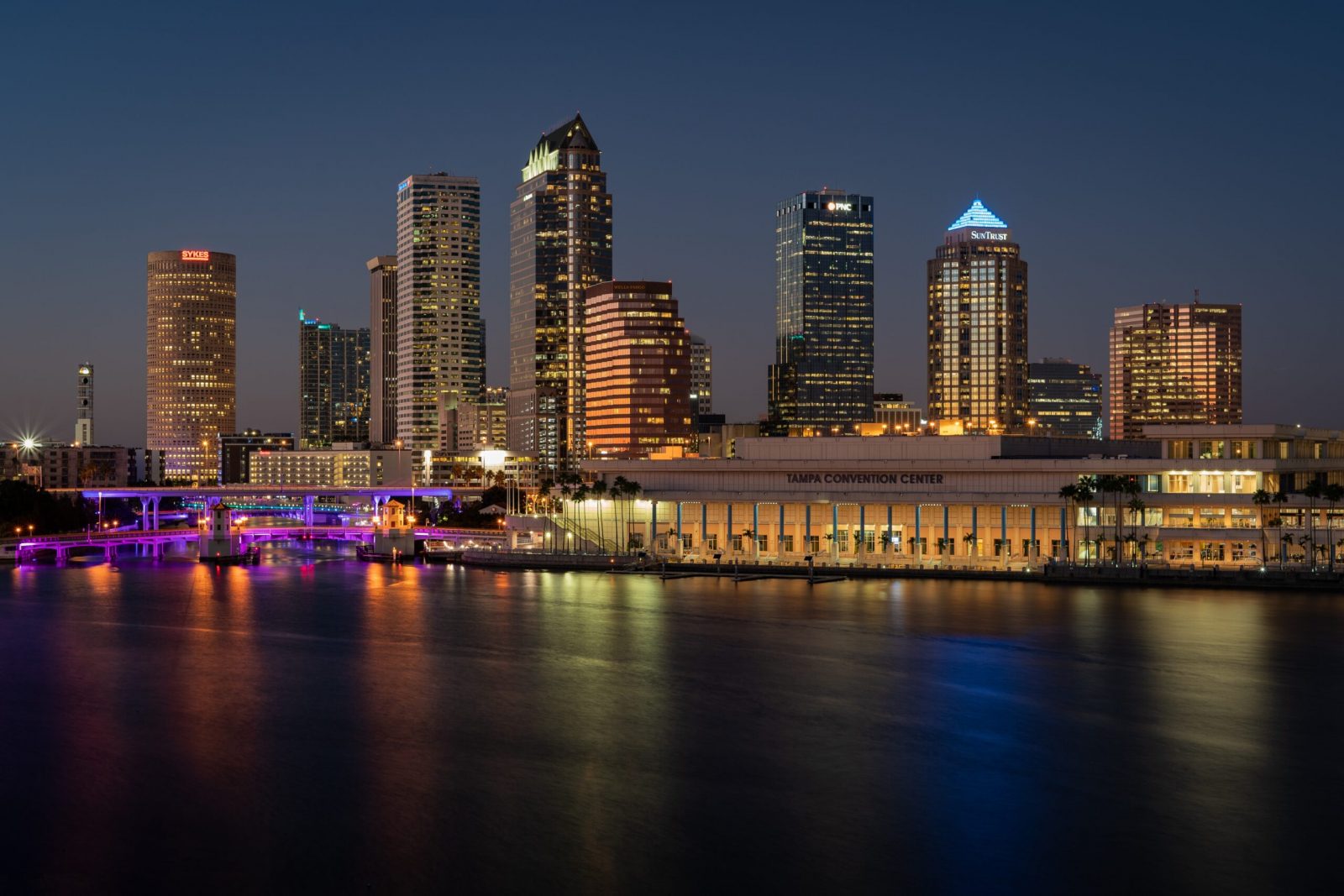
Living everything you wanted to know about the makes the Cigar City so great to live in from the people that call it home.
Tampa, FL: Fast Facts
Tampa is the 3rd most populous city in Florida and continues to grow steadily. The city’s population is estimated at around 427,500 as of 2026, making it one of the larger urban centers in the state on Florida’s west coast.
Located on the West Coast of Florida, Tampa is about an hour‑and‑a‑half drive east to Orlando; Jacksonville is about two‑and‑a‑half hours to the northeast; Miami is about four hours to the southeast; and Florida’s capital, Tallahassee, is about four‑and‑a‑half hours to the north.
The broader Tampa Bay metro area (including St. Petersburg and Clearwater) has an estimated population of about 3.07 million in 2026, reflecting ongoing regional growth as more people relocate for jobs, weather, and lifestyle.
Experiencing sustained growth over the past decade, the Tampa region remains a magnet for new residents thanks to its economy, climate, and coastal location.
The city of Tampa’s culture is very ethnically diverse with a strong Latino flavor. One of Tampa’s earliest neighborhoods, Ybor City, was founded by immigrant cigar manufacturers from Cuba, Spain, and Italy and remains a cultural hub that celebrates its heritage through food, music, and architecture.
People from Tampa are referred to as “Tampeños”.
I love the diversity of Tampa. There’s always something for someone, no matter the community.
Chloe M.
Tampa Neighborhoods
Downtown Tampa: This neighborhood is popular with young professionals, families, and empty nesters alike who are eager to experience the vibrant arts and entertainment scene that has continued to grow in recent years. Curtis Hixon Waterfront Park occupies the heart of the city with a sweeping green space that hosts festivals, concerts, and family-oriented recreation, all overlooking the Hillsborough River.
Channel District: Just east of downtown, the Channel District — also known as Channelside — has undergone a major transformation from a gritty warehouse zone serving the Port of Tampa into a walkable, high-density neighborhood of converted lofts, luxury apartments, and high-rise condos. The continued expansion of Water Street Tampa has further elevated the area with dining, retail, wellness-focused amenities, and waterfront access.
South Tampa: Stretching across the Interbay Peninsula between Hillsborough Bay to the east and Tampa Bay to the west, South Tampa is a collection of more than a dozen distinctive neighborhoods comprising some of the most coveted real estate in the region. A few highlights from South Tampa include:
HistoricHyde Park: Its balustrade, wide sidewalks, and sliver of waterfront greenspace are notable as the world’s longest continuous sidewalk. Behind the stately mansions and condo high-rises that line the boulevard, upscale homes are tucked under moss-draped live oaks in one of the most affluent neighborhoods in the region. Hyde Park Village continues to anchor the area with shopping, dining, and events.
Davis Island:This family-oriented neighborhood prides itself on having zero traffic lights. Cyclists and runners take advantage of miles of paved paths leading to the Marjorie Park Yacht Basin, with plenty of green space for picnics and outdoor activities. The popular dog park and beach are local favorites, and the village-style downtown features charming, mid-century-inspired shops and restaurants.
Port Tampa: the neighborhood is an eclectic mix of older ranch-style homes, Florida-style bungalows, and, increasingly, new construction. You’ll find terrific recreation options including Picnic Island Park.
Ybor City: Ybor City has several apartment complexes that are popular with young professionals and students. Seventh Avenue maintains its reputation as a nightlife and entertainment hub, while nearby residential areas reflect a more complex mix of revitalization efforts alongside ongoing challenges. In the heart of Ybor City, Centro Ybor remains the central shopping, dining, and entertainment destination, home to theaters, restaurants, shops, and nightlife.
Carrollwood Village: Carrollwood Village features later-era homes, apartments, and condo complexes. Planned communities are common, including Carrollwood Oaks, Huntington of Carrollwood, and Whispering Oaks. For buyers seeking high-end waterfront property, the homes surrounding White Trout Lake remain among the area’s most impressive.
New Tampa: Established in 1988, New Tampa is situated just north of the University of South Florida. This 24-square-mile area is made up of planned communities offering a range of price points and amenities. New Tampa is a strong fit for families seeking resort-style living, with biking and walking trails, golf courses, tennis facilities, and soccer fields.
Doing Business in Tampa
The Tampa region offers a major business center, and it’s also known for its museums, cultural attractions, and a modern international airport. Tampa International Airport consistently ranks among the best airports in the U.S. for efficiency and passenger experience, supporting both business and tourism growth.
Key Industries: Aviation and Aerospace, Defense and Marine Electronics, Business and Information Services, Financial Services, Healthcare and Life Sciences, Manufacturing, Marine Sciences, Port and Maritime Operations, and Tourism.
Major Employers: BayCare Health System, Tampa General Hospital, Publix Super Markets, University of South Florida, Centene Corporation (formerly WellCare), Raymond James Financial, TECO Energy Inc., Verizon Communications Inc., Citi, Amazon, Walmart, and Port Tampa Bay.
The Tampa Bay metro area continues to rank among the more affordable large metros for entrepreneurs looking to launch startups. While costs have risen in recent years, the region remains competitive compared to other major U.S. cities. Tampa Bay has consistently been recognized for its strong business formation, access to talent, and growing investment ecosystem, particularly in healthcare, fintech, and logistics.
I live with my parents in a two bedroom apartment with my cat and dog in Tampa Bay, FL. We live in Channelside, which is best known for the Amalie Arena, where the Tampa Bay Lightning Team play.
Ryan R.
Cost of Living in Tampa
The Tampa Bay Times reports that Tampa Bay is one of the most affordable areas of its size in the nation, due to its lower-than-average rents and utilities. Florida continues to be a relatively low tax state, with extremely low per capita state taxation but considerably higher local taxes; however, its combined state and local rankings are rising.
In Tampa, the median rent is $1,650 for a one-bedroom apartment and $1,950 for a two-bedroom. Rents have spiked 3% over the past year. However, Tampa’s rental prices are significantly lower than other cities and about 35% cheaper than Miami.
What Tampa Renters Want
Convenient Location – People want to live, work, and find entertainment in a geographically convenient circle, but accessibility isn’t really the most easy to find such as walking to a convenience store. However, communities like Hyde Park, Fish Haw, MiraBay, Water Set (just to name a few) will usually be more available and offer closer conveniences. They’ll host entertainment events in these community neighborhoods that make their area feel more convenient and accessible to their homeowners.
Pet-Friendly– The Tampa area is pretty pet-friendly. Tampa has a couple of dog parks, one located in Curtis Hixon and one in WaterSet. In Hyde Park, restaurants will offer outdoor dining so your dog can join. They also have water bowls everywhere in that area for pets.
Key Appliances – Renters are on the lookout for properties that have garbage disposals, washers and dryers, dishwashers, refrigerators, and microwaves. Most places in Tampa usually come with key appliances, but sometimes not include appliances like laundry and dryers and refrigerators, but usually every other key appliance will be there. Tenants look for all appliances to be included because they would not want to go through the process of transporting big appliances by themselves. Most Tampa tenants are business people and have no time for that so they look for convenience.
Connectivity – Wireless connectivity is extremely important to renters. Around 6.8% of workers here work remotely and the number seems to increase everyday.
Outdoor Living– One of the biggest things for Tampa. Everyone in Florida wants to see sunsets, and go to the beach and enjoy outdoor activities. A lot of people either want to live on the water or at least 30 minutes to an hour from the nearest one. Due to the Florida heat, tenants usually find pools in houses appealing.
I’m very happy with the price point for what I’m renting for in Tampa.
Anna M.
Arts, Recreation, and Entertainment in Tampa
Downtown comes alive each year with some of Tampa’s hottest festivals, most of which revolve around José Gaspar, a.k.a. Gasparilla, the Spanish pirate legend of the city. Tales of this southwest Florida plunderer first arose in 1900, although there are no historic accounts of him anywhere. Still, he is loyally celebrated with enthusiasm each year during carnival season. These festivals and others listed are conveniently located, full of life and are definitely worth a visit.
Ask any Tampeño about their favorite sport and you’ll hear about everything from football to hockey to baseball. It is also home to many sports teams:
- Tampa Bay Buccaneers (Super Bowl LV Winner)
- Tampa Bay Lightning (Stanley Cup Champions in 2004, 2020, and 2021)
- Tampa Bay Rays
- Tampa Bay Rowdies
Frequently Asked Questions (FAQs)
What is the average commute time for residents in Tampa, and how does public transportation compare to driving?
Average commute is about 26-28 minutes. Most people drive; public transit options are limited but improving downtown.
How safe are Tampa’s neighborhoods, and which areas have the lowest crime rates?
Safer areas include Hyde Park, Davis Island, Carrollwood, Westchase, and New Tampa. Higher-crime areas tend to be parts of East Tampa and sections of Ybor City late at night.
What are the best school districts in Tampa for families with children?
Highly rated public schools include schools in the Hillsborough County School District, with strong magnet options. Private schools include Berkeley Preparatory School and Tampa Prep.
How do property taxes in Tampa compare to the other Florida cities, and what should homeowners expect annually?
Property taxes average around 1% of home value per year (about $4,500 – $5,000 on a $450,000 home).
What is the quality and availability of healthcare in Tampa, including hospitals and specialty clinics?
Healthcare is strong, with major providers like Tampa General Hospital, BayCare facilities, and specialty clinics across the metro area.
Are there affordable options for long-term housing rentals beyond the median prices listed?
Yes, especially in outer neighborhoods and suburbs like Brandon, Riverview, and parts of North Tampa.
How accessible are outdoor activities year-round, considering Tampa’s climate and hurricane season?
Outdoor activities are available year-round. Summers are hot and humid; hurricane season runs from June to November.
What cultural or community programs exist for new residents to integrate into Tampa’s diverse population?
Events like Gasparilla, local festivals, neighborhood associations, and arts organizations help new residents connect.
How does Tampa support entrepreneurs and small business owners beyond affordability rankings?
Support includes incubators, co-working spaces, local grants, mentorship programs, and networking through business organizations.
What are the best neighborhoods for young professionals versus retirees in Tampa in terms of lifestyle and amenities?
Young professionals favor Downtown Tampa, Channelside, and Hyde Park. Retirees often choose New Tampa, Carrollwood, and South Tampa.
Sources:
U.S. Census Bureau QuickFacts. “Tampa city, Florida.” U.S. Census Bureau. Accessed January 2026.
https://www.census.gov/quickfacts/tampacityflorida
Data USA. “Tampa, FL – Housing & Living.” Data USA. Accessed January 2026.
https://datausa.io/profile/geo/tampa-fl
Tampa Bay Economic Development Council. “Why Tampa Bay.” Tampa Bay EDC. Accessed January 2026.
https://www.tampabayedc.com/why-tampa-bay/
City of Tampa. “About Tampa.” City of Tampa. Accessed January 2026.
https://www.tampa.gov/about-tampa
Port Tampa Bay. “Port Tampa Bay Overview.” Port Tampa Bay. Accessed January 2026.
https://www.porttb.com/about/
Niche. “Tampa, FL – City Profile.” Niche. Accessed January 2026.
https://www.niche.com/places-to-live/tampa-hillsborough-fl/
RentCafe. “Cost of Living in Tampa, FL.” RentCafe.com. Accessed January 2026.
https://www.rentcafe.com/cost-of-living-calculator/us/fl/tampa/
Tampa General Hospital. “About Tampa General Hospital.” Tampa General Hospital. Accessed January 2026.
https://www.tgh.org/about
BayCare Health System. “About BayCare.” BayCare. Accessed January 2026.
https://www.baycare.org/about-us
Visit Tampa Bay. “Things to Do in Tampa Bay.” Visit Tampa Bay. Accessed January 2026.
https://www.visittampabay.com/