/
AI Strategy for Sales and Marketing with Katie King

IN CLEAR FOCUS: Katie King, CEO of AI in Business, discusses the all-new, second edition of her book, "AI Strategy for Sales and Marketing". Discover how brands can move from AI experimentation to scaled transformation by prioritizing strategy over technology. Katie explains the importance of consent-first, ambient personalization and how ethical AI acts as a trust multiplier rather than a cost center. Listen now to learn how to implement Katie's AI Playbook framework and prepare for Agentic AI.
Episode Transcript
Adrian Tennant: Coming up in this episode of IN CLEAR FOCUS.
Katie King: This messy bit in the middle, you know, where the people are researching, comparing, forming their opinions, where that trust is really, really important. I think that's been really underserved and that's a big opportunity because AI can do some exciting stuff there.
Adrian Tennant: You're listening to IN CLEAR FOCUS, fresh perspectives on marketing and advertising produced weekly by Bigeye, a strategy-led full-service creative agency growing brands for clients globally. Hello, I'm your host, Adrian Tennant, Bigeye's Chief Strategy Officer. Thank you for joining us. Most marketing teams have been running AI pilots for a couple of years now. The experiments have been run, the proofs of concept documented, and the case studies written up. And yet, for many brands, AI still lives in pockets, a tool here, a workflow there, rather than embedded as a genuine capability across marketing, sales, and customer experience. Our guest today has been tracking the evolution of AI in marketing across three books and has more than three decades of consulting experience. Katie King is the CEO of AI in Business, a UK-based consultancy specializing in AI strategy, training and practical implementation. She serves on the editorial board of the peer-reviewed journal AI and Ethics, and last year Katie was named one of just 30 global AI ambassadors by Swiss Cognitive Advisory and Research. Regular listeners may recall that Katie joined us previously when we discussed the first edition of her book, “AI Strategy for Sales and Marketing,” published by Kogan Page. To discuss the book's fully updated second edition and how brand marketers can move from AI experimentation to scaled transformation, I'm delighted that Katie is joining us again today from London. Katie, welcome back to IN CLEAR FOCUS.
Katie King: Thank you so much, Adrian. Lovely to be with you once again.
Adrian Tennant: Well, Katie, when we last spoke, the first edition of your book had just come out, and AI adoption in marketing was still at quite an early stage. How would you describe where most organizations are now?
Katie King: I'd say almost everything has changed, Adrian, since we last spoke. And when that first edition came out in 2022, ChatGPT hadn't even come on the scene properly yet. Gen AI wasn't in that mainstream conversation. And I was asked by Kogan Page, my publisher, “Give us a 20% new edition, 20% new content.” And it's ended up being 100% new content. So the case studies, the frameworks, the ethical landscape, I had to build all of that from the ground up again. So I would say that the first edition was making the case for AI in sales and marketing. But I think now it is about much more, “How can we do that at scale? How can we do that responsibly? How can we do that with one sort of integrated system rather than three separate functions that are dabbling with AI independently?”
Adrian Tennant: “AI Strategy for Sales and Marketing Second Edition” is actually your third book on the topic of AI. Katie, can you just remind us what the first two were?
Katie King: Absolutely, yeah. Book one, Adrian, was way back in 2019, and it was the same sort of title, really. It was all about the impact of AI on sales and marketing. And then 2022 was much more strategic and much more about AI across marketing, selling, and customer experience, and how you can harness that. And then the end of 2025, last year, was the second edition of that second book. But as I mentioned, it is 100% new content really. I didn't set out to write a brand new book, but it evolved into something completely new.
Adrian Tennant: What changed so fundamentally that that light revision wasn't going to be enough?
Katie King: I think what people were doing- and even when I go back to book one in 2019, then it was- “Open up your shopping bag and buy some AI.” 2022, we were starting to kind of really see its benefit. I think now what we're seeing is small pilots, but people have sort of been struggling to move, maybe- you know, past that. So I think we've seen the EU AI Act, we've seen new global regulations, we've seen sort of governance, much more maturity. And so in this new book, I've introduced new frameworks to help people really think about scale. I think the change management piece has been big as well. You know? How do we prepare our staff? How do we introduce this to our clients, to our customers? I've got a new scorecard because I've got people thinking about the right mindset, the upskilling, which is ongoing. So I think it's preparing people for baking agility into their everyday way of working as brand marketers, making sure that they really cooperate and work very closely with the sales teams, with the CX teams as well. So I think it is really rebuilding all of that and making sure that I show people that stealable innovation from elsewhere and examples. But practically, “How do I get started?” rather than making the case for “You should get started.”
Adrian Tennant: Well, I imagine many of our listeners have run AI pilots by now, but many are still struggling to move beyond them. Katie, what's holding organizations back from scaling, would you say?
Katie King: Well, Adrian, I get asked this a lot, and I've been working across multiple sectors with marketers and salespeople. Three things I would say. One is putting strategy before the tech. I constantly see people buying in these AI-powered platforms, running their pilots, maybe appointing a head of AI, but they don't have a clear strategy of how the AI is connecting to their business objectives. So if we layer that expensive tech on top of broken foundations, we're going to encounter issues. The second is their data readiness- it's this big beast. It's only as good as the data we're feeding it. And many marketing teams have got fragmented data. Their CRM here, their email platform, their website analytics. And then third, and I'd say this is probably the most crucial, are the people and the culture. And here I think of, for example, Boston Consulting Group's 10, 20, 70 rule. 10 percent is the AI success coming from the algorithms, 20 from the tech and that data infrastructure. But the biggie is the 70% from the people and the processes. So, we need those AI champions across the whole stack. So I think it's making sure that leaders understand this transformation program rather than thinking about “Let's invest in Salesforce over here” or Phrasee or Eightfold or whatever it might be. So that's really, really important.
Adrian Tennant: Excellent. Well, building on the scorecard for success from your earlier work, in the second edition, you introduce an AI Playbook framework. Can you give us an overview of it?
Katie King: Absolutely. Many organizations are now at that point, many brands, many agencies are thinking, “How do we normalize this? How do we keep ourselves and our staff safe? How do we, for example, appoint an AI champion?” So, I've been helping a lot of organizations to appoint an AI champion from different departments. For example, the legal teams are really worried about the marketing teams inadvertently violating copyrights and trademarks. So you create this group of champions from marketing, tech, digital, all different divisions. They come together, and let's say they meet once a week. The output of perhaps their first six meetings is this AI Playbook, this framework where they're really thinking about: “How do we build agility in? How do we normalize this? How do we share the best prompts? How do we make sure that we are attracting the right staff?” So it will differ from brand to brand, agency to agency, but it's a bit like going back to the digital days where we had like a social media handbook. So it's a piece of work by its very nature. It needs to be very agile, and it's brought together from a number of different people within the organization.
Adrian Tennant: Hyper-personalization versus privacy is one of the central tensions in your book. Katie, what does a consent-first approach to personalization typically require of a brand?
Katie King: This is probably one of the most important conversations in marketing right now, because too many brands get it wrong. So there is that temptation, because technically you can, that you've got to personalize everything. But does that mean we should? So I think a consent-first approach requires us to have three things. So number one, transparency. So customers understand what data you're collecting, how you're using it, what's in it for them, what are they going to get back in return? And I think that value exchange has got to be really visible and really real. Second is “Real choice.” Not 48 pages of terms and conditions nobody's going to read, but something meaningful and accessible. That's really going to help that. And then the third is being proportional. We only should collect the data that's relevant to the outcome that we're delivering. Now, I'm on the All-Party Parliamentary Group for Enterprise Adoption of AI and the AI and Ethics Journal. And these are big discussions. We don't want surveillance. We want real personalization that's going to benefit people. And I think the brands getting this right are consent-first and are actually using it to improve performance for the customer. So if I do that, I've got this virtuous circle, rather than thinking, well, we can take advantage of that, maybe not even purposefully. So I think once we've lost that consent, once we've lost that trust, it's very, very dangerous, very difficult to get it back.
Adrian Tennant: Katie, you use the idea of ambient personalization to describe what great looks like – personalization that's quieter and woven into everyday experiences rather than visibly targeted. For CPG and direct-to-consumer brands, what does that mean in practice?
Katie King: Yeah, great question. Ambient personalization really is what's happening when the tech disappears, and the experience feels right. So maybe Spotify with their Discover Weekly. Nobody's thinking, “Oh, the algorithm's targeting me.” It's happening. It just feels like a playlist that knows your taste. So we want that gold standard, we want CPG and D2C brands to move away from people noticing that. And actually, we don't want to annoy the customer. We don't want to erode the trust that we talked about previously. So we want the kind of AI that's going to adjust the experience in a way that feels really, really natural. It might be how it's dynamically adjusting the homepage based on the time of day, or the weather, or the browsing context, but not announcing it. It might be, for example, predictive replenishment. The brand knows you're likely to be running low on something, and it's surfacing a reorder at exactly the right time, not too early, not too late. Or content that's adapting the tone and the depth depending on where someone is on their journey. Are they a first-time visitor and just getting info and being educated, or a repeat? So again, we’ve really got to be adding benefit. We don't want the creepy personalization that's like when you walk into a store and they're immediately on you. We need space to breathe. It needs to be intelligent enough and governed well enough to be on the right side of that equation.
Adrian Tennant: Your book reimagines the marketing funnel with AI applied at every stage from awareness through to advocacy. Katie, where do you see the biggest untapped opportunity for brand marketers right now?
Katie King: I would say, Adrian, that is in the middle of the funnel around that idea of when you're considering and when you're evaluating. I think most have gone and put their AI investment on different extremes: the top of the funnel, it's all been about content generation, ad targeting; or the bottom: all about conversion optimization and the checkout. But this messy bit in the middle, where the people are researching, comparing, forming their opinions, where that trust is really, really important, I think that's been really underserved. And that's a big opportunity, because AI can do some exciting stuff there, you know, it can do that predictive content and the sequencing so that we get the right information at the right time. The intelligent nurture flow based on the kind of engagement signals that you're getting. So I think that's important, but also that period where you've got post-purchase and advocacy. We've got to try to retain our customers and make them our brand advocates. So it's not all about points and tiers and rewards. We want the AI to allow you to imagine that the loyalty is ongoing and that you've got a valuable advocate. So I think that's really, really important. And that kind of like personalizing the post-purchase experience is really important. And I think that's where, and this is what all brands are aiming for, that long-term value lives within that as well. And that's, that's really crucial.
Adrian Tennant: That's a great point. Well, staying with that idea of AI redefining customer loyalty, that is moving it from just a post-purchase goal to an ongoing, intelligently managed relationship. Katie, could you give us an example of a brand that you think is doing that really well?
Katie King: Absolutely. I look all the time at different sort of segments, but I would say Sephora is a brand doing that well, you know, moving beyond the traditional loyalty program into this, what I would term, you know, predictive relationship management. So their AI is analyzing the purchase history, the browsing behavior, the skin type data, engagement patterns, all of that, so that they can anticipate what comes next. “Which events should we invite people to?” So it becomes like you've got your own knowledgeable beauty advisor who's remembering everything about you. And I think as well, what they do well is give the customers that option: “Can we opt in?” If the value exchange isn't clear, you're sharing your data. You genuinely want to get a better experience. So I think it is about that kind of ongoing customer relationship, not just a transactional touchpoint. You know, brands like banks as well, banks in Southeast Asia. I did a lot of work in Singapore, UOB, those sorts of brands. They're using predictive models. They're anticipating life stage changes as well- “When are you buying a home? When are you starting a family? When are you doing retirement?” And then reaching out to people with the relevant services. And when I think back to book one, right back in 2019, the banks were admitting, and many brands were admitting, “We treat people as one big homogeneous mass.” And I think AI is enabling you to get that hyper-personalization without being really creepy.
Adrian Tennant: Let's take a short break. We'll be right back after this message.
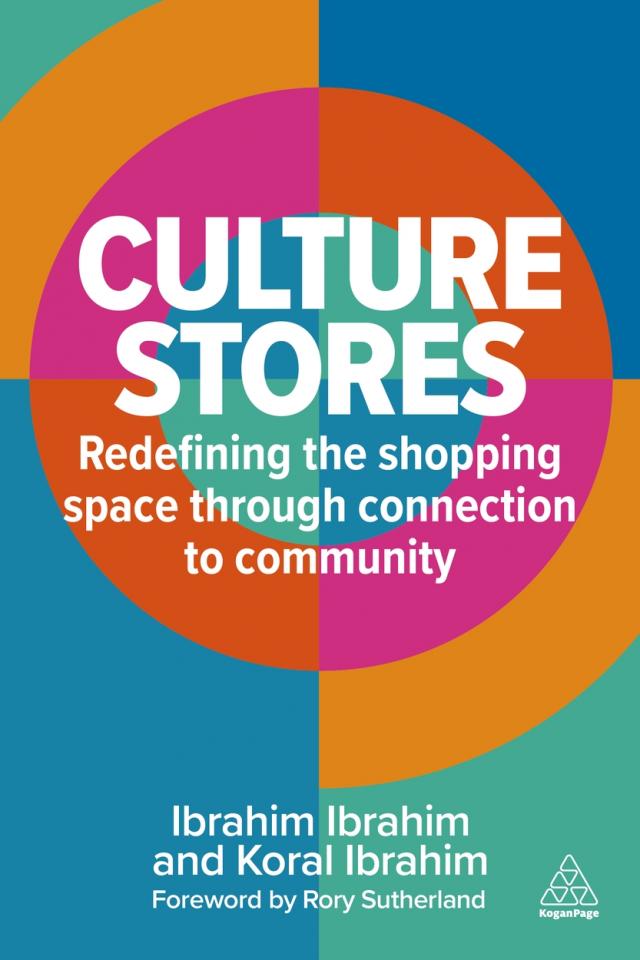 | Adrian Tennant: Each month, in partnership with our friends at Kogan Page, the Bigeye Book Club features interviews with authors who are experts in marketing, consumer research, and customer experience. Our featured selection for September is “Culture Stores: Redefining the Shopping Space Through Connection to Community.” As transactions move online, the book argues that physical stores are becoming places for recruitment and retention, closer to media platforms than shop floors. It sets out an alternative to demographic segmentation, grouping audiences by shared cultural interest instead of age or income. And it asks what a brand should measure, when a space is built for belonging. “Culture Stores” is written by Ibrahim Ibrahim, Managing Director of Portland Design, and Coral Ibrahim, founder of The Ready House. IN CLEAR FOCUS listeners can save 25% when ordering directly from koganpage.com using the exclusive promo code BIGEYE25 at checkout. Shipping is always complimentary for customers in the US and the UK. I'm confident “Culture Stores” will change how you think about the physical spaces your brands occupy. |
Adrian Tennant: Welcome back. I'm talking with Katie King, the CEO of AI in Business and the author of “AI Strategy for Sales and Marketing, Second Edition,” published by Kogan Page. You make a strong argument in “AI Strategy for Sales and Marketing” that ethical AI isn't just a compliance obligation. How do you make the case to a leadership team that AI is a genuine source of competitive advantage?
Katie King: This is a subject really close to my heart. I've been working now for many, many years with leadership teams across multiple different brands and organizations worldwide. And I think the case to the leadership team is really straightforward. Ethical AI isn't a cost center, It is a trust multiplier. So I think trust – I know trust is the scarcest resource in marketing. The commercial argument is basically the consumer is increasingly aware of how their data is being used. Multiple studies showing that trust is driving their willingness to share their data, and better data is making better decisions. So I think the brands that are getting more data, better data are getting better commercial results. So this isn't altruism, this is great business strategy. I think the risk argument is powerful as well. So we've seen all the headlines of when the AI goes wrong, discriminatory pricing, and biased targeting, and tone-deaf campaigns that have been generated without that human oversight. So I think their reputational trust is huge. And in regulated sectors, that's an existential threat as well. So good governance isn't about slowing you down. It is about protecting your license to really be able to operate. And then finally, the talent argument. The best people want to work for organizations that are using tech responsibly. So if those AI ethics are weak, you're going to struggle. Certainly to retain and to attract the best talent. So I think we need those three things in place.
Adrian Tennant: Well, you mentioned risks. What are the risks you see brands taking with AI right now that they may not fully appreciate?
Katie King: I'm glad you asked that. There are many, but I would try and focus it down to the three that keep me awake at night, particularly the more I see the way the world is evolving. Number one is an over-reliance on AI-generated content without adequate human oversight. Laziness, basically. Lazy marketing, brands publishing AI-generated copy imagery, strategy documents with minimal review. Interestingly, we're trying to use AI to give us a competitive edge, and just take people using LinkedIn in their marketing. We could all end up being the opposite of that and being really homogenized because everybody's using AI and LinkedIn to send those outreach messages or recreate those posts. And it's all looking and feeling exactly the same. So we don't want your brand to feel generic. The AI should be amplifying, should be allowing you maybe that first incredible draft of a blog, of a piece of content. I don't know what percentage, for some 40, for some 85, but you've got to layer onto it your creativity, your critical thinking, and so on. Second, data governance gaps. And the third is neglecting the human skills that are making marketing really effective, which is that empathy, that creativity. You know, the World Economic Forum talks that over the coming years, what the critical skills are going to be creative thinking, judgment, our human empathy. We need to be able to all move up the food chain and augment our human capabilities by using these latest tools and platforms rather than them doing all the work for us.
Adrian Tennant: The last time we spoke, Katie, I feel like agentic AI, that is systems that can execute multi-step tasks autonomously, was still pretty conceptual. Today, it's a commercial reality. Katie, what should marketers be doing now to prepare if they're not already using agentic AI?
Katie King: Agentic AI is that next frontier, Adrian, isn't it? It's here for many sectors, and it's closer than probably most marketers really realize. So, and as you just outlined there, we're moving away from AI that's answering questions, to AI that's really able to take action for us to, for example, execute a multi-step workflow or make decisions within certain defined parameters. And it's learning, it's incredible. So that could mean not just, you know, recommending the next best marketing campaign, but actually executing it for us. I still feel – again, brutal honesty here – the trust factor around agentic is not quite there yet. I need to see that as well. Need to see examples of it, particularly if we link it up to e-commerce, and to our payment cards, and it making decisions. That's not there for me yet, but the foundations, we need those in place before we let the agents loose. So that means again, get the governance frameworks right, design your agentic systems with clear guardrails and audit trails and escalation points. We've got to invest in our data architecture and we've got to start small and build that trust. So what I'm seeing are agentic workflows in quite low risk environments. I've been working with some banks and financial services organizations and they're treading slowly, and they've got clear governance frameworks in place, and they're working out: “What can we automate?” And making sure that they've got those rigorous steps in place. So I think we've got to allow the AI to anticipate, help decide, and act. But know when we've got to force it to escalate up to a human being or else we are going to get into trouble. But its potential is mind-blowing.
Adrian Tennant: Well, I think throughout this conversation, I'm probably making an assumption that many of our listeners are already well established on the road to AI. But of course, for anybody that's moving into a new position or is new to the industry, marketers just starting to think seriously about their AI strategy. Katie, where would you point them to first?
Katie King: Great question. I think my start point for any of this would be internal. I think starting by thinking about “Where are we as an organization? What are our goals? What's our competitive landscape? Where do we need to be?” You know, “How do we differentiate? How do we ensure that we continue to add value to our customers through the products and services that we offer?” And then thinking about “Across our marketing stack, what are three problem areas that we've got where AI might be able to help us or what are three opportunities that the AI could help us?” And that might be some deeper micro-targeting, it might be breaking into a new market segment. So I think it sort of begins with that strategy that I talked about and that research that's ongoing and that could come by having the AI Playbook and the champions, who are regularly having a watching brief on their market and across the different layers of what they're trying to achieve, rather than just jumping in and saying, “Let's use this tool.” But in terms of tools, let's get a bit practical here. I absolutely love Claude. So I've used CoPilot, I've used ChatGPT. I know that many organizations have multiple enterprise versions of that and may be blocked from using it. But for across the sort of marketing that I do and some of my clients do, Claude is really fantastic, but then there's Perplexity. And of course there's ChatGPT, and there's Salesforce and multiple others. But I think it's thinking about what you're trying to achieve, doing your due diligence and going and finding the right tools and then doing some small proofs of concept before you roll that out. But also curiosity, being on a journey of constantly learning has stood me in great stead over the years.
Adrian Tennant: Katie, as you just shared, you use AI tools yourself, of course, in your own work. I'm curious, are there any that you think are really promising or maybe underutilized by marketers?
Katie King: Absolutely, Adrian. I think there might be ones that you and I use all the time, like Google's NotebookLM. That's really helping a lot of the marketing teams that I've been working with, where it's turning your work into sort of clear summaries and research and all those sorts of areas. I also work across multiple sectors. So it might be a brand in the legal sector. There's some very sector-specific tools as well. So, you know, a lot of the brands that I've been working in are helping law firms, and the law firms have been using tools like Legora. There are Phrasee and Concurred, and those sorts of things that are quite specific to certain elements of marketing. And then there's the tools that many digital teams have been using for many years that have now got really cool AI brains built into them, like the brand watches and people like that. So for a lot of people, there's already an investment in a marketing tool and it's making sure that those aren't underutilized as well.
Adrian Tennant: Great conversation. Katie, for IN CLEAR FOCUS listeners who'd like to follow your work or find out more about the second edition of your book, “AI Strategy for Sales and Marketing,” where should they go?
Katie King: Best place is my website, aiinbusiness.co.uk, because that's a place where from there they can see the books, they can see the keynotes, they can see the blogs. That's a great place. The books are available via there, but of course also on Kogan Page. But a great place really to start is the website. Really happy to connect with your listeners on LinkedIn, for example, if they want to find me there, Katie King, AI in Business.
Adrian Tennant: Perfect. Katie, thank you very much for being our guest again this week on IN CLEAR FOCUS.
Katie King: Thank you for having me, Adrian. It's such a pleasure.
Adrian Tennant: Thanks again to my guest this week, Katie King, CEO of AI in Business and author of "AI Strategy for Sales and Marketing, Second Edition," published by Kogan Page. As always, you'll find a complete transcript of our conversation with timestamps and links to the resources we discussed on the IN CLEAR FOCUS page at Bigeyeagency.com. Thank you for listening to IN CLEAR FOCUS, produced by Bigeye. I've been your host, Adrian Tennant. Until next week, goodbye.
Timestamps
00:00: Introduction to AI in Marketing
02:17: Current State of AI Adoption
03:40: Katie's Previous Works on AI
04:26: Challenges in Scaling AI
06:08: AI Playbook Framework Overview
09:22: Consent-First Approach to Personalization
11:11: Ambient Personalization Explained
13:09: Opportunities in the Marketing Funnel
15:17: Examples of Effective Customer Loyalty
18:36: Ethical AI as a Competitive Advantage
20:42: Risks Brands Face with AI
22:55: Preparing for Agentic AI
25:18: Starting Points for New Marketers
27:28: Promising AI Tools for Marketers
28:45: Where to Find Katie King
29:27: Conclusion and Thanks