/
Authentic Marketing with Visha Kudhail

IN CLEAR FOCUS: Visha Kudhail is the author of our featured book for August: "Authentic Marketing." In this episode, Visha explains why authenticity should be an always-on operating model, not a social media trend. As AI content floods feeds, consumers crave genuine connection. Discover how to move past vanity metrics, turn data into real human insight, and embrace brand flaws. Hear how authentic marketing builds measurable competitive advantage and lasting trust in an era of digital fatigue.
Episode Transcript
Adrian Tennant: Coming up in this episode of IN CLEAR FOCUS
Visha Kudhail: Content is everywhere, meaning it's scarce. We're living in a performative economy where people are creating content at speed for clicks and likes and people are getting quite fed up of it. This is why I really feel like this is a really important space for any marketer that says, "I'm going to do right by my audience."
Adrian Tennant: You're listening to IN CLEAR FOCUS, fresh perspectives on marketing and advertising, produced weekly by Bigeye, a strategy-led, full-service creative agency growing brands for clients globally. Hello, I'm your host, Adrian Tennant, Bigeye's Chief Strategy Officer. Thank you for joining us. 'Authentic' might be the most overused word in our industry. We've attached it to social media trends, influencer partnerships, and tone of voice decks that sit forgotten in a shared drive. And yet, as machine-generated content is flooding every feed, and trust in institutions is eroding, the underlying idea has never mattered more. What if authenticity were treated like an operating model, a discipline that aligns what a brand says, what it does, and what it actually sells? Our guest today has spent nearly 20 years putting that question into practice. Visha Kudhail is an award-winning global marketing leader, speaker, and author whose career spans senior roles at Thinkbox, Google, YouTube, Pinterest, and Square. She built Google's UK brand trust function during one of the industry's most challenging periods, scaled Pinterest's business marketing across Europe, the Middle East, and Africa, and led brand for Square in the UK. Visha chairs the Media Council of the Data and Marketing Association, and she hosts the podcast 'Behind the Face of Success.' Visha's new book, published by Kogan Page, is "Authentic Marketing: Combining Human Thinking and Creativity with Technology to Inspire Audiences." The Bigeye Book Club selection for August, it's a practical guide for marketers who want their work grounded in real human insight rather than vanity metrics or automation for its own sake. To explore what authenticity really demands of brands and how marketers can use data and technology to deepen human connection, I'm delighted that Visha is joining us today from London. Visha, welcome to IN CLEAR FOCUS.
Visha Kudhail: Thank you, Adrian. I'm so happy to be here and come to talk to you.
Adrian Tennant: Visha, congratulations on the publication of your debut book, "Authentic Marketing." What prompted you to write this book now?
Visha Kudhail: Thank you so much. Such a good question to start us off with. I felt when I was circling around this topic with the publisher, it just felt like the right thing for me to write about. I've always worked in companies that believe in good values, trying to do the right thing. As a marketer, this is just common practice for me. I always believe in keeping it real in my marketing approach. What's interesting though, as the year went on and I was in the writing stage, is that I guess AI has really changed the way we think about authenticity. I think in some way it's almost like breathing new life into it. We're starting to question what's real and what's not real. We're really interrogating what creativity looks like today because of that. I think from my perspective, specifically as the marketer, who's written a book but also is a practitioner, these are big areas of focus from the brand side as well. So I think going from a place of, "Yes, I believe this matters and this is part of my experience," to a time today where I guess we really need to be putting this topic really high on our agendas. So I feel like it's a really timely thing to be talking about, which is why I feel so passionate about it.
Adrian Tennant: As you note in the book, 'authentic' is a word our industry has almost worn out through overuse. In your framing, authenticity is less a social media trend and more an operating model. What do you mean by that?
Visha Kudhail: I'm going to open it up with the context that we're living in right now, which sort of segues a little bit in your initial question to me. I think the world's changed so much, right? You know, 86 percent of consumers actually believe that being authentic from a brand is essential for them to decide whether they believe in the brand or want to buy in the brand. So I'm just starting to really realize just how much authenticity isn't a soft metric. And also in this world that we're living in at the moment, I'm sure you can probably relate to this as well. We don't know what we trust. You know, The Weather Channel in the US is more trusted by Americans than USA Today or the New York Times. That's the research source from YouGov. So content's everywhere, meaning is scarce; this is just a problem that we're sort of operating in right now. And coming back to the industry, I guess, from our perspective as marketers and the people in charge of storytelling and accountable to storytelling for our businesses, we've gone down this slightly strange direction of putting being authentic, being real, under the banner of social media trends, user-generated content. That has a role, specifically. But what we've forgotten is the fact that being authentic is not a silver bullet. You don't just do it. It's not a single trust campaign. It's an always-on mechanism. And so the way I sort of see it is it's more of an operating model. You think about your tone, your message, your actions. They all need to connect to how you think about your thought leadership, the narratives that you put out in the world, how your CEO speaks on stage. And I guess from my perspective as well, I've also looked at this in terms of a bit of a framework too, because I know that it's quite overwhelming. There's a lot to cover. I cover this in the book specifically with bullet points and ideas and checklists and things like that. But from my perspective, being authentic requires you to do four things really, really well. The first thing is understanding your brand truth. What is your brand promise? What are you there to do and deliver for the audiences that you want to talk to? The second thing is integrity and transparency. You know, try to make sure that you're being ethical in your approaches is really important. Building with a customer, which is a crucial point about being authentic, which is audience data is so crucial, being relatable and understanding what your audience is all about. And the other thing is consistent values. don't jump on the latest bandwagon, try to do things for Pride, but then not do anything within your company. And that's what I mean about the operating model. You know, your actions do shine. I've seen this so many times where I see content creators share, "Well, that company talked about Pride about two years ago, but now they're not." And these things really do matter to people. I think brands really matter to people. So yeah, that's the way I look at it.
Adrian Tennant: One of the central arguments in your book is that authenticity isn't a soft virtue, but a measurable competitive advantage. For a marketer who needs to justify that thinking to a skeptical CFO, how do you make that case?
Visha Kudhail: Well, this is such an interesting question because I think a CFO, in my opinion, and every CFO I've worked with, has just believed in the company that they work for. And again, this is why being a part of a company that operates with realness is so, so critical. I think if you're a senior leader, you would always have that underlying belief that that's why you joined this business. I mean, the way I've written this book, it's written so that anyone in a different department can pick it up and go, "Oh right, I get what marketing's about right now." So I think going back to that point I made about the operating model, that tone, message, product CEO consistency, keeping that aligned helps you convert the customer all the time. It does convert to profit. I've seen this happen in real time with Pinterest. The product innovation is always going to be aligned to the company mission. Which means that creators would make in a specific way for the platform we would attract. Specific types of clients that would want to advertise on the platform. It all has a halo effect: you actually do you see that turning around and profit. So I do you know, think that just making sure that we are always highlighting as much as how contextualizing metrics actually showing right now "We have produced a brilliant campaign. It has actually delivered XYZ in terms of awareness goals, but also measurement metrics like CTRs." All of those important things that we need to be thinking about. "But actually the long-term goal has been we've closed X amount of clients too, because we've been winning partners who want to work with us along the way because of the brand that we've become and that we believe in." There's a reason why everybody wants to do something with Nike. You know, they want to be associated with Nike.
Adrian Tennant: In the physical copy of your book I have right here, I underlined your idea about being flawed versus flawless. It runs counter to many marketers' instincts to present a perfect, polished brand. Visha, what does embracing imperfection actually do for brand voice?
Visha Kudhail: Yeah. So this part I really thought about so much because I think as I was writing this, it was the time where there was a lot of controversy around the Sydney Sweeney American Eagle campaign and there was a lot of to-and-fro in the marketing community where one side thought, "Well, who cares?" And the other side thought, "Well, I care." And I think I saw some stats coming through from The Business of Fashion that even though sales went up for American Eagle, the campaign actually did hurt them from a brand perspective. So I found that really interesting. What I am noticing, especially, and this is why I guess people are looking for connection right now, and brands that are looking for connection too, people are just looking for relatability right now. And I guess I'm using the American Eagle example as, you know, their apology felt really insincere and lots of people went on the internet and talked about that. They said, "Oh wait, we didn't do anything wrong." And look, marketers make mistakes, it's okay. Businesses make mistakes all the time. And I think what we really need to do is remember that the customer is very savvy, they are expecting something from us. I think it's important for us to own it and be quick to say something about it. And I think being flawed really signals honesty and humility and both of these things make a brand utterly relatable and it creates connection but also floors can be really creative. And actually, you can have a lot of fun with flaws. And I think that's something Snickers has done with, you know, the campaign where "You're not yourself when you're hungry," which, by the way, I actually see myself in that campaign quite a lot when you're very hungry. And you know, you've been there and you know that people are utterly flawed. And I think that's the brilliance of that campaign and why it's always talked about. And it's won multiple different IPA awards, hasn't it? So showing that messy, cranky side of people is just such a lovely thing to do, but it tapped into a really unique audience insight. So I think being relatable just allows people to see themselves. You know, humans are emotional and utterly flawed. So I think there's some brilliance in that.
Adrian Tennant: As regular listeners know, we love case studies on IN CLEAR FOCUS. So could you walk us through a brand you think genuinely lives this, and what makes their approach authentic rather than performative?
Visha Kudhail: Yeah. Being authentic is based on your brand and your brand promise and your truth and who you are and what you represent to your audiences. So that's why I think it's always individual and it's always very unique. So I always love talking about Nike. The reason why I like to talk about Nike is because of the fact that they've always put having a stance and protecting their stance and their values in front of their audiences. I think the 'Dream Crazy' campaign, which I'm obsessed with, and I know it's old now, but I sometimes still watch it to go, "Come on, Visha, dream crazy!" So I think there's something really brilliant about how they've continued empowering athletes, but also in empowering their audiences alongside them. And it's been consistent. We know what to expect with them. They've helped us understand their narrative so, so well. And the reason why I think they're very strong, because they've taken a values way in, is that we're seeing them show up as a power brand. They've got highest NPS scores, they are building on their brand equity as a powerful brand in that respect. And then you've got a brand like Dove. It's such a unique thing. I think I've talked about this in multiple different judging rooms where Dove's been entered as a case study. And the number one thing they've done is always kept the consistency of their storytelling at the heart of what they do around confidence and relatability and ensuring that young girls can feel seen and how beauty is individual and it's not manufactured. I think what's really brilliant about that is that they found an audience inside 2 percent of young girls actually feel that they are not confident. And as a product that is essentially shower gel, how they have come out of their category and become such a power brand in their own right, I think it's a really powerful play as well. You can see on the internet their sales. just showing time and time again why that was such an effective strategy for them. So I think again, using an audience insight and really owning that and being relatable to their audiences and meaning something to them has shown what their power brand they are. And the third one I will share though really quickly is e.l.f. And I always like to share this example because I come across this brand through the CEO talking on CNN about how he felt that diversity policies were really important to e.l.f. Beauty. And this was at the time where new policies were coming through and e.l.f. really stood their ground on their values. And they talked quite a lot about the makeup of their audience is women and also the product innovation has to reflect their audiences and then connect the dots between the product innovation and the audiences that they are talking to. That was a really strong way of the operating model, the CEO speaking on CNN and protecting their values. Underneath that, I remember watching that and I remember seeing how their share prices were going up because their D&I policies were staying consistent. I then looked into them a little bit more and they've been running campaigns consistently. You know, I live in the UK, I'm buying into e.l.f. because of those things. So what I found interesting about that was, again, that was a really great way of an operating model from being authentic start to finish.
Adrian Tennant: Let's take a short break. We'll be right back after this message.
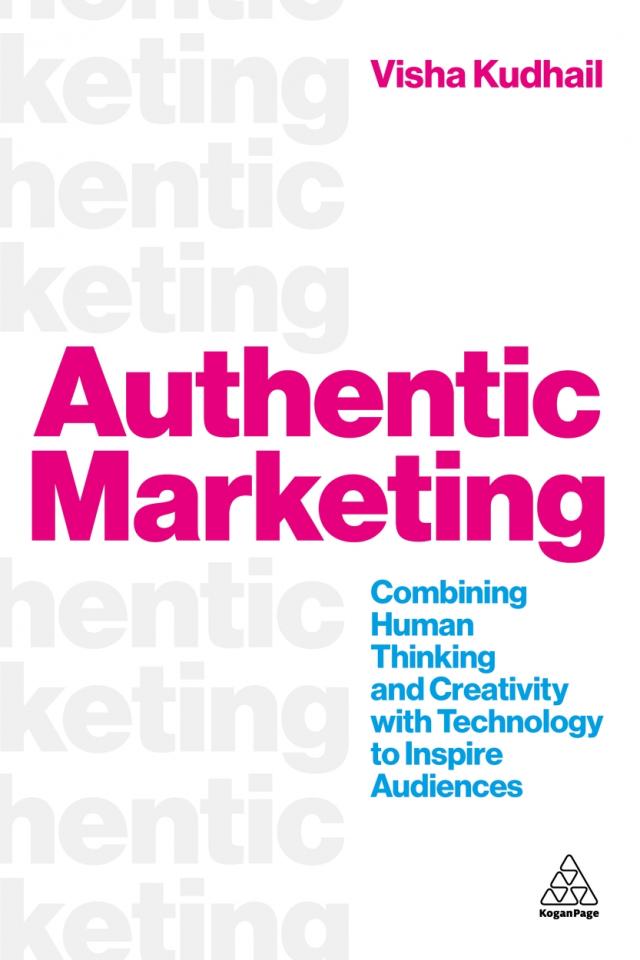 | Visha Kudhail: Hello, I'm Visha Kudhail, author of "Authentic Marketing: Combining Human Thinking and Creativity with Technology to Inspire Audiences," published by Kogan Page. I've spent nearly two decades building brands and marketing teams at companies including Thinkbox, Google, Pinterest, and Square. In my book, I make the case that as artificial intelligence reshapes our industry, the qualities that set great marketing apart are still profoundly human: curiosity, creativity, and audience-first thinking. I share practical frameworks for turning data into genuine human insight, building brand trust, and creating campaigns that earn a lasting place in people's lives. You can save 25% on "Authentic Marketing" when you order directly from koganpage.com. Just enter the exclusive promo code BIGEYE25 at checkout. Shipping is always complimentary for all customers in the US and the UK. I hope my book helps you build brands worth believing in. Thank you. |
Adrian Tennant: Welcome back. I'm talking with Visha Kudhail, author of the Bigeye Book Club's August selection, "Authentic Marketing: Combining Human Thinking and Creativity with Technology to Inspire Audiences." Visha, let's talk about data. You're emphatic that data should deepen human understanding rather than replace it. Could you walk us through that journey you described, from raw data to information to genuine human insight?
Visha Kudhail: Yeah, so I'm a big data fan, I will be honest with you. And that's because I think of data in a very different way, potentially to most, well some people perhaps. I think data is always kind of seen as like the boring thing that everyone has to do. But I actually think it's the most fascinating part of marketing strategy. I'm sure you'll really appreciate this with your strategic hat on. And I have found I've been very lucky, actually, if I'm completely honest with you, you know, coming from the broadcast sector, TV sector, we didn't have a lot of data to play with. But coming into places like Google, and Pinterest, where we owned a lot of our data, so we were able to see what was happening on the platforms. Google trends is a brilliant example. At Pinterest, we had an abundance of data on a regular basis of how people were using the platform, which helped us make sure that we were storytelling in the right, correct way. I was very lucky I had a research partner. I cannot stress how much people really need a smart research partner alongside them. So let's say using Pinterest as a good example, working on Pinterest shopping, we actually created and developed shopping research to really get under the grips of what does shopping mean on Pinterest. And that was read out to me. And we talked about that a lot, about how we want to show up and how that should show up in our campaigns. Through the research, we were able to identify a real insight. Now, insight is interesting because it's not just the audience insight that you really need to get your hands on. There's also market insight. You know, you've got what you're about, what your platform does, but how does the shopping experience happen across multiple different countries because different countries operate in a very different way. Commerce is different in very different countries. So just having a higher level macro perspective of how the world is working when it comes to e-commerce was interesting and helps you bridge the gap between your own audience data and the market insight. And then what you start to find between that is what the tension is. What are the places that people are just really struggling with? And that's what gets you to unmet needs. So just really being able to then take it from audience insight, market insight, to getting closer to what the real tension is, means that you're able to create campaigns that really do matter. And I have found that going through that sort of strategic framework when it got to ideating with my partners got us to a really compelling story that we could take out to market that showed up in creative campaigns, that showed up in thought leadership. That showed up in how sales might talk to their customers. That showed up in how our social media, organic social media showed up. So it has, I think, in understanding data and audience insight, is so, so critical to be able to communicate holistically across your entire content ecosystem.
Adrian Tennant: There's enormous pressure right now to lean on artificial intelligence and automation across the marketing workflow. In your view, where does that technology genuinely strengthen the work, and where do marketers risk losing something essential if they over-rely on it?
Visha Kudhail: Yeah, this has been a big conversation that I've had with multiple different people. And it's in different forms, right? So one thing is AI can give you fake feedback. So I have been a better marketer over time because I've been told, "This is where you need to improve." So I do think there is a lot of, "Hey, this is a brilliant strategy. That's fantastic!" So there's a challenge about you know, I guess the inflated feedback that you might get. So I would be cautious about that. The other thing I've seen and heard is how people might go into AI and just completely pull off a strategy, but then don't know how to implement. So there are some challenges there. I think if you do that, you're in danger because your experience would always be second-hand. So I do really, really believe in having first-hand experiences. So in my opinion, always use AI as your sparring partner, get some ideas from it, just work through what you think, does that make sense? Or gain the intel that you might need. Where I also feel is a bit of a struggle is how people are using AI for creating outputs. And this is where we're getting into a little bit of the 'sea of sameness' as we're now calling it. The content and the creativity I am seeing is not at the high bar that I would expect from the marketers and the brands that they're putting out there. Coca-Cola saw this when they did an AI version of their Christmas ad, which is such a special ad. Perhaps they've got some really good metrics for that because it probably served a purpose at that time, but what's the long-term impact? It did have an impact on their brand because people call them out for not being as authentic which I see that they have actually changed that trying to learn from and do better with that. There is this kind of like desperation of going to market very quickly with AI-driven content. And it does have a knock-on effect on how you show up in front of your audiences. And I've seen this first-hand. I've had a content writer share a thought leadership piece that was created from AI. I couldn't put it out. I had to ask a human writer. I can't even believe I'm using this in a sentence ... I can't believe I'm actually saying 'human writer' these days to differentiate this! But I did talk to a very brilliant copywriter and said, "Please may I get your help on rewriting this?" Because the quality and the standard was not good enough. And I don't think we can blame prompts for that at all. Writing is thinking. The way thought leadership is a really great way of connecting to audiences is a representation of your brand voice. So I think I've seen this happen quite a lot. You know, we see it all the time where there are typical phrases that people in international markets are now using in their content that they have never used before. And it's very American. And having worked for lots of American companies, that's kind of language I'm quite used to. But knowing the people that work in local markets, you can tell that, "You didn't actually write that, did you?" So we are sort of seeing the gaps quite a lot, I think.
Adrian Tennant: Visha, you've pointed to a fascinating counter-trend: audiences who are, in some sense, craving a more analog life, stepping back from their smartphones, returning to real-world hobbies and crafts. What does that signal tell you about where consumer attention is heading?
Visha Kudhail: Yeah, this has been really fascinating to me because there's been a rise with Gen Z's particularly, that are now just kind of sick of it, I think. You know, I think there was like a 30 percent rise in 'dumb phones' as The Guardian's called it. People are just wanting to connect with their analog life. I guess you know having come from a technology background myself we are overwhelming people with lots of information on a regular basis and it's not just digital. If you go on the street you met with ads. You know, if there's a billboard anywhere there's a screen. You're likely to see an ad on that. Human beings can take in a lot of messaging; they cannot take in a lot of messaging. And that is why we are fatigued in our day-to-days. So I think we have to respect the audience and just remember the fact that we are overwhelming them with an abundance of messaging right now. The turn to analog is not surprising to me in a time where content is everywhere, meaning is scarce. We're living in a performative economy where people are creating content at speed for clicks and likes, and people are getting quite fed up of it. And we see this time and time again with headlines coming through on a regular basis. This is why I really feel like this carved out a space for us though. This is carved out as a really important space for any marketer that says, "I'm going to do right by my audience." And I always feel like AI's done something really brilliant for brands: it's breathed new life into being authentic. When I'm putting this topic at the top of our agendas so we know audiences are turning off from us. We know that a little bit fed up we know that they are concerned about the political climate we know all of these things. So I think we could just do a little bit better, creating content that really means something. We see stats time and time again that are telling us that consumers are really valuing transparency. They are really valuing values as part of their decision-making process. So I think this is really carving out a really, really unique space for us marketers to step up. That's how I see it.
Adrian Tennant: Let's turn to measurement. You have a line I love from your Pinterest days: "A try is more powerful than a thousand likes." What's wrong with the vanity metrics so many teams still report against?
Visha Kudhail: And I love that line too, which is why I keep using it because it's so powerful and it puts metrics in context, I think. And the challenge I think we have right now is that digital's just made it so easy, hasn't it? Digital's made it so easy to measure every single thing that we've decided that we're going to measure every single thing! I have seen this as I've run teams myself, the admin of metrics counting is overwhelming, and a lot of it doesn't mean anything. Vanity metrics are nice to look at and certainly seductive, but they don't really mean anything. The metrics that we really need to be looking at are those NPS scores and Customer Lifetime Value scores. Those are helpful metrics that show the direction of where the brand is going. And I think we should not just keep that within the marketing teams, we should be celebrating these and highlighting these to the wider business so they know the direction of the brand. And I think that's really important. I don't really see that happen very much, so I really, really want to make sure that we are flying the flag for metrics, success metrics, and sharing that more broadly. And I think intentional metrics too, like saves are helpful to understand, downloads are helpful to understand, CTRs, because what this does is highlights interest and activity and engagement, and it helps us with our decision-making process of like, "Did that white paper," let's say, or "that narrative matter? Did people watch my video?" I think intentional led data is more useful for any of us in decision-making roles. And the other thing I think we need to do is thinking about values as playing a bigger role. And I've seen this happen so much where you have values on a slide deck, or you have values on a company manifesto, or you have it as a slogan on a hoodie - which, by the way, I do have a value slogan on a hoodie and I do like wearing it - but you need to treat these things really important because If the customer thinks it's important. I did call out that 86% stat; if they are treating it as something important, so should we.
Adrian Tennant: Cultural insight is something we probably don't discuss enough, particularly in the United States, where there is a tendency to treat this market as the market rather than one market among many. For marketers in global or multicultural roles, where does that assumption tend to break down?
Visha Kudhail: It's such a good question and speaking candidly, I think this really goes down to a lack of education. I think if you are an American company, you cannot assume that the US market is the global market. The US is very different to the UK and it's also very different to Germany and France. They're all very unique in how they treat the commerce or how they treat buying, generally. How they live their lives, how their homes are set up, even how the streets are; the challenges you will find a connecting thread between each of them that's your global inside and your global story but there is a lot of uniqueness in each of these markets. Which is why I love global, which is why I love working with so many different markets, and I think people are fascinating. We're lucky as marketers to work with multiple countries. And the same goes if you're in a European company: you can't assume if you're a European company that you know how to talk to the US. The US operations are very different. The US market's very different. So from my perspective, this is where I think marketers need to stop thinking about desk research so much and get out there in the real world. Go to these markets. Go talk to real customers. Definitely when I was at Square, what we tended to do is go and talk to the customers. In fact, I remember we had an offsite and the CMO of Square joined us. She went to go talk to all Square sellers and I absolutely loved that about her. She brought that back in every single top of mind, all-hands conversation she was having and saying, "I went to the UK. Guess what I learned? It is a busy market. This is what we need to do." And it was really interesting hearing her fresh perspective coming from the US and understanding the UK market. And I bet I wonder what the UK market could offer back to the US market, too. So I think cultural fluency is really important.
Adrian Tennant: Great conversation. Visha, if listeners would like to learn more about you, your words, or your book, "Authentic Marketing," what's the best way of doing so?
Visha Kudhail: Well, I am on LinkedIn and I will share regular thought leadership as much as I can on there. So please do follow me and I'm also on Substack if you enjoy using Substack. And the book is available not only on Kogan Page, but also on Amazon, Barnes & Noble, and Target. So please buy it from whichever place you'd like to.
Adrian Tennant: And a reminder that IN CLEAR FOCUS listeners can save 25 percent on "Authentic Marketing" when you order directly from koganpage.com using the promo code BIGEYE25 at checkout. Visha, thank you very much for being our guest this week on IN CLEAR FOCUS!
Visha Kudhail: Thank you so much, Adrian. It's been such a pleasure.
Adrian Tennant: Thanks again to my guest this week, Visha Kudhail, author of "Authentic Marketing: Combining Human Thinking and Creativity with Technology to Inspire Audiences." As always, you'll find a complete transcript of our conversation with timestamps and links to the resources we discussed on the IN CLEAR FOCUS page at bigeyeagency.com. Thank you for listening to IN CLEAR FOCUS, produced by Bigeye. I've been your host, Adrian Tennant. Until next week, goodbye.
Timestamps
00:00: Introduction to Authenticity in Marketing
02:00: Visha Kudhail's Journey and Book Overview
04:00: Authenticity as an Operating Model
07:15: Authenticity as a Competitive Advantage
09:23: Flawed vs. Flawless Brand Voice
12:10: Case Studies of Authentic Brands
15:41: The Role of Data in Understanding Audiences
17:10: From Data to Genuine Human Insight
20:37: The Impact of AI on Marketing
24:01: The Shift Towards Analog Life
26:09: The Problem with Vanity Metrics
28:34: Cultural Insight in Global Marketing
30:56: Conclusion and Where to Find Visha Kudhail