/
Culture Stores with Ibrahim Ibrahim and Koral Ibrahim

IN CLEAR FOCUS: Ibrahim and Koral Ibrahim, the co-authors of "Culture Stores: Redefining the Shopping Space Through Connection to Community," explore the future of physical retail. As transactions shift online, they argue that physical spaces must evolve into media platforms designed for community recruitment and retention. Discover how to turn customers into loyal fans by embracing culture-graphics over demographics and creating "Fifth Places" that merge physical and digital commerce.
Episode Transcript
Adrian Tennant: Coming up in this episode of IN CLEAR FOCUS…
Ibrahim Ibrahim: The space, if it's going to be a recruitment platform, will have to be able to accommodate experiences that drive community, experiences that drive participation, and very importantly, experiences that drive media impressions.
Koral Ibrahim: The physical space should be seen with as much integrity as any other brand touchpoint, as the website, as the social media, and we should be treating it as such and valuing it as such.
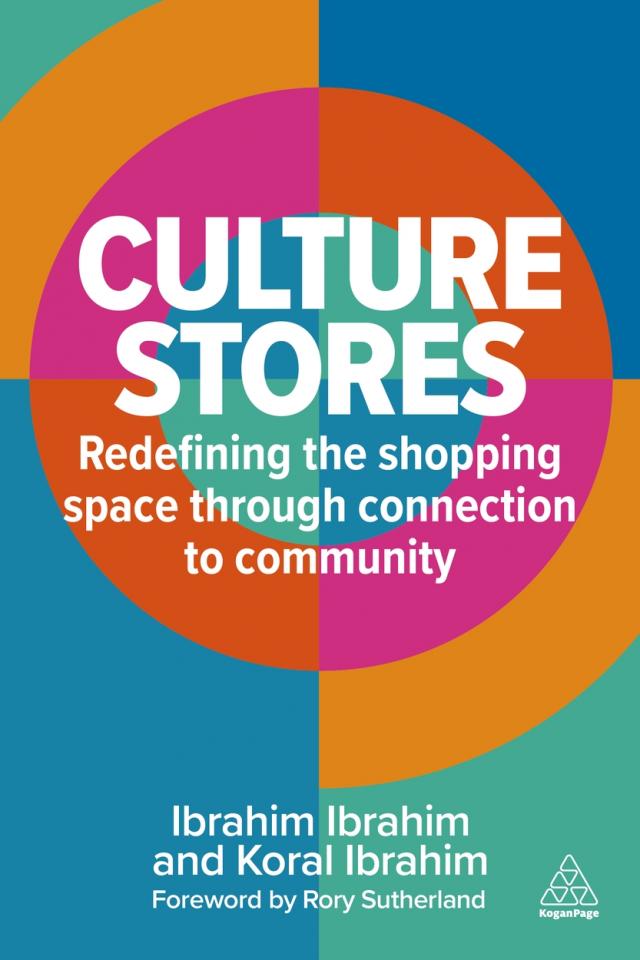
Adrian Tennant: You're listening to IN CLEAR FOCUS, fresh perspectives on marketing and advertising, produced weekly by Bigeye, a strategy-led, full-service creative agency growing brands for clients globally. Hello, I'm your host, Adrian Tennant, Bigeye's Chief Strategy Officer. Thank you for joining us. Historically, retail has fulfilled four fundamental functions, customer discovery, transaction processing, product distribution, and customer retention. With transactions and fulfillment increasingly shifting to digital platforms, brick and mortar stores must redefine their core value proposition. My guests today are both deeply immersed in this shift. Ibrahim Ibrahim is Managing Director of Portland Design, part of the Perkins & Will Global architecture and design firm, and his first book, “Future-Ready Retail,” was published by Kogan Page. Regular listeners may recall that Ibrahim was a guest on this podcast when the book was first published. Ibrahim's son, Koral Ibrahim, is founder and managing director of The Ready House, a creative studio, and co-founder of Forward, a quarterly gathering of the investors, operators, designers, and cultural voices shaping the future of physical space. Ibrahim and Koral have co-authored a new book titled, “Culture Stores: Redefining the Shopping Space through Connection to Community.” They argue the brands will increasingly occupy space to recruit and retain communities rather than to transact with customers. To discuss what that means for marketers, I'm delighted that Ibrahim and Koral are joining us today from London. Ibrahim, welcome back to IN CLEAR FOCUS.
Ibrahim Ibrahim: Thank you, Adrian. Delighted to be back.
Adrian Tennant: And Koral, this is your first time on the podcast, so welcome.
Koral Ibrahim: It is indeed. Thank you so much for having me.
Adrian Tennant: Ibrahim, during your previous appearance on the podcast, we explored how fulfillment models like click-and-collect and ship from store kept physical retail relevant while transaction processing shifted online. In your recent work, you argue that physical locations outperform digital channels at customer acquisition and retention. So how should a retail space be designed when optimized specifically for these primary roles?
Ibrahim Ibrahim: Thank you, Adrian. Yes, and that is the key question, I suppose, because if we are going to rethink physical space, and I deliberately do not call it a store, physical space to perform the function of recruitment and retention, then the occupier, the brand, begins to behave, and that space begins to behave like a media platform. And I'll answer your question very specifically about what changes but all these changes everything. It will change the physicality of the space that design it will change the service proposition you will change the kind of technology it will change its location. I need the master plan of the assets. It will change the kind of people that work in the space and the kind of people that represent the brand. It will change the type of occupier. It will open the opportunity for different types of brown and occupied to occupied physical space. Much, much more importantly than all that, it will change the revenue model and the asset valuation. So it is absolutely tectonic in the shift it will create. The extent of the disruption that is caused will then depend on the proportion of any asset's gross leasable area being a transactional or recruitment space, let's call it. So the proportion of those two in any master plan will determine the extent in which we'll see disruption. So to answer your specific question, yeah, I mean, the space, if it's going to be a recruitment platform, will have to be able to accommodate experiences that drive community, experiences that drive participation, and very importantly, experiences that drive media impressions. Therefore, it's going to be more stage-like. It will be shifting a space of products on shelves for sale to a space for stories on stages to share. A very, very specific shift. It will change technology like lighting and other kinds of technology. It will change the technology to gather data. We're going to have to gather the data and future stores in Oxford Street, which will soon be in New York and Paris, are demonstrating a space for recruitment and the impact that has the kind of large format screens it has as media. It will definitely change the service proposition, i.e. the experience, and therefore, the type of people that represent the brand. So, it will change its connection to the public realm. So, yeah, I mean, it's very, very significant.
Adrian Tennant: Koral, the book draws a distinction between a customer and a fan. What has to be true of a brand before people start behaving like fans rather than buyers?
Koral Ibrahim: Yeah, it's an interesting question because I think there's a lot of confusion within the industry. And I think what the book, and especially what me and dad were provoking when we were speaking about it, is that there's a fundamental difference between a customer, a subscriber, a follower, and a true community member. And what does that look like? and i think we're in an era at the moment probably because investment is linked to the zeitgeist of our community but every single brand and place is leveraging the fact that they have a community and i think there is a confusion of distinction between that role and that type of person and so when we talk about fandom what does that mean in a very simplistic sense it's the people who live and breathe what that brand believes, to a point of where they would almost want to tattoo the brand name on their chest. There is a process, traditionally a branding process, around how you discover what that looks like. It prides itself on three key things. Before that flip needs to happen, before we start treating customers as fans. I think fundamentally, and what the book argues, is around a worldview. I think we're in an era of where brands can no longer stand for nothing. They cannot be in the medium because of the loss of trust in the government, in institutions. Actually, brands now have the emphasis, to state their claim of what they believe and what their view of the world is. I'm not necessarily talking politically here. I'm talking more a case of a passion point, things that really matter to them. I'd say, secondly, a clear kind of people-like-me type view. And I'm definitely not talking about demographics here. And there's a whole section in the book talking about the difference between demographic and what we're coining as a phrase of culture graphic. Culture graphic is almost a cultural understanding of the world of your audience. And I'd much rather understand, as a brand owner, not age, income, and destination, but more personal questions. What do they listen to? What do they believe? What are the things they're engaging with? To understand them on a more emotional level. And these are the people that you then start identifying. This is who we want to join. This is who we want to co-create with, collaborate with, join us in having an impact in where our brand is going. And I think thirdly, it's something to do within the space, not just something to buy. So let's bring it down to now, the physical environment. So if we understand the worldview, if we understand the people that are like us, then actually, “what is the action?” What's the thing? And, as you can probably tell, a large majority of the argument in the book is shifting away from 90-95% of the physical environment being about a POS system, to being about a sales mechanism. It's actually, to my father's previous point, it's actually around this idea of a stage, a performance, content. And I don't necessarily mean content, digital content. I mean content of animation, content of performance, content of education. Whatever that content then becomes. Because if you understand the spine of your brand and what it believes, you understand the culture of your audience and what they'll be engaged with, that will determine that content. That will then determine, okay, this is what would be interesting. And obviously, it's got to link to what the brand's about. It's got to link to what the brand stands for. But that's what we mean about the fundamental shift between a customer and a fan in a more engaged sense across brands, but also how it translates into the physical environment.
Adrian Tennant: Ibrahim, 'Aftershop' is a term you coined for reinventing the store. So what is the new purpose of a physical shop under that model?
Ibrahim Ibrahim: I used the term 'Aftershop' - obviously a play on words of aftershock - because I really do believe it is a shock to the system. I really do believe these are, as I mentioned before, tectonic changes that are reinventing the whole industry, not just the physical spaces. And it means that the industry- the retail industry, the real estate industry, needs and requires new types of people-new type of culture. So that's why I really think it's very far-reaching. But to answer your question, aftershock means a shift from a place of transaction and a relationship that is transactionally based to a place of experience and a place of recruitment. And that means that the type of recruitment purpose is going to be brands focusing on developing this idea of fandom. And the spaces will change dramatically. They will be, as I said, more stage-like. They will be places that will be formulated around participatory experiences that are programmed around themes that I always cool beyond product. This whole idea of Aftershop is where brands go beyond product, beyond what they physically traditionally sold, to addressing “What is the new paradigm”, “What is the new zeitgeist”, and that is the battleground for fans now. is not about product or price or performance or service, it's about values. And therefore, the experiences that are put on the way the brand behaves in these spaces has got to align and resonate with the values of that brand. And so that brand, that retailer, is no longer enough to outperform or outprice or out-innovate your competitors, you’ve got to out-behave them. And that behavior really is what brand is. Now brand is behavior. And I think the complexion and the makeup of the physical space to respond to the idea of 'Aftershop' is about a place of community, a place of participation. I would say potentially also a place of hyper physicality, a place of digital detox. I think in the future. On the one hand, digital detox. And on the other hand a place where that experience is connected to not just to the people in the space but to the wider world in other words the future of off the shop is live and live stream.
Adrian Tennant: Koral, The Ready House worked on The Dolphin in Poole, where digital ethnography shaped the retail mix in the area called Kingland Crescent. What did the audience research surface that a conventional study would likely have missed?
Koral Ibrahim: Yeah, it's a really interesting project and I think it's what made us as a business fall in love with the power of place and I think doubling down on this idea of hyper-localization. Fundamentally, the book is written with an enemy in mind, with a mindset of how traditional industries genuinely operate within these spaces. So cookie cutter experiences, this kind of headlining of the fact that we need independence or we need a certain type of mix use they all stack up on a maybe an investment plan or a deck. What does that mean in this behavior? and so hopping back to what i just said around. How do we find who our fans are and who we're trying to attract? It's grounded within the gaps in their data. Traditionally, especially for a shopping mall, the data that they've got is credit card data, understanding where they're shopping, typical demographic data. It's grounded through a North Star as a vision of what they want to attract. We know that we are not attracting a younger, more early family kind of stage character, more creatively inclined. There was a big shift in the UK during that time when we won the project and when we were building the strategy around because of COVID-19. It was, we call it the ‘DFLs’; the Down From Londons. People were moving out of London to the coasts and relocating for better space, better quality of life. And so there was an exercise that we did for a platform that we built, and we co-created it with a data partner of ours. And the platform's called WayIIN, and it's spelled in I-I-N. Interrogating culture, instigating stories, navigating change. And what we did as a starting point, because I really do have the belief that data is the guide, it's not necessarily the governor. It gives us a really interesting jumping off point to start then being on the ground and testing some of the hypotheses that we can find, rather than that being the only way that we understand what people really believe and what they want. What weighing can do is it took the epicenter of Poole on the south coast, and within this data engine, we have credit card data, census data, review data, and any other single data source that we can buy, get access to, and plug into this engine. And we can do up to a six mile radius scrape of that epicenter. And we can understand people's interests, behaviors, buying power. But the biggest difference is that we understand sentiment. We understand what they're feeling, why they're feeling it, and probably we can start being predictive of when's the next time they're going to feel it. So you can probably imagine the richness of that data when you then start saying, what does that look like as the programming of a place? And I say programming, but also informing leasing strategy, because we're not letting agents, but we can put together a brief for the type of tenant mix that we would need and what that consumer that you're looking to attract with demand. When you then start giving them arbitrary data points and findings, the fact that they love rum, the fact that they love grilled fish, the fact that they engage with the colour orange, the fact that they really enjoy taking care of their plants and this idea of greenery, This is not your typical kind of demographic data that you would then start deciding a lot of the decisions upon. And I don't want to overstate it because that was just one of the inputs amongst a host of other kinds of exercises that we did on the ground as well to understand the pulse of the place. But you can start imagining then when we started thinking about “Who are we outreaching to? What does that then look like?” And interestingly, the landlord did take a bit of a leap of faith here of understanding that we as a creative team need to be part of the curatorial team of the retail. rather than going down a traditional route of understanding that we need to go with a letting agent and just fill the boxes. So it came with almost a brand sensitivity with an idea of hyper localization with an idea that maybe we need a specific mix to attract those types of customers. And the animation, the spill out into the core public realm to help people feel engaged, and also the anecdotal data that we're getting back of that. It actually feels like it's a place that I want to be in. Feels and has so much more importance. Then what does that mean for the shopping mall in the traditional sense? The fact you have an optician, the fact that you then have some F&B offers, the fact that you have a coffee shop is almost a byproduct of why they're then visiting. They're going there for the experience. They're going there for the animation, the events, all of these independents discovering these stories connected with like-minded individuals. And the by-product is what used to be the core strategy of these places. That used to be the core strategy of these shopping malls. So it's a reprioritization of thinking about how we let places, build places, animate places, all through quite arbitrary data findings, which you can probably imagine doesn't land as smoothly as it should do with fund managers, asset managers, who are fundamentally spreadsheet people.
Adrian Tennant: Got it. Yeah, it's fascinating. Let's take a short break. We'll be right back after this message.
Adrian Tennant: Welcome back. I'm talking with Ibrahim Ibrahim and Koral Ibrahim, co-authors of "Culture Stores." Ibrahim, the book sets out third, fourth and fifth places. So what is a fifth place and what makes it different from a shop with an events program?
Ibrahim Ibrahim: I’ll explain what third place is. Place from home is first, work is second. Third place is these places that people meet and eat and drink and shop and gather. And fourth place is, from our point of view, the digital domain. It's a place where people meet completely virtually and digitally. And fifth place is where the physical and the digital converge. But it's not only about that. We see fifth place as sometimes we call it everything store. So it's not just a store, there's retail, there's food, there's a stage, there's a community, it's got entertainment, it's got podcast studios. There's a place, in fact they've got two sites, it's called Mare Street Market. and you go to Mare Street, there's a bar, there's a restaurant, there's a co-working area, there's podcast studios, there's retail, there's service retail, services as I say. It's daytime, nighttime, it's a place you just go and hang out. The digital piece is the podcast piece. We see Fifth Place as maybe where the experiences that are also live streamed. So Fifth Place's audience is not just present physically, but they are digitally present as well. And I think the natural next step of a fifth place type of place is where that live stream content is also what we call content commerce. So it's shoppable remotely. So it's very different to having an events program. Absolutely. It's a very broad term. Fifth place can be a space where it's a kind of media platform. I'm referring to future stores. So just doors is literally a place a brand occupies to put on kind of experiences that are live streams that gather community and again fifth place is about this as well it's about spectacle. It is about really encouraging and pushing media impressions. So there's a whole bunch of things. It's very, very different to a shop with shelves that has a central space for events. It's very different. The starting point of Fifth Place is not a shop. It's not products with shelves. It's a very different thing. But really the core of it is the convergence of physical and digital.
Adrian Tennant: Koral, Capital One Shopping projects that as few as 150 of the United States' roughly 1,150 malls may still be operating by 2032. For an American brand looking at that landscape, where's the opportunity?
Koral Ibrahim: That's a big question. I think it depends on the brand. And a large majority of the work that we're doing at the moment, which is really interesting, is actually with DTC brands starting to explore what physical space now starts becoming for them. There's no point in me going over the benefits and the typical kind of usages of pop-ups, but that is almost the first step into exploring what this space becomes. And it's really interesting. I've been interrogating quite a lot recently, which is “Why do we view pop-ups very different?” We track it very differently from an impact point of view with our customer than we do a traditional lease. And I think there needs to be a leveling up of understanding that actually a lot of these experiential plays, community buy-ins, this almost novelty cultural pop-up experience that is here today and gone tomorrow. That mindset wouldn't go amiss in a more traditional lease. And let's scale it all the way upwards, I think, from a landlord perspective, from the people who own these shopping malls, to reframe actually what the role is there. Of a tenant within my space that isn't necessarily going to be driving just sales, means that we're starting to step on some pretty institutional questions here, right? Because fundamentally, if you've got a revenue-based lease, which is all around driving sales, what is that telling the brand that is entering that space? And the large majority of the work that we do is actually recognizing the power that these brands actually have. If they understand their customer, they understand what they stand for, they understand the fact that they have fans, they are bringing something fundamental to that mall, to the nearby tenants, and embetterment of the place, which I personally believe then creates a more valuable destination for the valuers of that shopping mall. DTC brands major on two things, which is conversion. They think about their funnel, but they also- they think about being social first and sharing their opinion, and translating that to the physical environment. So if I was an American brand and I was DTC, I would strongly, strongly recommend, well, actually, I've got a view of my customer that can add something strategically to this development. And in tandem, start thinking about the placement of where that is. You know, because of the nearby tenants that you're going to be influencing and as a by-product the cohort of all of these brands together is actually going to create the sum of a much better experience for that customer. And then on the flip side, we also have quite traditional brands that we work with. And if I was a traditional American brand looking, “Do I step into this physical mall?” I don't think it's ever going to be as clear-cut, and I think this was part of the debates between me and Dad during writing the book, which is there are still going to be brands, and there are still going to be businesses, should I say, in the simplest sense, who want to stack them high, sell them at a price, and it is a transactional experience. I think we're thinking quite in a utopian world that every single brand is going to have an experience, and I don't think actually the consumer wants that. I think a consumer has a set of brands, a set of principles, and they circle those brands and they keep them closer to them. If that becomes ubiquitous, it becomes quite overwhelming. I think if I was more of a traditional brand, I would start in smaller steps. I would start thinking quite cleverly around your actual physical space. And there was something that we wrote in the book, which is all around the cultural space framework., Where it interrogates everything from the physical environment, the actual physical shell, into the more utilitarian experience of what we're looking for people to actually do there, into the emotional signal. This is often translated through the staff and the behavior of people in and around the space. But then it goes into really interesting territory around the community loop and the cultural amplification. Those five key elements of the future space, I think, is what I would start experimenting with. And it means “What amount of percentage of my square footage can I start experimenting with?” Start maybe having a broadcast studio in the corner for our influencers to come in and start inviting their fans. Whereas actually then the other 80% is still your rails, it's still your merchandising, it's still the sales to mitigate that risk. And with a strategy of understanding how do we start shifting the emphasis. And in tandem, there comes a lot of benefits with that. Maybe smaller dwellings, cheaper rent rolls, and understanding actually this is a shift in strategy to recognize that our physical spaces are maybe not just a big sales mechanism. And maybe we need to start valuing them differently in the brand matrix of what we're dealing with. I think what we're trying to say here is the physical space should be seen with as much integrity as any other brand touchpoint, as the website, as the social media, and we should be treating it as such and valuing it as such. And it means that it should be treated as if it's almost a programmable piece of media, just like you think about your content plan on your Instagram and the next blog you're going to be writing on your website. What's that next behavior, that next thing, that next piece of content that you're going to be thinking about in your physical space? And especially if you look from a macro perspective, we have a loneliness epidemic. We have people really not connected. We have one in three people say they have no close friends. The responsibility lies on these brands to start thinking about their physical spaces in different ways to start creating these connections. So I would actually have a sense of optimism if I was an American brand. Thinking about stepping into the physical environment. I think there's a lot of creative license and leverage that they can have in those conversations, and they shouldn't shy away from it. They should challenge, because the industry, especially from a property angle, is very used to doing things in a run-of-the-mill, typical, safe, valuer protected way. And I think we need to start challenging some of those things and some of those hypotheses because we're not consumer-focused enough. We're not people-focused enough. And that's who is ultimately using our spaces.
Adrian Tennant: Great conversation. If IN CLEAR FOCUS listeners would like to learn more about "Culture Stores" or connect with you both directly, what are the best ways to do so? And I'll start with you, Ibrahim.
Ibrahim Ibrahim: LinkedIn, I'm on LinkedIn, so please drop me a message on LinkedIn. The easiest way of contacting me. First of all, I'd be delighted to understand what people think of the book. I really love getting feedback. And of course, if you buy it on Amazon or anywhere else, put a review in, that would be really good as well. And if you want to get into a conversation, I'm happy to connect with you on LinkedIn and then arrange a call and let's have a conversation. I love talking about this stuff. And the more I talk about it, the more I learn. I'm learning from Koral every single day. I just want to add, for the record, that Koral blew me away during the writing of this book. It's the proudest moment of my life, being able to write a book with my son. It's amazing. And I never knew he had it in him.
Adrian Tennant: Alright! And how can listeners learn more about your work, Koral?
Koral Ibrahim: I feel like I want to share more of a sentimental message now. In very simple terms, LinkedIn, I'm very active. I provocate a lot about these topics on LinkedIn. So if it's not about connecting with me and adding me as a friend, comment on the post because there's lots of different arguments and things that I interrogate there. So yeah, LinkedIn.
Adrian Tennant: Perfect. And just a reminder that IN CLEAR FOCUS listeners receive a 25 percent discount on "Culture Stores", when you purchase directly from KoganPage.com using the promo code BIGEYE25. Ibrahim and Koral, thank you very much for being our guests this week on IN CLEAR FOCUS.
Ibrahim Ibrahim: Thank you, Adrian. It's been a pleasure.
Koral Ibrahim: Thank you very much.
Adrian Tennant: Thanks again to my guests this week, Ibrahim Ibrahim and Koral Ibrahim, co-authors of "Culture Stores: Redefining the Shopping Space Through Connection to Community." As always, you'll find a complete transcript of our conversation with timestamps and links to the resources we discussed on the IN CLEAR FOCUS page at Bigeyeagency.com. Thank you for listening to IN CLEAR FOCUS, produced by Bigeye. I've been your host, Adrian Tennant. Until next week, goodbye.
Timestamps
00:00: Introduction to Community-Driven Retail
00:30: The Evolution of Retail Functions
01:13: Meet the Guests: Ibrahim and Koral Ibrahim
01:58: Redefining Retail: From Transactions to Community
03:04: Designing Spaces for Recruitment and Retention
05:41: The Difference Between Customers and Fans
09:25: Aftershock: Reinventing the Purpose of Physical Shops
12:07: Digital Ethnography and Local Insights
17:18: The Role of Data in Shaping Retail Spaces
18:33: Understanding Fifth Place: Beyond Traditional Retail
21:22: Opportunities for American Brands in a Changing Landscape
26:56: Connecting with Ibrahim and Koral Ibrahim