/
Earned Media and AI Visibility with Brett Farmiloe

IN CLEAR FOCUS: Our guest this week is Brett Farmiloe, CEO of Featured, who explores the link between earned media and AI visibility. Discover why Featured acquired Help A Reporter Out (HARO), how to unlock internal subject matter experts, and why human-written pitches perform three times better than AI-generated ones. Brett explains how public relations drives generative search results and shares practical ways to use AI co-pilots without sacrificing authentic human authority.
Episode Transcript
Adrian Tennant: Coming up in this episode of IN CLEAR FOCUS…
Brett Farmiloe: We’ve analyzed over 1.4 million pitches: one in three that are human-written get accepted; one in ten AI pitches get accepted. If you’re looking at where human judgment sits, if you want to be three times more successful, it’s writing the pitch yourself.
Adrian Tennant: You're listening to IN CLEAR FOCUS, fresh perspectives on marketing and advertising, produced weekly by Bigeye, a strategy-led full-service creative agency growing brands for clients globally. Hello, I'm your host, Adrian Tennant, Bigeye's Chief Strategy Officer. Thank you for joining us. For years, most of our conversations about brand visibility have centered on paid media. But as generative content fills the web, credible human expertise is becoming more valuable to journalists, and increasingly to the artificial intelligence systems that answer questions on behalf of consumers. Brett Farmiloe is the founder and chief executive officer of Featured, a Scottsdale-based platform that connects subject matter experts with journalists and publishers. In April 2025, Featured acquired Help A Reporter Out, or HARO, from Cision and brought it back as a free service for journalists and sources. Within weeks, more than 100,000 people were receiving it daily. In June 2026, Featured relaunched as what Brett calls “the Artificial Intelligence Co-Pilot for Public Relations.” To discuss what a brand revival teaches us about durable authority, why experts inside organizations may be an underused marketing asset, and where AI genuinely helps earned media work, I'm delighted that Brett is joining us today from Scottsdale, Arizona. Brett, welcome to IN CLEAR FOCUS.
Brett Farmiloe: Hey, thanks for having me.
Adrian Tennant: Well, Brett, let's start with Help A Reporter Out, or HARO. It launched back in 2008, was acquired by Cision, rebranded as Connectively, and then shut down entirely in December of 2024. What did you see in that brand at the moment it was switched off?
Brett Farmiloe: Well, HARO has been around for almost two decades. You did a great job consolidating all of that into almost 20 years. You know, HARO is a brand that every journalist and every PR professional has either used or heard of. So when it was announced that it was going to be rebranded into Connectively as a platform, and then when it was ultimately discontinued, there's a lot of brand equity in that and a lot of, frankly, trust that was built up with that. Journalists had turned to HARO for decades when they needed a source for a story, and PR professionals had opened HARO three times a day, every day, for a number of years. And so we thought, “Hey, why not just bring it back?” And we were able to put a deal across and brought it back in April of 2025. And since then, I believe we've sent well over 100 million emails to different subscribers.
Adrian Tennant: Well, as you mentioned, you acquired it. I believe you had the daily newsletter back in inboxes within a week of the deal closing; is that right?
Brett Farmiloe: Yeah, we had a little head start with it. We were behind the scenes making sure that all of the technology was correct because it's a very simple service. It's a three-times-a-day email newsletter that allows sources to reply directly to journalists via email. We had to be able to correct a lot of the things that led to its discontinuation in regards to quality and trust issues, AI slop, and things of that nature because it's such a simple service. We had to build in some safeguards on the back end to make sure that that connection between journalists and sources was authentic and helpful.
Adrian Tennant: What did the response from the community tell you about how much equity was still sitting in that name?
Brett Farmiloe: I think we underestimated it. One of the very first things that I did was just kind of go on a virtual tour, if you will, of talking with different folks. I think in one of the first or second emails, I said, “Hey, it's back, and I'm happy to connect for a Zoom call to think about where we should take it and where to go next.” So I probably had well over a hundred hundred and fifty calls with different subscribers different journalists who had used the service, and this was on a mission to learn and listen, and repeatedly the commonality between all these different conversations was excitement. People literally let out like a cheer in their agency to be like “Oh, HARO is back” and “this is something that we're going to incorporate into our daily routine.” So really, just underestimated how powerful the brand is.
Adrian Tennant: Okay, well, for brand managers listening, what's the lesson about the kind of authority that retains its value even when the company that owns it walks away?
Brett Farmiloe: Yeah, I think, you know, it's such an interesting case study, thinking about the brand and the brand equity that's associated with the name and the attachment that customers have with a certain product. I think that, like, I actually have seen a trend of this, not only just Help A Reporter Out, but, like, Digg came back. Digg was a really popular Web 2.0 tool that went away, and then the original founder brought it back within the last year. I think that there's something to be said with these tools that once had the mind space and were in the workflows of so many people, and then it went away. And I think that bringing it back is something that’s a really interesting trend that’s happening in the space because it was once relied on, it was once trusted, something went haywire, and if you’re able to bring that trust back in a way that shows up in 2026, in this age of AI, I think there’s something to be said with that.
Adrian Tennant: Well, your company, Featured, now works with more than 150,000 experts and over 2,500 publishers. Brett, what are journalists telling you they're short of right now?
Brett Farmiloe: Yeah, if you look at the baseline for content today, AI is incredible at being able to create this baseline content, and the bar has significantly raised over the last four years. What AI can't replicate is the expertise and experience of a human being. They can't make up a story, and if they make it up, then it's not that interesting for a reader. And so journalists always need a source for a story to either validate the claims that they're making in their article, or to add this added value element of a human story that amplifies and brings to life what their story is all about. So the thing that's always in short supply is going to be the expertise and experience so that a journalist can add the authority and trust within their piece.
Adrian Tennant: So you see that as the main gap really that's been left open by artificial intelligence-generated content?
Brett Farmiloe: Definitely. And I think that you're going to see, moving forward, a blended mixture of human and AI within content. I think AI is just getting better in terms of what content can be produced. And I think you're seeing this at local news outlets. Local news deserts that abandoned their publications and now are using AI to monitor municipality reports to figure out what they should be reporting. And they've got a human editor that's doing all these AI transcriptions and that's coming in. And then when they actually have a story that's ready to go, they need a human, they need an expert to be able to insert themselves into that story so that you have this blended mixture. And I think that's kind of the future of what content creation looks like. You're gonna be able to have this really great baseline that's gonna be AI-generated, that's gonna frankly read, really, well for a reader, but you need to go above the baseline to make it exceptional, and there's no substitute for an expert within that story.
Adrian Tennant: Well, Brett, let's talk about what I think you call “the expert economy.” Inside most brands, there are people who have deep category knowledge, yet they never appear in the media. Why does their expertise remain locked up or inaccessible?
Brett Farmiloe: Well, first of all, time. It's really hard to make the time to be available for a journalist all the time, which is why PR agencies exist. They're doing PR nine hours a day, and most people only have maybe 15 minutes a day to do PR for themselves. So I think that time is a significant barrier that AI is now starting to unlock a little bit more. AI is able to essentially monitor all these different requests and alert you when there's a relevant opportunity. So I think that's going to open the doors for a lot more folks to share their knowledge. And in regards to the expertise and the opportunity within organizations, I think that you're seeing a huge shift in terms of customers trusting the people within those organizations and being able to buy from a brand because of a person. And the brand of a company is now being attached to the individuals that represent that brand. So I think that that's a significant thing where if you could give these folks internally a platform to share their expertise, there's a willing audience to accept that both on the readership side and then on the publication and journalist side. And what I mean by that is that most companies will designate a founder, a CEO, to be the thought leader, which is very much the safe play. And I think that you are now seeing more human resource managers, more chief information officers, more CTOs who are talking in depth about a very technical aspect that only they could speak on. And by association of sharing that knowledge, it's an incredible marketing activity for those companies and those brands. So I just did this piece on the Help A Reporter Out blog on “What is PR in 2026?” And I interviewed about 38 different practitioners over the course of a week. It was like a lot of calls to have in a week. And one of the folks that I spoke with was the VP of PR for a mattress company. And so that's a consumer side. They have a press room. And the press room links out to all these different individual profile pages of every thought leader within the organization, and essentially encourages each of those folks to be featured in the media. And they're using these different citations as a way to amplify the brand within LLMs, but also just traditional media. And so I think that you're seeing not only just on the B2B side in terms of thought leaders, but on the B2C side especially, because these citations and these media mentions are helping amplify and getting the brand cited more often, which is now increasing their visibility share within the LLMs.
Adrian Tennant: Well, we'll certainly get to that. I'm curious, what do you think has to change operationally for a marketing or communications team to consistently get its subject matter experts in front of journalists?
Brett Farmiloe: I think that universities do this really, really well. They've got thousands of faculty members that are all very, very qualified and also very, very busy to be able to connect with the journalists for stories, and yet it's incredibly valuable for those faculty to be featured—also valuable for the university. Typically, what I see is you'll have an internal point of contact—the PR person and/or a team—that's monitoring and essentially taking in all of these different opportunities and filtering that. Increasingly, they're using AI more and more often to be able to discover these opportunities and for filtration. From there, they've got probably about 15, 20 different really trusted sources that they're always going to. And then, beyond that, you have the outer layer of faculty that, if it's outside of the core 15, 20, you can go to the outer skirts of that. And that takes a little bit more time to go to the outer skirts, and you might not always have a strong hit rate. But that's what I typically see, is that you're going to have that point of contact owning it. You're going to have your trusted 15, 20—that's right there—and then you're going to have now your outer tier. And I think that scales really well to organizations too.
Adrian Tennant: How does earned media connect to artificial intelligence visibility?
Brett Farmiloe: So there's a lot of studies that are coming out to say earned media is the best way to amplify your AI visibility. What we've seen on our side is a dramatic increase of usage, I would say. So, since bringing Helper Reporter out back, I think that subscribers have increased maybe 50, 56% year over year. But we're seeing, like I said, 100 million emails that we've sent, more than 2 million pitches that have been made, and that's just going up and up and up. And it's because you're seeing this demand for earned media. Because now the question that every brand is asking is: How do we get in Chachapiti? How do we get in Cloud? How do we position our message and amplify our visibility? Oh, well, let's try earned media. And it's working, which is why platforms like ours are seeing some tremendous growth. So I think that that's a good signal to rely on, and then, at the same time, it's changing. You know, I think that every person I speak with is like, the playbook is not in cement at this point; it is very much clay. And they're figuring out what works, what doesn't, doubling down on the stuff that does well—it still works—and then have an open mind for others in the space to figure out what is, in fact, working. But the commonality very much goes back to earned media, and it's earned media because it's a trusted thing. It's hard to manipulate, which is why, for decades, we saw backlinks as kind of the core of search. And earned media is, for better or worse, the trusted authority that LLMs seem to be relying on pretty frequently.
Adrian Tennant: What do you think brand managers should be doing differently?
Brett Farmiloe: I think “differently” is the key word because it is a different environment. So, differently, to me, means not changing what the core of your efforts are—have a solid message—but the spokes of that message have changed dramatically. You know, are we returning back to press releases? Are we having a press room that we're distributing that press release to, and then adding some experts to that to now further amplify that message? And the experts could be doing a LinkedIn post; they could be on a podcast like this; they could be doing a Q&A on a Substack or an AMA on a Reddit thread. There's just so many different things that you could be doing. And I think the differently actually goes back to the research phase of: What is going to work for your brand? What is being cited in LLMs? Doing some reverse engineering to figure out: Should we do a Reddit AMA? Is that actually going to move the needle for our brands, and is that going to be effective? And the difference probably goes back to the audit. The things that I've heard and seen from different PR practitioners is that one mention on a random Paella blog in Spain is worth more than a collection of appearances on the tier-one publications. So it's about auditing, it's about trying, it's about measuring, and then it's rinsing and repeating to see what actually moves the needle.
Adrian Tennant: You mentioned Reddit AMA. For those people who don't know, what is that?
Brett Farmiloe: AMA: Ask Me Anything. So someone shows up in a Reddit community and says, “I'm here, ask me anything about Help A Reporter Out, and I'll be here for the next five hours answering anything that you want to ask me.” And it works because Reddit is a community that will ask the questions that need to be asked and are unapologetic about it, and it forces people to be pretty transparent.
Adrian Tennant: And Reddit is one of those places that it seems like the LLMs like, is that right?
Brett Farmiloe: It varies by LLM. I think that it's been widely reported that Reddit's the most cited site by LLMs. And I follow the money. You know, Reddit has a pretty significant deal with ChatGPT and you're going to see Reddit cited a lot more on ChatGPT than you're going to see on other LLMs. But given that so many people use ChatGPT, that's pretty significant.
Adrian Tennant: Let's take a short break. We'll be right back after this message.
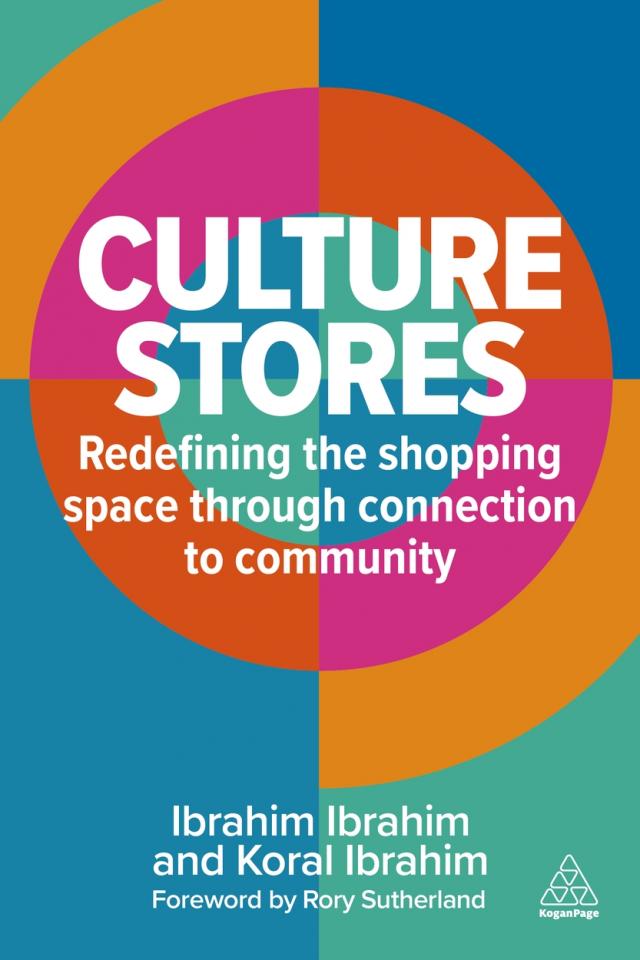 | Adrian Tennant: Each month, in partnership with our friends at Kogan Page, the Bigeye Book Club features interviews with authors who are experts in marketing, consumer research, and customer experience. Our featured selection for September is “Culture Stores: Redefining the Shopping Space Through Connection to Community.” As transactions move online, the book argues that physical stores are becoming places for recruitment and retention, closer to media platforms than shop floors. It sets out an alternative to demographic segmentation, grouping audiences by shared cultural interest instead of age or income. And it asks what a brand should measure, when a space is built for belonging. “Culture Stores” is written by Ibrahim Ibrahim, Managing Director of Portland Design, and Coral Ibrahim, founder of The Ready House. IN CLEAR FOCUS listeners can save 25% when ordering directly from koganpage.com using the exclusive promo code BIGEYE25 at checkout. Shipping is always complimentary for customers in the US and the UK. I'm confident “Culture Stores” will change how you think about the physical spaces your brands occupy. |
Adrian Tennant: Welcome back. I'm talking with Brett Farmiloe, founder and Chief Executive Officer of Featured, about what artificial intelligence changes about earned media work. Well, Brett, in June, you reintroduced Featured as the artificial intelligence co-pilot for public relations. OK, what is it and who is it built for?
Brett Farmiloe: Yeah. So, Featured, Co-Pilot for Public Relations, we help PR practitioners find media opportunities and submit against those opportunities. So the problem that we saw over the last four years of operating Featured as essentially HARO in a platform was that there's not enough opportunities and there's not enough time to submit for those opportunities. And so, when you think about serving hundreds of thousands of different users, all of them have a distinct lane that they want to talk about. And the thing that we learned was, like, what if someone could just show up and type into a chat bot, say, “Hey, find me media opportunities about cooking paella,” and then, all of a sudden, it's, “Okay, you should pitch this podcast that talks about paella, and here's the contact information for the host, and you should reach out to them, and we can help you draft a pitch to them. Here's journalists who have recently written about trends in paella. Here are publications that are openly accepting byline submissions for you to write an article if you want. Here's awards that you should apply for. Here's a call for speakers about paella chefs.” And it's put in all of that into a prioritized lane so that you're able to act on those opportunities to amplify your visibility. So what we learned is that PR is not one thing; it is, like, 48 different things. And we're centralizing all of that within Featured.
Adrian Tennant: Excellent. Okay. Could you walk us through a use case?
Brett Farmiloe: So there's many, many, many different things that you could do within a copilot. A good way to frame this is, like: What can you do on ChatGPT? Or what can you do on Claude? You can do that within public relations on Featured. So, some of the different use cases that we're seeing are super popular on our platform is a GEO audit. Essentially, you wanna see how your brand shows up in LLMs. You could go to Featured, say, “Hey, do a GEO audit on my website,” and it'll essentially say, “Hey, you have visibility for these particular prompts, these ones you don't, and here are the exact opportunities that you should act on to increase your visibility.” That's one that is super popular. Obviously, since we own and operate Help A Reporter Out and Connectively, another popular one is to monitor journalist requests. So we're essentially aggregating all these different journalist requests across all these different platforms. Typically, your PR professional or brand manager is opening three HARO emails a day. They're subscribed to four other different services. They're monitoring Substack. They're on X. They're on LinkedIn—spending, like, five hours trying to find out what journalists are actually talking about. You're able to now aggregate all of that, have an automated workflow that monitors all of that for you, and then be alerted via Slack or email when there is an opportunity. So, many different use cases, but I would say that the GEO audit is particularly relevant for brand managers, as are the journalist requests.
Adrian Tennant: And you just mentioned Connectively. So Connectively has not gone away completely. Where does it live in your stack?
Brett Farmiloe: So Connectively is HARO on a platform, and you can basically go there to search all the different opportunities that are on HARO. With early access to HARO queries, you're able to see all the different publisher requests that are coming through Connectively, since we work with over 2,500 publishers to create content and connect them with experts. So Connectively is a great place if you don't want to open three emails a day and act on it—if you want to just show up on your own time and answer stuff that's relevant to your expertise.
Adrian Tennant: Well, there's a question I have to ask you since we've been talking about artificial intelligence. Where in that workflow you just described does human judgment stay irreplaceable?
Brett Farmiloe: So we've analyzed over 1.4 million pitches against AI detection, and the difference between placements is: 1 in 3 pitches that are human-written get accepted; 1 in 10 AI pitches get accepted. The difference is a 3x success rate. And so, if you're looking at where human judgment sits, if you want to be three times more successful, it's writing the pitch yourself.
Adrian Tennant: That is absolutely fascinating. Before Featured, you built Marketors into an agency that held the number one Google result for digital marketing company for more than four years. What did that experience teach you about earning attention rather than buying it?
Brett Farmiloe: Yeah. So I ran marketers for 10 years. And, like you said, I got the website to rank on page one for the term “digital marketing company.” And then I actually started a digital marketing company. It was just me, and then that happened, and then I was getting calls from all over the world. The thing that it taught me is trust is everything. If you're selling SEO services, you better be good at SEO. And when you are good at SEO, immediately, the trust of the conversation shifts to, “Hey, I already trust you because your experience has proved it.” That helps with everything. That helps with closure. That helps with your brand. And I think that it just goes back to: Trust is the brand. And if folks can trust you, then you can move faster, you can do more things, there's more creativity to be unleashed and unlocked. And so, if you think about where trust resides today, people are trusting these AI-generated summaries. And I think that that's the new game that is being played, for better or worse: to make sure that your message is consistent, that AI is citing you accurately. And so, your job as a brand manager today is to make sure you have a consistent message and to make sure that that message is widely understood.
Adrian Tennant: Your first venture involved driving an RV across the country, interviewing 300 people about their work. I'm curious, Brett, what connects that very early project to what you're building now?
Brett Farmiloe: Yeah, so it was a career education website: 300 interviews, 16,000 miles, 38 states, four months in an RV with four guys. And the thing that connects those couple of road trips from two decades ago to what we're doing today is that everyone has expertise and a story to share. Not everyone has a meaningful outlet to share it, which is why I think that so many people sat down with us for an hour and told us their life stories and told us their life secrets and, you know, expose themselves to four random college kids. And the thing that, yeah, drives me today is being able to amplify those stories—to give anyone an outlet to share their expertise. Because I think that that's one of the most important things that we could do, is unlock the world's knowledge, and these platforms that we're operating allow us to do that.
Adrian Tennant: Great conversation. Brett, if IN CLEAR FOCUS listeners would like to learn more about Featured, subscribe to Help A Reporter Out, or, indeed, connect with you directly, what's the best way to do so?
Brett Farmiloe: You can go to featured.com, and you'll see a little chatbot, and feel free to put anything in there and see what comes back. You could go to helpareporter.com and put in your email address and get three HARO emails a day. You go to connectively.us and test out HARO on a platform, and you can find me on LinkedIn.
Adrian Tennant: Perfect. Brett, thank you very much for being our guest today on IN CLEAR FOCUS.
Brett Farmiloe: Thanks for having me.
Adrian Tennant: Thanks again to my guest this week, Brett Farmiloe, founder and chief executive officer of Featured. As always, you'll find a complete transcript of our conversation with timestamps and links to the resources we discussed on the IN CLEAR FOCUS page at Bigeyeagency.com. Thank you for listening to IN CLEAR FOCUS, produced by Bigeye. I've been your host, Adrian Tennant. Until next week, goodbye.
Timestamps
00:00: Introduction to IN CLEAR FOCUS
00:25: The Shift from Paid Media to Expertise
00:46: Brett Farmiloe and Featured's Journey
02:01: The Return of Help a Reporter Out (HARO)
03:28: Community Response and Brand Equity
05:05: Lessons on Authority and Brand Trust
06:06: Journalists' Needs in the Current Landscape
07:14: The Gap Left by AI in Content Creation
08:10: Unlocking Internal Expertise in Brands
08:28: Barriers to Expert Visibility
10:10: Operational Changes for Marketing Teams
12:43: Earned Media and AI Visibility
14:25: Adapting Strategies for Brand Managers
16:03: Understanding Reddit AMAs
16:57: Break and Book Club Promotion
18:23: Reintroducing Featured as AI Co-Pilot
20:11: Use Cases for Featured's Co-Pilot
21:42: The Role of Connectively in the Workflow
22:29: The Importance of Human Judgment
23:25: Earning Attention vs. Buying It
24:36: Connecting Early Projects to Current Ventures
25:40: Closing Remarks and How to Connect