/
Mobile-First Growth Marketing with Gilad Bechar
IN CLEAR FOCUS: Gilad Bechar, founder and CEO of Moburst, explains why treating mobile as an afterthought costs brands growth. He discusses the shift to a mobile-first strategy, detailing how App Store Optimization outpaces traditional mobile marketing tactics. Gilad also explains why organic users retain at higher rates, how startups serve as testing labs for enterprise brands, and the ways AI is revolutionizing all marketing workflows from initial briefs to final reporting.
Episode Transcript
Adrian Tennant: Coming up in this episode of IN CLEAR FOCUS. Gilad Bechar: If you don't think mobile-first, you're basically doing it wrong. Trying to fit a very, very large screen into a smaller screen. Just trying to play with the resolutions rather than thinking about what the user is expecting to do. How do they actually expect to behave differently in this device? Because it's not the same type of experience.
Adrian Tennant: You're listening to IN CLEAR FOCUS, fresh perspectives on marketing and advertising produced weekly by Bigeye, a strategy-led, full-service creative agency growing brands for clients globally. Hello, I'm your host, Adrian Tennant, Bigeye's Chief Strategy Officer. Thank you for joining us. Sixty percent of global web traffic now comes from mobile devices, yet many brands still treat mobile as a smaller version of desktop: the same creative, the same user journeys, the same assumptions about how people make decisions. Today's guest has spent 12 years proving that a mobile-first approach unlocks growth that traditional strategies miss. Gilad Bechar is the founder and CEO of Moburst, a global mobile-first digital agency that has helped more than 1,000 brands scale through strategy, creative, and performance marketing. Clients include Google, YouTube, Samsung, Uber, and Robinhood. Gilad has also been a mentor at the Microsoft Accelerator and is a regular contributor to Forbes and Entrepreneur magazines on topics including app growth, marketing effectiveness, and digital innovation. To explore what brand marketers need to understand about mobile-first growth strategy, AI-powered marketing, and building sustainable competitive advantage, I'm delighted to have Gilad join us today from Parkland, Florida. Gilad, welcome to IN CLEAR FOCUS.
Gilad Bechar: Thank you very much. I'm happy to be here.
Adrian Tennant: Gilad, you founded Moburst back in 2013 with a very deliberate bet on mobile. At that time, most traditional agencies were treating mobile as just another channel in the mix. So what were you seeing in consumer behavior that convinced you mobile deserved to be the starting point for marketing strategy, not an afterthought?
Gilad Bechar: Yeah, it's a great, great question. I feel like the way that I've seen the market is that most of the digital agencies out there would say, “Yes, we handle mobile as well. It was one of our channels. Yeah, you need mobile for sure. We are doing digital. We are doing offline. Yeah, of course, we were covering you on also on the mobile side.” But the way that they actually transformed that into the mobile section was completely wrong. When you're thinking about creating all of those sites that you need to kind of do those type of things with your fingers to actually scroll up and scroll down and kind of zoom in and zoom out because they took something that worked well on digital space and basically trying to transform it into the mobile side of things. And the resolution is much smaller and the user behavior is touch and not really the same way as you do with the cursor. So they basically just transformed it into the resolution rather than really thinking about, “Okay, it's a new medium, it's a different type of a platform.” And if you don't think mobile first, you're basically doing it wrong because, like starting from the mobile and then increasing it into a full digital, increasing it into a full website or things of that nature, much easier to do. But if you are trying to think, “Hey, I have in these websites 15 different subcategories and now we need to list them all in the mobile side,” you need to continue endlessly scrolling and basically doing it in the wrong path. So I feel like when we kind of took a stab at it and saw how other agencies are performing on mobile, we just felt like this is the wrong approach. They are trying to fit a very, very large screen into a smaller screen that just trying to play with the resolutions rather than thinking about what the user is expecting to do, how do they actually expect to behave differently in this device, because it's not the same type of experience. So we came up with this type of a mobile-first approach and saying, like, “You need to think first about how to actually engage with your customer, how they actually want to be approached, what type of experiences that you can actually do within the mobile device when you actually have the when you actually navigate, you can speak to it, you can treat it in a completely different way rather than just doing what you're doing on the web.”
Adrian Tennant: Well, since founding Moburst, you've worked with over a thousand brands from seed stage startups all the way through to large companies like Google and Samsung. So when a brand comes to you and says, “We need to grow,” what's the first thing you look at to understand where their biggest opportunities are?
Gilad Bechar: So that's a great question. I think that the first thing that we do is trying to audit what are they doing and how the footprint looks like on the digital on every single facet, like how their website looks like, how the paid speed score they're getting from Google looks like, how the colors of Google, and ChatGPT, and Gemini, and Perplexity, and Claude, that are kind of viewing the site, how that present looks like from the bot's side of things. We are also looking on the design patterns. We are looking on the messaging. We are trying to understand, who is their ICP? Who are they going after? What is the main unique selling proposition that they are actually trying to solve for those customers? And then starting to see where are the mismatches. If we get access to their ad accounts. We will also see a lot of the technical side of things about cannibalization opportunities or things that are not really doing in the past possible way. Campaign structure. There are lots of best practices on each and every one of those niches. How they are being perceived on the PR side. How they are being perceived on each and every one of the sides of the business. How the creative is performing. What type of creative are they using? Is it static? Is it GIF? Is it user-generated content? Influencer content? There are so many pieces that you can look on. just from the outside before even getting access to the analytics. And basically saying, “Hey guys, like from what we see from the outside, these are missed opportunities that right now you're just not utilizing or not utilizing well enough.” And the deeper that you get access to, then you can actually see the structure itself and what are the things that are not necessarily following best practices. So there is no like one specific thing that you can just look at, like you need to audit the entire presence. to see what they're doing on social, how they're actually treating Reddit differently than Facebook, differently than LinkedIn. What are they doing? What are the different types of things that they're basically posting? “Oh, they have five social platforms that are just posting exactly the same thing on all five platforms.” And now it's a missed opportunity. Like it's not the right path. So it's not like just a megaphone that you're getting. Like you have different audiences in different places that are expecting to get from you different pieces of information. So this entire thing is being basically judged by our experts on each and every one of those departments, and then basically providing them this type of an audit report where, “Hey, you know, the lowest hanging fruits are here and here and over there.” And that's how we can actually help to start, you know, fixing those challenges.
Adrian Tennant: Got it. Well, at Moburst, you talk a lot about data-driven creativity: the idea that creative teams receive deep data insights about target audiences before they begin ideation. So Gilad, can you walk us through how that actually works in practice?
Gilad Bechar: Yes, for sure. So when we are doing the creative audit and when we are trying to be like creative data-driven on the media side, we want to make sure that every single creative that we do gets a proper test. We get enough sample size to see if it works or it doesn't work. If it works, double down. If it doesn't work, kill it and move to the next idea. It doesn't matter if we love it and if our client likes it. At the end of the day, if the users don't like it, it doesn't perform, we are missing an opportunity. So the main goal here is to try to find the lowest-hanging fruits. The way that we are basically starting that is by looking on competitive landscape of the niche of the biggest competitors, for example, for that client, what are they doing? What are they doubling down on? You have the ability to see every single one of those ads that are running on Google and Meta, for example. And based on analyzing those things, you can actually start from what they're already doing. And if they're as data-driven as us, they're probably not just having it for the sake of having it, they probably optimize it. So if you see there, what type of hooks are they using? What type of pace of things are they using? What type of formats are they actually working with? And then saying, “Okay, do I want to put me in a very different direction because I want to differentiate myself from them? Do I want to follow the path on those specific channels? We see that on TikTok, this trend works really, really well. Let's just, you know, go in the same path rather than in here we want to do something completely different.” So the first glance of it is seeing what happens in that niche, in that specific audience, what your biggest competitors are doing. And then looking on also the brief of what you are trying to achieve, what are the things and how to actually set you apart from them. And that's kind of being formed as kind of the after brief that we are getting after looking on basically everything that happens in the industry in your specific niche to know that you can't be always right, but you want to be less wrong as your first attempts when you're coming up with the creative approach. And you want to test things very fast. If something works, double down. If it doesn't work, basically killing it and move to another direction. So we're always having like a very large batch of creatives initially testing a lot of different assets. Once we see the things that are working better, those are the things that we continue on creating additional hooks in this specific type or additional creative assets that are more similar to the things that work best for us in the ad formats.
Adrian Tennant: I'm sure most people listening are familiar with Search Engine Optimization or SEO. App Store Optimization is something you've called one of the most cost-effective tactics in mobile marketing. So, for brand marketers who may not be as familiar with ASO, what should they understand about how it influences discovery and conversion?
Gilad Bechar: For sure. So app optimization has been around in the last probably 14 or 15 years. So it's not a completely new practice, but app owners usually are aware of it. People that are not necessarily marketing in the App Store are not as much. But basically, the ability of getting indexed for the right keywords and phrases is really key. Just like you do for your website on the web, you're doing exactly the same thing in the App Store and Google Play store. The way that it works is a bit different because you can impact the title, sub-data, show description, description, like all of the metadata that you have when you're injecting a new app to the app store, you need to basically call it in a name. You need to have a description of 4,000 characters, like you have a lot of different fields that you can fill out and a keyword section on iOS and things of that nature. So basically, when you're thinking about all of those fields, it helps the algorithm identify what you are relevant for, what type of keywords and phrases they should actually rank you higher for because you are an exact match for what the users are searching for. So the logic behind it is basically reverse engineering what the users are looking for and making sure that your app stands out on those specific keywords and phrases. And unlike SEO, on the SEO world, it's just about winning those keywords and phrases, like just mentioning them enough time and getting the right links. In the app store optimization side, you also need to convert those users because they will find you in the app store, they will scroll through your screenshots or through your preview video or icon. And then they will make a decision to tap on the download button, on the get button. So you also need to convert those users. Unlike in the website, if you just managed to get ranked really highly on Google, you're getting them to the website. And then again, they're already in your world. In the app store, it's still in the app store world. Like you don't control the environment. You're just showing the screenshots of the asset that you have to display there. So how do we convert them there to take action to download? And then you'll be able to get them to your world where you control the entire experience within the app. So that's kind of the importance of apps optimization. It can unlock massive, massive growth. On the organic side, you don't want to pay for every single click. You want to be notified and kind of being established well in the apps on Google Play Store. So you'll get all of those organic downloads for people that are searching for those search terms that have exactly your need and then being able to be recommended by the algorithm of the apps on Google Play Store.
Adrian Tennant: Got it. Well, following up on that, you've also said that organic users are seventy percent more likely to remain active two months after installation than those users acquired through paid media. Gilad, what does that insight mean for how marketers should be balancing their acquisition budgets?
Gilad Bechar: It's a wonderful question. I feel like most of the brands out there just throw a lot on user acquisition. They're just putting ads on Facebook, Google, Snapchat, Pinterest, Quora, Ad Networks, RTBs, exchanges, all of those platforms. And the organic side is usually being pretty neglected. Like, okay, we'll play a bit with the title, with subtitles, some more keywords and things of that nature. But basically, when you're looking on the trends, the users that have the intent and coming to the app store to search for a specific need and they find you, they stay much more active. Again, that's just reality. You look on the retention metrics, you look at the lifetime value of the users. It's a completely different thing compared to paid, where you're barging into someone, scrolling on their meta ad and then saying, “Hey, you know what? In Instagram, this is a cool ad. I'll tap on it. Yeah, I'll give it a shot, but I don't need that. I didn't look for that.” It seems like a good opportunity. And you see that in the numbers. It's not like something that anyone can basically argue with. And based on that, if you're doing the right type of optimization on the App Store, you can just get so much more value. So just for example, in the US, you have around 40 to 50 million Spanish speakers. If you're only optimizing the US for English speakers, you're missing out on a great potential of optimizing the same assets also in Spanish. And if you have them also in Spanish and someone is coming from a device that is set up in Spanish because that's their tongue language, then it means that they will be able to find you much easier. If they're finding you much easier and they have that very high intent and you just have done the extra mile of localizing it, now they find you much easier. And because of that, you just get all of those users into your product rather than your biggest competitor that has done that process while you didn't. I feel like the opportunity of doing the localizations, not just the translation side of it, like actually thinking about what's important for those users to see. If you're thinking about the local elements for different countries, for example, it's another thing that can help you to unlock so much more potential. Users that are from Japan, for example, will probably want to see users, if you're showing on the screenshots, how users are using the device and you're only showing their white people, for example, and you're not showing Japanese people on those shots, it doesn't feel as culturally fitting to them. The same thing goes if you're showing any scenic things on the background and you're only showing, you know, the Statue of Liberty, for example, rather than showing things that are much more local in Japan or in France or in all of those other areas. Basically, you're just saying to those users, this is more of an American product rather than a local product for you. So doing that extra mile and actually localize that for each and every one of the countries, each and every one of those localizations, yes, it's some headache, it's some more work, but the value that you can actually exhaust out of that is probably the biggest ROI that you can have for a global app. If you're only supporting users in the US, again, at least do the extra mile of feeding it also to the Spanish speakers and not just for the English speakers out there. It just unleashes so much more potential and getting you a much better return of investment compared to any other channel on user acquisition.
Adrian Tennant: Let's take a short break. We'll be right back after this message.
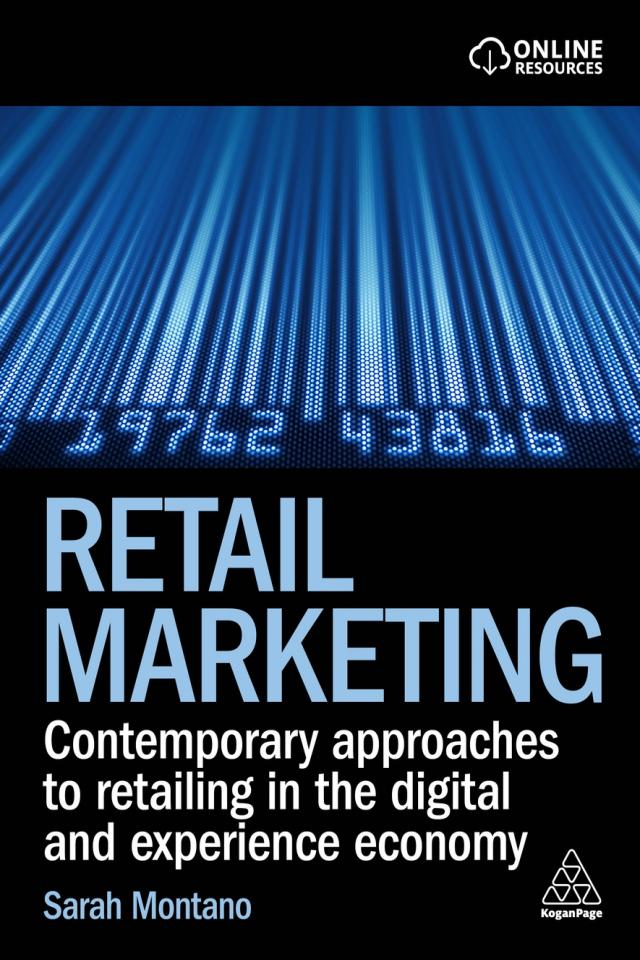
Sarah Montano: Hello, I'm Sarah Montano, author of Retail Marketing: Contemporary Approaches to Retailing in the Digital and Experience Economy, published by Kogan Page.
Drawing on my experience as an academic of over 20 years, a former retail professional, and a media commentator, I cover issues that impact contemporary retail practice, including how physical and digital retail are merging into digital experiences, what drives customer behavior and loyalty, aligning your brand with consumer values around ethics and sustainability, and the technologies transforming how people shop.
The book includes links to online resources, real-world case studies, and practical frameworks you can apply immediately, whether you're a student exploring retail for the first time or a retailer developing a go-to-market strategy, optimizing customer experience, or simply staying ahead of retail trends.
As an IN CLEAR FOCUS listener, you can save 25% on Retail Marketing when you order directly from KoganPage.com. Just enter the exclusive promo code BIGEYE25 at checkout. Shipping is always complimentary for customers in the US and the UK. I hope the insights and frameworks in my book help you create stronger retail strategies and develop deeper customer connections.
Adrian Tennant: Welcome back. I'm talking with Gilad Bechar, founder and CEO of Moburst, about mobile-first growth marketing. Gilad, I'd love to talk a little bit about Moburst, and in particular, how you've grown your agency. One of the strategies you've talked about is using startups as a testing lab, running high volumes of A/B tests with fast-moving clients, and then applying those patterns to enterprise brands. Can you share an example of a pattern you've discovered that way?
Gilad Bechar: Yeah, for sure. So when you're working with an enterprise client, the cycles take a long, long, long time. Like I can have a new set of even screenshots for the app store that are approved by a very big enterprise client. And we need 13 decision makers of stamps of approval to get something live. And that can be a process of three and a half months. When you're thinking about working with a startup, and I'm giving them a new set of assets today, they're implementing them in the app store tomorrow, within a week or two weeks we have enough data to know this is going in the right direction, or let's kill that and move to another direction. So the pace of creating things and testing things and learning from different features and testing new features, new sets of capabilities, in-app events, for example, in the App Store or Google Play Store. When you're thinking about the ability to be ranked for additional things and basically getting more featured by the algorithms, you have a lot of new features that are coming off every single week by meta ads, by TikTok ads, by so many different platforms of new things that are now available that weren't there before. And now if you are taking an innovative approach, saying let's test it out, if it works, again, double down. If it doesn't, we need to kind of stay away from it. When I'm presenting an idea like that for an enterprise client, a lot of times it takes them two and a half weeks to just think about the opportunity and evaluate the threats and weaknesses and like if it's good for them or not. And only then to re-approve another budget for testing of that specific tool can take another three or four weeks. While for a startup, they're already live with that for five weeks and they're seeing fantastic results. So what we found is that when we are working with our core by Moburst, which is our startup division, we work much faster than any other teams. We test things in a much higher velocity. Some of those tests failing. Some of those tests are, you know, the best performers for the next two years. And the goal is to be able to test some of those things much faster than others. Even startups, you have ones that are much more, wait a minute, let's have other people test it before. And you have a startup saying like, Do whatever you need to win. If no one else is using this, it's a new feature from yesterday, let's be the first one to actually test it worldwide. Let's have it live. How fast can you actually go on that train? Because it's probably not as crowded as all of the other things out there. And sometimes you see phenomenal results. Sometimes it collapses. It's not a silver bullet, but it is something that taking those learnings and then showing some of those case studies to the enterprise and then to and say, hey, we saw four of our clients working phenomenally with this feature. Now it's much safer for you to come in in the same type of a way. So I feel like a lot of times the startups are much bolder and much more forgiving in the approach of saying, yeah, we know that we are testing things. We are breaking things fast. If it works, obviously we are putting more money behind it. If it's not, it's okay. Like it's part of the game. And enterprises kind of need a much more risk averse approach and making sure that they are going in the right path because they can't afford to tell their boss that they actually wasted money in an inefficient way.
Adrian Tennant: Well, when we were preparing for this conversation, you drew a parallel between the mobile marketing boom of the 2010s and today's AI revolution. Moburst recently appointed its first VP of AI, and I believe you've designated AI Champions across every department. So, Gilad, what are the most meaningful ways AI is actually changing how you do marketing today, beyond the hype?
Gilad Bechar: Ah, wow. I think that AI is basically revolutionizing every single service offering that we have today. So when we started with mobile marketing, we started with like five services. Today, we are a full digital suite of services. We have 29 services. So when you think about the type of offerings and what we are doing on the SEO and digital and NPR and podcast, and you have so many different departments, and I feel like the AI injection was through each and every organization, each and every sub-organization within the teams to rethink about if we were creating the agency today, would we be still approaching the same asset in the same way? The fact that we've spent 50 hours to create this type of an asset three years ago doesn't mean that that's the right approach to do that today. And when you are rethinking about every single process, we know what are the best practices. We know what works and what doesn't work. Like, I feel like that part is our sweet spot. But how you're actually creating those assets and what is the process and protocols and workflow to create that asset is very, very different. And when we appointed the VP AI and they have four team members underneath them, and then on top of that, you have 16 AI champions within the organization. So I have like 22 people that are touching AI every single day. to rethink every single one of those service offerings. What is the fastest way of doing something? And it's from the simplest things. It's like from getting on a call with a client, for example, and having there a note taker. And on that note taker, breaking it down to action items. And those action items automatically assigned all of the internal teams in Asana what the creative needs to do, what the media needs to do, what the organic team needs to do. based on what was on the conversation with the client. And they pick up what is our SLAs, what is the service time that it actually takes us to create it from our SLA document and puts that as what is the time that you need to actually produce that asset. And if you have anything urgent, it marks it as an urgent request and actually asks from the team lead to actually approve that new timeframe because it's something that is out of the norm, but it is something that was requested by the client. And now each and every one of those team members have the full documentation about what do they need to do? What was the conversation with the client? What are the unique things that they actually need to do? And it's like from the simplest things like that of saving the time of actually recording every single one of those chats and giving the brief now for every single one of those teams. So from the simplest things like that to a workflow that creates automatically creatives for our clients based on the best performing ads on the media side, compared to creating weekly reports, for example, that instead of exporting now from every single ad channel, what worked, what didn't work, getting all of that infused into an AI workflow, creating that into a spreadsheet, creating all of the graphs automatically, using that, injecting it into the Google Slides, giving the takes for what the media manager needs to go through, and that being presented as the report on top of a live dashboard that exports all of those things in real time and ingests that into the client hands. Like, that's the level of innovation that you can bring today in a matter of days, not weeks, not months, not years of development. So when you're rethinking about every single step of your marketing stack, when you're rethinking about what is scale with the AI power in your hand, when you're thinking about what's doable, when you think about competitive analysis, instead of doing it quarterly, we do that in a tap of a button, and it exports everything that happens in all of the ad accounts, and it just analyzes 5,000 assets that are currently live and tells you the best performing trends, This is something that will take three or four days to do that manually. So all of those things are being injected into like rethinking a digital marketing, rethinking how to actually produce the best possible growth for our clients. And that's something that is not like a small subset of one team that is using this type of an engine. It's like rethinking every single one of the assets before you're sharing something with the client. Take that deck. Run it by ChatGPT and Gemini, get the score from one to 100, tell it it's objective and let the AI butcher you for what the client might actually look like in this specific asset. Because if you haven't done it, you haven't done your homework right. And rethinking AI is like basically rethinking about how to actually judge myself and the value that I bring to my clients every single day.
Adrian Tennant: Well, you've emphasized the importance of understanding behavioral economics, and you've credited books like "Nudge" as foundational to your thinking. So, Gilad, how do you apply B.E. principles to mobile-first growth marketing?
Gilad Bechar: Yeah, so basically, with the way that we are looking at that, we always try to nudge the user into the action that we want them to take. So if you're thinking about the button, where it's like how comfortable it is to actually find that on the screen, when you're thinking about the likelihood of them diving very deep against the likelihood of them saying, “Hey, I want in two taps, find whatever that I was looking for and get the answer that I was looking to get.” So when we are trying to nudge them to take action, it could be about how clickable that button is, how easy it is to tap on different things, how easy it is to swipe between different categories or alternatives, for example. Everything related with how we are actually providing them the data in front of them, providing them the gallery, the view, the case studies, whatever they're searching for, in the easiest possible way. Not giving you too much that's going to be mind-blowing and saying like, “Okay, that's too much for me.” Not giving you too little where you feel like it's too dull. Finding the right balance between what is the thing that they're looking for, how easy it is that I can actually show them. They're basically now doing the due diligence about you to see that you're legit. So how can I actually show what? Should I show the 500 brands that I work with in the past two years? Should I actually focus on two massive case studies of specific brands that maybe are not as well known, but that will be ideal for that specific customer. Because if they're only seeing case studies of Fortune 500 companies, they feel like, “Hey, maybe they can’t support those smaller guys like me.” So trying to reverse-engineer what the user might look for And based on that, what type of information we need to present on them on whatever type of a screen, whether it's the mobile side, whether it's the desktop side, and basically providing them the things that they're looking for in the least amount of friction. And I feel like "Nudge" is definitely built around getting you into those different habits, just based on how you're designing the workflow around you, the environment around you. And I loved a lot of the case studies there and they use it a lot in inspiration when you're thinking about even product design and like thinking about, “Okay, should I actually give the user a free trial? Should I actually give them the ability to use that for the first time and basically allowing them to see everything within the product without needing to sign in and only then locking that out when they are trying to take action, or do I want to first thing, hey, sign in, and you don't know what it is that you're signing into, but you now need to start filling out all of those fields and things of that nature.” So you need to kind of reverse-engineer what the user is looking for, how fast can you actually deliver that value, and where is the right time to actually ask, hey, you know what, I gave you the value, now pay for that service.
Adrian Tennant: Great conversation. Gilad, if IN CLEAR FOCUS listeners would like to learn more about Moburst's approach to mobile first growth or connect with you directly, what's the best way to do so?
Gilad Bechar: Amazing. So the easiest way is probably the website www.Moburst.com or just finding me on LinkedIn, Gilad Beshar on LinkedIn, and I'll be happy to help with whatever I can.
Adrian Tennant: Gilad, thank you very much for being our guest this week on IN CLEAR FOCUS. Gilad Bechar: Amazing, thank you very much for having me.
Adrian Tennant: Thanks again to my guest this week, Gilad Bechar, founder and CEO of Moburst. As always, you'll find a complete transcript of our conversation with timestamps and links to the resources we discussed on the IN CLEAR FOCUS page at Bigeyeagency.com. Just select ‘Insights’ from the menu. Thank you for listening to IN CLEAR FOCUS, produced by Bigeye. I've been your host, Adrian Tennant. Until next week, goodbye.
Timestamps
00:00: Introduction to Mobile-First Marketing
02:00: The Importance of a Mobile-First Approach
04:30: Identifying Growth Opportunities for Brands
06:50: Data-Driven Creativity in Marketing
09:20: Understanding App Store Optimization (ASO)
12:00: Balancing Acquisition Budgets: Organic vs. Paid Users
15:10: Using Startups as Testing Labs for Marketing Strategies
20:00: The Impact of AI on Marketing Practices
24:30: Applying Behavioral Economics to Mobile Marketing
27:30: Conclusion and How to Connect with Moburst