/
Retail Marketing with Sarah Montano
IN CLEAR FOCUS: Guest Professor Sarah Montano discusses her new book, "Retail Marketing: Contemporary Approaches to Retailing in the Digital and Experience Economy." Sarah explains why brands must master "phygital" experiences and third place community building to survive. She explores the impact of the cost-of-living crisis, ethical consumption challenges, and success stories like Jellycat. Learn how to navigate the digital and experience economy while maintaining authentic human connections.
Episode Transcript
Adrian Tennant: Coming up in this episode of IN CLEAR FOCUS. Sarah Montano: It's really difficult to be a customer today. There are so many decisions that you have to make, there's so much information coming from brands, and there's so many different ways that, in inverted commas, you can be ethical.
Adrian Tennant: You're listening to IN CLEAR FOCUS, fresh perspectives on marketing and advertising produced weekly by Bigeye, a strategy-led, full-service creative agency growing brands for clients globally. Hello, I'm your host, Adrian Tennant, Bigeye's Chief Strategy Officer. Thank you for joining us. For consumer product marketers and brand managers, understanding contemporary retail is essential. Even if your product reaches consumers through distributors, the retail environment is where your brand promise meets reality, where customer experience is ultimately delivered, and where purchase decisions are made. Our guest today is perfectly positioned to help navigate this complex landscape. Professor Sarah Montano is a retail marketing expert at the University of Birmingham's Business School, where she's Professor of Retail Marketing and the Director of Education. Before transitioning to academia over two decades ago, Sarah worked in retail at the senior management level, giving her a unique perspective that combines practical industry experience with rigorous academic research. Sarah is also a media commentator and she regularly appears on BBC Radio channels to help everyday consumers understand what's happening in the retail space, from price fluctuations to the future of the high street. In 2023, she was awarded a National Teaching Fellowship from Advance HE for her work in teaching design, leadership, and digital learning innovation. In 2025, she was subsequently awarded the Principal Fellowship of the HEA. Sarah's debut book, published by Kogan Page, is “Retail Marketing: Contemporary Approaches to Retailing in the Digital and Experience Economy.” This comprehensive textbook balances contemporary retail theory with real-world industry practice, featuring case studies from successful retailers and exploring everything from store design to omni-channel strategy. To discuss the forces reshaping retail, how technology is transforming customer experience, and what marketers need to know about the evolving retail landscape, I'm delighted that Sarah is joining us today from Birmingham in the UK. Sarah, welcome to IN CLEAR FOCUS.
Sarah Montano: Thank you very much for having me. I'm absolutely delighted to be here.
Adrian Tennant: Well, Sarah, what inspired you to write "Retail Marketing"?
Sarah Montano: I think every academic always feels like they have a book inside them, and it's something that they want to write. And I was really honored to be working with Kogan Page on this. And I think retail is so important to society. And sometimes in a lot of the kind of media discussions and narratives around shopping and behaviors and different types of products and trends, that importance to society gets lost. This was an honor and a great opportunity to be able to really tell a retail story from my point of view.
Adrian Tennant: Well, your book does emphasize the ways in which retail touches all of our lives. Now, for marketers and brand managers who sell through distributors rather than directly to consumers, why is it still important to understand retail marketing?
Sarah Montano: So it's really important. If you're selling something to an end user, you've got to know how that person is thinking, how they're behaving, what type of trends they're buying into. Because actually, if you can't connect with that customer, if you can't understand that customer mindset, then you could have the most incredible brand, you could have the most incredible product in the world. But if you can't actually connect with that customer, you're not really going to be selling a lot of this potentially great product. And of course, it does depend where your product is then sold. But if your product is sold in store, again, that's another experience that a manufacturer or distributor really needs to understand. So, you know, when a customer is looking at their shelf, what's actually going through their mind? What are they thinking? But those products aren't sold in isolation either. There's a huge number of competitors around. So again, when that customer's at the shelf, what other brands are they looking at? What other type of packaging? What type of messages are they seeing? Do they deliberate on this product or actually do they go straight to a competitor? So it's really understanding that customer that's absolutely key. Adrian Tennant: Sarah, you've structured your book around 10 chapters that move from retail's history to its future. Why did you think it was important to start with that historical context?
Sarah Montano: Yeah, so it's a little bit unusual, I think, for a textbook to actually start off from history. Normally, when you open a textbook, you will obviously start with the kind of like basics of the area that you're talking about, and obviously, we do that in the book as well, but I really wanted to explain how have we got here? So we are at a point in Western society where consumption is actually central. It's central to all of our lives. Even people who make decisions to not be engaged in consumption, have made an active decision to not actually engage. I really wanted to kind of explore from what we call this watershed date of 1850, how have we got this modern retail picture? Why do our cities look like they do? Why do we have these giant things called shopping malls? What even is a department store? How did a department store actually come into being? And I thought actually understanding how we've got here and why we engage with retail in the way that we do was quite important to really set that foundation. I think also as a society we should always look to history, and so my background as well as a social scientist. That's why I have this very clear view of the role and the importance of retail in society. I think that we need to look at history. We need to see what's happened in history. We need to understand that for our future. And if we don't understand our history, to me, it means we put that future in a certain bit of danger. And one of the questions I'm often asked is, “Why did a retailer go out of business?” Actually, this retailer looks great. It's doing lots of things. It's perhaps a low-cost retailer. We talk a lot about the cost of living at the moment. But actually, we've seen a number of low-cost retailers go out of business. They're not looking to history. History shows us that retailers need to understand changing customers and changing customer needs. So I felt it was really important to get that historical context to understand where we are, and then we could move o,n and we could look at what's happening in the contemporary picture as well.
Adrian Tennant: Well, moving from history to bring us bang up to date, one of the contemporary issues you explore is what you call “phygital” retail. That's the merging of physical and digital experiences. What does phygital retail mean in practice?
Sarah Montano: Yeah, so it's a great word, isn't it? Phygital. So we've got the physical and the digital. So now, when customers are in-store, they're using some form of digitalization to either help them shop or to engage with the brand. and this can really range from something that might just be quite simple, so if you're looking for maybe the size of a jumper, maybe you're in store, they haven't got your size, you actually pop onto the retailer's website or their app and you have a look if they've got that actual size and you might then order that in a click and collect basis. Or actually, there can be digital activities that can be much more technologically advanced. So that might be doing things like augmented reality, of course, or virtual reality. We've even started to see things like robotics in store. So, you know, there's some huge technological advances. So there is that range. Really the key for retailers is how are you improving and making that customer experience better? So one of the things that we see is, particularly if you're in a very large place like a shopping mall, is things like you can use the app and that actually helps you navigate your way all around so you don't get lost or go in many different directions as I have done on a frequent basis in some of the really large shopping malls.
Adrian Tennant: And I'll just do a little British English to American English translation. The word “jumper” in the UK is what we know in the US as a sweater. Okay. Now, as you mentioned, customer experience is central to modern retail strategy. Sarah, what are some of the ways in which retailers are creating meaningful experiences that go beyond just transactions?
Sarah Montano: So, this was one of my favorite chapters to write because a lot of my work really looks at customer experience, and this is key to retail success today. So, because we do have the option to shop online and you can order virtually anything that you want, and therefore it's merely a click away, retailers have really had to think quite carefully. What's the purpose of the retail place today? What does it actually look like? And how do we get customers in to a store when they can just pop online and get something relatively easily? And this is what we're really seeing is the rise of the experience. And that's something that's more personally meaningful to customers. Now, experiences can be, again, a bit like technology. They can range from the kind of like very mundane to sort of like the great and the spectacular. And you're not going to necessarily have a spectacular experience every single day. But we talk about the moments economy, and we talk about the feelings economy. So this is about really creating those emotional connections between the customer and the retailer, but also allowing customers to get connections between themselves as well. So for example, you know, what we do see in brands like Tiffany & Co, they have a Tiffany Bluebird Cafe. So you can quite literally now have your breakfast at Tiffany's. So why have Tiffany's done that? Well, It's unlikely that you're probably going to be buying diamonds every single week, you know, so quite an expensive purchase there. But you can have an afternoon tea, you can have coffee, you can go for lunch. Actually, you could do that many times a year. So you're offering customers another way to engage with the brand, but also a way for customers to be able to create connections between themselves. You create this ability for them to be able to socialize and get together. and in our technological world that is becoming so important.
Adrian Tennant: Well you do emphasize retail's role in creating what you call “community third places.” Can you explain what this means?
Sarah Montano: So a third place, so it's not home, and it's not work, it's somewhere in between, and really, these third places are quite literally the life of our communities. Now, one of the things that we've been seeing as we've talked about the aforementioned digitalisation actually is things like self-service checkouts. You know, it used to be that you'd go to your supermarket, you'd talk to a cashier, “Hi, you having a nice day?” “Yeah, thanks,” “Goodbye.” But you'd actually have a human-to-human interaction. With the rise of things like self-service checkouts, we're actually starting to lose those human-to-human connections. And so these third places and the role that retail plays in third places, in my point of view, is becoming much more important. So third places are all about how you can get people together, you can create communities. These are places where people know who you are. Now whether that's the bookshop who know what type of authors you like reading or you have a conversation about your favourite books or it's, you know, your nail tech who knows who you are and if you're having a good day or if you're having a kind of bad day or it's, you know, the barista who knows your coffee order. These third places are where we build our communities. It's where we are able to quite literally be human. And there is such a rising concern now around the impact of things like social media on mental health, on well-being, that actually I think these types of places are becoming now so much more important. Retail is facing a really difficult time at the moment. We can see that because we can see empty units in, you know, key shopping districts across the world. So, you know, really it is difficult for retail, but if we lose these areas and if we lose these spaces, A, there will be a profound impact on society, but also they're going to be incredibly difficult to get back.
Adrian Tennant: Let's take a short break. We'll be right back after this message.
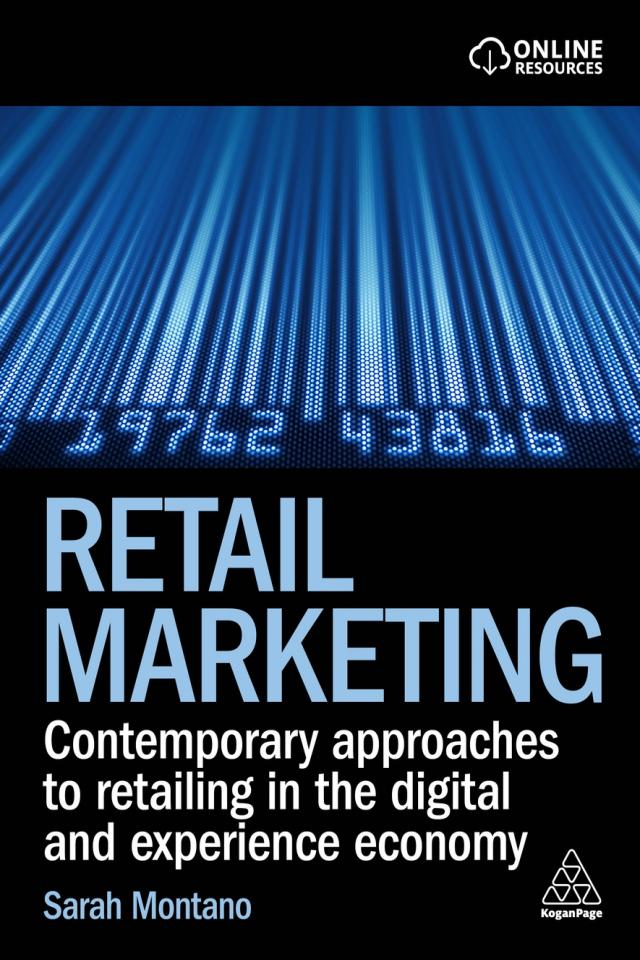
Adrian Tennant: Welcome back. I'm talking with Professor Sarah Montano, author of the Bigeye Book Club selection for February, “Retail Marketing.” In your book, you discuss topics that are increasingly important to consumers, namely ethical retailing and sustainability. Sarah, what kinds of ethical decisions are customers wrestling with as they shop?
Sarah Montano: So many. So many decisions. It's really difficult to be a customer today. There's so many decisions that you have to make. There's so much information coming from brands. And there's so many different ways that, in inverted commas, you can be ethical. So customers are urged to buy local or buy fair trade or buy organic. There's also a lot of discussion around, at the moment, ultra-processed foods or UPFs, as they tend to be known. So, if you're a busy parent, you're in the supermarket, you know, your child's decided that this week they don't eat pasta, whereas they really loved it yesterday. It's so difficult to actually make these decisions, and that's when brands really need to have clarity of communication. and information. And often as well, price is a prime determinant. Actually, if you are quite affluent, you can, you know, opt for what might be perceived to be more ethical products easier. So organic products tend to be much more expensive. If you want to buy things that are perhaps from a smaller artisan brand with more sustainable fabrics, again, they tend to be much more expensive. So, actually being a customer today, it is a real challenge when we're talking about ethical decision-making. And of course, lots of people often, you know, want to make these decisions. But as I said, actually, cost is a primary indicator of around that. And also time as well. Like I say, if you're in the supermarket and your child's decided they're not even eating pasta today, you probably haven't got the luxury of time to actually identify something that's more sustainable. So brands have a really key role to play here.
Adrian Tennant: You're a media commentator and regular contributor to BBC Radio, passionate about helping the average customer understand what's happening in the retail space. Sarah, what are some of the retail trends or changes that you've found confuse consumers the most?
Sarah Montano: I think there's been really two critical issues that we've spent a lot of time talking around and the first one has been the cost of living. So people have been in supermarkets and they were in the supermarket the last week and their product cost let's say 50p and today it's costing a pound so things have been significantly increasing and we have seen this really across the board and that's been the real difficulty is if one product goes up in price you can say, “Okay, well that's okay, I won't buy that product” or “Actually, I'll have a different brand, I'll have a substitute product.” What we've seen this time is we've seen such significant price rises we've seen such significant levels of inflation, but we've seen that across everything. And also we've seen it on quite basic products as well. So things like, you know, butter, cheese, bread, things like that, actually products that would be very, very difficult to substitute or actually manage without. So I'd say that's been a real seismic issue. And I think also the loss of brands as well. So again, post-COVID, particularly in the UK, but actually across the world, we've really seen the loss of some much-loved brands. In 2024, which is when we have the latest data, in the UK, we lost an average of 37 shops. That's just per day. That's per day. So, you know, we're seeing these significant exits of these brands. And I think sometimes, you know, as an average customer, it's quite hard to understand why. And you say, “O, well, I really like that brand.” But then sometimes I do ask and go, “Well, when was the last time you were in that shop?” And someone goes like, “Oh, two years ago.” Right. There's your answer. And, you know, we can love places, we can love brands as much as we want. But, you know, at the end of the day, retailers are a business. They do need to make a profit. And if they are not profitable, then they do go into administration. And then obviously, ultimately, they may collapse and then we don't see that brand again.
Adrian Tennant: Throughout “Retail Marketing,” you include case studies and industry examples. Can you share one success story that particularly illustrates an effective contemporary retail strategy?
Sarah Montano: When I was writing the case studies, when I was picking the industry examples, I tried to pick anything that was maybe something that people perhaps hadn't thought about before to kind of really illustrate contemporary practice and to maybe highlight some different types of activities that are going on. I think Jellycat was a great one to write about. So for anyone who doesn't know, these are really kind of like quite cute little squishable toys which actually aren't particularly aimed at children but actually are aimed more at what we call these kind of like kidults: so adults who collect these types of toys and they've been really successful from an experiential point of view where they've opened these types of outlets where you can go and you can have a jellycat experience. So they had a fish and chips one which was in London. Harrods have just opened one which is the Jellycat sort of airline experience. there's sort of like the inside of a plane there and they've got like a luggage carousel and the security machines and things like that and there's a supermarket one. There's various different types across the world but I think that really shows the importance of not just having a product which is highly desired, this product is very highly desired, But also it's about creating that retail experience that really excites and engages customers. And if anyone looks on TikTok, you can just see the great engagement that there is with Jellycat. And if I'm allowed to maybe squeeze in a couple more very quickly. I think Bridgerton is a great example. So obviously that's a TV show and I think many people might think, “Oh well, that's a TV show. That's not related to retail.” But actually that's a really great example of something which is a huge zeitgeist trend but has translated very much into retail. You've got Bridgerton experiences, you've got loads of different Bridgerton products. The other one was EL&N Cafes, which are known as the most Instagrammable cafes, where they really focus on what their products look like. And I think an honourable mention must go for the woman of 2025, which would be Taylor Swift. Talking about Swiftonomics and again, you know, why people have been so keen to spend. But again, you know, how that Eras Tour, it wasn't just about going to a tour, it actually created a whole experience and community around that as well. Adrian Tennant: Sarah, your book covers merchandising, supply chains, and omni-channel strategy, topics that are critical but often invisible to consumers. How do these operational elements impact the customer experience?
Sarah Montano: So these are absolutely integral for the customer experience. So they are behind the scenes, but the most fundamental answer to that is that if there isn't an efficient supply chain, then that results in out-of-stocks. And therefore, the customer can't get their products. Of course, the retailers can't sell them, which means that potentially the customer goes elsewhere, or they, of course, buy a different product as well. So it is really important, and I think particularly if you're a student of retail and perhaps haven't really looked at retail from an operational point of view before, I think it's quite important to understand how these different operational activities all need to be working harmoniously in order to create that experience. So it's not just what the customer sees in the shop, it's the infrastructure behind that that's important. And of course, from a merchandise point of view, it's how, as a retailer, do you think about the presentation of those products to your customers? What does that optimal mix actually look like?
Adrian Tennant: Well, relatedly, technology is transforming retail rapidly. What technological innovations are you most excited about for the future of retail?
Sarah Montano: So I think for me personally, it's anything that's going to come in store that's going to help me find something to fit. And I'm sure probably many people will share this experience that you go to one store and you try on your size and it doesn't fit and maybe it's too big and then you go to the next store and you try on the same size and it's too small and you're constantly trying on different items. Or even in the same store, you can have two pairs of trousers the same size, slightly different style, and they're not remotely the same size when you actually try them on. So for me, retailers can get anything where they can really identify and get me a product that's going to fit straight away. I think that would be really helpful. I think really, if we think more perhaps across the sector, I think it's anything really that's going to help improve that shopping experience. So whether that's identifying straight away whether your product is in store, getting rid of the pain points that we often have in retail, so things like queuing, things like that. But I would have a slight note of caution against technology, and as we were talking about community places, but actually really thinking around the importance of human connections and how we want to make sure that we are able to preserve human connections. And it is very interesting in the sector at the moment that whilst we are seeing increasing technology, what we are seeing customers really seeking out is actually something which doesn't necessarily have technology in it. So we're seeing like really significant increases in things like crafting and things like that. So, you know, like sewing, knitting, crochet, those sorts of things, because they actually don't have technology involved. So technology is fantastic. I'm hugely grateful to technology, particularly of technology in the home that saves us time, technology at work, which again, you know, speeds up everything that we can do. But we should remember the importance of being quite simply just being human.
Adrian Tennant: Now, for marketers looking to stay current with retail trends and consumer behavior, in addition to your book, of course, what resources or practices would you recommend?
Sarah Montano: The retail trade press I think is the best information that there is out there. I read various different retail press information several times a day. I have various alerts that are set up that ping in, and I think for anyone who wants to get a really good understanding of what's happening in the sector, those are certainly the best ones because then you get the latest news and the latest happenings.
Adrian Tennant: Now, as someone who leads digital education initiatives, how do you see online learning transforming marketing and retail education?
Sarah Montano: It's hugely transformed it already and it will only transform everything again in the future. I've been working in digital education for well over a decade now, and for me, technology has always been a partner. So, it's not a replacement for teaching, it's not a replacement for academics, but it's very much about a partner. Some of the content that I can create now really helps facilitate learning, so like this podcast. The students will be able to hear. I regularly create different types of podcasts, I create animations, things like that that really help explain key concepts in quite a different way because I'm a big believer that learning doesn't just happen in a classroom, learning does happen actually all the time and all around us. And of course, we can do things quicker. So, you know, students no longer have to sit in libraries, combing through books, trying to find one article, obviously via online they can do that so much quicker. But I think for me what is now important for academics and for students is making sure that there is that development of the so-called human skills. So that's things like creativity, critical thinking, analysis, communication. With AI, that's only going to be more important. And that's something that, you know, again, it really has the kind of like human element. And I think alongside that, it's the ability to be able to create authentic assessments So, that to me is so important in something like retail, which isn't just theoretical, it is something that actually happens, it is practical. So, the ability for technology to be able to help us create assessments that actually replicate the workplace, I think is hugely important and that's really important for students as well. so that when they graduate they've got something that they can showcase and they can talk to future employees about because again that graduate market is becoming increasingly competitive and in some ways it's a contracted market as well.
Adrian Tennant: Great conversation. Sarah, if listeners would like to learn more about you, your work, or of course your book, “Retail Marketing: Contemporary Approaches to Retailing in the Digital and Experienced Economy,” what's the best way of doing so?
Sarah Montano: Well, you can always contact me via LinkedIn, or people can contact me via the University of Birmingham as well via my email address. And I'm always happy to hear and talk to anybody, whether it's retailers or students. I think, hopefully, it comes across. I do really like retail. It's so important to me. And as I've mentioned, it's so important to Sosomity. So yeah, I'd be really delighted to hear from everybody.
Adrian Tennant: And a reminder that IN CLEAR FOCUS listeners can save 25% on "Retail Marketing" when you order directly from KoganPage.com using the promo code Bigeye25 at checkout. Sarah, thank you very much for being our guest this week on IN CLEAR FOCUS.
Sarah Montano: Thank you so much, and thank you very much for having me.
Adrian Tennant: Thanks again to my guest this week, Professor Sarah Montano, author of "Retail Marketing." As always, you'll find a complete transcript of our conversation with timestamps and links to the resources we discussed on the IN CLEAR FOCUS page at Bigeyeagency.com. Just select ‘Insights’ from the menu. Thank you for listening to IN CLEAR FOCUS, produced by Bigeye. I've been your host, Adrian Tennant. Until next week, goodbye.
TIMESTAMPS
00:00: Introduction to the Episode
00:21: Welcome to IN CLEAR FOCUS
00:42: The Importance of Understanding Retail
01:03: Introducing Professor Sarah Montano
02:12: Inspiration Behind the Book
03:36: Understanding Retail Marketing for Distributors
05:06: Historical Context in Retail
07:40: "Phygital" Retail Explained
09:45: Creating Meaningful Customer Experiences
12:00: The Role of Community Third Places
14:20: “Retail Marketing” Book Promo
15:48: Ethical Retailing and Consumer Decisions
16:12: Confusing Retail Trends for Consumers
20:34: Success Stories in Retail Strategy
23:29: Operational Elements Impacting Customer Experience
25:05: Technological Innovations in Retail
27:22: Resources for Marketers
28:10: Transforming Education through Online Learning
30:42: Connecting with Sarah Montano
31:35: Closing Remarks