/
The Future of Agency Leadership with Chantal Sagnes
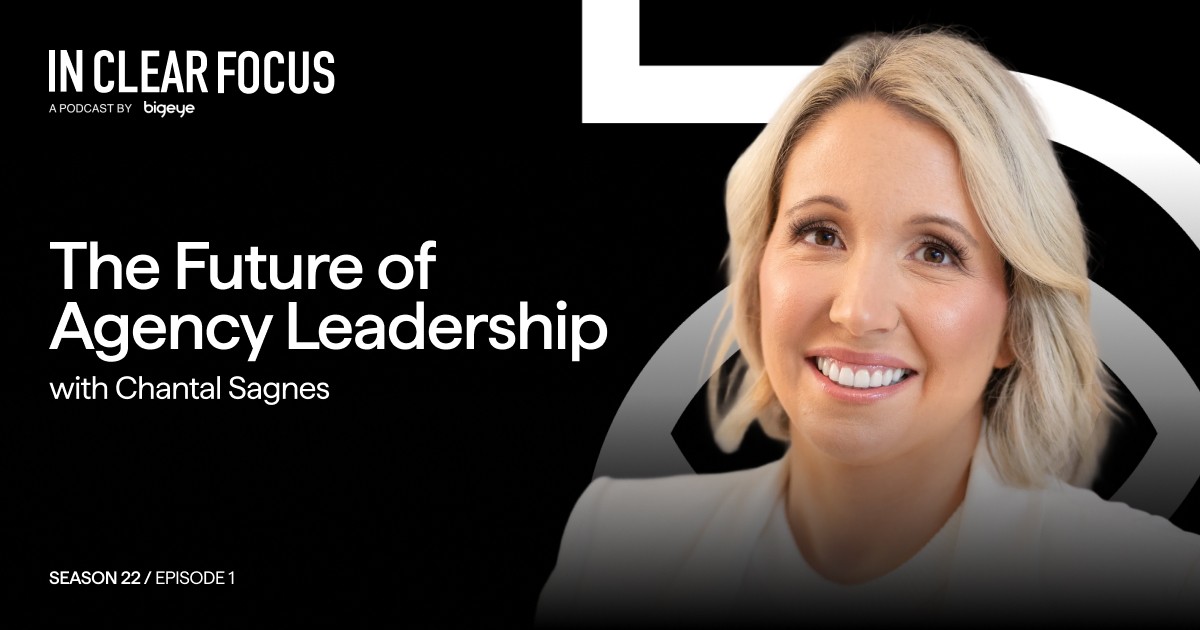
IN CLEAR FOCUS: Strategic advertising executive Chantal Sagnes discusses the future of advertising and marketing agency leadership and her career spanning top agencies like GSD&M. She shares insights on transitioning from independent shops to global holding companies, the nuances of running high-stakes pitches, and her current role as a fractional Managing Director. Chantal also explores the "pitch crew" model and offers advice for aspiring leaders navigating the evolving industry.
Episode Transcript
Adrian Tennant: Coming up in this episode of IN CLEAR FOCUS.
Chantal Sagnes: I never want to be a leader that what I call is up in the clouds, just looking from afar, looking down at everything they've built. You know, for me, once you get to that level, you've stopped becoming a true leader because you're kind of too far removed.
Adrian Tennant: You're listening to IN CLEAR FOCUS, fresh perspectives on marketing and advertising produced weekly by Bigeye, a strategy-led, full-service creative agency, growing brands for clients globally. Hello, I'm your host, Adrian Tennant, Bigeye's Chief Strategy Officer. Thank you for joining us. The advertising agency model is evolving faster than ever. Major networks are consolidating, new agencies are launching daily, and an emerging class of senior talent is choosing flexibility over traditional full-time roles. At the same time, brands are demanding partners who can navigate complexity, whether that means launching disruptive products in unfamiliar markets or assembling world-class pitch teams on short notice. Today's guest has operated at every level of this ecosystem. Chantal Sagnes is a strategic advertising executive whose career spans both agency and brand side leadership. As VP, Group Account Director at GSD&M, she was recognized as one of Omnicom's top 50 high performers nationwide in 2024, leading new business pitches and managing national accounts across healthcare, hospitality, retail, and food and beverage. Before that, Chantal served as Head of Brand Marketing at Aion Bank, where she helped launch Belgium's first subscription-based digital bank. Today, Chantal operates as a fractional managing director and is a member of We Are The Board, providing strategic leadership to agencies navigating growth, transformation, and high-stakes pitches. To discuss the evolving agency landscape and what it takes to lead in uncertain times, I'm delighted that Chantal is joining us today from Austin, Texas. Chantal, welcome to IN CLEAR FOCUS.
Chantal Sagnes: Thank you for having me. Happy to be here.
Adrian Tennant: Well, Chantal, your career has taken you from entertainment PR in New York to an MBA in France to leadership roles across multiple agencies. What initially drew you to advertising?
Chantal Sagnes: I mean, I think most careers start by a mix of kind of want and good luck. And so I would say that I did my MBA in terms of looking for something new. I was looking for something different with a little bit more business acumen than the world of entertainment was filled with actors, glamour, but maybe not exactly the business side I was looking for. So, I did my MBA, and advertising was the luck piece, where a friend of mine was working at a strategy and innovation consultancy called co:collective in New York, and there just so happened to be an opening for a social strategist, which I am not, nor I have no idea how that made sense for my profile. But I always say "Once you're in, just get into the place that you want to be, and you can grow from there." And that's what I did from social strategy to saying, "Actually, I think I'm an account person," and then was able to do that.
Adrian Tennant: Well, at co:collective, you led the Infiniti account, and then helped build out their new business department. What did that experience teach you about pitching and winning work?
Chantal Sagnes: Well, it was interesting because when they approached me saying, "Could you actually do something different than being an account person? Could you actually help us build a new business department?" It was sort of like when I had started in social strategy, like, "Wait, I'm not supposed to be here. Am I supposed to be somewhere else?" And, you know, it was two previous co-presidents of JWT that had come over and started this startup at the time. And when you have a Rolodex like that, the door keeps opening. It's, you know, an incoming call business, until it's not, right? So at about year five, they looked at themselves and said, "We need to kind of work on a pipeline and do all the things that we didn't really have to do." And that's when I was able to step in and work on that. And that was something that I had never done before. And so I had to kind of teach myself a bit about pitching and winning work, starting with, "Okay, what is a credentials document? OK, we have this document. And it's saying some things about who we are." And you try it out. And you see that the client asked this or that question, or it was too long, or it was too condensed, or it wasn't compelling enough. "How can we do it better next time and the next time and the next time? And what do we need to set up in our new business department to be a functioning team, right?" To one: be able to hire into that. Two: be able to set the systems for something that was non-existent. And then three: once you start having a win or two, be it a small project, "Let's go for a bigger one." Be it a bigger project, "let's go for an AOR" and see kind of what is working and getting that feedback at the end of the pitch. "Why did you choose us? What could we have done better?" And that will help you craft that narrative. And I think what it taught me about pitching and winning work was, you know, that you have to keep going. You're not going to win them all, but every opportunity is a chance to get better and to learn and to be curious about why you did or did not and to craft that differently for the next time.
Adrian Tennant: Well, you later joined GSD&M, part of the Omnicom network, after years working at independent agencies. Chantal, I'm curious, what was the most significant adjustment moving from indie agency culture to a global holding company?
Chantal Sagnes: I think there were a few adjustments in that shift. I think the first is that, you know, I'm the type of person that likes to break things and make new things. And when you get into a system where you have a ton of resources at your disposal, which is kind of the pro, but the con is that these resources, these systems, these processes are so built in to the kind of operating system that is the holding company, you kind of feel like you're constantly wanting to break things because you're coming from a culture where you're able to say, "Hey, I have an idea!" And someone at the top could listen and the next day you could start to implement that. It's not at that same pace, right? I don't think it's ever going to be. As nimble or bespoke of a team as a holding company can purport to have as part of a pitch process, you're still going to have certain checks and balances that are unavoidable, right? And there's a boss's boss and a boss's boss's boss! And you can cut through those layers much faster at an indie shop. So I think the speed is something different. And I think that I was constantly coming up against, "Hey, what if we did this differently? And what about this? And what about that?" And sometimes that panned out. And sometimes there's just a wall that you can't go through. And it's hard, right? Because I always think, "Well, there has to be a way."
Adrian Tennant: Let's talk about your client-side experience. Now, in 2020, that was a year, you joined a bank in Belgium to help launch what became the country's first subscription-based digital bank. Can you explain the business model and how you helped?
Chantal Sagnes: Yeah, I mean, it is a really interesting place to launch anything, especially in the banking sector, because Belgium is one of the most regulated when it comes to financial services. They have also a lot of really established players, like a BNP Paribas, for example, that have been there forever that, sure, they have a mobile app. But they are not inherently digital first. But you're playing against the big guys, right? And you're coming out with an app and you're saying, "Instead of bringing cash to deposit at an ATM, we're not going to do any of that. We're going to have more of the Tesla showroom model, right? Where you can come and you can talk to sort of our experienced designers that are going to help you craft your financial journey, but you're not going to have any exchange of money, any deposits," any of the typical things that one thinks of when they show up to a bank. So, that's kind of step one of a different model. The other piece of it is that really, you know, everything is happening in the app, right, whether it is B2B or B2C, or we were serving small to medium enterprises and also just your average consumer. But you have to think about Belgium as a place where you've got so many different cultures and languages that every single thing that you launch has to take that all into consideration. So you might be doing one campaign for one market, but it's really split into four. It's just unlike any other country or any other launch that I've worked on in terms of the complexity. So you have to think of that in mind. But the business model was different. And I think one of the exciting things that we were able to do was, at least for me, coming from the agency side, I know the CMO at the time was looking for a right hand that had agency experience and specifically in the US. He was American. We had investors from Warburg Pincus out of London, and it was being run by previous folks out of Poland that were high up in different banks there. And they all came together to create this. And so one of the first things we did was think about what's our go-to-market strategy? And of course, you have that all laid out, and then the pandemic hits, and then you go, "Wait. We're going to hire up a team. We're not going to meet anybody." And I think to this day, we hired up maybe a team of 16 and ended up meeting about one of them, you know, throughout this entire journey in person. And so there's a few complexities with that. You know, multiple languages, multiple cultural identities. And that obviously shaped our marketing approach. When we set out to shift that go-to-market strategy, we looked to launch a pitch. And this was the first time that I was able to sit on the other side of the table and be running the pitch from within the brand. And doing that allowed me to kind of act as almost a pitch consultant, as this right hand to the CMO, which was interesting. We ultimately chose TBWA Novoco out of Amsterdam. And we had a crazy idea, which I say "we," because I do think you have to partner with your agency, as I always preach that from agency side. But as a client, I wanted to hold up my end and really work with them. And what we did was we burned fake money, obviously, but burning money on television in Belgium was something that was a bit unheard of. When we approached the CMO with the idea, it's like, "Wait, we're going to get pulled off air. Like, we just scrapped our whole go-to-market plan. Now you have this new crazy plan, and we're going to be on TV burning money." I'm like, "Yes, because that's literally the whole idea of what we're trying to do with this new banking model, right? We want you as the consumer to stop burning your money and to choose us without all of these additional fees, you know, no hidden fees, everything is super transparent and easy and right there on your phone. How better can we show that than by doing it on such a big stage and burning literal money?" So, everybody took the leap of faith. We didn't get pulled off air for some crazy reason. We did have a 'plan B,' but we didn't have to use it. And it was a lovely experience to be able to be on the other side of the table.
Adrian Tennant: What did that experience running an agency pitch from the client side teach you about what brands really want from their agency partners?
Chantal Sagnes: You know, it's interesting because I think you get to see through things in a different way when you've been on the agency side pitching and then the table is turned and you're evaluating different agencies, right? You can see through, did this team really have the chemistry that we need or did they just meet each other, you know, 20 minutes before they walked into the room? Does the team really understand our business and the ambition that we have for such an innovative product in such a regulated market and country? And how are they showing us that? Are they just talking about their capabilities and what they can bring to the table with a them mindset versus an us together mindset and really putting themselves in the shoes of a marketing director on our side? That's where I think you see the creatives that are really digging into the strategy, the strategists that are digging into the actual business, not just the brand and the account people that are thinking more like marketing managers than as an account manager.
Adrian Tennant: Right. Let's take a short break. We'll be right back after this message.
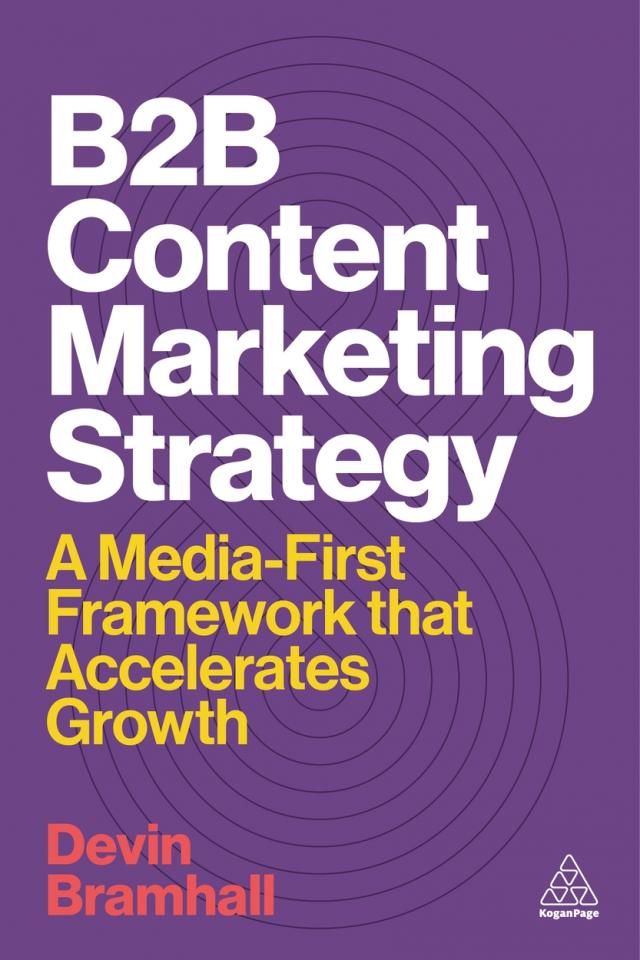
Devin Bramhall: Hi, I'm Devin Bramhall, author of B2B Content Marketing Strategy: A Media-First Framework That Accelerates Growth, published by Kogan Page.
If you've ever felt like your content marketing creates a lot of activity but very little real business impact, this book is for you. I wrote it to help mid-career marketers move beyond outdated playbooks and build human-centered strategies that actually drive growth.
Drawing on my experience as former CEO of Animalz, where I worked with brands like Google, Amazon, Slack, and Ramp, and real-world case studies from companies such as Cisco, HelpScout, and Nubatic, I share modern marketing frameworks that combine community-building with AI and multimedia-based tactics to create growth strategies that deliver a true competitive advantage.
As an IN CLEAR FOCUS listener, you can save 25% on B2B Content Marketing Strategy when you order directly from KoganPage.com. Just enter the exclusive promo code BIGEYE25 at checkout. Shipping is always complimentary for customers in the US and the UK. I hope my book helps you create content strategies that build real connections and drive measurable results. Thank you!
Adrian Tennant: Welcome back. Welcome back. I'm speaking with Chantal Sagnes, a fractional managing director who helps advertising agencies navigate growth, transformation, and high-stakes new business pitches. After returning to the US and your time at GSD&M, you made another transition, this time to fractional leadership. Chantal, what prompted that decision?
Chantal Sagnes: I think I had always had the bug to try freelance or what many are calling 'fractional' now as more of a full-time gig, but never quite found the time to be the right moment to do that. At the time at GSD&M, I was working on multiple projects, which for some, they might be worried about the instability of that, right? What happens when the project is over if you're not able to turn that project into another project? If all your projects end at the same time, what might happen? We live in a world where layoffs are plenty and advertising, it can be unforgiving. When a business goes, a lot of the people, even if they're talented and amazing, go with it. I was looking down, trying to think a year ahead and saying, "What's going to happen at the end of these projects? I do have confidence that we can probably build them, but do I want to do that or do I want to end up on a retainer piece of business that I might stick with for many years?" as many do, you know, at traditional holding companies. If you have a large AOR, they've trusted you, and you're known to be, you know, an agency that has had great tenure, which is wonderful, but it is for a certain type of account director that wants that. I've always been more of a hunter and thinking about what is that next thing, be it for the business I'm on or the business I could be on, participating in another pitch or whatnot. So I've always just had that yearning to do many things for many brands at the same time. I never knew when that moment was right and being put on a few projects at that time, I could see, "It's October now, if I put in my notice now in April, those projects will be done. They can choose to keep me on and maintain these projects until their end, but they could also say, 'thank you so much, but we can't do freelance,'" which could have been a thing, right? In holding companies, it's tough sometimes to unlock that freelance budget. I'm thankful that they did keep me on through April, which gave me, you know, the runway to think, "Okay, starting January in that next year, where do I want to be? And what is this business going to look like once those projects go away for me to make this sustainable?" And, you know, at that time, I was part of a group of, I want to say, it might have been about 50 of us as part of Omnicom that were identified as these high-performance leaders. I was thankful to be part of that and to go through certain trainings and to hear certain people speak. But I also sat in that chair and wondered, "Is this chair for me? Is there somebody else potentially more deserving that wants, that aspires to stay at this company, at this agency, or on a certain piece of business for an extended period of time? And should they not go through this instead?" And so I had to give up my spot in that. And I made some recommendations to who might take that, thinking about the other account directors or budding account directors that maybe would be more deserving, as I felt like it was my time to leave the nest.
Adrian Tennant: Well, you now work as a fractional managing director, as a member of We Are The Board. Now, for listeners unfamiliar with the fractional model, can you explain how it works?
Chantal Sagnes: The fractional model, I think, really can vary depending on the brand or the agency. I do think it is newer for agencies to hire, let's say, a fractional managing director or a fractional head of growth or a fractional account director or whatnot. We are used to the world of agencies looking at freelance as something to pitch hit when there is a need that cannot be met by the current bandwidth of the people that are working at that agency at any given time, right? A new pitch comes in. "We don't have everybody we need to get after it. Who's an amazing creative we could bring on? Let's see if we can win. Great. We'll pay a day rate. We'll pay a project fee. They'll be in. They'll be out. And we'll see what happens if we win the business." This is kind of the old way of thinking, in my view, right? You can have someone now, fractionally, call it 25% of their time. advising you at a higher level on anything, right? My day could be one day sourcing talent, the next day putting out a client fire, the next day pitching a piece of business, looking at your credentials, working with account directors to mentor them and bring them up as part of their current pieces of business and how we can look at organic growth. I just love the umbrella that what I'm calling the fractional managing director provides, that every day can be different. And if you have those varied skill sets, like for me, coming from account management and new business and having been a managing director, those three kind of come together in the superpower of, yes, at 25%, I can help grow your business. And you don't need to have the weight of hiring a managing director at 100% of the time, because that might not be necessary or sustainable for where you can go financially or what you need. And so I love the idea of being able to sprinkle that knowledge and advice and learn from these different agencies, too. There's a new agency that's popping up every day, and they all have their own business models, different ways of working, whether they're remote, whether they're global, whether they're hybrid. So it's a lot of learning on both sides. And in terms of We Are the Board, this was a community founded by April Uchitel, really to bring those of us that are now operating in our silos in a fractional capacity with different agencies or brands, together because it can be a lonely ride, right? If you're working technically by yourself, yes, you're working with different agencies, but you are managing your own time. In any given day, I could be talking to three to five different agencies, and you're jumping from one thing to the next. You don't really have that time to value, share, knowledge transfer with others. Or if you have a question like, "Hey, I'm looking at this kind of a project that's coming my way. Have you ever dealt with something like this? Here's a roadblock I'm facing." Who do we ask, right? Well, we go to the board Slack or we go to our community events in person or online. And so it's lovely to have a team without a team being dedicated 100% at any given place.
Adrian Tennant: The Omnicom-IPG merger has created the world's largest ad holding company and, as a result, some renowned agency names like DDB Worldwide, FCB and MullenLowe will disappear. Chantal, does this moment present new opportunities for independent agencies, do you think?
Chantal Sagnes: It absolutely does. It is kind of the craziest, biggest thing that I don't want to say that no one saw coming because I think we all did in some way. Did I ever think that DDB, FCB and MullenLowe would disappear? Probably not, actually. So it's a crazy time in our industry right now. And I think, you know, we've seen the slow creep over the past, call it five years of you know, heads of agencies spinning out under a holding company and going and forming their own smaller shops. And that, you know, has become, I don't want to say commonplace, but it's become more known and has started to happen more and more. But now what we're seeing, for me, the biggest new opportunity that it presents is really that anyone can play on any stage. I recently worked with a small digital shop to win a pitch for branding work, really a big brand campaign that they never would have thought to go after, but they absolutely had the capabilities in them to do so. And giving them that confidence of being able to play and being able to win and take that business away from kind of one of the more traditional shops is such a lovely feeling to go, we're an unknown, and that doesn't matter because the work is speaking for itself right now. And you're choosing the team and the work versus the name, the office, and the pitch theater. So the model has shifted where it's anyone's game. And you're also seeing new agencies like Murder Hornet, for example, being very open about different models and ways of working, right? They have, I think they call it the Nest, which is their kind of core folks that are on full time, and the Swarm, which is kind of this bigger freelance roster that they go out to. And they're hyper transparent about that. So a client now knows not everybody's 100% in the building or even in a building, but they're working together and bringing the best. together. And the other one I've seen that I really admire is X and O. They're not even telling you on the website. You're not even seeing a face, a bio. You're just seeing a blank silhouette with where they used to be, what they bring to the table. And they are bringing these bespoke teams together and beating out large agencies on really interesting work. And so it just shows that it's anyone's game. You can do this. And that is what I love. I get excited about being a fractional managing director because any day we can go out on any stage and we have a chance. And giving these agency founders that chance is so rewarding.
Adrian Tennant: You've talked about assembling pitch teams from external resources, essentially building a team of specialists who may never have actually worked together before. Chantal, how do you make that work?
Chantal Sagnes: You know, I call it the pitch crew or the pit crew. It's kind of a play on words on Formula One, right? When you have the car that comes in to pit, you have to go quickly and everybody has to work together. And they might not have had a lot of time to get together, but one wrong move from one, you know, you're only kind of as strong as your weakest link. So they all come in and in three seconds or less, you're out of there and you're back on the track. So for me, this pitch crew model is something that I work with agencies to implement for when their teams are at capacity, but an exciting brief comes in, an exciting opportunity comes in, and they don't want to miss out. So I go in, I assemble, I lead this kind of pit crew or pitch crew that really gives you kind of the best shot at winning. And I think the way that you get everybody to work together, even when they've potentially never met, definitely don't have them meet five minutes before the pitch. That's not going to make for good chemistry. You need to assemble them, even if you have a short time. I've done this where we have a week. and we're on with the clients in five business days. Spend some time not talking about the work, truly getting to know each other, even if that's for 15 minutes on one day, but you're not talking about work at all. Get everybody together to understand each other, where they've come from, so that they can sort of have that shorthand start to be built. And then I think aligning people towards that common goal that we're here to win, here's what we've got from the agency, here's what we're supplementing. Because you're kind of quarterbacking at that point, and you've got certain plays that you're going to go, but everybody needs to know what plays you could possibly pull out at that moment, at the pitch. And so I think just getting great people together that have done great work in their past lives that you feel, like I feel, that the chemistry would be natural from them, getting them together early so that they can have kind of a shorthand and an understanding of each other as people, not just as people doing the work. and then getting everybody together working, even if it's remotely, we have to be in sync doing that together leading up to the pitch time. And so it should feel really seamless. And when it works well, the client should not be able to tell one from the next. And I don't think it matters anymore for clients with all of these new models and the way that the agency world is shifting. They just want to know that you're bringing the best people and the best work to the table. I don't think where they came from, when they met, how they met, how it all came together, that's too much in the sausage making for what a client is looking for, I think.
Adrian Tennant: Completely agree. For someone early in their agency career today, what advice would you give them about building a path to leadership?
Chantal Sagnes: If you're early in your career in advertising, I think the best thing to do is to be curious and to raise your hand. There could be an opportunity that you don't think you're right for or you never would have thought to go after, but that could be that first door that opens that leads to something else. If I hadn't looked around in my first agency and quickly in the first few months identified "I don't think that I'm a social strategist. This doesn't get me going in the morning. But those account people over there that are talking to the clients, building those relationships, selling in the work, that's exciting. And that's the type of thing that I want to do." If I had just sat there with that thought, I wouldn't be where I am today. You have to raise your hand and say, "Hey, supervisor, would it be OK for me to go shadow this person? Would it be possible for me to sit in on that meeting? I'm kind of feeling like I might be leaning more towards this or that." And having the faith in others that they can guide you, that the answer isn't going to be a door closing in your face. It could be that door opening to that opportunity that you didn't know that you were meant for. Right. So I think asking questions, not acting like you have all the answers, being curious at no matter what level. And I think the other thing that's huge about building a path to leadership is the leaders that I admire most today are those that still put pen to paper. Right? They are not just talking, they're still building, they're still working, they're writing the brief, they're interrogating the brief, they're looking at the work, and they're doing the actual work. And that's super important. I never want to be a leader that what I call is up in the clouds, just looking from afar, looking down at everything they've built. And as you know, for me, once you get to that level, you've stopped becoming a true leader, because you're kind of too far removed. So I would say keep putting pen to paper, keep doing that thing that motivates you and ask the questions and get into those rooms. You can be there and you can make an impact, but you do have to take that on.
Adrian Tennant: Great advice and a great conversation. Chantal, if listeners would like to learn more about your work, what's the best way of connecting with you?
Chantal Sagnes: You can email me at cs@ChantalSagnes.com, visit my website, or hit me up on Instagram @Chantal_Sagnes.
Adrian Tennant: Perfect. Chantal, thank you very much for being our guest this week on IN CLEAR FOCUS.
Chantal Sagnes: Thank you for having me. It's been a great ride.
Adrian Tennant: Thanks again to my guest this week, Chantal Sagnes, fractional managing director and member of We Are The Board. As always, you'll find a complete transcript of our conversation with timestamps and links to the resources we discussed on the IN CLEAR FOCUS page at Bigeyeagency.com. Just select ‘Insights’ from the menu. Thank you for listening to IN CLEAR FOCUS, produced by Bigeye. I've been your host, Adrian Tennant. Until next week, goodbye.
TIMESTAMPS
00:00: Introduction to Leadership in Advertising
02:20: Guest Introduction: Chantal Sagnes
02:43: Chantal's Journey into Advertising
04:01: Lessons from Leading New Business Pitches
06:12: Transitioning to a Global Holding Company
08:04: Client-Side Experience: Launching a Digital Bank
12:51: Insights from Running an Agency Pitch
14:02: Break: "B2B Content Marketing Strategy" Promo
15:11: Chantal's Move to Fractional Leadership
19:15: Understanding the Fractional Model
23:05: Opportunities for Independent Agencies
25:46: Building Effective Pitch Teams
28:50: Advice for Early-Career Agency Professionals
31:13: Closing Remarks and Contact Information