/
The Power of Brand Mascots with Stef Hamerlinck
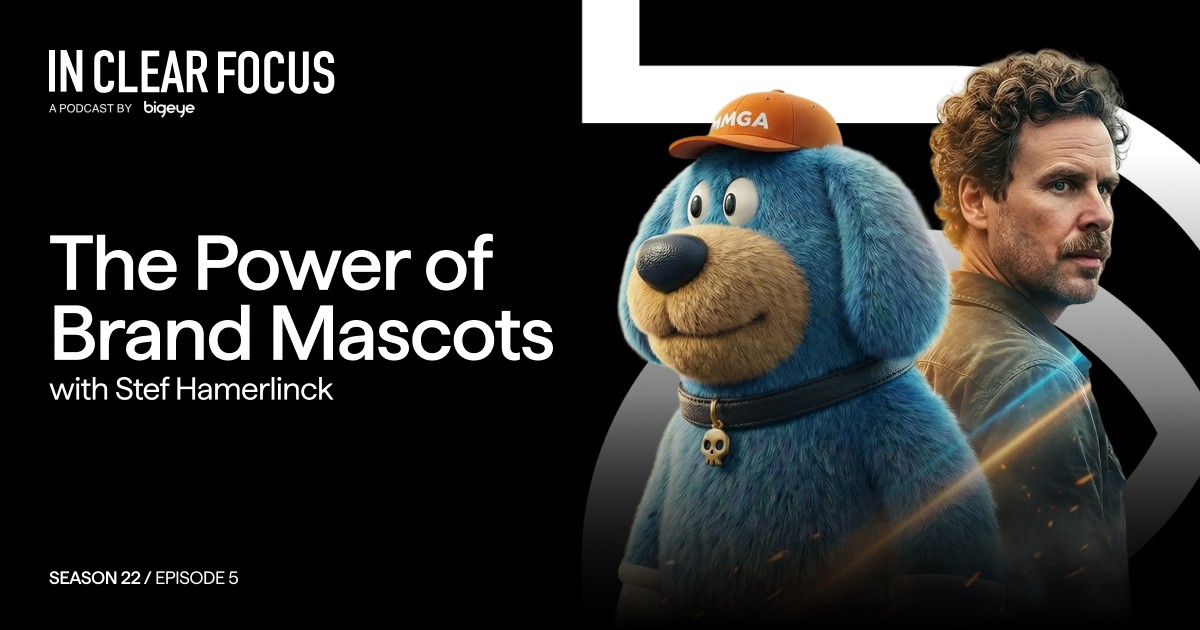
IN CLEAR FOCUS: This week's guest, international brand strategist Stef Hamerlinck, explores the resurgence of brand mascots. Supported by data revealing characters outperform logos, Stef shares his framework for assessing a mascot's effectiveness, based on distinctiveness, entertainment, and playability. He also explains how generative AI is democratizing character creation and why mascots need a brand universe to succeed. Learn how to build distinctive brand assets that drive real growth.
Episode Transcript
Adrian Tennant: Coming up in this episode of IN CLEAR FOCUS. Stef Hamerlinck: It's not enough to just have a character, I would say. You need a distinctive character with a distinct story and an interesting personality. And that is where marketers, designers, storytellers come in. That's where human creativity comes in. That's where the craft comes in. And that will never go away. That will never be replaced by AI.
Adrian Tennant: You're listening to IN CLEAR FOCUS, fresh perspectives on marketing and advertising produced weekly by Bigeye, a strategy-led, full-service creative agency growing brands for clients globally. Hello, I'm your host, Adrian Tennant, Bigeye's Chief Strategy Officer. Thank you for joining us. Brand mascots are among the most effective tools in the marketer's toolkit. Research from Ipsos shows that brand characters are five times better than logos or slogans at driving branded attention, while System 1 data reveals that long-term campaigns featuring mascots increase profit gains by over 34%, compared to those without them. Yet, in a world dominated by performance marketing, AI-generated content, and fragmented attention, mascots remain one of the most potent and yet misunderstood distinctive brand assets. Today's guest has spent the past four years exploring this intersection of character-driven branding, evidence-based marketing science and generative AI. Stef Hamerlinck is a brand strategist and the creator of the Let's Talk Branding podcast, in which he interviewed noted evidence-based marketing thinkers, including Byron Sharp, Jenni Romaniuk, and Phil Barton. Last summer, Stef produced a documentary exploring how mascots faded from prominence and why they're making a comeback. He's also the creator of Marcel, an AI-generated blue dog mascot that serves as a distinctive brand asset for his own consultancy, and through his Substack newsletter, Marcel's Lab, Stef shares frameworks and experiments for building character-driven brands in the AI era. To discuss why brand mascots are returning, what makes them effective, and how AI is transforming character creation, I'm delighted that Stef is joining us today from Ghent in Belgium. Stef, welcome to IN CLEAR FOCUS!.
Stef Hamerlinck: Hey, hey, hey! I'm happy to be here.
Adrian Tennant: Well, Stef, you started your career as a designer before moving into brand strategy as an independent strategist and educator with an ongoing role at the healthtech company, Alan. So what was it about the intersection of brand characters and evidence-based thinking about distinctive brand assets that first captured your attention?
Stef Hamerlinck: Yeah, it's a really interesting thing where in hindsight it all makes sense, but during the process it didn't so much. So I was always just fascinated by animation movies, by drawing, by characters. And when I was doing brand strategy, I discovered the whole Ehrenberg-Bass Institute, “How Brands Grow”, “Distinctive Brand Assets” by Jenni Romaniuk. And I was instantly hooked, and I saw the discrepancy between these evidence-based principles and a lot of the brand strategy world just totally ignoring it or not being aware of that. And so I started designing brands and building brands with this new lens of, “Okay, how can we be very distinctive?” And usually, like logos, slogans, graphic design in general, it's not very distinctive, it's not very memorable. There's also a lot of science around that, like “The Power of You” by Ipsos, which was a study done a few years back, really showed that most brands are not distinctive, and most brands use the most common assets like logos, typefaces, and colors. And you have these brand books that go into infinity about how much margin and white space, but people don't really remember that stuff. While characters, they do. And I didn't see any characters myself, but I also wasn't able to make them myself, per se. I had some experience with 3D design and illustration, but I wasn't good at it. And so, one, I had the luck of joining Alan, which was a brand that had a mascot, so I was able to start working with that mascot. I jumped in the actual physical suit, I did campaigns with that, and then generative AI came along. And all of a sudden, there was this new set of tools and technology that allowed me to not only play around with existing characters through shoots or 3D agencies or illustrators, but actually make it myself, control them myself, become like the puppet master, sort of speaking. And so this opened the box of Pandora for me. And at the same time, I was doing this documentary where I basically tried to figure out why aren’t there any more mascots? Like they're hugely effective. What's happening? And so this whole journey of understanding that, with at the same time generative AI developing and me having the chance to play around with it at scale at Alan and then also me building my own newsletter with Marcel, which is like my scrappy blue dog sidekick where we can do a lot of explorations. That's basically the journey of how we got here to this mascot fetish moment.
Adrian Tennant: Well, your documentary titled "Are Mascots Back?" traces the history of brand mascots from what you described as their golden age through their decline and now their comeback. You featured some great contributors. What did you learn from them?
Stef Hamerlinck: Yeah, I mean, one of my favorites, probably, of the show is Paul Feldwick. If “How Brands Grow” was the theoretical framework around how it works, Paul Feldwick's books, like “How Does the Peddler Sing?” they filled in this empty, cold, scientific space with ideas and inspiration of, like, marketing should be entertaining. And characters are obviously one of the best ways to drive this entertainment. So Paul Feldweck's contribution in this documentary about the importance of character, his examples of the Cresta bear, as like an iconic character, are things that I really enjoyed. Talking to Orlando [Wood] from System 1 was also very good, because he really confirmed that they actually saw a huge decline in the database of the IPA of characters being used. So it wasn't just my feeling of, are they disappearing? No, they actually are disappearing. And again, System 1's thinking around the effectiveness of these characters confirmed it. So I had a bit of the science, I had people from advertising that also talked about the Golden Age and all of these things connected. It was just super fascinating.
Adrian Tennant: I grew up with the Cresta bear. "It's Frothy Man!"
Stef Hamerlinck: "It's Frothy Man!" Yeah.
Adrian Tennant: Now, you studied dozens of contemporary mascots across categories, right, from CPG to FinTech to B2B SaaS. Stef, what separates the mascots that are genuinely effective from those that are forgettable or even counterproductive?
Stef Hamerlinck: Hmm. I have this little framework. It's not scientifically validated on the level of Ehrenberg-Bass. So bear with me here. The first level of a good mascot is just basic distinctiveness. And actually, I've developed a simple test for this because distinctiveness is not that hard. If, for example, your mascot is quite unknown, you're launching a new one. Like, how can you really know if people remember it? There's not a way to measure the fame because there isn't [any]. So the fame and uniqueness measurement framework of Jenni Romaniuk doesn't really work for a lot of brands wanting to start out. So I built this basic test which is like a silhouette test, just showing your mascot in like black and white profile. Does it still stand out? Do you still recognize key features? Blur is another one of those tests where you blur it. This is a situation where like 99% of the time your content of your brand doesn't appear very clear. It's maybe people are scrolling, maybe they're driving, whatever's happening. And then, fragment is again this problem of if you only show a small piece of your mascot, maybe it's like somebody's driving by, it's in the corner of their eye, maybe it's walking out of frame. Is it still recognizable? So those three little tests you can do, you can actually go and test them yourself on marcelmascot.com if you want. That's the base layer, distinctiveness. Is it recognizable? Is it iconic enough in terms of visual element? Then there's a second layer, which is entertainment. It's good if you have something that's easily recognizable, you can slap it on your packaging and likely people will be easier to spot it. But then it's like, if you make people feel stuff when they see that mascot, like the Cresta bear is a cool-looking bear. But when it dances and when it sings and the whole attitude it has and when it says, “It's frothy man,” that's not just pure distinctiveness, that's entertainment. It's usually driving engagement, and that's what makes people fall in love with some of these characters. And so that second level is really understanding the core of what is entertainment, how do you build entertainment, how do you get people engaged, hooked. it's all about personality basically. You know, like I often say this: personality is the only moat that you still have as like with generative AI content production on its own and even like it used to be that you could produce high-value, like very professional-looking content and you're already beyond your competition because they didn't bother doing that. But today, like you can do a super fancy 3D animation with generative AI if you have the right people in place. And so that's not enough anymore. So again, entertainment, personality, I think those are the things that make that character even more successful. And then there's the last part, which is what I call like playability. So it's entertaining you, that's great. It's standing out, that's great. But can you actually interact with it? Are there ways to interact with it? And that's where I think there's a new wave of how you can actually interact with characters. We're seeing fans of all IPs right now remixing their favorite Nintendo characters. They're remixing Stranger Things almost as it happens instantaneously. And this has always existed. Even in the old days, people were remaking shows and doing their own interpretation. so playability is not something purely technological but it is this thing where a lot of new technology allows you to really engage in a way with characters and that's of course where ai again comes in like you have AI companions so basically you can start talking real time to a mascot. Like, imagine if George Clooney for Nespresso was also the one in the customer support where you can ask questions directly to George and he says, “What else?” at the end of your little conversation? I mean, there's an infinite possibility here in terms of what you can do. But those three levels, distinctiveness, entertainment, and then playability, are I think, key to building a good character, and I would say building a brand universe around that that is not just like slapping a good character on something.
Adrian Tennant: Well Stef, this isn't just theory with you, this is actually practice because recently you've been experimenting with generative AI tools to create and iterate on mascots including, as you mentioned, your own character, Marcel. Could you take us sort of behind the scenes of how you created him and how you maintain consistency across your different outputs?
Stef Hamerlinck: Yeah, it's a good question. So actually, before Marcel, there was Otto, rest in peace. Marcel ate the poor pigeon, I think. Otto was like a first iteration and not a good one in the sense that I also created this one with AI, but the pigeon had all sorts of problems. He couldn't really talk very well. I couldn't animate it properly. It was always all over the place. So Marcel was born out of a need to be more adapted to AI in the first place. And so I started exploring, how could this character look? There's a lot of back and forth between me and the computer of like, I like dogs, but I don't want a typical dog. It needs to be very distinctive. So I played around with colors and then with all sorts of accessories to make it like not your average dog and give it some depth and some interest. And then I started thinking also about the personality. What does it want to achieve? And this was in the whole time where there was a lot (there still is a lot) about Trump and MAGA. And so I gave it a hat which says "Make Mascots Great Again," MMGA instead of MAGA, of course, which was a bit of like tongue-in-cheek just playing around, triggering people basically, which is this second layer of entertainment and sometimes even introducing some friction into the character. So, Marcel was created and you can actually find a lot of tutorials on my newsletter on how to actually go from this one character frontal view, to side views, to having a really good what we call a character sheet, which is basically an overview of your character from all angles, different poses, different expressions, so you have a clear understanding of how it should behave. But this was pre-Nano Banana Pro, which is Google's latest model. And that basically solved all of the problems. Before that, there was a lot of messing around, and basically it was almost like a slot machine where you had to do a lot of fiddling to get your character to feel consistent. And honestly, it wasn't always consistent. For me, that's why I tried to build a character that's okay, blue dog, orange hat, skull color. It's obviously Marcel, maybe he looks a little bit different. But then Nano Banana Pro came along and this is basically the model that changed everything because you can feed it that character sheet, and it will like 99% respect the consistency of the character. So this was the real game-changer, and I recommend people to just try. Like even, I've started this small series called Character Drawing a Day, which I've been doing for the last 10 days. Draw a little doodle of a character you think, like just something very simple, take a photo of it, drag it into your Google Gemini or FreePic, this model is available in a lot of places. Drag it in there and just say, “Turn this into a 3D character.” And then once you have the 3D character, say, “Turn this into a character sheet with multiple poses.” And you'll be surprised how good it is and how fast you can go from like concept, doodle, character, multiple angles, to something consistent that you'll be able to use in your media. So yeah, that's been the big game-changer for sure.
Adrian Tennant: Let's take a short break. We'll be right back after this message.
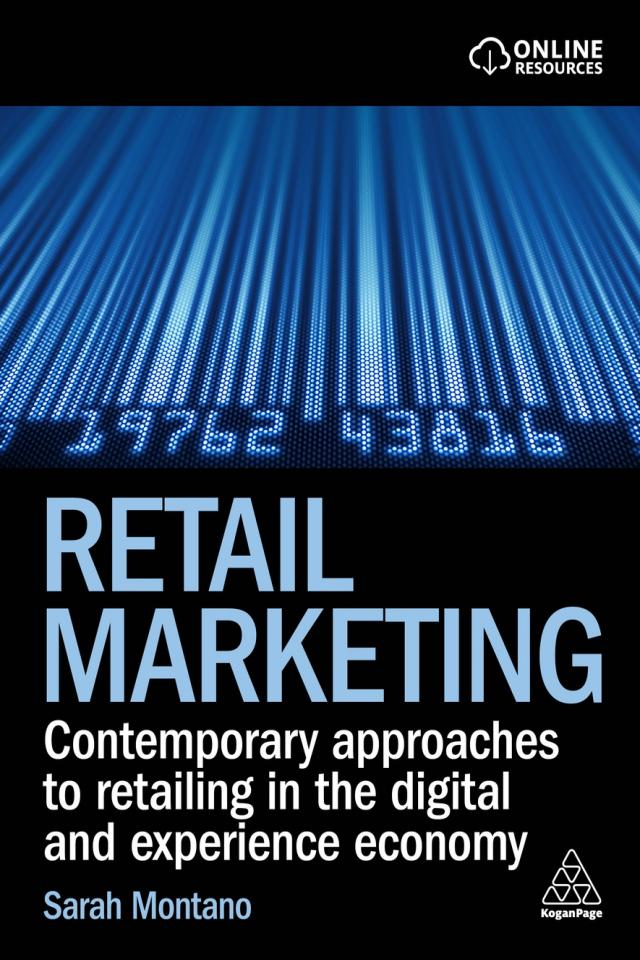
Sarah Montano: Hello, I'm Sarah Montano, author of Retail Marketing: Contemporary Approaches to Retailing in the Digital and Experience Economy, published by Kogan Page.
Drawing on my experience as an academic of over 20 years, a former retail professional, and a media commentator, I cover issues that impact contemporary retail practice, including how physical and digital retail are merging into digital experiences, what drives customer behavior and loyalty, aligning your brand with consumer values around ethics and sustainability, and the technologies transforming how people shop.
The book includes links to online resources, real-world case studies, and practical frameworks you can apply immediately, whether you're a student exploring retail for the first time or a retailer developing a go-to-market strategy, optimizing customer experience, or simply staying ahead of retail trends.
As an IN CLEAR FOCUS listener, you can save 25% on Retail Marketing when you order directly from KoganPage.com. Just enter the exclusive promo code BIGEYE25 at checkout. Shipping is always complimentary for customers in the US and the UK. I hope the insights and frameworks in my book help you create stronger retail strategies and develop deeper customer connections.
Adrian Tennant: Welcome back. I'm talking with brand strategist Stef Hamerlinck about brand mascots and the role of generative AI in creating these distinctive brand assets. Stef, as you mentioned, you've turned your mascot experimentation now into client work and a sub-stack newsletter, Marcel's Lab. How did that evolution happen?
Stef Hamerlinck: I've always been communicating about whatever my journey was in brand building. So before that, I had a podcast called Let's Talk Branding, where I shared all of my findings through newsletters, through podcast interviews, with all of my heroes. And so I already built in this reflex of sharing the journey. But now, you know, the content changed so it was a logical evolution for me to really go in that direction it was only like a few months ago that I actually realized that I should also rebrand the whole thing. Like it was still called Let's Talk Branding and it didn't really make sense anymore. So that's when I said, “Okay, I already have Marcel, let's turn it into Marcel's Lab, and make it the thing where ‘Hey! This is the frontier where we're exploring characters and generative AI and how you can build brands with that.’” And so, yeah, it kind of grew organically, and then I had this little thing called Marcel's Sandbox, which is like a place where you can go, where you can test some of this stuff out, you can generate images with Marcel, you can hug with him, you can do all sorts of testing. And actually, it was really interesting. I saw people testing their mascots and then they came to me like, “Okay, I have some problems here, how can we do that?” So automatically, I started helping where I could in the projects that felt really interesting to me. And I had one of these projects that was such a dream fell in my lap. I was just doing a podcast on a Belgian show about mascots, and then after, this guy who's like an agency owner said, “Yeah we still need a mascot actually for Dreamland,” which is one of the biggest toy retailers here in I'd say this part of Europe. And so this is a brand, you know, that I've known as a kid, like it's a very close thing. And so all of a sudden, I get this opportunity to make a mascot, which is a mascot at scale. I mean, it's sitting on trucks. It's in big stores, like 10 meters big. It's walking in suits. It's going to big toy expos around the world. So it's so cool to see. And that was like one of those moments where it was like a magical moment of, “Okay, it's been a journey, but now we're actually making stuff, helping brands implement it.” And yeah, that's been just fascinating.
Adrian Tennant: Well, it's been fascinating to watch your journey towards that for sure. Jenni Romaniuk, you mentioned, of course, is featured in your documentary. She literally wrote the book on “Building Distinctive Brand Assets,” and, I should mention, has also been a guest on this show. She cautions against over-investing in any single distinctive asset. So, Stef, how do you think about mascots within a broader brand system?
Stef Hamerlinck: Yeah, that's a great question. So there's a lot of ways to frame it. I think I used to call it like a palette, like a palette of assets that you use. And obviously, the most interesting part is when you combine the right assets. Like, for example, if you combine a character and sonic branding, characters on their own, are like seven times more memorable. And sound something like that … together it's like 15 times more memorable. So if you have even like the Aflac duck, I don't know if you know this duck.
Adrian Tennant: Yes, of course.
Stef Hamerlinck: It literally says the brand name, but in a way that a duck is doing the shouting, and this is iconic and it's very smart because it's reinforcing the brand name while also just being funny because, you know, what does an insurance has to do with this little duck? So that's a great example of combining sonic branding with characters, for example. But what is a cohesive brand universe? It's not just a character, it's not just a sound, it's not even just a look. It's like combining all of these things into something that you can keep tapping into for the long term. And that's where I think a lot of brands kind of miss the boat. On one, yes, let's pick one character and only do that. It's not a good idea. But also every quarter, reinventing themselves and doing all sorts of different variations of storytelling and formats and stuff. And basically never working on something that's compounding. And I think if you have the right assets and if you have that bigger universe to think about, then it becomes this really interesting thing where it's like every campaign, you don't start from scratch. You start like, “What can we do in this universe that's interesting and fresh, but also like reiterates and feels familiar?” And so, yeah, it's a bigger topic than just distinctive brand assets and characters alone. Like the meerkats, for example, Compare the Market. You have this one character, Aleksandr Orlov, who's like, you know, the original Compare the Meerkat character. But they build a whole world around it. You have the town of Mirkovo, you have Otto Sergei, you have lots of characters. There's a dialect, there's a way of talking, there's a behavior. And all of these things keep this brand fresh. When they had AI, all of a sudden now they have Otto Sergei. They can introduce new assets. And again, it's sonic branding because of the way of talking. The Russian accent is very unique. And so you can do a radio ad and still summon the universe without seeing the mascot. And that's the power, I think, when you start combining these assets and also thinking about a broader cohesive universe to tap into. I think that's the secret to building long-term brands.
Adrian Tennant: For a CMO or brand director listening to our conversation today, who's considering whether a mascot might be right for their brand, what are the minimum conditions you recommend they have in place before committing?
Stef Hamerlinck: Yeah, it's a good question. So I think it's important, like first, you just need to make sure that you have a good understanding of what your brand is about. Like those fundamentals of, you know, brand strategy, don't go away. Don't throw them out of the window because all of a sudden characters are cool. What is your brand personality? What is your brand positioning? These things matter because they will be a good foundation to develop a character that makes sense in that story. So first, have a look at that. Let's start with the basics. Even on the level of brand identity, if you have a very ugly or cheap-looking brand and you want to be positioned as premium, no mascot is going to solve that problem. You need to solve the way you communicate, the tone of voice, the way you look, everything. There's a lot of work to be done before that. So that's table stakes. Make sure you understand that your brand is already there in terms of how it looks and how it's positioned. And then the interesting thing about characters is a lot of brand owners say like “It's not for me.” One, I would say, actually I haven't seen a lot of industries except for maybe super high-end fashion and luxury, but even there, there's some cool exceptions I think. I haven't seen a lot of categories where characters don't work. Like B2B we have this perception that it shouldn't work, but it does, it does exactly because you know it's interesting and it's playful and breaks through the stereotypes of the category. So yeah, I think it's like first get your ducks in a row and then develop your own little duck, whatever it is. And the main thing is like what I do see now is then that's I think that's a normal issue that you have when the technology becomes so accessible. What we'll see is we'll see really good characters, and we'll see a lot of very bad characters, because it's so accessible. So people say, “Oh yeah, I also want a fluffy little thing.” So they just go somewhere and say, “Make me a fluffy bear.” And then they say, “This is our mascot, and this should work.” But that's the thing: going back to these three levels of distinctiveness, entertainment, playability, it's not enough to just have a good character. It's not enough to just have a character, I would say. You need a distinctive character with a distinct story and an interesting personality. And that is where marketers, designers, storytellers come in. That's where human creativity comes in. That's where the craft comes in. And that will never go away. That will never be replaced by AI, I think. Make sure, and that's maybe the part where if you are CMO thinking about this, make sure you invest in either people in-house that are strong in terms of creativity, or that you invest in a partner that can be creative, think conceptually, and not just in terms of like, “Yeah, sure, we can render fluffy bears, no problem.” And I think that's important that you are able to invest in this long term. Because if you're not able to commit to it and if you expect it to, like you do, you create a character, and next campaign it should explode. This is not how it works. Like it's compounding. People need to get familiar with the character, and over time this will become a very powerful asset, but not straight away. So if you're in it for the short term, cheap solution, then definitely don't go there. It will disappoint you.
Adrian Tennant: On your Substack, you've also written about the coming wave of AI companions and interactive brand characters from robotics to chat interfaces. Stef, how should brand builders prepare?
Stef Hamerlinck: Yeah, I mean, it's such a fascinating area where on the one hand, it's scary. I mean, we've all seen the humanoid robots, and it feels a bit like an episode of, you know, Black Mirror. So on the one hand, I'm like, “Do we really need all of this stuff?” But on the other hand, I'm actually very excited when I do see, for example, robotics or more like typical online avatars with real characters that actually introduce friction. Like, even on the most basic level, when first off, I switched from OpenAI's ChatGPT to Claude (because I heard it was better at being like a bit more critical), when I switched to it and I asked it to give me a real critical look at what I've been doing and how I've been thinking, it was actually the first time that I sat back and was like, “Okay, that was kind of harsh, but needed, thank you.” And this is where the value is. This is where something interesting happens, when characters or these LLMs can create friction. I think that's what we're often missing in this space. Don't try to be vanilla and solve everything for everyone. And that's the problem with a lot of what ChatGPT is doing. It's just trying to please users in whatever direction possible. And I think that's where characters are exactly great, because you can have a set character with a behavior and a backstory and motivations, and you can have people interact with it and learn from it, without it having to be like 100% adapted to you. And I think that's where hopefully we'll see brands be smarter about building IP, and at the same time, you know, servicing their customers through this companion layer. And yeah, I'm excited about it. But again, as all these things, there will be a wave of just boring, overly-friendly adaptable characters that aren't really characters because they don't have character, and then there will be really unique smart brands that do very cool stuff with this.
Adrian Tennant: Well, when we were preparing for this interview, you actually showed me some 3D printed mascots that you'd made and given to your clients. How important is extending characters into physical touch points, would you say?
Stef Hamerlinck: Yeah, that's where it becomes so interesting. Obviously, having them physically in your hand, it's a different way of connecting things. So when you go from a character you see online the whole time, to a physical character whether that's like a bear you get from a campaign or you see an actual suit there's something magical … like, I don't know if you've been to Disney, but seeing those characters in real life even as an adult I'm somewhat impressed by them. Like, you know, they're not real, but in some way it's like making it tangible in such an interesting way. And so when you have a brand, and you have this character, and you can bring it back to physical touchpoints. That's such an opportunity because it brings the universe into these daily conversations or events or whatever types of campaigns you do. So I think it's very important. And I think it also reduces a bit the idea of like, “Oh, so this is an AI-generated character that never goes beyond the digital touchpoint.” I think that's ... risky to do it. So making it physical also makes it more trustworthy and real. And then that again impacts the way you present it digitally. So yeah, it's a very smart play, and I think people should explore it.
Adrian Tennant: Well, Stef, thank you. You've been very generous with your insights. This was a great conversation. If listeners would like to learn more about your work or subscribe to your newsletter, Marcel's Lab, or indeed just connect with you directly, what's the best way to do so?
Stef Hamerlinck: Yeah, so visit labmarcel.substack.com. That's the number one place. And then otherwise, go find me on LinkedIn. I'm very responsive. I'm always trying to answer any questions you have. Interested to learn also about your challenges. And then if you want to hug Marcel or have some fun, just go to MarcelMascot.com and see what other people have been making. It's just a good laugh, but also a little bit of a moment where you can appreciate the powers of generative AI in this way.
Adrian Tennant: Stef, thank you very much for being our guest this week on IN CLEAR FOCUS.
Stef Hamerlinck: Thanks for having me on. This was fun.
Adrian Tennant: Thanks again to my guest this week, Stef Hamerlinck, brand strategist and creator of Marcel's Lab. As always, you'll find a complete transcript of our conversation with timestamps and links to the resources we discussed on the IN CLEAR FOCUS page at Bigeyeagency.com. Just select ‘Insights’ from the menu. Thank you for listening to IN CLEAR FOCUS, produced by Bigeye. I've been your host, Adrian Tennant. Until next week, goodbye.
Episode Timestamps
00:00: Introduction to Brand Mascots
00:36: The Power of Brand Characters
01:30: Guest Introduction: Stef Hamerlink
02:35: Stef's Journey into Brand Strategy
05:43: The Documentary: “Are Mascots Back?”
06:01: Insights from Contributors
07:15: What Makes an Effective Mascot?
11:44: Creating and Iterating on Mascots with AI
15:20: Introducing Marcel's Lab
17:00: The Evolution of Stef's Work
19:25: Building a Cohesive Brand Universe
22:39: Minimum Conditions for Mascot Development
26:10: Preparing for AI Companions
28:21: The Importance of Physical Touchpoints
30:12: Conclusion and Resources