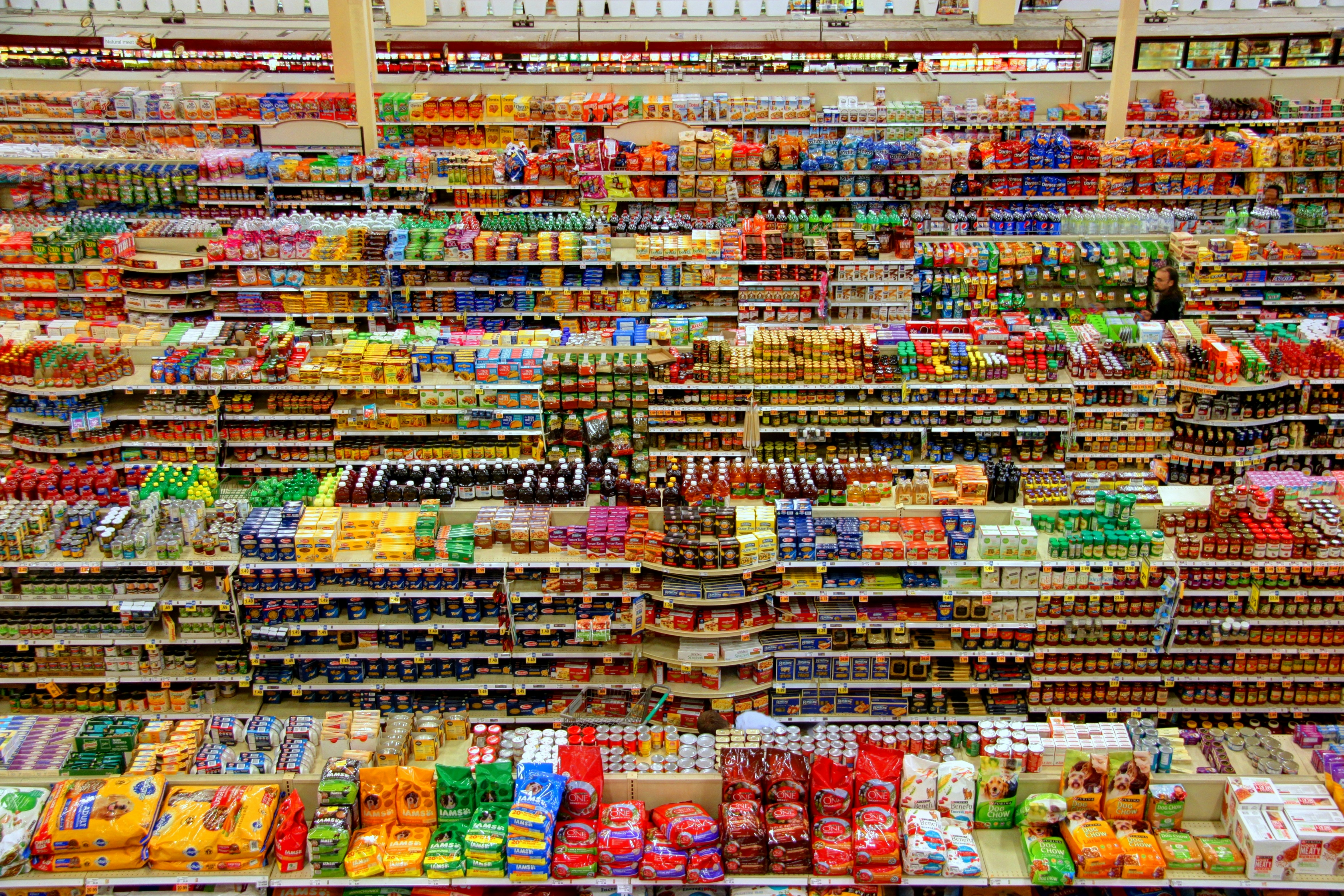
Shoppers bought fewer grocery units in 2026, and more of what they did buy carried a store brand. They kept paying more for a short list: beef, functional drinks and a bigger coffee-shop ticket. WORTH IT. is a 2026 brief for food, beverage and restaurant marketers: where shoppers bought more even as prices rose, where they pulled back, and what that means for prices, packs and menus.
28 pages. Free. No form to fill out.
TL;DR
Americans spent $2.51 trillion on food in 2025, and most of the growth was price. Food-at-home spending rose 2.8%, or 0.6% with price changes taken out.
By late summer 2026, shoppers were buying less. Food and beverage dollar sales rose 0.2% and units fell 1.8% in the 4 weeks to August 29.
Beef cost 5.7% more a pound and shoppers still bought 2.1% more pounds. Ground beef led. Steaks sold fewer pounds.
Functional-beverage buyers each bought 8.8% more units, against 1.5% for all beverages.
Store brands took 23.7% of units while national brands sold 0.9% fewer.
Quick-service traffic fell 2.6% in Q3 2026. Burger King and Starbucks grew anyway, each with a low entry price and an add-on.
The Numbers to Bring to Your Next Planning Meeting
8.8%: increase in units bought per functional-beverage buyer, against 1.5% for all beverages (NIQ Expanded Omnishopper, 52 weeks to April 18, 2026)
+2.1%: beef pounds sold at US retail while the price a pound rose 5.7% (NCBA analysis of Circana data, 52 weeks to Oct 4, 2026)
3.4x: median price per fluid ounce of prebiotic and fiber sodas, against the other listings in Amazon's top 50 soft drinks (Bigeye observation, Nov 11, 2026)
23.7%: store brands' share of units across 11 departments (PLMA, Circana data, year to Nov 1, 2026)
-2.6%: US quick-service traffic in Q3 2026, while the average price rose 2.6% (Revenue Management Solutions)
+8.4%: Burger King US comparable sales in Q3 2026 (Restaurant Brands International)
Why We Ran This Study
Food and beverage marketers keep bringing us the same worry. Prices went up, units went down, and the team can't say which products shoppers will still pay for. The topline doesn't help, because dollar sales look fine when price is doing the work.
So we went looking for the short list. Where did shoppers buy more of something that cost more?
On November 11, 2026, our team recorded Amazon.com and Walmart.com directly: the top 50 Best Sellers in 4 Amazon grocery categories and the first 50 results for 5 Walmart.com searches, 401 listings after cleanup. We set that against retail and panel data from USDA, the Bureau of Labor Statistics, Circana, NIQ, Numerator and PLMA, the latest earnings calls from 9 food, retail and restaurant companies, and 3 guests from IN CLEAR FOCUS, our weekly podcast.
"Customers are looking for value, but they're not willing to compromise on quality." Greg Foran, Chief Executive Officer, Kroger, on the company's Q2 2026 earnings call
What's Inside the Report
Where the Food Dollars Went
Americans spent $2.51 trillion on food in 2025: $1.10 trillion at home and $1.41 trillion away from home. Food-at-home spending rose 2.8%, but only 0.6% with price changes taken out. Away from home, the figures were 4.8% and 1.1%.
Prices kept rising in 2026, faster for meals out than for groceries. The Consumer Price Index for food at home was 1.8% higher in September 2026 than a year earlier, and 3.5% higher for food away from home. At the register, shoppers bought less: dollars up 0.2% and units down 1.8% in Circana's data for the 4 weeks ending August 29.
Food took 13% of the average US household's spending in 2025. For the lowest-income fifth of households, food at home alone took 9.5%.
Protein Holds Its Place
Beef averaged $7.47 a pound in the 52 weeks ending October 4, 2026, up 5.7%, and shoppers bought 2.1% more pounds. Dollar sales reached $47.4 billion, up 8.0%. The cut made the difference.
Ground beef: price up 9.8% a pound, pounds sold up 1.7%.
Steaks: price up 4.6%, pounds sold down 2.4%.
Chicken: $3.09 a pound, price up 0.7%, pounds sold up 2.0%.
GLP-1 households changed the mix too. Between 11% and 12% of US adults said they were taking a GLP-1 medication in recent Gallup and KFF surveys. Cornell researchers found that households where someone started the medication spent 5.3% less on groceries within 6 months. Yogurt, fresh fruit, nutrition bars and meat snacks were among the few categories where their spending rose.
On the shelf, the word protein no longer sets the price. On November 11 it appeared on all 47 priced Amazon jerky listings and on 32 of 40 at Walmart.com. Sugar claims separated the prices. Amazon jerky with zero or no-added-sugar copy sold for a median $2.00 an ounce, against $1.22 for the rest.
Function Earns a Premium in the Cooler
Shoppers who buy functional drinks are buying more of them, more often. Per buyer, spend rose 12.0%, units 8.8% and trips 6.0% in NIQ's panel for the 52 weeks to April 18, 2026. Across all beverages, the figures were 5.4%, 1.5% and 1.0%.
Energy claims: products claiming to provide energy added $2.7 billion in sales in the 52 weeks to May 23, 2026, more than any other functional claim NIQ tracked. Brain health added $560 million and digestive health $211 million.
Zero sugar is the default: 38 of the 44 priced listings in Amazon's top 50 energy drinks carried a zero or low sugar claim.
Brands moved apart: in the 13 weeks to September 27, 2026, US retail sales of Alani Nu rose 57.9% and Celsius fell 7.0%. Celsius Holdings owns both and plans to keep both priced as premium brands.
Prebiotic soda: 9 of Amazon's top 50 soft drinks were prebiotic or fiber sodas. Their median price was $0.18 a fluid ounce, against $0.05 for the other 41 listings.
Then there's Pepsi Prebiotic Cola. Ranked #30 on that list, it sold for $0.07 an ounce, close to regular soda. A large brand can sell the same claim without the premium, so price your functional drink for the day that competitor sits next to it.
"We're positioning CELSIUS and Alani as premium brands. So we don't want to become value brands." Jarrod Langhans, CFO, Celsius Holdings, on the company's Q3 2026 earnings call
Where Shoppers Pull Back at the Store
Store brands sold 0.1% more units in the year to November 1, 2026, and national brands sold 0.9% fewer. Store brands now hold 23.7% of units and 21% of dollars across 11 departments.
Grocery dollars moved to mass and club. Walmart took 20.3% of US grocery dollars in the 12 months to September 30, 2026, up 0.2 points. Costco took 8.4%, up 0.5 points. Aldi rose 0.2 points to 3.0%, and Kroger slipped 0.2 points to 8.2%.
On everyday staples, shoppers waited for the deal.
Orange juice: US retail shoppers bought 4.2% fewer gallons in the 2025-26 season while the price per gallon rose 6.9%. The share of sales made on promotion rose from 21.7% to 28.4%.
Soda: among the first 50 Walmart.com results, Great Value sodas sold for a median $0.024 a fluid ounce, half the $0.048 for national brands.
Pack sizes: General Mills is answering with cups and smaller boxes at lower entry prices, plus tubs and larger formats with a better price per ounce.
For what to do at the shelf itself, see our guide to shopper marketing for CPG brands.
"There's a deal every other month, it feels like. Five years ago, Memorial Day was a 20% discount. Nowadays, Prime Day is a 20% discount. And so to me, it's just, it's not meaningful." Nik Hall, Founder and CEO, REViVE Marketing Partners, on IN CLEAR FOCUS (S22 E13)
Restaurants: The Entry Price and the Add-On
Fewer people visited quick-service restaurants in 2026, and each visit cost more. Traffic fell 2.6% in Q3 while the average price rose 2.6%, which left net sales up 0.6%. The results split by chain. US comparable sales in Q3 2026:
Burger King: up 8.4%
Starbucks, company-operated stores: up 7.7%, on 2.4% more transactions and a 5.2% bigger average ticket
McDonald's: down 0.2%
Taco Bell: down 4%, with Yum! citing an industrywide food safety issue
Wendy's: down 5.7%
The chains that grew sold a low entry price and something extra. Burger King sold $5 Duos and $7 Trios next to premium items. Starbucks grew its ticket through pricing, attach, mix and delivery.
"Our $5 Duos and $7 Trios continue to support steady value incidents as we see outsized growth in more premium areas of the menu." Josh Kobza, CEO, Restaurant Brands International
The 5 Recommendations
Sort your range by why people buy it. List which products shoppers pay full price for and which they buy only on deal, and set pricing for each group separately.
Price protein by the cut and the pack. The claim alone won't carry a higher shelf price, so give shoppers a second reason to pay, such as no added sugar.
Defend the price of a functional claim. Know what your drink offers beyond the claim before a large brand prices against it.
Build the pack ladder before cutting list price: a small pack at a low entry price and a large one with a better price per ounce.
Sell the entry price and the add-on together. Measure traffic from the value offer and check from the add-on.
Who This Research Is For
CMOs and VPs of marketing at food and beverage brands setting 2027 prices, packs and promotions
Brand leaders at functional beverage and better-for-you brands defending a premium
Shopper marketing and retail media teams deciding where trade and promotion dollars go
Restaurant marketers balancing a value menu against check growth
About the Research
The data window covers 18 months to November 2026 and is US-focused. Sales figures are in current dollars.
Marketplace observation: Bigeye recorded Amazon.com and Walmart.com on November 11, 2026, logged out. That covered the top 50 Best Sellers in 4 Amazon Grocery & Gourmet Food categories (Energy Drinks, Soft Drinks, Juices, Jerky) and the first 50 results for 5 Walmart.com searches. After exclusions, 401 listings remained. Unit prices are the listed price divided by the stated ounces.
Market data: USDA Economic Research Service, Bureau of Labor Statistics, Circana, NIQ, Numerator, PLMA, NCBA, the Florida Department of Citrus, Revenue Management Solutions and Placer.ai, plus Gallup and KFF surveys and a Cornell study in the Journal of Marketing Research.
Earnings calls: Kroger, Hormel Foods, General Mills, Celsius Holdings, Walmart, Keurig Dr Pepper, McDonald's, Restaurant Brands International and Starbucks, quoted verbatim.
Expert interviews: 3 guests from IN CLEAR FOCUS. Nik Hall (REViVE Marketing Partners), Sarah Montano (University of Birmingham Business School) and Jean-Pierre Lacroix (Shikatani Lacroix Design).
Best Sellers rank is a marketplace signal at the time of capture, not sales data. Retail sales and panel data show what people bought. Survey figures, including GLP-1 user shares, show what people said.
Download the Full Report
WORTH IT. is a free mini study from Bigeye. Download it for the full charts, the cut-by-cut and aisle-by-aisle data, and every quote.
Setting prices, packs or menus for 2027? The report gives you the numbers. We can help you act on them, from consumer research and brand strategy to creative and media across retail media networks and the shelf. Talk to our team.
Frequently Asked Questions
What are US shoppers still paying more for in food and beverage?
Beef, functional drinks and a bigger coffee-shop ticket. Beef pounds sold rose 2.1% while the price a pound rose 5.7%. Functional-beverage buyers bought 8.8% more units each. Starbucks grew its average US ticket 5.2% in its fiscal fourth quarter of 2026.
Are grocery shoppers buying less in 2026?
Yes. In Circana's retail data for the 4 weeks ending August 29, 2026, food and beverage dollar sales rose 0.2% and unit sales fell 1.8%. Most of the dollar growth in food is price.
Is protein still worth a premium?
Shoppers still buy protein when it costs more, but the word alone no longer sets the price. Protein appeared on all 47 priced Amazon jerky listings Bigeye recorded. Listings with zero or no-added-sugar copy sold for a median $2.00 an ounce, against $1.22 for the rest.
How much more do prebiotic sodas cost than regular soda?
About 3.4 times as much per fluid ounce. On November 11, 2026, the 9 prebiotic and fiber sodas in Amazon's top 50 soft drinks had a median price of $0.18 a fluid ounce, against $0.05 for the other 41 listings. Pepsi Prebiotic Cola sold for $0.07.
How much share do store brands have?
Store brands held 23.7% of units and 21% of dollars across 11 departments in the year to November 1, 2026, according to PLMA and Circana. Their unit sales rose 0.1% while national brands sold 0.9% fewer.
How are GLP-1 medications changing grocery spending?
A Cornell study using Numerator purchase data found that households where someone started a GLP-1 medication spent 5.3% less on groceries within 6 months, and 8.0% less at limited-service restaurants. Yogurt, fresh fruit, nutrition bars and meat snacks were among the few categories where their spending rose.
Why did Burger King and Starbucks grow when quick-service traffic fell?
Both gave people a reason to visit and a reason to spend more once they were there. Burger King grew US comparable sales 8.4% in Q3 2026 while selling $5 Duos next to premium items. Starbucks grew US company-operated comparable sales 7.7%, with transactions up 2.4% and the average ticket up 5.2%.
Who published this report?
Bigeye, a full-service consumer brand agency in Orlando, Florida. WORTH IT. is Vol. 08 in Bigeye's mini study series, published November 2026.

Pet Industry
Nov 11, 2026
Pet food marketing, step by step: where the bag is bought, who sells it on Amazon, the reviews and pages it needs, and how to budget for the repeat order.