/
Data-Driven Marketing Strategy with Kamila Miller
IN CLEAR FOCUS: Our guest this week is Kamila Miller, author of "Data-Driven Marketing Strategy." Kamila explains the critical difference between being "data-heavy" and truly data-driven, revealing how collecting data just to justify past decisions creates what she calls "sophisticated nonsense." Learn how to craft actionable personas, spot AI red flags, and use data-driven marketing to lower the cost of being wrong, all while taking creative risks that drive measurable business growth.
Episode Transcript
Adrian Tennant: Coming up in this episode of IN CLEAR FOCUS:
Kamila Miller: What data does brilliantly is lower the cost of being wrong, so we have to remember that because it lets you be braver, make these creative bets, and you can test it and learn quickly.
Adrian Tennant: You're listening to IN CLEAR FOCUS, fresh perspectives on marketing and advertising produced weekly by Bigeye, a strategy-led, full-service creative agency growing brands for clients globally. Hello, I'm your host, Adrian Tennant, Bigeye's Chief Strategy Officer. Thank you for joining us. Most marketing teams today are swimming in data. They've invested in analytics platforms, built dashboards, and hired specialists. Yet many still struggle to connect all of that measurement to the decisions that actually drive business growth. The uncomfortable question is whether all that data collection is genuinely informing strategy or just creating the illusion of progress. Our guest today bridges the worlds of academic research and hands-on marketing practice. Kamila Miller is a lecturer in marketing at Henley Business School, University of Reading, and at other UK universities where she teaches consumer behavior, digital marketing, and marketing strategy. She's also pursuing a PhD at Henley, investigating how artificial intelligence and large language models are reshaping consumer decision-making. Before moving into academia, Kamila spent over a decade leading marketing across fashion, technology, retail and media, and she holds the designation of Chartered Marketer from the Chartered Institute of Marketing, or CIM, the UK's leading professional marketing body. Kamila's new book, published by Kogan Page, is “Data-Driven Marketing Strategy: How to Apply Data to Achieve Measurable Results.” It's a practical guide that takes readers from customer insights and persona creation through to personalization, channel optimization, and, unusually for a data-focused text, the role of creativity and risk-taking in effective strategy. To discuss the difference between being data-heavy and truly data-driven, and how marketers can turn measurement into strategic action, I'm delighted that Kamila is joining us today from Hampshire, in the UK. Kamila, welcome to IN CLEAR FOCUS.
Kamila Miller: Thank you, Adrian, for having me. And I'm really excited about this interview, I have to say.
Adrian Tennant: Kamila, first of all, congratulations on the publication of your book. What was the frustration or gap you kept seeing that made you want to write it?
Kamila Miller: Yeah, I have to admit, I kept seeing the same problem over and over with clients and my own teams. If you think about it, teams had lots of data, they had dashboards, specialists, but they were still making decisions based on not the gut feeling. And then they were using the data afterwards to justify what they already decided. And the books on the market, they were either too technical, all about the platforms, or they were treating the data as this extra thing you have to add at the end because it's trendy, you know. So I wanted to write the book I kept wishing I could give to my clients, my students, and actually read by myself. Something practical, something that shows how data shapes the question, not just how it calls the answer.
Adrian Tennant: You make a distinction between organizations that are truly data-driven and those that are simply data-heavy. What does that difference look like in practice?
Kamila Miller: It comes down to timing. Data-heavy teams collect everything and then make the call on gut. The data arrives after the decision, so its job is to justify what really happened. Data-driven means bringing data in before the decision. They ask “What [do] we need to know? What would change your mind?” Or simply “Why it's going to change your mind?” So I have this very simple test, and it is one question: Can anyone point to this decision that was actually changed because of the data? And if you can't, you are basically data-heavy, not data-driven. And that's the real difference in the outcomes because if you think about it, and McKinsey found that companies using behavioral segmentation properly see up to 20% higher customer satisfaction and up to 30% better marketing efficiency. You can see that is a real gap.
Adrian Tennant: In your experience, what are the most common ways that marketers misuse or overuse data?
Kamila Miller: I can see the same patterns again and again. First, measuring what's easy instead of what matters. Lots of engagement numbers that don't connect to the business metrics. Second, using data to define the decision already being made. And that's not analysis. That's advocacy. The third is confusing correlation with what’s causing what. Because a chart looks clean, so let's use it. And the fourth one is measurement fatigue. Well, we can see that teams argue so much about attribution that they can stop acting on anything else. Honestly, they have enough of the data and the decision to make, so they're being simply tired of that.
Adrian Tennant: Well, let's talk about personas and segmentation. Kamila, what makes a persona genuinely useful for driving decisions versus one that looks polished in a presentation but doesn't actually change anything?
Kamila Miller: A persona is only useful if it changes what you do. If you can't point to a decision, a message, a channel that looks different because of that persona, then I would say it's just a wallpaper. If you look on the HubSpot example, I actually included it in the book, their marketing meta-persona isn't about age or hobbies. It's a mid-level marketing manager focus on lead generation under pressure to show our eyes to leadership team, and that's actionable. Now you know what to connect to write what pain points to address, how to qualify the sales leads. Compared to “Marketing Mary,” that is, I don't know, thirty-five, likes yoga and oatmilk. This type of person does you basically nothing. The best personas are built on behavior and patterns, not demographics, and we need to know what this person is trying to do, what they try to achieve, what they get stuck on, what they are worried about. And let's find out these problems. Let's help them with these pain points so we can actually help ourselves.
Adrian Tennant: Kamila, your book is structured so that data serves as strategic infrastructure across the entire marketing process, not just as a reporting layer. So how should marketers think about embedding data into their planning rather than reviewing it after the fact?
Kamila Miller: I must admit I did it on purpose because I've seen this a lot. The shift is simple to say and unfortunately, hard to do. You have to start with a decision. Ask yourself the question. And then you walk backward to the data you need to make it well. So instead of running the campaign and pulling the reports afterwards, you build the measurement question into the brief at the beginning. And my favorite question to ask before anything launches is simply, “What would change our mind, my mind, my boss's mind, my CEO’s mind, or the business mind?” If you can't answer that, you're not planning to learn. You're planning just to report. And I know it sounds quite small, but that actually changes everything. You are designing for insight, not coverage.
Adrian Tennant: Yeah, great point. Dashboards and analytics can tell us what people did, but not necessarily why. How do you recommend marketers combine quantitative data with qualitative insight to get the full picture?
Kamila Miller: Yeah, I would say, at least for me, it's quite simple. Quant tells you what. Qual tells you why. So you basically need both. A good example in the book is a global fitness brand. The numbers told people they're dropping off. And the survey said lack of time. “Oh, we do have great data, don't we?” But when the company did their focus groups, they found something deeper. It wasn't just lack of time, it was guilt. People felt bad about missing workouts. So the brand took it under consideration and they built these guilt-free routines that fit into five minutes. App usage went up, I think, 30%. So if you can see, it's a really simple picture that quant would never have given them that one answer, that great answer. It had to be combined with both. But there is one small warning, I would say. The bad questions, when they ask at the beginning, can give us only sophisticated nonsense. So we have to be very careful when we're designing qualitative and quantitative questions.
Adrian Tennant: Love that, “sophisticated nonsense.” One section of the book that stands out is the coverage of creativity, risk-taking, and disruption. That's not what most people would expect to find in a book about data strategy. Why was it important to include that?
Kamila Miller: Because without them, data-driven marketing becomes a very expensive way to be average. Data can only tell you about patterns that already exist. If you only do what the data supports, you are moving towards being average. Average brands are not perfect, and the average is not a strong position to be on. If you think about Apple's Think Different campaign, This is a perfect example. They didn't have a product on their ads. They mentioned a few names like Gandhi, Martin Luther King, and that wasn't A data driven decision that was a creative leap the data could not have predicted but the data could validate it afterwards and. In the action it did what data does brilliantly is lower the cost of being wrong so we have to remember that because it lets you be braver. make this creative beds and because of that you can test it and learn quickly but you need this creativity and you need to take risks sometimes against the data and against the patterns so as much as i love. Data. I truly believe that sometimes we have to be creative and bold in our marketing decisions. And then data can help us to validate if we were right or not and help us learn quicker.
Adrian Tennant: Yeah. Let's take a short break. We'll be right back after this message.
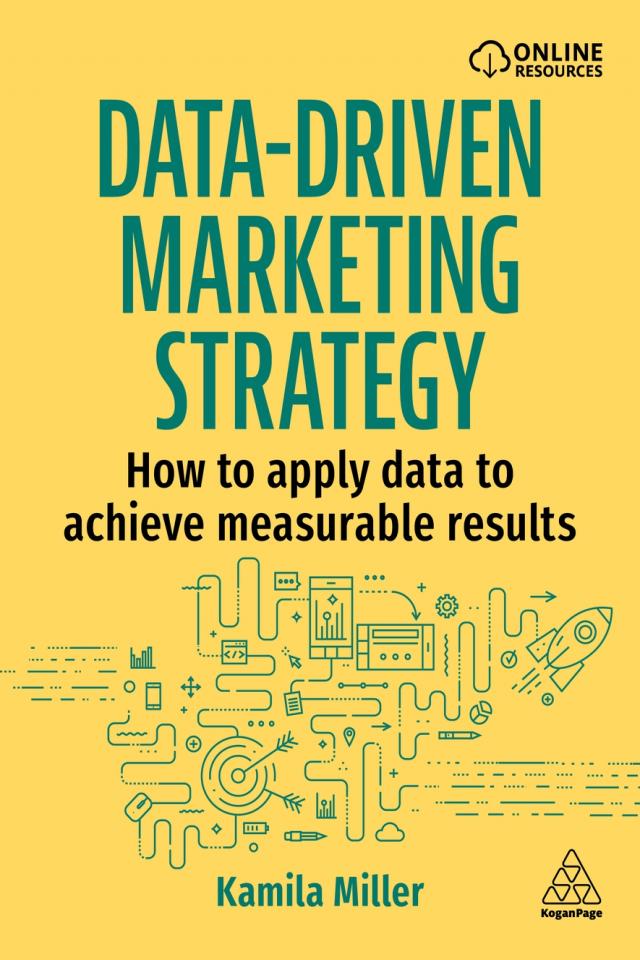 | Kamila Miller: Hello, I'm Kamila Miller, the author of Data-Driven Marketing Strategy, published by Kogan Page. As a charter marketer and lecturer in marketing across several prestigious UK universities, I've seen firsthand the gap between collecting data and actually using it to make better decisions. In my book, I share practical frameworks for turning data into creative, evidence-based strategies, from building actionable personas to leveraging AI for personalization at scale. With real-world examples from brands including Pepsi, Netflix, and HubSpot, you will learn how to move beyond dashboards and reporting to develop strategies where creativity and analytics work together. As an IN CLEAR FOCUS listener, you can save 25% on Data-Driven Marketing Strategy when you order directly from koganpage.com. Just enter the exclusive promo code BIGEYE25 at checkout. I hope this book helps you turn your data into strategies that deliver measurable results. Thank you. |
Adrian Tennant: Welcome back. I'm talking with Kamila Miller, author of the Bigeye Book Club selection for May, “Data-Driven Marketing Strategy: How to Apply Data to Achieve Measurable Results.” Kamila, artificial intelligence is changing how marketers collect, analyze, and act on data. What should marketing leaders be watching for as red flags when deploying AI-powered tools?
Kamila Miller: I would say we have a few to watch out for. First, black box tools you can't check. If the vendor can't explain how the model makes a decision, that is a problem. Second, AI trained on bad or biased data. I don't know if you remember, but Amazon built an AI recruiting tool a few years ago that quietly favored male applicants, because the training data was simply biased. And in marketing, that can easily show up as a bad act, training, or unfair recommendations. So we have to be very careful with that. Then the third one, over-personalization, which feels almost invasive. The famous Target app example, I would say, where the algorithm worked out that a teenager was pregnant before the family knew, just from her shopping. That is the line between being helpful and being a little bit creepy. And the biggest red flag is culture. When teams stop questioning AI output, because it sounds clever, something is broken. You need what I call human-in-the-loop oversight. The four principles I keep coming back to are transparency, fair representation, real customer consent, and human oversight. If you get those right, you will stay on the right side of the line. We need to remember AI is a great tool, but it needs people to oversee what it does.
Adrian Tennant: There's a growing concern that early career marketers may lean on AI tools before they've built foundational skills. And without that grounding, they can't evaluate whether the output is methodologically sound. Kamila, how should marketing educators and leaders be thinking about that challenge?
Kamila Miller: This is so close to what I'm doing because I think a lot about this as a lecturer and a marketer. The worry is real. If you build a segmentation yourself, you know how to judge whatever AI version makes sense or not. But if you've never written copy from scratch, you can't really tell whatever AI is one of the great tools that is going to help you, or this copy is just nicely written. And the ability to look at the output and say, “That's wrong, and here is why,” it's exactly what gets skipped when AI becomes the starting point. My view is that we need to teach students how to evaluate, not just how to use AI. Students could absolutely use AI later on, but they also need this basic knowledge. They need to know how to catch what is wrong, so they actually have to start with the foundations. They need a formal education. They need education about how to write a brief, about how to build the segment themselves, so they will be able to be smarter later on, not just lazy. As I mentioned previously, if we feed AI with bad data, the outcome is going to be bad. So we are literally just creating this sophisticated nonsense.
Adrian Tennant: Well, your PhD research at Henley investigates how large language models are reshaping the way consumers experience and make decisions. Kamila, without giving too much away, what are you finding that might surprise marketers?
Kamila Miller: Oh, what I can share is that the picture is much more complicated than most of the industry assumes. Yes, there is a comfortable story that AI personalization is a straight win for the consumer. Easier decision, better matches, everyone is happy. What I'm seeing is that the story has a second layer. It's a darker layer. Something quieter is actually going underneath around how people experience the agency and control when the algorithm is in the mix. I don't want to give away too much because the findings are still being written and I do have a few papers in review, but I'd say to any marketer listening, don't assume that a customer who accepts your recommendation is a customer who feels empowered by it. Those are two different things, and the gap between them is where I think the next interesting conversation is in our field, because we have to be very careful what we can see.
Adrian Tennant: So Kamila, I've got to ask you, is a second book on the horizon, building on what you're discovering through your doctoral research?
Kamila Miller: I'd say absolutely, yes. Although it's early days, but the direction is there. And I have to say that it's not only about my research, but I'd like to add something really interesting, which is marketing in the boardroom. We know that the marketing still struggles to earn its seats at the table. And let's face it, data-driven marketing was supposed to fix that, but it's not really how it works in the practice. As most marketing leaders still work about the boardroom activities, and they are really aware that they have no power, especially these days when AI is on top of everything, CMOs, they can't gain the position in the market. So hopefully, that's what I'm hoping the second book will help CMOs and leaders in marketing to gain the position in the boardroom.
Adrian Tennant: Well, I think that's an interesting idea, as we know that many marketers do struggle to present data-driven insights in a way that resonates at that board level. So, Kamila, what's the key to translating marketing metrics into the language of business outcomes?
Kamila Miller: Quite simple. As I mentioned that I think already, you can't just use the data to back up your decisions. You can be creative and take a bold move, but you need to include the data at the beginning of every single strategy you are building. You need to understand that. Don't just look at the dashboards that are going to be presented. Somewhere they are going to be presented to you. You have to make sure that you understand what is the question you are asking. Who are the people you want to target? What is the pain point? Ao all of that, from understanding what data you need to understanding who your customers are, which segments you want to be doing for. Use the data properly and embed this in every single decision. So, before you start collecting the data, think “Why this is important,” and how this information is going to help you, and what is going to be changed thanks to this information.
Adrian Tennant: Well, if a listener is feeling overwhelmed by data and doesn't know where to start, what's the smallest meaningful step they could take this week?
Kamila Miller: Asking yourself, what is the business priority? What does the business want to achieve? Understanding that, you know, what type of data you can look at. We know these days, traffic to the website, how important is that? Is it going to change something? So be selective, don't try to analyze every single piece of data you have. Don't go into the dashboard and try to sit there and like “Oh, this is telling me that what is this etc.” Trying to find the key question, the gap, what you're trying to achieve, and then look at the data with that perspective in your mind so you will actually see the answer in the data because you have a question before.
Adrian Tennant: Great conversation. Kamila, if listeners would like to learn more about you or your work, or indeed pick up a copy of “Data-Driven Marketing Strategy,” what's the best way of doing so?
Kamila Miller: I would say Kogan Page is the best place for the book. So please go and visit. And if you want to connect with me, LinkedIn will be the easiest way to reach me. I'm trying to buzz there about the practice, the research, and all the interesting findings I'm coming across.
Adrian Tennant: And a reminder that IN CLEAR FOCUS listeners can save 25% on “Data-Driven Marketing Strategy” when you order directly from koganpage.com using the promo code BIGEYE25 at checkout. Kamila, thank you very much for being our guest this week on IN CLEAR FOCUS!.
Kamila Miller: Thank you so much for having me.
Adrian Tennant: Thanks again to my guest this week, Kamila Miller, author of “Data-Driven Marketing Strategy.” As always, you'll find a complete transcript of our conversation with timestamps and links to the resources we discussed on the IN CLEAR FOCUS page at bigeyeagency.com. Thank you for listening to IN CLEAR FOCUS, produced by Bigeye. I've been your host, Adrian Tennant. Until next week, goodbye.
Timestamps
00:00: Introduction to Data-Driven Marketing
02:30: Meet Kamila Miller
03:50: The Frustration Behind the Book
04:50: Data-Heavy vs. Data-Driven
05:50: Common Misuses of Data
06:50: Effective Personas and Segmentation
07:50: Embedding Data into Planning
09:00: Combining Quantitative and Qualitative Data
10:30: The Role of Creativity in Data Strategy
12:00: AI in Marketing: Red Flags
14:00: Foundational Skills for Early Career Marketers
16:00: Insights from PhD Research
19:00: Future Directions: A Second Book?
20:30: Translating Metrics into Business Outcomes
22:00: First Steps for Overwhelmed Marketers
23:00: Closing Remarks and Resources