/
Rethinking Modern Event Strategy with Jonathan Kazarian
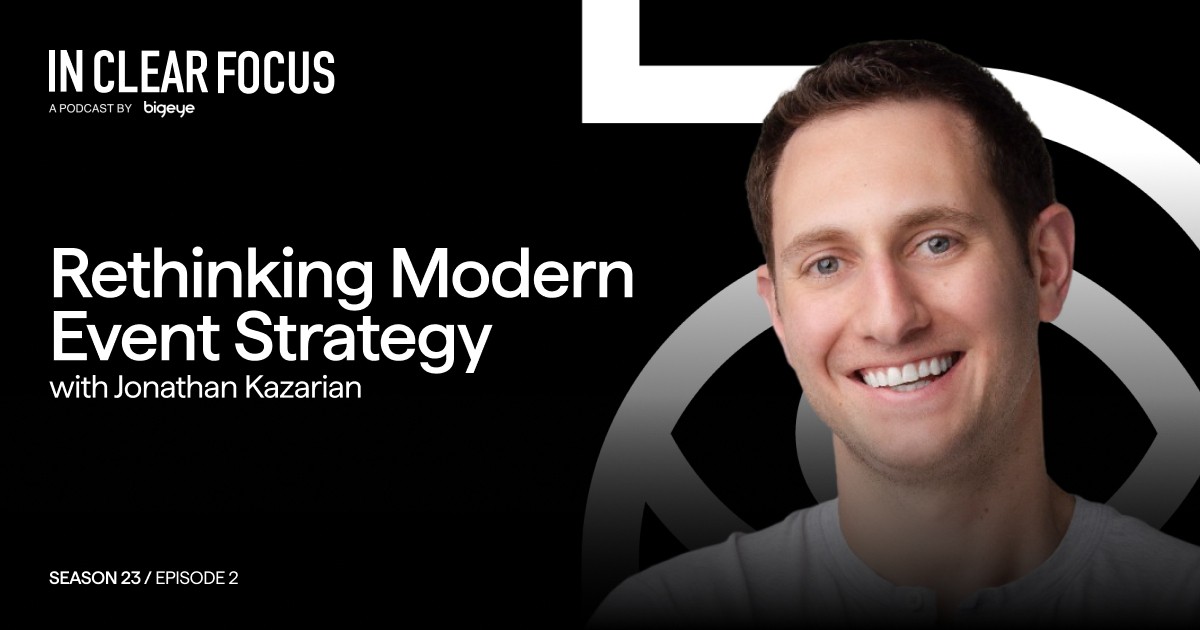
IN CLEAR FOCUS: Our guest this week is Jonathan Kazarian, the Founder and CEO of Accelevents. He explains why saturated digital channels make face-to-face connections more valuable than ever, arguing that a modern event strategy must be a long-term brand-building investment, not just a demand-generation tactic. Discover how to co-host field events, optimize registration experiences, and integrate data into your CRM to accelerate pipeline and drive business growth in the connection economy.
Episode Transcript
Adrian Tennant: Coming up in this episode of IN CLEAR FOCUS:
Jonathan Kazarian: The events industry is having its moment, and I think we're just at the beginning of that wave. The commoditization of all the digital channels and the lack of differentiation, it just brings us back to a world where face-to-face matters more than it ever has. And that puts the event industry in the best possible position.
Adrian Tennant: You're listening to IN CLEAR FOCUS, fresh perspectives on marketing and advertising produced weekly by Bigeye, a strategy-led, full-service creative agency growing brands for clients globally. Hello, I'm your host, Adrian Tennant, Bigeye's Chief Strategy Officer. Thank you for joining us. Digital marketing has never offered more precision, more channels, or more ways to measure the journey from impression to conversion. And yet something is shifting. As those channels grow more crowded and audiences more selective, forward-thinking B2B marketing leaders are asking a different question: not how to optimize the next campaign, but how to create an experience someone will still remember nine months from now. Events are having a serious strategic moment, but most organizations still treat them as a demand-generation tactic, measuring success by badge scans and captured leads. My guest today argues that framing is far too narrow, that events done well are one of the most powerful brand-building investments a marketer can make, and that the shift from the attention economy to what he calls the "connection economy" demands a fundamentally different approach. Jonathan Kazarian is the founder and Chief Executive Officer of Accelevents, an all-in-one event management platform. He bootstrapped the company to $1 million in annual recurring revenue, before navigating a near-total pivot during COVID-19, which grew the business tenfold in a single year. Accelevents has twice appeared on the Inc. 5000 and today serves more than 12,500 organizations worldwide. To discuss why B2B brand managers should rethink how they invest in events and what it actually takes to build an event strategy that delivers for both brand and pipeline, I'm delighted that Jonathan is joining us today from Miami Beach, Florida. Jonathan, welcome to IN CLEAR FOCUS.
Jonathan Kazarian: Yeah, thanks for having me on.
Adrian Tennant: Accelevents has an unusual founding story. You didn't come from the events industry, you actually came from finance. Can you take us back to the beginning and explain how you ended up building an event technology company?
Jonathan Kazarian: Yeah, definitely. Although I came out of the financial services industry, I was working at a hedge fund. I was actually organizing some events within that company. And back - this is 2014 - so almost 12 years ago, I had a relative who got sick and wanted to do something for her. So I decided to host a thousand-person fundraiser in Boston where I was living, where I'm from, and went into that event trying to find ways to help run it. All the tech out there was either like crazy expensive or the support was non-existent, or frankly, it was just like bad tech and felt like that wasn't going to work for us. So ended up partnering with a friend and we decided to launch our own. Again, you know, that was like, what, 11, 12 years ago now. So I went into that first event. It was the first thousand-person event I'd ever organized. And I decided for some sick reason to grow, building a tech product on top of that, but fortunately everything went well and that was the catalyst so started getting a lot of demand from other organizers asking if they can use it. That's where it turned into a company. At that time we were focused on the fundraising space but very quickly we moved into corporate and association.
Adrian Tennant: Your years in asset management and investment technology probably gave you a different foundation from most people who build software companies. How did that finance background shape the way you built Accelevents?
Jonathan Kazarian: Well, I think for one, I approached the entire industry of events from a much more quantitative perspective, really looking at where events fall in the marketing stack, looking at events from the lens of "How can we actually attribute the impact of events to pipeline to business goals?" So there's definitely that, yeah, I came from a quantitative fund, so there's definitely that quantitative background that I had, but that's probably the extent of it. I think, really, it was the found passion for the event industry that shaped how much I enjoy and care about building for this segment. I played a lot of sports growing up and there's one thing that like is heavily correlated between sports and the event industry and it's that it happens in seasons and you're preparing for a game and it's like you're putting everything into making sure that goes perfectly. You spend all this time practicing, working up for it, and then it culminates in a couple of hours. And that sense of urgency is one thing that I think is just so hard to find elsewhere. And I love that element of this industry.
Adrian Tennant: Well, the pandemic was obviously a defining moment for the entire events industry. In-person revenue went to zero essentially overnight.
Jonathan Kazarian: Of course, and negative. We, at the time, we were transaction-fee-based. So as every event that you can imagine starting, canceling, and issuing refunds, we actually had negative cash flow during that period.
Adrian Tennant: Well, looking back now, what did that crisis actually reveal about the way organizations had been thinking about events?
Jonathan Kazarian: There became this meshing of event marketers and DemandGen marketers, almost this overlapping set of responsibilities. I'd say that event marketers became much more involved in the tool set, not just the event tool set, but other elements of the marketing tool set. But also there became a much bigger focus on the impact that events have in the organization. Frankly, it's almost surprising that this didn't happen sooner because events make up 25%, on average, of corporate marketing budgets. I mean, it is pretty much the largest sole contributor to marketing budgets. So there obviously needs to be a lot of scrutiny into, "Is this working? Are the dollars translating to dollars out?" But that also shifted back pretty quickly. As events moved back to in-person, event marketers, event planners, their time became re-consumed with vendor management and on-site logistics and everything else that takes up so many hours in the day and the week of an event professional. So it did shift back a little bit. At the same time, there became this expectation from the top down, the CFO, CMO, CEO, that like, "If we're going to spend this much money on a channel, we need to know it's working." So the expectations of an event marketer have grown significantly. And with that, the workload, but the team resources have not.
Adrian Tennant: Jonathan, I've heard you make a strong case that digital marketing channels such as search, social, email, and content are becoming increasingly saturated. Where do events fit in that picture? And why does the face-to-face format do something that digital simply can't replicate?
Jonathan Kazarian: Yeah, I mean, they are completely saturated, commoditized. It's to the point where it's just noise and we all blow past it today. The things that people remember are the things that they feel, and they feel that from human connection. When you're face-to-face with somebody, you're having a conversation. That's not a half-second impression that they come across that they scroll by. It's, you know, it might be nine months down the road when somebody becomes in-market. And you're top of mind for them. That's what in-person experiences allow for. And in the world of events, I mean, that could be events that are owned events that you're organizing. It could be third party events that you're exhibiting at, like trade shows or other industry events. I'm obviously in the camp of owned events because you're owning that person's attention for some much longer duration of time. But in both cases, you are having that face-to-face impression, having that conversation, getting to know somebody, getting to know their struggles or challenges, their pains or aspirations in a way that just, it can't be matched online and it leaves that lasting memory with somebody.
Adrian Tennant: Well, traditionally, event investment has lived within demand generation budgets, has been evaluated on pipeline metrics, and has been attributed to revenue. Now, you've argued that a brand manager should actually claim a portion of the event's budget. What's the case for making that shift?
Jonathan Kazarian: Yeah. And I've generally argued for about 20 percent. The case is everything I just mentioned, right? When it comes to brand-building, you want to be remembering when somebody is in market. In the case of B2B, in a given segment, only three to 5 percent of buyers are in market at any point in time. So when somebody becomes in market, they're going to start with a list of potential solutions that's in their head. And then they're going to turn to tools, AI, Google search, whatever it might be, to help them expand that list. And they'll probably compare it to the tools that are in their head. So when it comes to brand-building, again, events give you that opportunity to create that impression that doesn't flee in a matter of seconds. It's - you're chiseling out this little corner in somebody's head where when they're thinking about a solution to a category, you are that solution. And it's not immediately attributable. I mean, the other thing is when you're looking at attribution models within an organization, I don't believe that every channel should have the same attribution window. If we're talking about something like a LinkedIn ad or a Meta ad, chances are somebody doesn't see your ad and remember you six months later. The attribution window that needs to be much shorter there compared to something where you're creating that emotional engagement, that experience that's going to last months, if not years, to come.
Adrian Tennant: When a Chief Marketing Officer or a Chief Financial Officer asks an event team to justify their budget, what does a credible, well-constructed answer to that question actually look like?
Jonathan Kazarian: It really depends on the organization. Depends on how they've been measuring the impact of events, the relationship with their marketing ops team. Do they have different attribution mechanisms in place to understand the event? But again, at a high level, I would start with "We're allocating X percent, maybe 20% to brand. So let's first take that off of the table." And you know, with that comes the PR, the credibility. When you're hosting a large-scale event in your industry, you are thought of as a thought-leader in that space. And the perfect example of that is HubSpot with Inbound. Inbound is, you know, to some people as big, if not larger, than HubSpot. They built so much credibility around that event experience and positioned themselves as a thought-leader in that space. And that's the brand play. In terms of actually going about the measurement side of things, on the attribution side, it's looking at, "Okay, how many net new people do we bring in?" Chances are on the event side, it's not going to be that high. Third-party events, probably a little bit more, but an owned event, I mean, that is generally people are attending your event who have never heard of you. It could be the case in smaller field marketing events, hosting dinners, hosting sidecar events on the back of an industry show where you're able to bring net new people into the funnel - at the top of the funnel. But again, it's measuring each stage of the funnel as well. So how much revenue is influenced, deals that were already open that hadn't converted yet. We host a bunch of field marketing events ourselves and that's actually the biggest win for us is pipeline acceleration. But then the other part is,"Okay, what about expansion and retention with existing customers? How does it give us the opportunity to again, show ourselves, paint ourselves as thought-leaders in an industry, build credibility by bringing together our customers with our prospects, and really having those deep conversations around what's the future of the industry? What are the problems they're trying to solve? Where do we fit into the mix in doing so?" And I'll add, we actually try to stay away from product-centric conversations in those types of events. But that's another piece of it is just what's the expansion opportunity with the retention impact that can come from those events. Simple things that you can look at there - what's the churn rate on customers that have versus have not attended an owned event?
Adrian Tennant: Interesting to hear you refer to inbound from HubSpot. HubSpot, of course, they're a Boston-based company.
Jonathan Kazarian: Yeah.
Adrian Tennant: Well, for a brand manager with a budget and buy-in, but who has never actually built a field marketing event program before, what's the smartest first move?
Jonathan Kazarian: Don't go it alone. Find a couple of partners that you can cross sell with. You know, this is another thing we do. So we host, we'll probably do 15 to 20 dinners this year across the country. Well, across the US and in UK and in Canada. And we will do those with a number of different partners, some events, some dinners, we might even have up to four partners in the room, two people from each company, but no pitching. And in doing so, we aren't solely responsible for the cost of each dinner. We're also not solely responsible for filling the room. And in the case where a partner might bring a customer or prospect and we do the same, there is an inherent credibility when one partner is recommending another. There's already that element of trust, that assumption that the integration is already there and it works. So it's a great way to reduce the cost. reduce the risk of not being able to fill the room, and actually increase the outcome because you're co-selling with these partners.
Adrian Tennant: Great advice. One of the more counterintuitive pieces of event strategy advice is, as you say, co-hosting events with other companies rather than going it alone. What makes that model work? And what does it take to make those kinds of partnerships productive rather than messy?
Jonathan Kazarian: We're yet to find one that's messy. So I guess we've been fortunate there. We've done something right. Actually, you know, I'll say the most important thing, what's the ICP - the ideal customer profile - who are the people that we want to have in the room? It's not just because it would feel like a waste for me if I'm paying for, you know, splitting the bill and there's people in the room that don't matter to me. Although that's true, the bigger factor is the conversation that takes place in an intimate gathering, maybe it's a 30-person dinner. It's not going to be the same if you've got three or four different ICPs in the room. You need to keep it very, very niche, very, very focused. And that really creates the best possible outcome because you're taking people, in our case, we're inviting like Senior Director, VP, Head of Events at different companies. They don't have a counterpart within their organization. So we might go to a city like New York, host this dinner, we're bringing people together that they finally feel like they have somebody to bounce ideas off of; somebody else is going through the same thing every day that they are the same struggles reporting up to the CMO, CFO, CEO, that in itself just it leads the conversation to a point that becomes so much more memorable and. At the end of the day, we become the brand that is creating a community around that conversation, around that experience. When they think back to that thing nine months ago that they learned, or that conversation they had, or that thing that they're applying in their own company because they heard about it at that dinner, it was our dinner, the Accelevents dinner that they hosted that at.
Adrian Tennant: Let's take a short break. We'll be right back after this message.
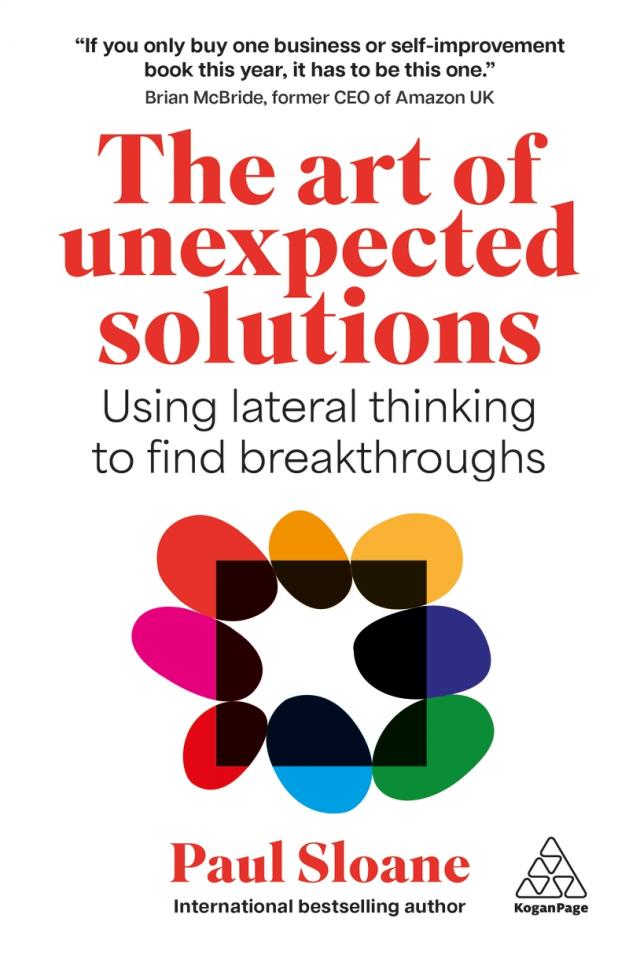 | Paul Sloane: Hello, I'm Paul Sloane, author of "The Art of Unexpected Solutions" published by Kogan Page and the Bigeye Book Club Selection for April. I've spent decades studying how the most transformative innovations in history arrived not from careful planning, but from unexpected discoveries, accidents, failed experiments, and chance encounters that only produced results because someone was curious enough to pay attention. In the book, I share practical techniques for challenging assumptions, cultivating serendipity, and finding solutions that others overlook, with examples drawn from business, science, sport, the arts, and many other fields. As an IN CLEAR FOCUS listener, you can save 25 percent on "The Art of Unexpected Solutions" when you order directly from KoganPage.com. Just enter the exclusive promo code BIGEYE25 at checkout. Shipping is always complimentary for customers in the US and the UK. I hope this book inspires you to approach your toughest challenges from a completely unexpected direction. Thank you. |
Adrian Tennant: Welcome back. I'm talking with Jonathan Kazarian, founder and Chief Executive Officer of Accelevents, about why events deserve a more prominent place in marketers' toolkits. As regular listeners know, we love case studies on IN CLEAR FOCUS. So Jonathan, can you walk us through a specific example of how getting the event technology right genuinely transformed the experience of one of your customers?
Jonathan Kazarian: Oh yeah, there's a large podcast that is a customer of ours and I'm heavily involved with the organization. It was a show where it had three, four thousand people there. The first year we were involved, we were only the mobile app provider. We did not do badge printing and registration. The lines to get in the event were an hour, 80 minutes long. We came in and we said, "Look, we'd love to continue working with you, but we need to take over the whole thing: registration, badge printing on site, our team being there on site to run it." And we did. And the following year, the longest anybody waited was like four-and-a-half minutes. So that's just one piece of that experience. For us, our brand was on it. We only wanted to be associated if we could deliver the way that we knew how to deliver. We didn't want to accidentally get associated with some other elements of the event tech that we weren't responsible for. But here we'd come in, owned all of those different pieces by bringing a unified tech platform - our platform, the Accelevents platform - that owns all of those different elements under one data model, in one seamless user experience in a way that allows us to streamline so many different elements of both the pre-event and on-site operations to make sure that every element of the event runs flawlessly.
Adrian Tennant: Jonathan, the registration experience is often the first time a prospective attendee actually interacts with an event's brand. How much does that first touchpoint matter? And I guess, what happens to conversion when organizations get it wrong?
Jonathan Kazarian: Yeah. And it almost speaks for itself, right? Because if you have a poor registration experience, people just don't register. You just don't, you don't have an event. Nobody shows up. You owe it to yourself as the organizer, to your sponsors, to do everything you can to get the right people in the door, no matter how big or small the event is. And like you said, it is the first touch point, your website, your registration process. It sets the tone. There are plenty of events that have been around for decades. And as an attendee, your attendee can only bet on one, two or three events per year that they can go to. That's all they have time for. That's all they're going to get the budget to go to. They want to be part of the next big thing, right? Everybody has FOMO. They don't want to make that bet on something that feels like it's on its way out. And that registration experience, that event website is really what gives them that direction. Now we see thousands and thousands of event websites, tens of thousands per year. We could probably have the whole episode just focused on this, but some of the things that bug me right off the bat, registration forms that are built by committee, people sit around a table, everyone decides the questions that we need to have on the reg form. All of a sudden it's 27 questions long. People just don't complete that. And it's such an easy solve by first cut out the stuff you're not gonna actually do anything with. The second of all, move to a progressive registration form, ask the things you need, get somebody to pay, figure out the other things later, right? Clear the experience so they get access to things like the mobile app and the first access to session selection by completing their profiles. Another thing is, and this is the easiest, your event platform - ours does, but it absolutely should have car abandonment. So if somebody starts filling out the form and they leave the site, send them a link right after so they can pick up where they left off. And again, the next day, if they haven't completed it, that should be integrated with your ad stack so that you can run retargeting ads at the people that don't complete registration. On the event website side, another thing that is really a pet peeve, beyond the very basic stuff like making sure that you have that location and the date visible. With the wave of vibe coding solutions, we're seeing more and more people vibe code their own websites, which is awesome. And I've seen some incredible sites. But if you don't have a background in SEO web design, although you can create something that's very aesthetically pleasing, you need to make sure that you're making short regs. I'll see people putting like the location of the time as an image that they created in Canva. Google can't read that. It doesn't even know it's an event. Like people aren't using like the opengraph structured metadata so Google knows it's an event. There's just some things that an event platform like Accelevents has baked into the website-building experience. So if you don't have the background there, use a tool. If you do, great. Ask your vibe coding tool to check for some of those basic things to make sure that your page is going to rank. And then, you know, from a more strategic level, some websites are designed for new attendees. Some are designed for returning attendees. Split your audience. You know who you're inviting, that's a returning attendee. More than any other thing that you can sell, you know who's been at your event in the past. Create landing pages that are designed for them. Create different landing pages that are designed for net new people. Drive the traffic to the appropriate location. Because the way that you're going to message your event is going to be so different between the two of them. The people that have been there before, they know who's in the room. The people that haven't, they don't even know if the event is for them. You need to make sure that they know - hey, let them self-select. "Am I part of the ideal customer profile for this event or am I not?" And if I'm convinced that I am part of that profile, then lean into FOMO. Make sure that I know that I'm missing out if I'm not there because everybody else just like me is going to be there.
Adrian Tennant: Great advice. Much of the value that events generate, such as intent signals, engagement data, and of course, relationship history, ends up trapped in spreadsheets or siloed systems, rather than flowing back into the customer relationship management or marketing automation platforms. Jonathan, what does good event data integration actually look like?
Jonathan Kazarian: Again, your event platform should handle that for you. Most data flows to either Salesforce, Marketo, or HubSpot, you know, Pardot and Eloqua are certainly there. And then there's a handful of other marketing automation platforms and CRMs that data flows into as well. But half the battle is getting the data in. The other half is what do we actually do with it? And I think it's even easier to solve the "How do we get data in?" because companies like Accelevent do that for you. It's harder to think about, "Okay, now that we have this information, what are we actually going to do with it?" And it's not just about first party data, like validating email addresses or phone numbers. There's a thousand ways we can get that type of information. It's "How can we build campaigns around this information?" I'll use Inbound as an example. Again, if Inbound is hosting their event and they've got a customer who's on SaleHub and ServiceHub, but not MarketingHub, and they see that customer is attending a whole bunch of second sessions on the MarketingHub, what are they doing with that information? Right then and there that should be getting flagged to the account manager that, "Hey, there's probably some interest from this existing customer in the MarketingHub." There's an expansion opportunity. Here are the sessions that they went to. Here's some resources that you can follow up with, "Maybe we should get them onto a free trial." And that's really where the opportunity falls. And, you know, going back to your previous question around attribution, this is a great example of where we can look at account expansion through the lens of our event program or triggered from our event program.
Adrian Tennant: Well, we're living in volatile times. As you look at the events industry over the next three to five years, I know that's probably quite difficult at the moment, but what are you most optimistic about, or conversely, what concerns you?
Jonathan Kazarian: The events industry is having its moment and I think we're just at the beginning of that wave. It's the same things that we talked about at the beginning of this conversation. The commoditization of all the digital channels and the lack of differentiation, it just brings us back to a world where face-to-face matters more than it ever has. And that puts the event industry in the best possible position. Now, that said, there are no shortage of risks, right? Fuel prices make it harder to travel and labor shortages. Like we can go through the whole list of economic inputs that can impact the feasibility of your event program. But at the end of the day, as a channel, it is the channel that we're investing most heavily in. And we're seeing the same from our customers. Now, inherently there's a bias there because they're investing in us, but I don't think there's a better industry to be in right now.
Adrian Tennant: Great conversation. Jonathan, if listeners would like to learn more about Accelevents or connect with you directly, what's the best way to do that?
Jonathan Kazarian: Yeah. If they want to learn more about Accelevents, they can go to accelevents.com. We have 24-seven support that's staffed by real people. Come over and say "Hi!" And if you would like to hear more from me, I'm very active on LinkedIn. You can find me. It's Jonathan Kazarian on LinkedIn, and look for Accelevents or look for Jonathan Kazarian. And I'm posting pretty frequently there. Drop me a DM.
Adrian Tennant: Perfect. Jonathan, thank you so much for being our guest this week on IN CLEAR FOCUS.
Jonathan Kazarian: Thanks for having me.
Adrian Tennant: Thanks again to my guest this week, Jonathan Kazarian, founder and Chief Executive Officer of Accelevents. As always, you'll find a complete transcript of our conversation with timestamps and links to the resources we discussed on the IN CLEAR FOCUS page at bigeyeagency.com. Thank you for listening to IN CLEAR FOCUS, produced by Bigeye. I've been your host, Adrian Tennant. Until next week, goodbye.
Timestamps
00:00: The Rise of the Events Industry
00:24: Introduction to IN CLEAR FOCUS
00:46: The Shift in B2B Marketing Strategies
01:51: Guest Introduction: Jonathan Kazarian
02:44: Jonathan's Unconventional Path to Event Technology
03:26: The Impact of Finance Background on Event Management
05:26: Lessons from the Pandemic for Event Organizations
06:00: The Saturation of Digital Marketing Channels
07:24: Rethinking Event Investment for Brand Building
09:14: Justifying Event Budgets to Executives
10:31: The Importance of First Touchpoints in Registration
12:15: Smart First Moves for New Event Programs
14:15: The Benefits of Co-Hosting Events
16:09: Case Study: Transforming Customer Experience
19:18: The Significance of Registration Experience
23:02: Integrating Event Data into Marketing Systems
25:20: Future Outlook for the Events Industry
26:23: Connecting with Jonathan Kazarian and Accelevents
26:52: Closing Remarks and Episode Wrap-Up