/
The Digital Shelf, Tested with Daniela Bolzmann

IN CLEAR FOCUS: Daniela Bolzmann, founder of Mindful Goods and the Design Proof Substack, explores how data-driven creative optimization transforms e-commerce conversions. Drawing from over 1,000 consumer polls, Daniela shares how Amazon split testing, A+ Content, and main image tweaks reveal what shoppers actually want. Discover how to bridge the say-do gap, leverage AI for data analysis, and build a repeatable experimentation practice that converts testing into predictable sales lifts.
Episode Transcript
Adrian Tennant: Coming up in this episode of IN CLEAR FOCUS
Daniela Bolzmann: These are the highest lever things that are gonna move the needle. Not the 15 things, not the 20 things. There's really gonna be 2 or 3 things that you can actually do to improve this, to make it perform better than the competitors. And that's what you need to pay attention to.
Adrian Tennant: You are listening to IN CLEAR FOCUS, fresh perspectives on marketing and advertising produced weekly by Bigeye, a strategy-led, full-service creative agency growing brands for clients globally. Hello, I'm your host, Adrian Tennant, Bigeye’s Chief Strategy Officer. Thank you for joining us. Most consumer research tells a brand what happened. Very little of it tells a brand what will happen before the work goes live. When testing gets systematic enough, that changes, and so does the way a creative team makes decisions. Our guest today is Daniela Bolzmann, the founder and chief executive officer of Mindful Goods, a creative optimization studio that has partnered with more than 850 consumer and e-commerce brands across supplements, food and beverage, beauty, baby, pets, and home. Over 9 years, her team has built what may be the largest systematic record of e-commerce creative testing anywhere. More than 1,000 consumer polls, some 36,000 Amazon Prime shoppers, and hundreds of live experiments, all logged and tagged. Daniella is an Amazon Accelerate speaker, an advisor and ambassador to the consumer polling platform PickFu, and the author of Design Proof, a Substack newsletter. To discuss what large-scale testing reveals about consumer decision-making, and how brands can build experimentation into a repeatable discipline, I'm delighted that Daniella is joining us today from Lima, Peru. Daniella, Welcome to IN CLEAR FOCUS.
Daniela Bolzmann: Thank you for having me.
Adrian Tennant: Daniella, Mindful Goods started in 2017 as a creative studio, but 9 years of systematic testing has turned it into something closer to a data business. When did it become clear to you that your database was a real asset?
Daniela Bolzmann: Honestly, in the last year, it really clicked for me. It's something we've been doing and refining over the last few years, the last 8 to 9 years, we have been split testing. The last, I would say, 2 to 3 years ago, I started thinking, “Wow! It would be really great if we could analyze all of the datasets that we have and understand what works in every category according to the data that we already have.” But at that time, we obviously didn't have the help of AI. So now that we have things like Claude and ChatGPT, we're able to basically analyze over 36,000 data points and understand what is working in every single category across clients that we've worked with. So those insights are fantastic for our internal purposes. They're allowing us to take the learnings even across category and apply them to clients.
Adrian Tennant: Now, for marketers who may not be familiar with all of the Amazon terminology, could you just explain for us what A+ Content actually is?
Daniela Bolzmann: Yes. I'm so glad you're asking. So when you first search for a product on Amazon, you're gonna see all of these images pop up, your search results. Those are what we call in Amazon land, main images. It's always a product on white. That's one of the rules. Let's say I like one, I click into the listing, then I'm looking at the carousel of images in the top left. We call that the product image stack. As you scroll down below the fold though, there's this other section where brands can really take over the page and have a full landing page aesthetic. And what you saw, I think even now and a few years ago was really popular to have lots of text in that section. Amazon themselves has said, “Look, that's a conversion lever. We're not putting it there for you to squeeze SEO juice out of it. We're putting it there so that you tell your story. And so people learn more about your product so they buy it.” And so really what we wanna do is use that with really high-quality visuals and storytelling to help people understand the product as quickly as possible. Check off those things in their mind that- like they might be looking for so that they add it to cart as quick as possible. So it's a really great high leverage piece for you to essentially have all of these banners stacked one on top of the next that feel almost like a dedicated landing page in the middle of your product page, which is incredibly important when you think about all of the advertising that's going on top to bottom on those pages that are distracting people from actually converting. That's the big difference between brands that are selling really well on their own direct-to-consumer websites like Shopify. And then when they migrate to Amazon, some of them struggle because they realize- like it's a completely different ballgame. They need to make sure that their images are really dialed in for that specific marketplace.
Adrian Tennant: Well, as you know, there's a well-documented say-do gap between what consumers say they prefer and what they actually choose. So Daniela, what does testing at this kind of scale reveal about that gap?
Daniela Bolzmann: So that is very true. I've seen that as well because we've used multiple different tools and some of the tools for split testing will ask the person in advance what their considerations are before purchasing a product like this. And what I noticed is what they say and what they do in almost every test is very different. So that information wasn't as important to me in terms of our testing. What is important to me is what they end up saying later in the comments, maybe not even related to the question that we're asking. So one of the best practices that I like to do is that every time we run a split test, we're getting quantitative data- of course, but the qualitative data is really where the gems are, where we're able to see, “Okay, what is the pattern in the language behavior between what they're saying and what they're asking and different notes,” right? So one example of this I'll give you is a client of ours that we worked with many years ago. We've worked with them multiple times since then, but one of the first tests that I remember we ran for them was a main image. split test, and I remember reading through every single comment on this, and it was 50 different comments. And there was this pattern of people that kept asking if the product was vegan. “Is this vegan?” “Is this vegan?” That wasn't the question we were asking them whatsoever. The question we were asking was, which one would you choose? But multiple people kept saying, “Is that one vegan? I can't tell.” And that to me signaled that, okay, yes, that product actually was vegan. That wasn't one of the things we were even highlighting on the image.
Adrian Tennant: Hmm.
Daniela Bolzmann: But it's something that clearly people are asking us about. So we need to bump that up and make that resonate. So we actually in post-edit made the word vegan, you know, 3 times as large as the rest of the font on the packaging so that people could see it from a glance at a thumbnail view. And that, in addition to a couple other changes, ended up improving their click-through rate by 11.8% within 2 weeks.
Adrian Tennant: Wow.
Daniela Bolzmann: So, little tiny changes can happen from just paying attention to the language of what people are saying. And yes, sometimes if you're, I would say- preemptively asking them like, “What matters to you?” That can be different from what they actually vote and what they say later down the road. So I'm paying attention to that later down the road messaging of what they're saying when they're actually looking at it. That's what I care about.
Adrian Tennant: Well, one finding from your database is that consumer poll results predict live sales lifts roughly 3 times out of 4. For a brand marketer used to research that informs but doesn't predict, what does your approach make possible?
Daniela Bolzmann: Specifically, we do split testing for brands that sell on Amazon, right? So it's a very unique type of split testing, but the reason why we do split testing in advance is because we're getting that directional data as we're designing. Otherwise, anytime you're working with a design team or an agency, they might be taking in research and they might be designing something, but there's no feedback loop. So, how do we know what's actually working when we're designing? Yes, we think our work is beautiful, obviously. But, does it move the needle conversion-wise? That's the hard piece to know. So we needed some sort of data layer in between us as we're designing, and then later as we test on Amazon, we can obviously use Manage Your Experiments. Or, we can just do manual testing on Amazon. That's fine. But we like to have some sort of data to help us gather learnings as we're designing so that we're not designing over here in a silo. So that's where we have PickFu in the mix. And when we analyzed our data, we noticed, like we pulled a subset of brands, out of the 50 that had positive performance on PickFu. On our split testing tool that showed a positive test result, 75% of them ended up seeing a lift in sales. And that lift in sales can vary, right? There's gonna be outliers that have very large increases in sales. And then there's an average that I would say about 50% are getting anywhere from like 10 to 20% increases.
Adrian Tennant: Yeah.
Daniela Bolzmann: Maybe 30%. And then 50% are getting upwards of anywhere from 30% to 2,500% increases in sales. So it very much depends on your category-your product. If you had horrible content to begin with, you know, then you're obviously going to see a huge leap. So there's no true predictability of like, “I can never guarantee that a product is going to see X amount of sales.” That's impossible.
Adrian Tennant: But by following a systematic process, that's the best way to kind of Daniela, you've also found that the main image on a product detail page, or PDP, seems to carry disproportionate weight in the purchase decision. Why does that single asset matter so much and do so much of the work?
Daniela Bolzmann: So I wouldn't necessarily say it's specifically that one. I would say that one improves click-through rate. I would also say it's the lowest-hanging fruit. Fruit in terms of if you're looking at the listing as a whole, what you're going to optimize, that's one of the lowest hanging fruits and the easiest things to get people into the listing. So in terms of improving the click-through rate, absolutely. Does it also improve sales? Absolutely. We've seen up to 600% increase in sales by just focusing on the main image. But what we see the best results within terms of all of our split testing, because on Amazon you can test title and bullets, you can test your main image, you can test your product image stack, and you can split test your A+ content. Of all of those things, the title and bullets, and the A+ content tend to see the highest lift in sales. That being said, the title and bullets are the easiest thing to change. The A+ content is going to be the hardest thing to do well. It's a heavier lift. So what I typically recommend is looking at it in terms of a funnel. You're going to focus on your title and bullets first to bring more people into your listing because that's how you get found. It's also the easiest thing to just change and split tests as much as you want, then you would move on to your main image. So you've gotten found; you're getting clicks into the listing with your main image, and then you want to really spend time and dial in every single product image in your product image stack and your A+ content. Between the product image stack and the A+ content, we see the highest lifts with A+ content. Surprisingly, most people think it's the product images, but I would say product images is what most brands tend to focus on the most, and so there's usually not as much optimization juice that we can squeeze out of it if they were already doing it somewhat well. I would assume that most brands are doing it half decently by now, you know? So for us, really a big lever is making sure that the A+ Content is doing what it needs to do, and that it works really well with the product image stack.
Adrian Tennant: Got it. Daniella, a test in your database came back 29 to 1 in favor of showing the product in use. Rather than beautifully displayed. What is the underlying principle there?
Daniela Bolzmann: So that one really stood out to me, and it made me go back and look at the database further to find more and see “What do those have in common?” The ones that are the 29s to 1, the 28 to 2, the ones that have just drastically swinging votes in one favor. And for the most part, where we saw those drastic votes was on main images. And for the most part, the commonality that they had between all of them was that they were showing product in use. And this was across baby, it was across like a random shoelace product. We've seen it in beauty, we've seen it in almost every single category. Anytime you can show the product in use, that happens to be one of the top types of images that you can have on Amazon in general, but specifically for the main image whenever possible. So we had a snow cone client. Okay, imagine you're selling a snow cone. Do you wanna just see the machine or the bottles of the snow cone flavors, or do you wanna see the actual snow cone in someone's hand? That right there ties the person to that emotional connection. Subconsciously, you're brought in and you're like, oh, I'm in that moment with my family having my snow cone, you know? And so they're imagining just by seeing a hand holding a snow cone, they're imagining what their life is going to be with their family having these snow cones at home.
Adrian Tennant: Mm-hmm.
Daniela Bolzmann: So that's the difference between just showing a bottle And trying to show the product in use as much as possible. And this is a gray area on Amazon because Amazon is seemingly moving away from extra props and extra things inside the images. But brands do get away with a lot with this- with main images right now. So we're always trying to push the boundaries.
Adrian Tennant: Let's take a short break. We'll be right back after this message.
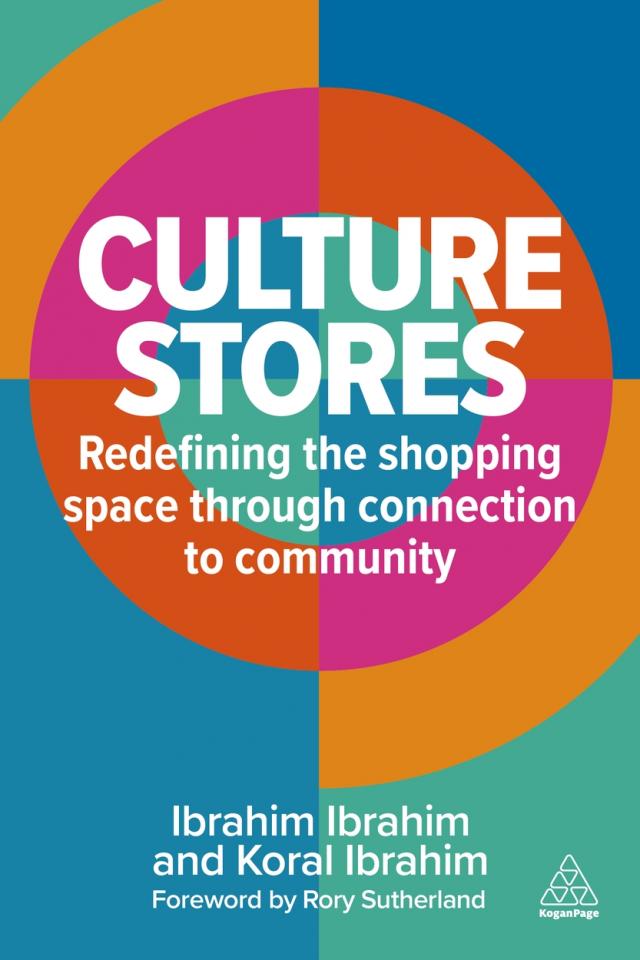
Adrian Tennant: Each month, in partnership with our friends at Kogan Page, the Bigeye Book Club features interviews with authors who are experts in marketing, consumer research, and customer experience. Our featured selection for September is “Culture Stores: Redefining the Shopping Space Through Connection to Community.”
As transactions move online, the book argues that physical stores are becoming places for recruitment and retention, closer to media platforms than shop floors. It sets out an alternative to demographic segmentation, grouping audiences by shared cultural interest instead of age or income. And it asks what a brand should measure, when a space is built for belonging.
“Culture Stores” is written by Ibrahim Ibrahim, Managing Director of Portland Design, and Coral Ibrahim, founder of The Ready House.
IN CLEAR FOCUS listeners can save 25% when ordering directly from koganpage.com using the exclusive promo code BIGEYE25 at checkout.
Shipping is always complimentary for customers in the US and the UK. I'm confident “Culture Stores” will change how you think about the physical spaces your brands occupy.
Adrian Tennant: Welcome back. I'm talking with Daniela Bolzmann, founder of Mindful Goods, about what 1,000 split tests reveal about consumer decision-making, and how brands can turn testing into a repeatable creative discipline. Supplements are one of the most competitive DTC categories. Daniela, your data shows certification badges appear in a third of tests, yet Badge A versus Badge B comparisons mostly end in ties. So what should brands take from something that's expected but not persuasive?
Daniela Bolzmann: So, this is an interesting one. I think there's a disconnect between using badges in an informative way and using badges in a way that helps customers. Like, we as marketers might assume that customers know what something means. I myself as a consumer can tell you I don't know what half of these certifications mean, and I work in the business with these brands every single day. And so I think that there's an element of helping people connect the dots. Like, there's us understanding and seeing something and subconsciously registering that as, “Hey, this is trustworthy, this is a trustworthy brand, they have badges.” Yes, I absolutely think most brands should be using badges, especially in CPG, especially in supplements. That's why we use them. But I also think there's a lot of overuse in them without explaining what it specifically means. And a lot of these supplement brands have certifications that the other ones don't. So if you're a brand that has a special type of certification, don't just put the badge there next to all the other ones. Highlight it and translate that to the actual result. You know, there's some tests that are actually very, very, very hard to get, and that should give the customer a lot more trust than just seeing a row of badges. So sometimes even just separating one badge from the rest and giving it a little bit of an “explainer” is gonna help them understand, okay, this actually is a legitimate brand versus the other ones that are just kind of putting the standard, you know, vegan or other, you know, little badges on the screen. So that's the disconnect that we see. The other thing is, I will say, because it's overused in the category, it's an expectation.
Adrian Tennant: Mm-hmm.
Daniela Bolzmann: It's the rite of entry, right? You have to have it. The expectation from the consumer is that you have to have it. If you don't have it, that's a red flag. They're gonna bounce. So it's like you have to have it. And then if you do have it, if you have something extra special, pause and explain why it's special or highlight it and make it bigger. One of the things that we like to do is if there is an exceptional type of badge or award or something, we like to highlight it in a bigger way at the top of fold and sometimes on the main image. So, that people can realize like, okay, this is something exceptional for some reason. The other badges are gonna be, you know, throughout to build trust. But sometimes there's something like, imagine if you had an Allure magazine or a Good Housekeeping magazine. Those badges can help brands improve their conversion. That's why a lot of brands have to pay to use them. Having a Shark Tank logo as well, you know, so there's a trust that's built in from the consumer by seeing those badges.
Adrian Tennant: Hmm. I found this really interesting. Your testing on the Made in USA flag found shoppers reading it as a proxy for quality and safety rather than as patriotism. So how should marketers think about trust signals?
Daniela Bolzmann: So it's interesting 'cause I actually had this conversation with some sellers who were selling in other countries as well, and they noticed the same thing. Right. And so there's sellers in Europe that sell in multiple countries. So if a product is made in, let's say, France, and they're selling in Germany, the German people might not necessarily trust a product made in France as much as a product made in their own home country. And so the same thing is true with us. And I think that we're so used to just hearing it with China, but it's not just with China, it's with any other country. So we have to remember that as well. There's a little bit of an unconscious bias there that we feel a little safer with something that's made at home. The other thing is that just by changing the words of how you're saying something on your badge can make a difference. So, what we noticed in our testing is when it was Made in America versus some other way of saying Made in America, just by changing the words just slightly, one would read as more patriotic versus just safer, right? And so it's really just understanding how you're framing things and How you're showcasing it. The other thing is I'll notice there's a lot of gimmicky ways to use it. And so there's a way to do it to where it feels professional and feels a part of your brand versus you just slapping it everywhere, slapping flags and red, white, and blue everywhere. That can read as overly patriotic and that can be a turnoff in a lot of buyers' minds. So there is a level of understanding how you are using those symbols and where you're placing them strategically and doing them in such a way to where it's received by the consumer in a way that makes them feel trust rather than patriotism.
Adrian Tennant: Yeah.
Daniela Bolzmann: Unless you're selling American flags. In that case, go for it.
Adrian Tennant: Let's turn to artificial intelligence. And at the time we're recording this, we have some news from Amazon regarding the use of AI, or perhaps I should say, notifying consumers about the use of AI. Daniela, can you take up the story for us?
Daniela Bolzmann: Yes. Okay, so this was made news in early July. It became law in the state of New York that if you are using what they call synthetic humans in your creatives, you have to label it on your images if you are using it in advertising. And so the question is, “Is product images and A+ Content considered advertising?” The A+ content might be if you are using ads to drive to that page. It's kind of an unknown at this point, but Amazon is already asking you when you go to upload your images if on each individual image whether it has AI synthetics or whether it was AI generated. And so if you choose yes that it has AI synthetics, aka AI humans, then it will default to both options. Like, it'll say this is AI generated and as AI humans, which is Interesting, right? Because even though something might have an AI human, the actual image itself might not have been AI-generated. So that's a little bit of a confusing area, but I do think it's a good practice that we should be deploying. We should be really open, and honest, and transparent about using AI imagery. One of the things that we have started doing is putting these tiny little disclaimers that can say something just simple like, Images may include AI humans made by real humans, you know?
Adrian Tennant: Mm-hmm.
Daniela Bolzmann: Or, you know, you can have fun with this, but it's about being transparent for the consumer. I would say this is especially important in the baby category, in the beauty category, in the pet category. So for us, what we're doing is in categories that are needing a lot of trust, especially babies, we will usually talk with the client and advise them to use human babies as much as possible. That being said, there are gonna be brands that are gonna be using synthetic AI babies. And sometimes you can't get the exact facial expression that you want from your photo shoot. And so you wanna tweak things a little bit. So, there is gonna be a use case for using it. What my fear is though, is that you end up generating your listing with a bunch of AI humans and then you disclose that to Amazon. And then what if Amazon puts a huge disclaimer that is much larger than your disclaimer on some of these images? I would imagine that would tank conversion almost immediately. I don't think Amazon wants to do that to brands. Especially since they've been leading the charge with a lot of AI creative solutions in-house. But I do think that there's a possibility for anything. It's something you have to be aware of, and you have to know for your brand what is the risk level that you are willing and able to take.
Adrian Tennant: Well, staying with artificial intelligence, your team spent 3 weeks testing whether it could generate A+ content concepts. Daniela, what did you learn?
Daniela Bolzmann: It's interesting because if AI is going to take out our business as an agency, I wanted it to be us that took it out. So I asked my entire team of designers to basically start doing all of their work with AI and see if we could replace ourselves with AI. And what ended up happening, I would say, was just a big AI fail for us. And we were really trying. We were using multiple different AI solutions that are out there right now. We're also not... I mean, we're using ChatGPT, we were using Claude, we were also using third-party softwares that are built for this for Amazon. And there's a few different things that came out. One, what we were thinking was, “What if we could prototype multiple options of what we're thinking and present faster to clients so they can choose which option they want?” And then from there, we can bring it back and, you know, hand polish and do the things we normally do. That was one of the ideas that we had of where AI could really help us streamline things. That backfired because imagine from a client's perspective, they're paying thousands of dollars to work with you and the first thing that they see is something AI generated. There is this level of them being like, hmm, that's not the first impression of anybody's work that you wanna see. And so for us it kind of was, you know, a couple steps backwards and then, you know, a couple steps forward and then a huge step backwards and it didn't really work out for us. Where it has worked out Is in terms of data analysis and pulling in as much data as possible early in the equation, so that we can make smart decisions on how we wanna build out the content. From there, we're actually now concepting still by hand, but then we're able to then later scale the content once it's locked in and the design is set-and we've split tested it and we've gotten things directionally where we want it to go. What if a brand has 50 SKUs, that would take a month or 2 to roll out by hand to design all of those, right? Maybe a month. What if they have 500 SKUs or 5,000? That's something that we... it would take us months, right? And that's something that now with the help of AI, we can do that in, you know, days if not hours. So that has been a huge help in terms of AI. And it's- it's really figuring out where is the smart ways to use AI. And right now we have strategically found it best to fill the gaps rather than to do the work for us.
Adrian Tennant: Mm-hmm.
Daniela Bolzmann: Which at the end of the day, we still need a human sitting there directing. So would I rather have a human directing AI and getting something that's not really what we want and having to go back and forth? Or do I want a human designing and using AI to scale it later after we've already decided this is what we want? So that's kind of where we've landed with it. But I look at it in the same sense as when people started using 3D renders in e-commerce, right? When you saw a product page and it had only 3D renders on it, it was so obvious. It was so obvious to where you knew, you were like, something's off about this and I can't really put my finger on it, but it just feels fake. It just feels like something's off about it. And you knew as a consumer it felt off. And so that's where we kind of decided like it's kind of in the same bucket. You know, we can't use all AI because it's a tell. And actually our data shows that we're seeing, I think it was 2.5 or 3.5 times more mentions of AI in the last 100 polls than we've seen in the last 700 polls on our testing. And that is really- it's 2 pieces, right? It's consumers that are overly sensitive to it now to where it's an AI fatigue type of aspect, where they're just calling something AI even when it's not, right? Even when it's a real photo of a real baby, they're saying that baby looks AI.
Adrian Tennant: Mm-hmm.
Daniela Bolzmann: And so that speaks to something being overpolished. being overly done. And so that's something that we saw in our data come up recently that we need to start paying attention to. Things feeling over-polished, which we never had to worry about before.
Adrian Tennant: That was the goal. The goal was to be super polished.
Daniela Bolzmann: Right, and now it's too much. So now we need to just tone it down a slight bit, a little less bright, a little more dull, a little more... it's like if it's too perfect, it's not human anymore. So it needs to be human. Imperfectly human.
Adrian Tennant: Well, you've shared that you use Claude to analyze the poll database itself rather than to make the creative. Daniela, what does grounding the process in real consumer data change about how a team can use these tools?
Daniela Bolzmann: Oh, it changes everything. So if you take your product images right now, whether it's for Amazon or Shopify or however you're selling your product, If you take your products and you drop it into ChatGPT, or Claude, or anything, and you ask it, “Tell me 10 ways, or tell me how to make these images better.” Not even 10 ways. “Tell me how to make these images better.” It will give you infinite amount of ways that you can make it better. Maybe it'll start with 15. It'll give you a list of 15 things you're gonna go and make better, and you're gonna take that list. You're gonna go to your designer and you're gonna say, “ChatGPT says these are 15 ways to make it better. Can you make it better?” Your designer's gonna hate you for that, by the way. And they're gonna go- they're gonna go ahead and do it and they're gonna bill you. And you're gonna make those 15 things. The problem with that is it'll be an endless loop of edits that are actually not making your image... there's no data saying that these are actually gonna be better, right? And so what we need is a layer that sits in between that has data that the AI can access and says, yes, these are definitively better. So now what we're able to do is we run our split testing on a tool like PickFu. There's other ones, but you run it on a third-party tool that runs really fast- gives you the results back in an hour or less. And these are real humans that looked at your images and they voted on something and they verbally told you something. And in the past, you'd have to sit there and read every single thing that they said and kind of draw out the patterns. Now you can take all those links to however many polls that you run. Let's say you ran 3 different polls and you ran it against competitors and you ran a head-to-head against your multiple design options. You ran your favorite design option against your original content, so you have all of these different data points. You can grab all of those Split tests, drop the links into Claude, and you can say, “Analyze this and tell me how I can make my images definitively better based on this dataset.” And then you have actual data that says, actually, yes, you can make this better by doing these 3 things. These are the highest lever things that are gonna move the needle. Not the 15 things, not the 20 things. There's really gonna be 2 or 3 things that you can actually do to improve this, to make it perform better than the competitors. And that's what you need to pay attention to. Hmm.
Adrian Tennant: Daniella, for a brand or agency team that wants to build a genuine experimentation practice rather than just running the occasional test, where should they start?
Daniela Bolzmann: That's a great question. I talk about split testing a lot on my Substack. You can check that out. I happen to be an advisor for PickFu, so I'm a little bit biased in this. And that was only just recently, by the way. I only just recently became an advisor to them, but I was a power user for 8 years, so I am a super fan of their product and that's why I always talk about it. But I recommend starting there. It's so simple to run a poll and I recommend everybody try to run a poll on your main image. It's the most simple process and you learn so much from just running one test. And once you understand the mechanisms of how it works, you can start to build it into your workflow as you're designing. But for us, it's been tremendously valuable. I can't imagine not designing with split testing because there's so much data that can be extracted from this type of testing, and the designs can improve so much from just one version to the next version by having that data. So that's why we build it into our process from the start.
Adrian Tennant: Great conversation. Daniella, if IN CLEAR FOCUS listeners would like to read your Substack newsletter, Design Proof, learn more about Mindful Goods, or indeed connect with you directly, what's the best way to do so?
Daniela Bolzmann: You can find me on LinkedIn. That's where everyone connects with me. I post every single day on various different topics around Amazon split testing, e-commerce. And then if you wanna go deeper, my Substack is designproof.substack.com.
Adrian Tennant: Perfect. Daniella, thank you very much for being our guest this week on IN CLEAR FOCUS.
Daniela Bolzmann: Thanks for having me.
Adrian Tennant: Thanks again to my guest this week, Daniela Bolzmann, founder of Mindful Goods. As always, you'll find a complete transcript of our conversation with timestamps and links to the resources we discussed on the IN CLEAR FOCUS page at Bigeyeagency.com. Thank you for listening to IN CLEAR FOCUS, produced by Bigeye. I've been your host, Adrian Tennant. Until next week, goodbye.
Timestamps
00:00: Episode intro
00:18: Adrian Tennant introduces the podcast and guest
02:04: Shift from creative studio to data business
05:04: The ‘say-do’ gap: what consumers say vs. what they actually do
07:26: Predictive value of consumer polls for sales outcomes
09:28: Main image’s impact on click-through and sales
11:42: Showing product in use vs. staged beauty
15:09: Supplement category badge tests and consumer expectations
18:01: Made in USA as trust signal, not just patriotism
22:57: Team’s experiments with AI for A+ content and what worked (and didn’t)
26:14: Rise in AI mentions and consumer AI fatigue
29:32: How teams can get started building an experimentation practice
31:20: Episode wrap-up and outro