Bigeye's Retail Disrupted study of 1,501 US shoppers found that 61% prefer to buy food and drink in stores. A food and beverage marketing strategy for 2027 has to win at the shelf first, then earn the price gap over the store brand sitting beside it. Bigeye, the Orlando agency for consumer brands, builds these plans through its food and beverage marketing practice.
This playbook lays out eight steps, in the order Bigeye works them, with the numbers behind each one.
Key takeaways
Bigeye found that 61% of US shoppers prefer to buy food and drink in stores, and 89% say being able to see, touch or try a product adds value to shopping there.
Bigeye found that 89% of shoppers say a product's visual appeal matters to which brand they choose. For most food brands, the pack is the ad more people see than any other.
Taste is still the first filter. The International Food Information Council's 2025 Food & Health Survey found 84% of Americans say taste strongly affects what they buy, ahead of price at 71%.
Circana reports that households using GLP-1 medications make up 23% of US households and projects they will buy 35% of food and beverage units by 2030.
Store brand refrigerated sales grew 6.1% and store brand beverage sales grew 4.8% in 2025, according to PLMA.
What is food and beverage marketing?
Food and beverage marketing is the work of getting a food or drink brand chosen, bought and bought again, in grocery stores, on retailer sites and through the brand's own channels. It covers who the shopper is, what the product promises, how the pack looks, where the media money goes and how results get measured.
It differs from other consumer categories in one way that changes everything else. People buy food weekly, in a few seconds per item, with the store brand a hand's width away. Then they taste it. No ad survives a product that disappoints at the table.
The numbers to plan around
Measure | Figure | Source |
|---|---|---|
Shoppers who prefer buying food and drink in stores | 61% | |
Americans who say taste strongly affects purchases | 84% | |
Americans who say price strongly affects purchases | 71% | IFIC Food & Health Survey, 2025 |
US retail food and beverage dollar growth, 2026 forecast | 2% to 4%, with volume flat or slightly negative | |
US households using GLP-1 medications | 23% | |
GLP-1 households' share of food and beverage units by 2030 | 35% (projected) | Circana, Nov 2025 |
US adults seeking more protein | 48% | |
Store brand growth vs national brands, 2025 | 3.3% vs 1.2% | |
Grocery shoppers buying both online and in store | Nearly 94% | |
US retail media ad spend, 2026 | $69.33 billion |
Step 1: Start with what the shopper is trying to eat
Find out who buys, what meal or moment the product fits, and what they'd put back to make room for it. Do that with research, before a creative brief or a media plan exists. Food habits shift quickly, and a plan built on last year's shopper will miss this year's.
The National Mango Board is the clearest case in Bigeye's work. The brand had stalled. Bigeye ran usage and attitude research in English and Spanish, and learned that shoppers liked mangoes but didn't know how to pick or cut one. The identity, website and content were rebuilt around that. Website visits rose 23%, and the case study reports video advertising up 726%, paid social up 275% and display up 647%.
Research doesn't have to take a quarter anymore. Bigeye's EyeQ studies return in 72 hours with samples from 200 to more than 5,000. That's fast enough to test a flavor name or a front-of-pack claim before the print run.
Step 2: Lead with taste
Put taste at the front of the pack, the ad and the product page. The International Food Information Council's 2025 Food & Health Survey found 84% of Americans say taste strongly affects what they buy, ahead of price at 71%. A health claim earns the first purchase. Flavor earns the second.
Why does that matter? Because most food and beverage briefs are written the other way around. The functional benefit gets the headline, and taste gets a line of body copy with the word "delicious" in it.
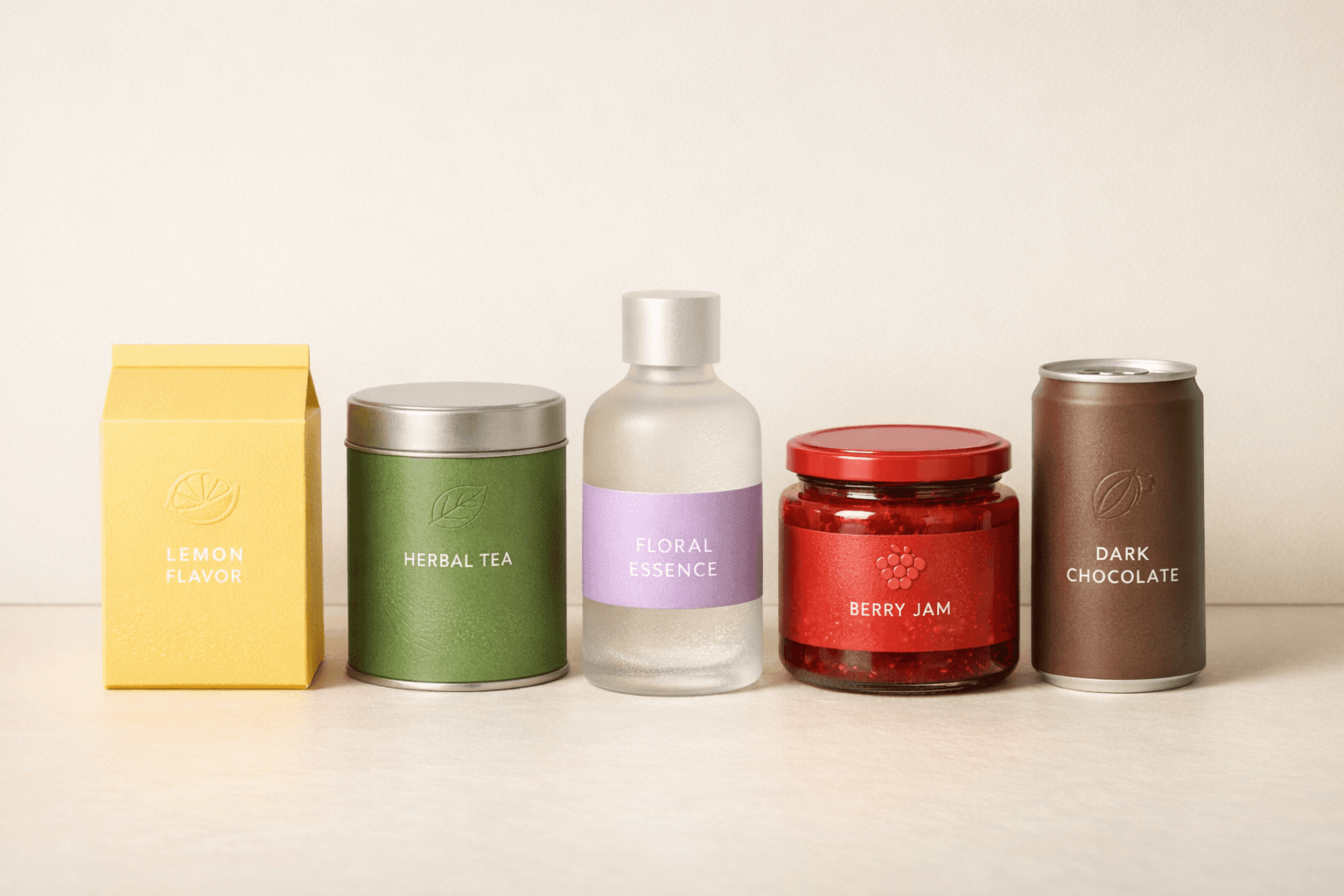
Show the food. Name the flavor in words a shopper would use at the table. Use color and photography that signal what's inside before anyone reads a word. This guide covers how packaging communicates flavor in detail.
Step 3: Decide why you beat the store brand
Pick one reason a shopper should pay more, and prove it on the pack. Store brands are strongest in the aisles where food and beverage brands live. PLMA reports store brand refrigerated sales grew 6.1% in 2025 and store brand beverages grew 4.8%. A product at parity loses that comparison on price.
Raising prices won't cover the gap either. Circana expects most 2026 growth in the category to come from price and mix while volume stays flat or slips, so there's little room left to charge more for the same thing.
A food brand has three honest answers. It tastes better and shoppers can tell. It's made differently, and the difference can be checked: an ingredient, a source, a process. Or it's the one people ask for by name. Choose one. The CPG marketing strategy playbook covers the private label fight across categories.
Step 4: Plan for the GLP-1 shopper
Ask what your product means to a household eating less. Circana reports that households using GLP-1 medications already make up 23% of US households and projects they will account for 35% of food and beverage units by 2030. That's a third of the category buying smaller portions and reading labels harder.
Most brands haven't run this exercise. It takes an afternoon.
Start with pack size. A shopper eating smaller meals wants a smaller format that doesn't go stale, and will often pay more per ounce for it. Then look at what the product delivers per bite: protein, fiber, nutrients. Then look at the occasion. A snack built for volume eating needs a different story than it had three years ago.
Don't put the drug's name in the marketing. Put the benefit there, and let the shopper connect it.
Step 5: Treat the pack as your first ad
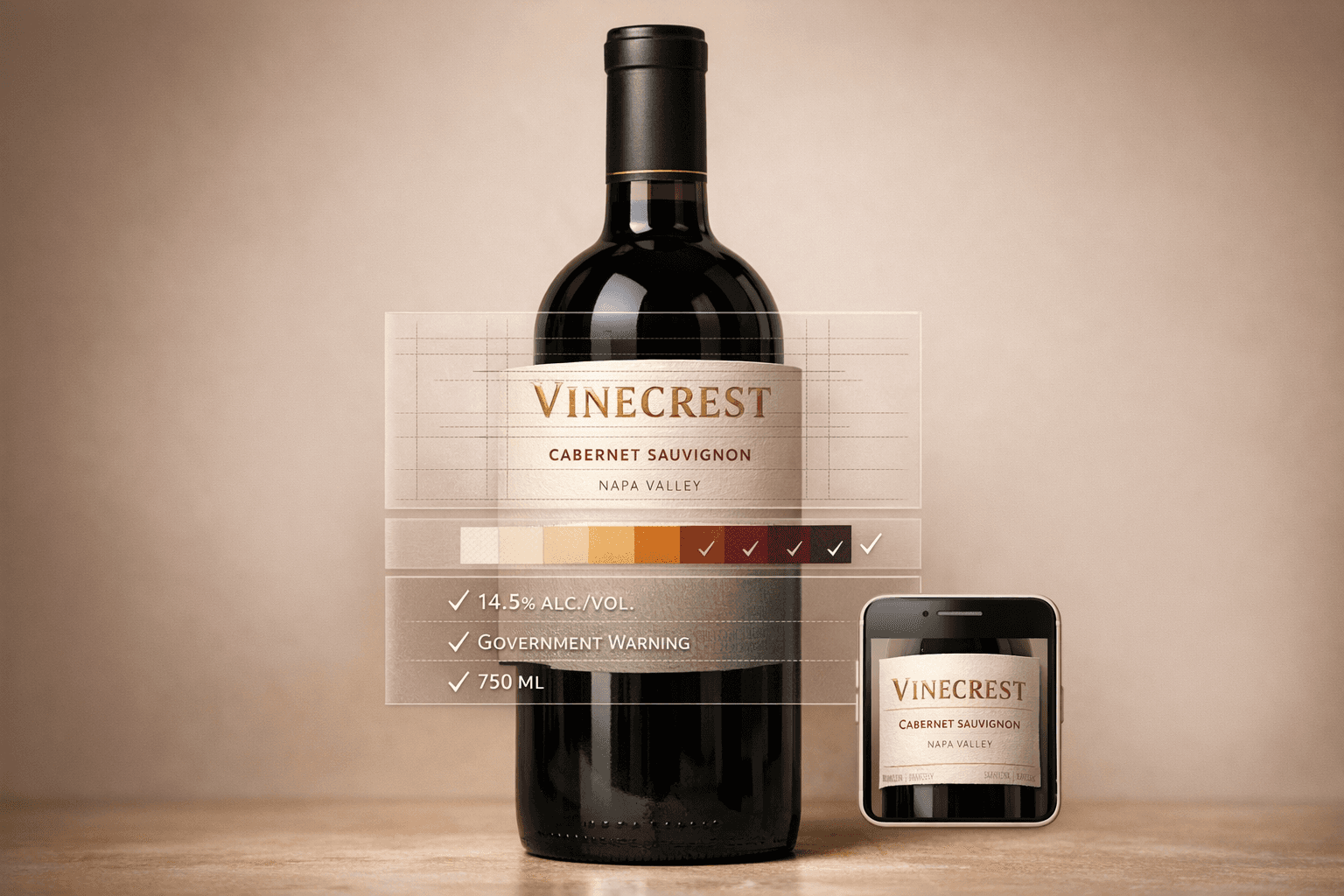
Design the pack to be chosen in three seconds from six feet away. Bigeye's Retail Disrupted study found that 61% of US shoppers prefer to buy food and drink in stores, and 89% say a product's visual appeal matters to which brand they choose. More people see the pack than any ad.
The same study shows what else shoppers weigh. Bigeye found 79% say a brand's environmental and sustainability stance matters to their choice, 78% say the same about products made in the USA, and 77% about local or small businesses. Those are front-of-pack facts if they're true of your brand.
Then make the screen match the shelf. The hero image on a retailer listing is the pack at thumbnail size. If the flavor name can't be read on a phone, fix that before buying a single ad. Bigeye's packaging design team tests both, and the 2027 packaging design trends report shows where shelf design is heading.
Step 6: Fund retail media where your volume is
Budget retail media by retailer, in proportion to where your cases sell. US advertisers will spend $69.33 billion on retail media in 2026, and eMarketer expects Walmart and Amazon to take more than 89% of the new dollars. For most grocery brands, two or three networks deserve real money.
Here's the catch: a retailer's ad dashboard credits the ad for sales that would have happened anyway. Branded search inside a grocery app looks like the best investment in the plan every single time.
So run a sales lift test before scaling a network. Defend your branded terms, then hold the rest of the budget for work the retailer can't do, which is making people want the brand before they open the app. Two guides go deeper: retail media ROI and where brands get it wrong and best practices for Walmart Sponsored Brands ads.
Step 7: Let real people prove it
Use creators to show the product being cooked, poured and eaten, then measure them like a sales channel. Bigeye's Retail Disrupted study found that 9 in 10 people who follow influencers bought a product in the prior six months after seeing an influencer use, review or recommend it.
Food is the easiest category for this. A recipe is content. So is a taste test.
Fit matters more than reach. In the same Bigeye study, 38% of influencer followers said they trust influencers more than friends for product recommendations, and 40% said their trust in influencers had fallen. A home cook with a small following and the product in hand will outsell a famous face reading a script.
Florida Crystals is the example. Bigeye paired influencer partnerships with the brand's regenerative farming story and holiday baking campaigns, across social, digital and retail media networks. The case study reports triple-digit growth as the brand moved from regional favorite to national contender.
Step 8: Get named by AI assistants
Write product content an AI assistant can quote, and make sure other sites repeat it. A shopper who asks an assistant for a high-protein snack without artificial sweeteners gets one short answer with a few brands in it. The brands named are the ones with plain, specific, consistent facts.
That means grams, ingredients and sourcing stated in full sentences on your own product pages. The same facts on every retailer listing. And mentions in reviews, recipe sites and roundups, because assistants lean on what others say about a brand more than what the brand says.
Bigeye's AI SEO and GEO work starts by recording what assistants say about a brand today. This guide explains why a page ranks on Google and never gets cited by AI.
Channel roles at a glance
Channel | Role | Metric |
|---|---|---|
Packaging | Closes the sale at shelf | Velocity per store |
Retail media | Converts existing demand | Incremental sales lift |
Paid social and video | Creates demand | New-to-brand buyers |
Creators | Shows the product in use | Sales by code or retailer link |
Search and AI answers | Captures research | Share of answers |
Email and SMS | Drives repeat purchase | Repeat rate |
Consumer research | Decides the claim | Purchase intent lift |
Bigeye's read
Bigeye's view is that food and beverage brands have over-corrected toward function. The claim takes the front of the pack, and the flavor work gets whatever budget is left.
The demand is real. Circana's 2026 Eating Patterns in America report found 48% of US adults are seeking more protein. But every competitor reads the same report, and a store brand can print a protein count on a pouch as easily as you can. A function claim is the easiest thing in the aisle to copy.
Taste is the hard thing to copy. PepsiCo paid $1.95 billion for poppi in 2025, and what it bought was a soda brand with flavors, fans and shelf space. A claim on its own doesn't sell for that.
Function gets the product tried. Taste, and a brand people ask for, gets it bought again. Bigeye would move money from the third functional line extension into making the core product the best-tasting one in its set, then into telling people so.
Frequently asked questions
What is a food and beverage marketing strategy?
A food and beverage marketing strategy is the plan for how a food or drink brand gets chosen at the shelf and bought again. It sets the target shopper, the reason to pay more than the store brand, the pack and claims, the retailer and media budget, and the measures that show what drove sales.
Do shoppers still buy food and drink in stores?
Yes. Bigeye's Retail Disrupted study of 1,501 US shoppers found 61% prefer to buy food and drink in stores. NielsenIQ reports nearly 94% of grocery shoppers bought both online and in stores in 2025, so the plan has to cover the shelf and the retailer's site together.
How do food and beverage brands compete with private label?
By giving shoppers one reason that survives a price comparison: better taste, a verifiable difference in how the product is made, or a brand people ask for by name. Store brands grew 3.3% in 2025 against 1.2% for national brands, according to PLMA, so parity products lose on price.
How much should a food and beverage brand spend on retail media?
There's no single right share. Bigeye sets retail media by retailer, in proportion to where the brand's volume sells, and tests sales lift before scaling. eMarketer expects Walmart and Amazon to take more than 89% of new retail media dollars in 2026, so most brands do better concentrating than spreading.
How should food brands respond to GLP-1 medications?
Start with pack size, nutrient density and occasion. Circana reports GLP-1 households are 23% of US households and projects they will buy 35% of food and beverage units by 2030. Smaller formats and clear protein and fiber content serve that shopper without naming the medication in the marketing.
What does Bigeye do for food and beverage brands?
Bigeye is a full-service agency for consumer brands, based in Orlando and working with food and beverage companies since 2002. The work covers consumer research through EyeQ, with results in 72 hours, plus brand strategy, packaging, paid and retail media, AI search visibility and analytics.
Talk to a food and beverage strategist
If your 2027 plan needs a second set of eyes, Bigeye's food and beverage marketing team will walk through it with you. Start the conversation.
Sources: Bigeye, Retail Disrupted (2021); International Food Information Council, 2025 Food & Health Survey (published Jan 2026); Circana (Nov 2025, Dec 2025, Aug 2026); PLMA (Jan 2026); NielsenIQ (Apr 2026); eMarketer (Nov 2025); PepsiCo (Mar 2025).
CPG Marketing
Oct 4, 2026
A CPG marketing strategy for 2027 in eight steps, with Bigeye shopper research and current data on private label, retail media, creators and AI search.