/
Brand Stewardship with Anne Huntington Sharma

IN CLEAR FOCUS: Guest Anne Huntington Sharma, CEO of Huntington Learning Center, explores brand stewardship in an age of AI-led disruption. Discover how a nearly 50-year-old heritage brand is reinventing its identity to connect with millennial parents while preserving accumulated trust. Learn about balancing franchise collaboration with compliance, integrating artificial intelligence tools like agentic tutors, and leveraging both physical and digital experiences to drive results.
Episode Transcript
Adrian Tennant: Coming up in this episode of IN CLEAR FOCUS
Anne Huntington Sharma: I do not believe change is necessary unless it's necessary. So if you have a heritage brand and it works, maybe you don't need to change. And we see a lot of examples where folks do try and change, and then they're backtracking.
Adrian Tennant: You're listening to IN CLEAR FOCUS, fresh perspectives on marketing and advertising produced weekly by Bigeye, a strategy-led, full-service creative agency growing brands for clients globally. Hello, I'm your host, Adrian Tennant, Bigeye's Chief Strategy Officer. Thank you for joining us. Most marketers would consider a 50-year-old brand an enviable asset with all that recognition and accumulated trust. But heritage cuts both ways. The very history that makes a brand feel familiar can also make it feel dated. And the instinct to protect what's always worked can quietly harden into resistance to what comes next. So how does a brand that families have trusted for nearly half a century reinvent itself with a new identity, new channels, even artificial intelligence built into the core of the offering without losing the thing that earned that trust in the first place? My guest today is navigating exactly that challenge. Anne Huntington Sharma is President and Chief Executive Officer of Huntington Learning Center, the company her parents founded in 1977, and which today spans more than 300 locations across 42 states. After six years as president, a tenure that included leading the brand's pivot to online learning, Anne became chief executive in 2025. To discuss brand stewardship in an age of disruption, I'm delighted that Anne is joining us today from South Dakota. Anne, welcome to IN CLEAR FOCUS.
Anne Huntington Sharma: Thank you so much for having me on. I'm excited to be here.
Adrian Tennant: Well, Anne, you really grew up inside this brand and then spent the better part of a decade building your own career elsewhere before coming back to lead it. When you returned, what did you see in the brand that someone who'd never left might have missed?
Anne Huntington Sharma: That's a great question. Coming back with fresh eyes and with experience outside of Huntington Learning Center, what I saw was that the system truly works. Yes, even someone who has not left would know that, but going back, I could see that even if it was 1977 or today, the methodology truly works. The people who are behind and were behind the brand are excellent individuals. What I may have seen with fresh eyes was maybe it's time for a little bit of a refresh and a rebranding. So that is good because when you're in it every day, you don't realize, “Okay, maybe we do need to shift.” But I also like to say, “if it's not broken, why would you fix it?” So, coming back in with fresh eyes really enabled me to see it works regardless of the age. And maybe it's time for a little refresh.
Adrian Tennant: Well, of course, Huntington has been part of families' lives for nearly 50 years. That's the kind of brand equity most marketers dream about. But when a brand is that established, where's the line between equity that's worth protecting and familiarity that's quietly holding you back, maybe?
Anne Huntington Sharma: So that is a challenge and an opportunity. When generations know that you are a solution, that is excellent. However, generations really have to know what you do. And a Learning Center back in the ‘90s might have been considered something different than it is today. So, that's where that familiarity is really important because people need to know, “Oh, Huntington is here and is my solution. However, what exactly does Huntington do?” And that's how you have to break through the clutter and you have to break through all the noise to say, “This Learning Center can help you, whether you're an enriched child or a remedial child, whether you're learning how to read or you're trying to get a scholarship on the SAT and ACT.” And that's a really big market to encompass in the name, in direct mail, or in commercial or digital channels, because it's kindergarten through grade 12. It's all different types of students because we're individualized. So it's knowing that Huntington is here. “I know Huntington can help.” Goodness gracious, our website is HuntingtonHelps.com. Our number is 1-800-CAN-LEARN. So we try to make it as simple as possible for the consumer to know that we can help you academically, wherever you are on that journey. That's tough because it's encompassing so much. And the education landscape has changed in terms of definitions, what a student is or is not, what a learning disability is today versus maybe how it was perceived in the ‘80s and ‘90s. Everything has evolved, yet what is consistent is Huntington. And we are able, and have been and will continue, to be able to help as many students as possible. That's where that familiarity, you hit it right on the head because folks know us, but are we the right fit for you? And the answer is yes, of course. And how do you break through that in 30 words or 30 characters or less?
Adrian Tennant: Yes. Well, you're in the middle of a full brand identity project right now. Anne, what was the realization that told you the identity itself needs to change, not just the marketing around it?
Anne Huntington Sharma: So, in terms of refresh, we have gone through a lot of different iterations over the decades. Right now, it's really capturing that Millennial parent and showing that Millennial parent that we're not “old” per se. “We are your solution.” So how do you speak the speak of parents today? How do you get to where they are, and where they're buying, which is very different than where they were, and where they were buying, back in 1977? So it's critical that right now as we're going through this transformation, from a branding perspective, that we stay true to our identity, i.e. our color is green, so that's just the veneer, the color, but then the backbone of it is how do we capture that we are individualized, we're customized and we can help all types of students and we believe that every student can learn, every student can get that best education possible. But how do you say that in a really, really specific way? That also breaks through the concept of, “Okay, are you rigid? Are you corporate? Are you kind? Are you empathetic?” So, we are who we are. We're very family-focused, results-driven. We have no judgment. We really care. We're empathetic. At the end of the day, we get the result. So going through that process with really smart people who are looking at our consumer, they're looking at our franchisees, our staff, tenured, new, to really figure out who we are. So that identity process is, it's a lot of soul-searching in a sense from a brand perspective, but it's also a real acknowledgment of understanding the confidence of who we are and what we do.
Adrian Tennant: Okay, I'd love to dive a little deeper. Anne, when a heritage brand sets out to evolve its identity deliberately rather than drifting into a refresh, what does that process actually look like from the inside?
Anne Huntington Sharma: Well, we need a really, really strong marketing head, which we have, and we need a really clear North Star. Where do we want to go? So we have to have the right agencies we're working with. So at the ground level, it's having an RFP or very clear deliverables with whomever we're speaking with or whoever we're engaging with, and then making sure that the timeline is executed and that along the way that the outside folks we're working with are really getting the right intel from the internal. Because, if an individual speaks with someone who thinks we are a robotic company, well, they probably are not the right people to speak with. So it's also curating who the focus groups are, what calls are delivered, because if an agency only learns about our learning center product, which is basic skills, so like phonics, reading, writing, but then doesn't understand the test prep, SAT, ACT, and state, then all of a sudden they're only seeing, yes, a chunk of the business, but not the whole picture. So the process is really making sure internal resources and personnel are who and what they need to be. And externally, the partners, the vendors are getting access to the right material to make and draw the correct conclusions. At the end of the day, it could look beautiful, but if the consumer doesn't buy into it, it doesn't land. So the first step really is to make sure the partners are correct, the focus groups are correct, the intel's correct, but then test. And test a lot: A-B testing in different markets to ensure that it is correct. And that's where we're at right now in our whole process, where we're finalizing some of the creative, and we're going to be testing it. Without testing, we wouldn't know. And we did that a few years ago, where we had a light refresh, but it didn't land properly for a lot of reasons. And we, of course, corrected that.
Adrian Tennant: Let's talk about the franchise network, because brand consistency across more than 300 locations is its own discipline. Traditionally, franchising treats brand standards as compliance, you know, “Follow the rules.” Anne, what changes when you start treating those standards as collaboration instead?
Anne Huntington Sharma: In franchising, it's really rule-following. You want a collaborative culture when the brand standards are consistent and appropriate for the brand. To have a collaborative culture, there needs to be forums to have those conversations. So we have an advertising fund, 2% of every center's revenue goes into that. And then the fund has a board, five franchisee members elected by the franchisees and five franchisor members. That body really makes sure that nationally we're going where we need to go. And as we just discussed with that brand positioning project, that is through the advertising fund. Now we also have council, such as we're tutoring and test prep. So, of course, we have a tutoring and test prep council. So when it comes to the look, the feel, the brand consistency, and a collaborative conversation or culture, it's really ensuring that those appropriate councils and boards are in talks. So, if we are going to offer something new, like we are rolling out a whole new division called microschools, we are going to get the appropriate councils involved, we are going to test the water, we are going to explain it to the community to get buy-in. If a franchisee is just popping up different programs without our knowledge, that could be a way to systemize something that's really great or also say, “Look, the reason why your revenue is down, and you're not getting all the results with the students in your community, is because you're not focused on what Huntington Learning Center does great.” The converse is also true. If some franchisee has thought of something really great, talked to their franchise business consultant, spoken with the appropriate councils, showed efficacy in it, then we can systemize something like that. And that's really how microschools were born, where in Florida, where you are, there are great funding through the state where families can use dollars at private providers. Some of our franchisees have taken that over the years and have created schools during the day, and then in the afternoon they have the tutoring and test prep. Well, now with the onset of all the education savings accounts in lots of different states, we systemized it and packaged it into microschools. And we then leveraged accreditation and we went through an accreditation process to be accredited as a microschool. We are currently accredited as a supplemental education center. So, we took it that step further. But to have that collaborative conversation, there has to be trust. There has to be respect and understanding of what the franchisee purchased. And a lot of times we do have to go and be that franchisor who says, “You're not in compliance.” And then there's a level of escalation where you start with a conversational warning, default, etc. But we have to do that from the franchisor perspective to also protect the brand. And all franchises want that too, because if there's a bad apple in the bunch, that could affect, especially the neighboring franchises, but the overall brand in general. And then that's amplified today with all of Google reviews and all the reviews out there, that if you get a lot of not happy customers, well, you have to course-correct pretty quickly. And that is part of marketing, which you are like, “Well, is it marketing or not?” It is, because it's customer service and it's a brand reputation, which falls under marketing. So it's big in terms of brand equity and also brand consistency. There's that delicate line of collaboration, but also following the rules.
Adrian Tennant: One of the hardest tensions in any distributed brand is staying coherent everywhere without flattening what makes each location locally relevant. How do you give your franchise owners room to be local while still protecting, of course, one recognizable brand?
Anne Huntington Sharma: Local is essential. Every franchisee, they are the ambassador of Huntington Learning Center. They are the face that goes into the schools. They are the face that sponsors the local 5K run. They are the face that goes into libraries, goes into the PTA meetings, goes into the college fair nights, knows the counselors, knows all the different doctors, pediatricians. That franchisee and that franchisee's staff are the name of Huntington. “Oh, I know X, Y, and Z in this community.” And it happens to me all the time when I'm flying around. They'll say, “Oh, what about that franchisee in Plymouth?” I'll be like, “Amy, she's amazing.” Or, “What about that one in Pennsylvania?” “Lori, she's amazing. And now her daughter's working there.” So it's having, even from the franchisor level, we need to know all the local. Because it's not about me, it's not about the franchisor, it's about the franchisee and how that franchisee is really leading the brand in their community to make impact. And that's why folks who before they're franchisees, prospects are interested in us because they can do really good, impactful work in their community, all the while having the backing of the franchisor, which is essential. And in franchising, the slogan is “You're in business for yourself, but not by yourself,” and we live and breathe that. We want the communities to know, “Mr. and Mrs. Franchisee, you are Huntington Learning Center in your community.”
Adrian Tennant: Let's take a short break. We'll be right back after this message.
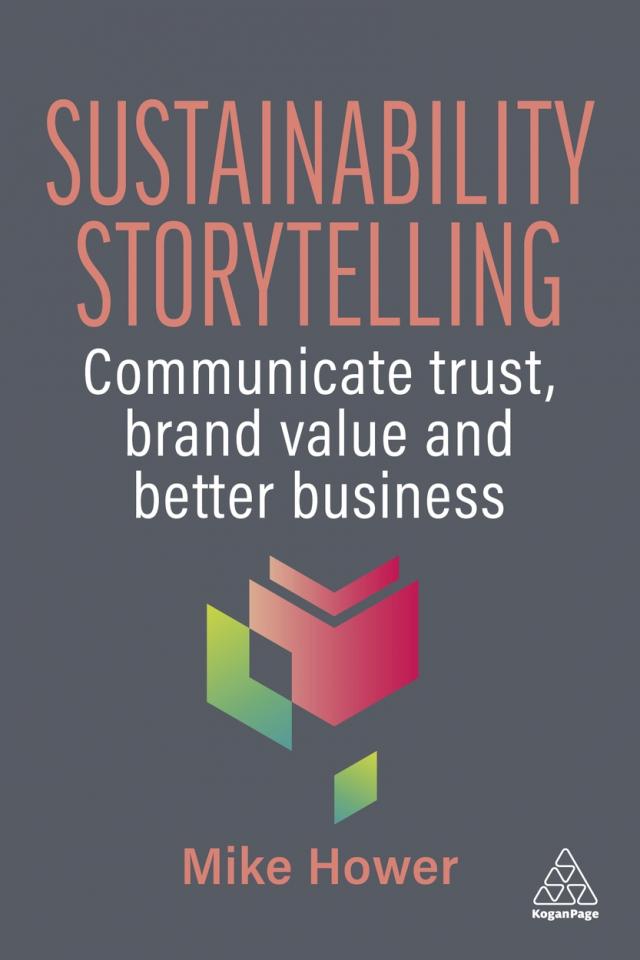
Mike Hower: Hey there, I'm Mike Hower, author of "Sustainability Storytelling: Communicate Trust, Brand Value, and Better Business," published by Kogan Page. I've spent nearly two decades on both sides of sustainability communication.
In my new book, I introduce a framework called the Four Cs of Effective Sustainability Storytelling: Context, compelling, credible, and compliant. Four areas that turn complex sustainability initiatives into stories that build trust, manage risk, and deliver real business value.
You'll find practical tools for avoiding greenwashing, navigating evolving regulations, and aligning your sustainability, communications, marketing, and legal teams around a single coherent narrative.
As an IN CLEAR FOCUS listener, you can save 25% on "Sustainability Storytelling" when you order directly from koganpage.com. Just enter the exclusive promo code BIGEYE25, that's B-I-G-E-Y-E-25, at checkout.
Shipping is always complimentary for customers in the US and the UK. I hope my book helps you tell sustainability stories that resonate, hold up to scrutiny, and move business and sustainability goals forward. Thank you.
Adrian Tennant: Welcome back. I'm talking with Anne Huntington Sharma, President and Chief Executive Officer of Huntington Learning Center, about how a brand with nearly 50 years of heritage is reinventing itself. Anne, when we were preparing for this interview, you told me that Huntington is putting artificial intelligence right at the core of the offering. An agentic tutor, a virtual classroom, and custom-built curricula. But this is about as high-trust as a service gets because parents are handing over their children's education. How do you introduce AI into that relationship without negatively impacting the trust the brand has built over all these years?
Anne Huntington Sharma: So, we're testing all of this right now. I'm actually a student with the agentic tutor right now, just making sure. As are others, of course, we go through Alpha tests and Beta tests. We are currently testing our virtual classroom or interactive classroom. with students in our Bronx location, and our custom curricula is going through a lot of rounds with our tutors. So in order to really gain that trust with families, there has to be efficacy and a proven method that rolls out the different products. So, there are the three components. So in terms of the interactive classroom or the virtual classroom, it has already gone through Alpha tests, Beta tests, and now it's the next version of a Beta test with some more students. So it's gone through a lot of different iterations in there, and we're currently rolling it out system-wide as we speak. So that's the easiest way because it's similar to a Zoom or a Teams, but it's tailored to the student and the student's program. So it's very, very specific to ensuring that experience of an online tutoring session is done the Huntington way. It's extremely individualized, it's extremely positive, and ultimately, it ensures that the student can get results because the platform is intuitive. From a custom curricula perspective, what we're doing is we're building out all this custom curricula with prompt engineers. We're leveraging AI, but every single piece of curricula, and I mean every (and this is tens of thousands of pieces that we've already done) has gone through an actual Huntington Learning Center tutor to verify that it is accurate. And because it's custom curricula, if there is something that we find or someone flags in real time, we can quickly change it. But every single piece, we're leveraging the technologies that's out there. And we've brought on board really smart people to ensure that the integrity of our methodology and our instructional procedures are combined within what we're building. Now, the agentic tutor, that is really essential because it is fully built with AI. However, it is built with the underpinnings of Huntington Learning Center’s instructional procedures, our methodology, and all of our results of nearly 5 decades. In addition to that, we've created guardrails because we know that even in the news, sometimes, you hear some not-so-great stories about agentic bots or AI. So we have partnered with AWS to create guardrails, and we're even taking it a step further and having outside professionals verify that all of the guardrails that we're doing and the methodology is accurate. So families will be able to trust that the integrity, that the method, is true to what we have been delivering for nearly 50 years. In addition to that, the agentic tutor is to support the human tutor. We believe that both are the best option today. As we learn, we may see that the agentic tutor can be a standalone, but the product might be a little bit different than what we're delivering today. That is to be determined because we have to base every single thing that we're doing on results and efficacy. So in today's form, in terms of the agentic tutor that we're building, we're still testing it. That has not rolled out to the system yet. In its first form, the form that it’s being built for is to support the live tutor so the tutor can help more students. So think about it this way. There's a school district that may not be within the direct area of a center, but has the funding to help students. Now we can help more students. So the scalability, because we have this agentic tutor with a live tutor, will enable us to scale and help more students get the best education possible through the Huntington methodology, which we know works. But that's why we're building it, so that we can continue the vision of Huntington, leveraging all the technology that is at our fingertips today. And that's what we have been building for the past, basically, two and a half years since AI has really become a big mainstream item. And right now it's really neat because it's all rolling out.
Adrian Tennant: Got it. Many brick-and-mortar-based brands hesitate to launch a digital offering because they're afraid it'll cannibalize the core business. Now at Huntington, your experience seems to point the other way, with the families who use both the centers and the online programs getting the best results. So Anne, what did you learn about how the physical and digital experiences can reinforce each other?
Anne Huntington Sharma: COVID was, of course, a crazy time across the whole globe. COVID, from our perspective as a brand, enabled us to leapfrog. Because before COVID, we were talking about what online could look like for Huntington. But it was talk. With COVID, we had to act really quickly to ensure that the physical doors, should they be closed, remained open virtually. So, we had 99% adoption. I always say there's this one franchisee who just did not want to do it, which was fine. With that, though, we saw that there were great results with online students. So the pendulum swung to online because that made sure that the actual centers could continue. With all the chaos out there in the world, there was consistency with the Huntington program. The pendulum then swung back to in-person. But some of our franchisees saw, “Wow, I got great results with this.” And it wasn't the virtual interactive classroom that we're building today. It was leveraging technology folks knew. So we used Zoom. And the curricula we used was PDFs and some homegrown, but we had to really bootstrap it to ensure that the centers could continue. Well, guess what? They continued, but we also saw results with our students. And then as you alluded to, we see the best results with students who are in person and online because they can attend a Hunting Learning Center more hours at a quicker time, which with us, we believe in something called “Big steps, little steps.” So we need the students to come as much as possible so they can really reinforce all the skills that they're being taught, and they can learn the skills. So, in terms of being in person and online, that exercise, or that global pandemic, made us realize that there was a need and a want. And our franchisees saw that they can help more students. And they can help students, let's say, during the summer they go to grandma and grandpa's. Now, all of a sudden, they don't have to stop their sessions. Or, let's say that the parents are divorced and one family member lives further away. They can continue their sessions. And every single decision we make is based off our mission to give every student the best education possible. Our mission doesn't say in-person or online. It's “delivering the best education possible.” So we're going to find the means to do that. And with technology, we can see that. A really important note, though, is we believe in in-person tutoring. We believe in brick-and-mortar. But we can also believe in online. We only believe in what we know works and we know both work. And so anything we do, and anything we market, we test and we retest, which is what we've been doing since day one and will continue to do. But now as we're building out all of the online tools, we are testing, retesting, and building on our methodology of the five decades. So it's not challenging each other, it's really amplifying each other online and in person.
Adrian Tennant: Great distinction. Well, Anne, for any listeners who are sitting on their own heritage brand and feeling that same pull between honoring the past and staying relevant, what's the most useful first principle you'd give them before they touch a single thing?
Anne Huntington Sharma: Really know who you are. If you're based off of your mission, make sure that as you're moving forward, that it's focused also on that mission. I do not believe change is necessary unless it's necessary. So if you have a heritage brand and it works, maybe you don't need to change. And we see a lot of examples where folks do try and change, and then they're backtracking. So, I would say really understand what the purpose is. If there's a problem that needs to be solved, how are you going to solve it? And even if you decide at the end of a project that you're not going to change it, it's still a good exercise to go through internally. Until you launch something and market something, no one actually knows what you're working on. So that could also just be good from a pulse check to say, “You know what, we're good.” Or, “You know what, let's think about amplifying this one area or sunsetting this area.” You have to base it off of results, and you have to base it off of what the consumer is doing, and how that consumer is acting today, and where you're forecasting your consumer to be in the next short-term and long-term.
Adrian Tennant: And as you step fully into the Chief Executive Officer role and your parents move to the board, what's the version of this brand you're most determined to build?
Anne Huntington Sharma: So in terms of stepping into this role, it's really incredible that we still have our co-founders. And many brands say, “Well, the co-founders, they are no longer here.” So it's this delicate dance in terms of how do we move forward as quick as possible, while being respectful and understanding what the co-founders had built. What I am most determined is to ensure that the legacy continues and that we ensure that we have the best system, the best franchisees, and the best management team and all support team behind us. We're going through transformations across the board. We've been speaking about the marketing transformation and brand positioning. We're going through that whole IT transformation, which we also spoke about in terms of the AI, but there's a whole underpinning beyond that in terms of all of our systems and processes. I am most determined to get this right because so many brands don't. And it's critical that as the CEO, that I and the team are listening and that if something is wrong, we course correct as quick as possible while being as delicate as we need to be with our co-founders.
Adrian Tennant: Great conversation. Anne, if IN CLEAR FOCUS listeners would like to learn more about you or Huntington Learning Center, what's the best way to do so?
Anne Huntington Sharma: If you're looking for help for your students with Learning Center basic skills, reading, writing, SAT, ACT subjects, call 1-800-CAN-LEARN or visit us on HuntingtonHelps.com. If you're interested in franchising, HuntingtonFranchise.com or just Google Huntington Learning Center. I'm on LinkedIn, Anne Huntington Sharma, as is the company. We are there for you. We are there to help you wherever you are. So just find us or call us at 1-800-CAN-LEARN.
Adrian Tennant: Anne, thank you very much for being our guest this week on IN CLEAR FOCUS.
Anne Huntington Sharma: Thank you so much for having me.
Adrian Tennant: Thanks again to my guest this week, Anne Huntington Sharma, President and Chief Executive Officer of Huntington Learning Center. As always, you'll find a complete transcript of our conversation with timestamps and links to the resources we discussed on the IN CLEAR FOCUS page at bigeyeagency.com. Thank you for listening to IN CLEAR FOCUS, produced by Bigeye. I've been your host, Adrian Tennant. Until next week, goodbye.
Timestamps
00:00: The Necessity of Change for Heritage Brands
00:20: Introduction to In Clear Focus and Guest Introduction
02:10: Fresh Perspectives on the Brand's Effectiveness
03:29: Balancing Brand Equity and Modern Relevance
05:56: The Need for a Brand Identity Refresh
06:10: The Process of Evolving Brand Identity
08:09: Navigating Brand Consistency in Franchising
10:18: Collaboration vs. Compliance in Franchise Standards
12:32: Local Relevance vs. Brand Coherence
16:30: Introduction to AI in Education
17:31: Testing AI Solutions for Trust and Efficacy
22:45: Integrating Digital and Physical Learning Experiences
26:23: First Principles for Heritage Brands
28:02: Vision for the Future of Huntington Learning Center
29:25: How to Connect with Huntington Learning Center