/
Community Strategy with Lindsay Pinchuk

IN CLEAR FOCUS: Lindsay Pinchuk, host of the Dear FoundHer podcast and consultant, shares how to leverage community strategy for sustainable growth. Drawing from her success building Bump Club and Beyond, Lindsay explains why audiences crave connection, not just product pitches. Discover her actionable SWEEP framework to amplify your message across multiple channels and hear how to forge authentic zero-transaction partnerships to turn passive followers into highly engaged, loyal brand advocates.
Episode Transcript
Adrian Tennant: Coming up in this episode of IN CLEAR FOCUS
Lindsay Pinchuk: Stories are really the connector. What are the stories that you can tell? What are the experiences that you can share? How can you really put heart and soul into your brand versus just like a logo and a "buy me"?
Adrian Tennant: You're listening to IN CLEAR FOCUS, fresh perspectives on marketing and advertising produced weekly by Bigeye, a strategy-led, full-service creative agency growing brands for clients globally. Hello, I'm your host, Adrian Tennant, Bigeye's Chief Strategy Officer. Thank you for joining us. Every brand says it wants to build community, far fewer actually know what that means or how to do it without a significant paid media budget. The gap between having an audience and building a community is one of the most consequential distinctions in marketing today, and many organizations are on the wrong side of it. My guest today is Lindsay Pinchuk, an award-winning entrepreneur, marketing consultant and host of the Dear FoundHer podcast, ranked among the top 0.5% of shows globally. Lindsay bootstrapped her national parenting community Bump Club and Beyond from a $500 investment into a 7-figure business reaching 3 million people a month, all without paid advertising, for nearly 8 years. Today, through Dear FoundHer and her consulting practice, Lindsay works with brands of all sizes to help them rediscover the community-first fundamentals that drive real growth. To discuss why treating your audience as a community changes everything, and the practical strategies brands can use to build one, I'm delighted that Lindsay is joining us today from Chicago, Illinois. Lindsay, welcome to IN CLEAR FOCUS.
Lindsay Pinchuk: Thank you so much, Adrian, for having me. I'm thrilled to be here.
Adrian Tennant: You spent a decade at Hearst Magazines and Time, Inc. selling integrated marketing programs to Fortune 500 brands. Lindsay, what did that experience teach you about how large companies think about their relationship with consumers?
Lindsay Pinchuk: I was at Hearst from 2002 until 2010. So to paint that picture, that was really before digital was a big piece of how we consumed media. I loved picking up my printed publications every single week, month, etc. I loved reading magazines. And when I think back to both Hearst and even Condé Nast those two publishing houses did not listen to their consumers and did not follow their consumer behavior to the digital space the way other companies did. For example, Meredith Corporation had a far more robust digital platform, and so did Time Inc. And I'm only really speaking in my capacity as an ad salesperson, but that was something that really impacted my role and my output because I was selling against companies and publications that were looking at themselves as brands and not just as a magazine. And it really impacted the actual brands at Hearst. I mean, Good Housekeeping is one of their most iconic brands, and they were not doing what they needed to be doing back in 2008, 2009, 2010, to prepare for this big migration online. And you can see that now. I mean, there are no magazines. I mean, magazines are so thin. It's not even something that really people consume anymore. Because these big brands that were iconic were not listening and following the behavior of their readers. It made room for other brands to come in and start and really take away that readership, and it did. And so I think the biggest thing is big companies don't often listen to their customer and a lot of times they think they know best, and that's really when they miss the mark.
Adrian Tennant: Well, you made the leap. The community you founded, Bump Club and Beyond, grew from a $500 investment to a seven figure business reaching 3 million people a month. And you did it all without paid advertising for nearly eight years. Now, when you look back at that growth, what was the engine that made it possible?
Lindsay Pinchuk: So the very first thing is that it started with me, and I was a person, and I put myself out there in a very vulnerable way, sharing my stories, talking about my pregnancy, and I wasn't worried about revenue. I wanted a community. I was creating a community for my own need. This wasn't a business at first. And in doing that, and in not really worrying about the revenue or what was going on in terms of dollars and cents, I allowed myself to really start building a community and not only build a community who trusted me, but to connect with a community. But the engine behind it all was the fact that I was very consistent in the message that I was sharing or the messages– like there were five to ten very core messages that I shared regularly, that connected with my end user who were expectant parents and new parents and eventually as we grew parents with younger kids, you know, it was connecting through those messages and then it was putting those messages out everywhere that I could and everywhere that my core consumer was. And that really was the engine that grew this company. Without that foundation, we would never have reached 3 million users per month. We would never have gotten to a point where we could have run ads, because we did eventually, but we didn't need to at first. And I didn't have the budget to be able to do that. But those were really the core principles that pushed this company out into the world. And it all stemmed from this trust that I built by putting my face and my name on this brand. And it all goes back to people wanting to do business with people, and that still holds true. Stories are really the connector. And so I think that it's so important to really peel back the layers as that big business. And when you think of the engine, what are the stories that you can tell? What are the experiences that you can share? How can you really put heart and soul into your brand versus just a logo and a “buy me?” And you know, in order to get to that “buy me” transaction, you really do need to put yourself out there and you need your brand to have soul.
Adrian Tennant: When we were preparing for this episode, you shared with me that one of the patterns you see when consulting with larger brands is that they default to talking about their product rather than to their community. We love case studies on IN CLEAR FOCUS. So, Lindsay, can you walk us through an example where shifting that approach made a measurable difference?
Lindsay Pinchuk: Yes, I absolutely will. And I first want to say that I think that when you think about a lot of big brands, it's really the dollars and the cents that they put first. There's an obvious reason for that, especially a very big company often is reacting to a board, to stock prices, to investors. It's a very different thing than a small business. But I actually had a client when I first sold Bump Club and Beyond. And then two years after I exited, I took on a client. And it was a 9-figure apparel brand. She was sold at Target. So she had actually a line for Target and then her core line, which was a higher end product on her own website. And when she brought me in, her big thing was: we are this nine-figure brand. We're sold at Target. I think at the time, they maybe had like 80,000 followers on Instagram. And she said, we just are not seeing the engagement or the transactions from our Shopify on our Instagram. We aren't seeing what we should be seeing from that core customer and from an audience or a community of our size. And there were a couple things that were red flags immediately. Number one, this company had bought followers. And so that was a very big mistake. And I just want to add that to kind of what I'm about to share because you don't ever want to buy followers. All that is, is a vanity metric, and that's never going to convert to sales because people you buy are not necessarily your people. This was a maternity company and they bought followers, many of whom were like men from India and China and from Africa. They were not buying this brand, right. So, that was the first thing, because that was really messing up their metrics in terms of their engagement rate and in terms of open rates on things. It just was not a good practice. So, I would never recommend doing that. But the second thing that they did that was the big no-no is they only showed up on social media talking about their product. So every single post was like a picture of a product and a buy me, buy me, buy me, buy me. They were not talking to their core customer or their community. And their core customer/community was expectant moms. Now, you don't need to share a product with expectant moms to connect with them. Expectant moms have so many things they're thinking about. They have so many concerns on their mind. All you need to do, and this is really the same with any demographic and any group of people, is figure out what's important to them. And what are their pain points, and what do they need help with? And so what I did with their social strategy was I said, we're going to talk about one product once a week. We're going to share your “offer” once a week. And the rest of the week, we're going to be talking to expectant moms about the things that are most important to them. And so we started showing up first sharing little tips and tricks about pregnancy. We started sharing real stories about pregnancy, like real women talking about being pregnant. Something that very much resonated was I started doing humorous quotes, like graphics with humorous quotes about pregnancy that truly connected with this community. I remember we had one quote that went crazy viral and it was responsible for 5,000 new followers. And you better believe that all 5,000 of those followers were new expectant moms and new moms. So we really shifted the mindset on what we were sharing. And what ended up happening was, number one, we ended up growing the follower count to reach real people who would potentially consume this product. So expectant moms and new moms and even second-time moms. And the engagement rate went up, which is amazing. But then those posts that shared their “offer” once a week, they started seeing transactions on them because the women who were following trusted them. They were building trust and they were showing their core community, “Hey, we care about you. We don't just care about selling our maternity bras.” And that was very important. And it was a very big shift. And I think it was a huge eye opener for them.
Adrian Tennant: That's so interesting. Well, many brand marketers listening may agree that community matters, but feel stuck when it comes to execution. Now, you've developed a practical structure you call SWEEP. Can you explain it?
Lindsay Pinchuk: Yes. So before I get into what SWEEP is, I think it's very important to remember that your community is your brand's number one asset. And when you have a community who follows you and trusts you and hangs on your every word, you can ask them to share things for you. You can ask them for feedback. You can introduce new products and do testing. Now, the number one way to build community is through your content. And this is where I think a lot of marketers get stuck. Because a lot of marketers and a lot of founders and business owners think about their content as just social media. And in particular, many just think about it as just Instagram or just TikTok. It's just their social media. When in reality, your content is every single thing that you put out into the world about you and about your brand and about your products. It is everything. So it's, yes, your social media, and that's a big piece of it, and obviously, a very important part in today's economy and creator economy and brand economy is your social media. But I would argue that it's a piece of the pie, and it's not as important as even your email list. So your email is important, your website's important, events are important, partnerships are important, publicity is important. All of those things are incredibly important in terms of getting your message out to your community, wherever they are, and building that trust and ultimately growing your community and your engagement. So that brings me to the framework, and the framework, as you mentioned, is called SWEEP. And this was something that I didn't realize I was doing the first time I built my first company, Bump Club and Beyond. It wasn't until I sold it and then I left and I was like, well, what made it successful, that I realized what it was that I was doing. You mentioned at the top of this, I didn't have ads. I didn't have a million followers. There actually was no social media when I started. But what I had was this foundation of marketing, and I understood how to get the message out. So every single thing that you as a brand does needs to follow the SWEEP acronym. And what that means is you take a piece of content or a message, and you SWEEP it across social media, your website, your emails, your events, your partnerships, and your publicity. And it lives in all of those different tactics. Because when you do that, it amplifies the message. It amplifies the content. People start seeing you in more than one place. Like I, for example, am hosting an event in a couple of weeks. And we've been sharing on social media a ton. And I was getting feedback recently from people in the demographic who would potentially come to the event in the market where we were going. And they were like, “I haven't seen a single thing about this,” which just goes to show your social media is important, but it can't be the end all and be all because truthfully, not everyone's going to see what you put out. And so I reached out to a lot of local partners and a lot of partners in general that have big presence. And I asked them to start sharing it, but not just on social media, on their emails and mentioning it in rooms where they were. And we got some articles written about the event. And guess what, The wheels are in motion and more and more people are registering for the event because you have to SWEEP it across all of those tactics.
Adrian Tennant: Let's take a short break. We'll be right back after this message.
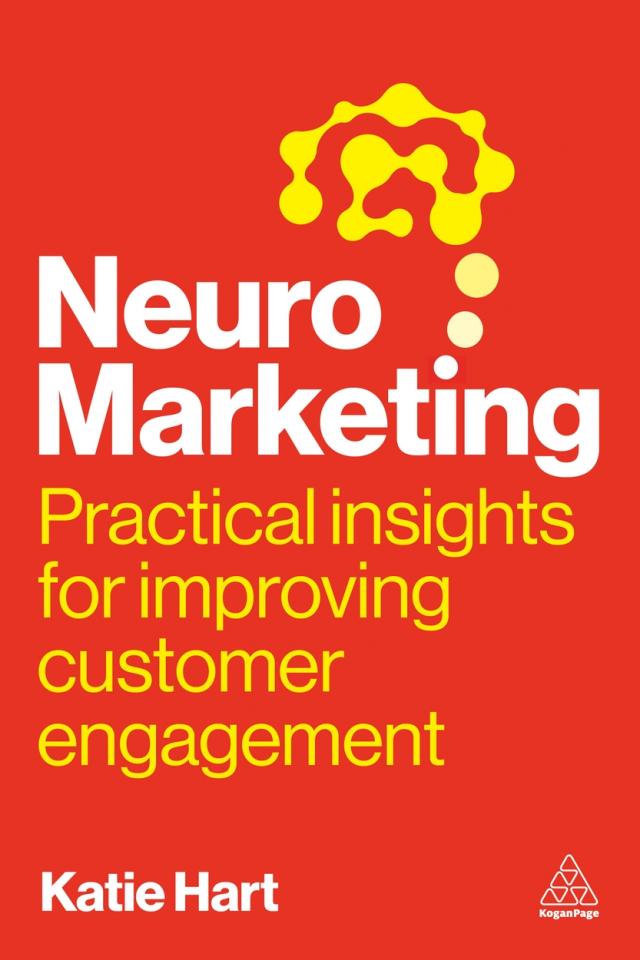 | Katie Hart: Hello, I'm Katie Hart, author of "Neuromarketing: Practical Insights for Improving Customer Engagement," published by Kogan Page. I've spent more than 15 years bringing neuroscience and psychology into marketing practice. In my book, I translate academic neuroscience into clear, actionable tools, covering attention, emotion, memory, and decision-making, alongside practical chapters on how each of the senses can be used to strengthen brand recall and shape consumer choice. You'll learn how to apply evidence-based techniques that improve engagement, optimize creative, and elevate your professional impact, drawing on original research I've conducted with leading brands. You can save 25% on "Neuromarketing" when you order directly from KoganPage.com. Just enter the exclusive promo code BIGEYE25 at checkout. Shipping is always complimentary for customers in the US and the UK. I hope my book helps you build campaigns grounded in how people actually think, feel, and decide. Thank you. |
Adrian Tennant: Welcome back. I'm talking with Lindsay Pinchuk, an entrepreneur, marketing consultant, and host of the Dear FoundHer podcast about why community-first marketing is one of the most powerful yet most overlooked strategies for brands of any size. Lindsey, it's my experience that many brands are apprehensive about showing the people behind their business, fearing that they'll lose control of the message. Yet, your core principle is that people connect with people, not logos. For marketers operating inside organizations with legal teams, compliance requirements, and of course brand guidelines, how do you make that case?
Lindsay Pinchuk: This is a great question. I love this question. And I think that there's obviously a different case to be made for every kind of brand, size, company, etc. And I want to caveat that because, of course, if you have a company that's like, you know, vitamins and supplements, you're going to have different compliance issues than an apparel company. It's just different. But regardless, the core principles remain the same. And what I would say is I would absolutely identify a few core individuals that can be the face of your company. So you know, and I think a few is key, like the big downfall for my first company, Bump Club and Beyond was that it was just me. And I eventually aged out of being a young mom and I didn't make sense anymore. And so I think it's really important that you diversify and it's okay to have multiple faces of the company and figure that out. I also think that it's okay to put other people on your social media and on your website, maybe in a lower role. So you might not necessarily have them take over social media or create content or speak as a spokesperson on behalf of your brand to the press. But those people could be interviewed. Those people could appear in the background. But then the bigger picture of all of it is you absolutely, if you're a big company and a big corporation, you need to set parameters and you need to set boundaries and you need to really sit down and say, “What are we willing to share? What are we not willing to share? What are the guidelines for our brand on social media in press interviews?” And it's really important that those representatives of your company know and understand what they can and cannot talk about. And I would say for any individual company, any individual who's a small business owner, all the way up to a large company, it's very important that you have boundaries and that you understand what you will and will not talk about. And if you are nervous about it, hire someone to media train you and hire someone to make sure that you are prepared to say those things in those public arenas.
Adrian Tennant: Great advice. Well, the SWEEP framework grew out of your analysis of what actually built Bump Club and Beyond. When you use SWEEP as a diagnostic with a new client, what does that assessment process typically look like? What kind of patterns do you find?
Lindsay Pinchuk: So usually when I sit down with a new client, I go through all of those elements that I just mentioned. We look at their social media. Where are they? How big is their following? What is their engagement like? Engagement is really important. I think that's a more important metric than the number of followers. And I often ask, it's not just looking at the numbers, but I often ask them, “Where do you see opportunity?” And “What do you want to be doing?” And “Are there goals on social media that you're not reaching right now?” And that way, I can put that into my assessment. I also obviously look at their website. Your website is your homepage. That's where you refer people for more information. And I think so many brands miss the mark by treating it as a billboard versus a place to transact. And you need to know when you go to someone's website exactly what they're selling and how to get it from them. And I think that's very important in terms of the diagnostic process because when you're SWEEPing things, you need to be able to say and go to www.dearfounder.com for more information. That's very important. I also look very heavily at emails. I think that emails are your number one asset outside of your community. When I sold Bump Club and Beyond, I sold 150,000 emails and that was the largest part of my sale. It didn't matter that I had 125,000 followers on Facebook and 80,000 on Instagram because I don't own that. I owned the emails. And so a lot of brands are not set up in a sophisticated way with their email database or how they're actually acquiring those emails. So that's a piece of it as well. Like, when I do a partnership, a lot of times it's sharing email addresses, but if I don't have an email database, then the partnership is kind of null and void.
Adrian Tennant: Which of those six SWEEP levers do you find most brands are currently underutilizing?
Lindsay Pinchuk: Partnerships. First of all, I built both my companies on a partnership model. And when I say partnerships, I'm not referring to paid partnerships. I'm referring to zero transaction partnerships. I'm referring to find another company that is meeting and reaching your target consumer and do something with them. Plan an event, plan some content, do something so that you are borrowing each other's communities. That is really and truly the way I grew Bump Club, and that's how I started Dear FoundHer. Dear FoundHer started as a podcast. That's what it was first, but it was a podcast with guests. They were my partners. They still are. But immediately they were sharing the episodes. My guests were sharing the episodes. It was like a no-brainer. And I just think that when there's no monetary transaction and it's really and truly a partnership because it means something and it works and you're reaching the same people, and you're talking to them about the same concerns, that's when partnerships work and that's when you really grow your community. So, I think that so many brands instead focus on like, well, I'd rather have someone pay me a fee to advertise or whatever it might be. Honestly, I have seen so many successful partnerships take place that I would rather have a partnership and get, I don't know, 1,000, 2,000 new followers, new email addresses, whatever, than have someone pay me a few thousand dollars for an advertisement or a sponsorship or whatever it might be. Because those customers, the value of those customers is far greater than the short-term monetary gain.
Adrian Tennant: You consult with some large brands, yet you mentioned to me when we were preparing for this interview that you often find that very basic, simple marketing has been thrown by the wayside. Lindsay, what is it about operating at scale, which I think you called The Machine, that causes organizations to lose sight of the fundamentals?
Lindsay Pinchuk: Yeah, I mean, honestly, I saw this firsthand when Bump Club was acquired. And it's really that when it comes to the machine, they're focused on money first and foremost. And I understand that. Obviously, money makes the world go round. Of course, you want a profitable business. But what I saw with Bump Club and what I do see with a lot of big companies that I work for is they don't focus or care about what I was saying before, the heart and soul of the business. And with Bump Club, for example, everything went from community first and transparency and connecting with our community, those were like our core tenets, to all of a sudden being associated to a P&L. And all of our content that we were putting out into the world started being sponsored, and our community didn't like it. And there were other ways to make money. The minute that I was extracted from a lot of that content and it wasn't a person showing up anymore giving advice. Instead, it was like, download this PDF. That was the downfall of the company. I mean, people really wanted advice from another mom. They didn't want advice from a PDF, they were okay to take the PDF when I gave it to them. So I think that the bigger thing is, even if you are a big brand, it is so important to have people representing your brand. And it is so important that your brand has a pulse, and it's not just a pulse for transactions, but it's really a pulse for caring about the people who are consuming from you. And the minute people don't feel that they're cared for, that's when they lose trust in you.
Adrian Tennant: Well, you produce and host your podcast, Dear FoundHer, that's F-O-U-N-D-H-E-R, and is a community building exercise in its own right. I'm curious, Lindsay, what has hosting a podcast taught you about community that you didn't learn running Bump Club?
Lindsay Pinchuk: So it's interesting because when I ran Bump Club, it started with events. It was an events-forward company, right? And I, of course, always knew how powerful events were. But when I started hosting the podcast, it was 2022, so we were coming out of the pandemic. I started hosting the podcast, I started sharing stories. At first, it was just sharing other people's stories. It wasn't until season two that I started sharing my own and really started infiltrating the podcast with my own lessons as well. But in that first season, almost immediately, people started asking me, we want to meet up with other listeners. We want to know what's going on with other people in this community. And yes, I knew events were so important when I had an events company. But my intention was never to host another event again after I sold my company. I had done 2,000 events in a decade, and I hosted an event with a friend of mine, Mara Smith, who owns Inspiro Tequila. She's another female founder. We hosted an event here in Chicago, it was invite only, and people came in droves. And then the people who didn't know about the event, because they weren't invited, because it was invite only, were so upset and they were like, “When are you doing another one?” So it really showed me the power of meeting in real life in person. I obviously knew this through Bump Club, but I don't think I realized that it translated into every aspect and every niche that's out there. You make stronger connections and the best connections when you are talking to someone live and in person. And it could be online. I mean, I don't want to discount virtual events because I just got off of a virtual networking session with our community and it was amazing. But I think that those live and in person and engaging experiences are really what moved the needle in business, and too many brands are not doing it. I want my daughters to grow up in a world where they're interacting with people face to face and not just online.
Adrian Tennant: For a marketer listening today who wants to start building community but is unsure where to begin, what are the first two or three steps they should take?
Lindsay Pinchuk: The first thing I would do is identify who is your target community, who is your niche customer, and what kind of community do they fit into, and know that it might change. I've had clients who haven't even known what they're going to sell, but they know who they're going to sell it to, and this is the advice that I've given them. You want to identify who that person is, and you want to show up and start talking to them. Use the free platforms that are available to you. Use Instagram. Use LinkedIn. Use TikTok. Whatever you think this community is, start talking to them. Start talking to them about their biggest pain points. Start talking to them about the things that connect with them. When you do that, you start building trust immediately. Literally, it's immediate. You're not selling them anything. You're just showing up and you're talking about what's important to them. So that's the first thing that I would do. The second thing that I would do is I would start thinking about how to collect people's emails. And I think it's really important that you have a really good engine for gathering people's emails versus just waiting until you have a large platform. Emails don't need to be gathered by a submit form on your website. You could host events. You could host a virtual event and gather someone's emails. You could do a giveaway and gather someone's emails. You could do a co-giveaway with another company and gather someone's emails. But start thinking about how you can gather people's emails because ultimately that's where people transact. The social media piece is obviously where you grow the awareness and build up that reputation. But when it comes down to it, getting into someone's inbox is very important for transacting. So, I would say that, and then I would say: send out a survey. Once you start really talking to people and you see people engaging with you and interacting with you, I would do a quick 10-question survey. You could do SurveyMonkey, you could do a Google form, and send it to the people who are engaging with you online, and then maybe a group of those people who are not engaging with you online but who you know. Send them a survey. Ask them what they're interested in, what their pain points are, what media they consume. Ask them if they were to work with you or buy X, Y, and Z from you, what would they want– start doing market research because your community will tell you exactly what it is that they need, but you just have to ask. They're not going to tell you on their own. So, that's what I would do first and foremost.
Adrian Tennant: Super insights, thank you. Lindsay, for IN CLEAR FOCUS listeners who want to connect with you or learn more about Deer FoundHer, what's the best way to do that?
Lindsay Pinchuk: The best way to do it is to go to Dear FoundHer on Instagram. Everything is there, all of my contact information, or honestly, shoot me an email. It's lindsay@lindsaypinchuk.com, and I'm happy to set up time.
Adrian Tennant: Lindsay, thank you so much for being our guest this week on IN CLEAR FOCUS.
Lindsay Pinchuk: Thank you so much for having me. This was a great conversation.
Adrian Tennant: Thanks again to my guest this week, Lindsay Pinchuk, entrepreneur, marketing consultant, and host of the Dear FoundHer podcast. As always, you'll find a complete transcript of our conversation with timestamps and links to the resources we discussed on the IN CLEAR FOCUS page at bigeyeagency.com. Thank you for listening to IN CLEAR FOCUS, produced by Bigeye. I've been your host, Adrian Tennant. Until next week, goodbye.
Timestamps
00:00: The Power of Storytelling in Branding
00:20: Introduction to IN CLEAR FOCUS
00:42: The Importance of Community in Marketing
01:02: Guest Introduction: Lindsay Pinchuk
02:01: Lessons from Hearst Magazines and Time, Inc.
04:16: Building Bump Club and Beyond
05:40: The Engine Behind Growth
06:59: Shifting Focus from Products to Community
07:24: Case Study: A Successful Social Media Strategy
11:37: Introducing the SWEEP Framework
15:19: The Importance of Diverse Content Channels
16:25: Connecting with Audiences Beyond Logos
17:11: Navigating Compliance and Brand Guidelines
19:06: Using SWEEP as a Diagnostic Tool
21:13: Underutilized Marketing Strategies: Partnerships
23:03: The Impact of Scale on Marketing Fundamentals
25:13: Insights from Hosting the Dear FoundHer Podcast
27:14: First Steps to Building Community
30:01: Connecting with Lindsay Pinchuk
30:23: Closing Remarks and Resources