/
The American Mom in 2026: Purchasing Power and Peer Trust

IN CLEAR FOCUS: Bigeye strategy intern Hannah Rugar shares insights on the American Mom in 2026 from our report, The Trusted Voice Economy. Discover who holds household purchasing authority, why 71% of consumers trust peer creators over brand ads, and how nano-creators drive real engagement. We also hear how moms use AI to reduce mental load, and explore how zero-transaction partnerships and authentic community connections can help consumer brands earn lasting trust in 2026.
Episode Transcript
Adrian Tennant: Coming up in this episode of IN CLEAR FOCUS
Chelsea Clark: I always joke that I probably have a say in everything and probably I'm the final buyer, right?
Lindsay Pinchuk: I wasn't worried about revenue. I wanted a community. I was creating a community for my own need. This wasn't a business at first.
Adrian Tennant: You're listening to IN CLEAR FOCUS, fresh perspectives on marketing and advertising produced weekly by Bigeye, a strategy-led, full-service creative agency growing brands for clients globally. Hello, I'm your host, Adrian Tennant, Bigeye's Chief Strategy Officer. Thank you for joining us. Today, we're doing something a little different. We recently published a Bigeye research study called the Trusted Voice Economy, a synthesis of the most current United States data on the American mom as a consumer: who holds the household's purchasing authority, whose recommendations she believes, and what that means for consumer, retail, and direct-to-consumer brands. The report draws on two recent IN CLEAR FOCUS conversations, with Chelsea Clark of Momfluence and Lindsay Pinchuk, founder of Bump, Club and Beyond, and host of the Dear Found Her podcast. And we'll hear moments from both of these interviews today. To talk through what the research found, I'm joined by Bigeye strategy intern, Hannah Rugar, who contributed to the report. Hannah, welcome to IN CLEAR FOCUS.
Hannah Rugar: Thanks, Adrian. It's great to be here. This project was a real education for me because the more we pulled the research together, the clearer it became that a lot of the standard thinking about moms as consumers is out of date. So I'm glad that we get to talk through it.
Adrian Tennant: Yeah, me too. Well, let's start with the headline. The report opens on a number that sits at the center of everything else. What does the data actually say about who holds purchasing authority in the American household?
Hannah Rugar: The number we anchored the report on comes from the Certified Financial Planner Board's February 2025 survey, and it found that 69% of women are their household's primary financial decision maker. Among married women making investment choices, it holds at 60%. What struck me is that this isn't just about weekly shopping. That same survey found that 83% of these women rank a comfortable retirement without outliving their money as a high priority. So we're talking about someone who's making the long-horizon financial calls for the household, not just deciding what goes in the cart.
Adrian Tennant: Well, the report draws a distinction between the survey figure of record and the number practitioners work from. Can you walk me through that gap?
Hannah Rugar: This was one of the more interesting tensions in the research. The figure of record is that 69% from the Certified Financial Planner Board. But the practitioners who sell to moms every day tend to work from a higher number. Chelsea Clark, whose agency MomFluence works with a network of nearly 9,000 mom creators, puts the practical figure closer to 85 percent. We were careful in the report to present 85 as the working practitioner's benchmark, not as a claim of record. But the gap itself is the useful part. It's the distance between the decision on paper and the number the people actually selling to moms playing around.
Adrian Tennant: Yeah, there's a common assumption that marketing to moms means children's categories. Hannah, what did the research find about the reach of that authority?
Hannah Rugar: The authority runs straight through categories that brands habitually market to men. Chelsea put it plainly. She said women are just big buyers of everything, and she's run campaigns for golf companies, for barbecues, for men's shaving kits. So when a marketer hears mom and immediately thinks diapers and snacks, they're working from a much narrower map than the reality. The mom is a primary buyer across the full range of household spending, and the categories a brand assumes it markets to men are often a blind spot in the targeting plan.
Adrian Tennant: Yeah, that's interesting. The report frames the central shift as a relocation of trust. Where has that trust moved to?
Hannah Rugar: Trust that used to sit with brands has moved into the peer network. The other mom in the group chat, the creator whose life resembles her own, the parenting forum she keeps going back to. The number that captures it comes from Matter Communications. 71% of consumers trust creators they follow over direct brand advertising. And this cohort researches before it buys. Amra and Elma's 2025 work found 78% of millennial moms read product reviews before purchasing, and 80% rely on social media and online reviews to decide. So the pattern, visible at the level of a single purchase, is that before a mom in this group buys, she looks to a peer. The decision belongs to her, but the deciding input rarely comes from the brand.
Adrian Tennant: Chelsea Clark spoke to us about how she thinks brands should read the creator relationship, and she made a point about what a creator is actually good for. Let's listen.
Chelsea Clark: Those kind of things come into play sometimes after influencer work, and that's where the brand can see like, hey, these were You know, really they're, they're tastemakers. They're introducing your brand to a whole bunch of audiences. And then it's your job to continue to follow up with them and make the sale right. Influencers aren't always the magicians we think they are in some small categories they can be, but generally it's not a one-time post for, for sales. And I would assume that most of my actual conversion sales are going to happen in my retargeting and in the network that they're giving me to retarget. not necessarily from the influencer, especially not for the first little while, right? For the first three or six months.
Adrian Tennant: So, if the creator is opening the relationship rather than closing the sale, how should a brand think about measuring that?
Hannah Rugar: It means treating creator work as an awareness engine that runs over a period of months with the conversion happening downstream and retargeting and in paid social built from the creator's own content. The mistake we saw brands making is launching a campaign, watching it for two weeks, and concluding it failed because sales weren't immediate. But buying something for a family is rarely impulsive. A mom might hear about a product from a creator today, read reviews tomorrow, ask other parents, and buy it a month later when she actually needs it. The creator started that conversation. If a brand is only measuring clicks in the first two weeks, it misses all of the influence that happens before the purchase.
Chelsea Clark: Yeah, so we have worked with a diaper company for almost two years every month, and a lot of that is product only. And that works because it's something moms have to buy anyway. It's not very cheap, right? It's $100, $200 a month. And so it's easy to continue re-gifting the same creators that product, which is the goal of any influencer program is to use the same creators as many times as you see effect or release as many times as you can. And so with diapers, we're putting people on at least a three-month contract where they're getting replenishment every month. And they're building a brand with their audience as a reliable, “hey, this is the product I use. I'm continuing to use it”, which builds trust. It's not a one-time post. The audience never sees it again. So it's happening, you know, three months in a row, and the brand again is retargeting that audience. So through whitelisting, through, you know, other aspects, but really anything that you can, and they've been doing it, as I said, for two years, sometimes they're gifting 17, 20 creators a month for three months. That's kind of what a mid-sized brand should be doing, 20 or 30 creators a month if they can. And it really, product seeding campaigns really work best when it's something that a creator needs to get replenished, right?
Adrian Tennant: One of the more counterintuitive findings in the report is about creator size. Smaller creators outperforming much larger ones. Chelsea gave us a specific campaign example. Let's hear it.
Chelsea Clark: Yes, the biggest creator on that I think was 750,000 and the smallest was under 10,000. And the smallest creator got paid $125, the biggest one got paid $3,000 I think. So quite a difference. And the smallest creator had the highest number of story clicks, the highest number of comments, the highest number of saves. It was just off the charts different. And yes, it completely matters the size of the creator when it comes to certain products that really require trust. A small creator has an audience that really trusts them. And they're like, oh, if Kelly, her name was Kelly, if Kelly suggested this, I'm sure it's amazing. I love everything else she suggests. Whereas the bigger creators are just doing so many campaigns that some things are hit and miss and it lessens the alignment with their audience. They're just throwing a whole bunch of things up. They're working with Febreze and the glass oven cleaner company that seems to work with so many large creators. I don't want to say they sell out when they get big, but in some way they kind of do, or the smaller creators are really picky about their audience. They're still growing, they take it really seriously, and they don't want to promote something they know their audience wouldn't love.
Adrian Tennant: So Hannah, what is it about a smaller creator that produces that result?
Hannah Rugar: It's the directness of the relationship. In the parenting niche, nano creators, and by that we mean roughly 1,000 to 10,000 followers, achieve engagement rates two to five times higher than macro creators. A creator with 5,000 followers tends to know that audience really well. She's replying to comments, answering questions, and those followers have watched her kids grow up. So a recommendation from her just lands like advice from someone you actually know. And there's a second piece, which is that smaller creators are more protective of that audience. If they recommend something that disappoints their viewers, they're risking a relationship they've spent years building. So they say no more often, and that selectivity is exactly what makes that yes carry wait.
Adrian Tennant: The report pulls out two operating lessons for brands working with creators. The first is creative freedom, and Chelsea has a memorable way of putting that. Let's listen.
Chelsea Clark: So I have this funny little email plan that starts with go briefless and the best campaign, I bet you, would be a campaign that has no briefs, you know, or maybe just don't say X, Y, and Z, anything else you're able to say. The more creative freedom, the better because the creator is not going to be trying to fit in the 10 key features that you've listed. Right. And honestly, if you're sending product to a creator or they're promoting your business and what you have in marketing materials from your website and your own social media doesn't give them enough information about what they could talk about, you're not going to get customers. It's a good test. You know, I should be able to get sent a product, check out their website and genuinely make a video about what I, what I like about it. without a giant brief. So often brands that do this, the creators come up with amazing ideas nobody's ever thought of. They're like, we would never have thought of using it that way or that's a feature we, you know, that's something that this type of creator likes that we would never have thought about.
Adrian Tennant: That sounds risky from a brand safety point of view. What's the second operating lesson that keeps it from going wrong?
Hannah Rugar: The second lesson is diligence on audience quality. Near-briefless work only pays off if the creator's audience is real, so you do the work up front to check on that before you sign. Bot followers are still common, they're detectable, and they never convert, and they distort every metric the brand reads afterwards. So, the two lessons work together. You give the creator freedom because a scripted post reads like an advertisement and audiences tune it out, but you earn the right to give that freedom by auditing who you're actually working with first. The freedom is what makes the content resemble the peer recommendation moms already trust.
Adrian Tennant: Let's take a short break. We'll be right back after this message.
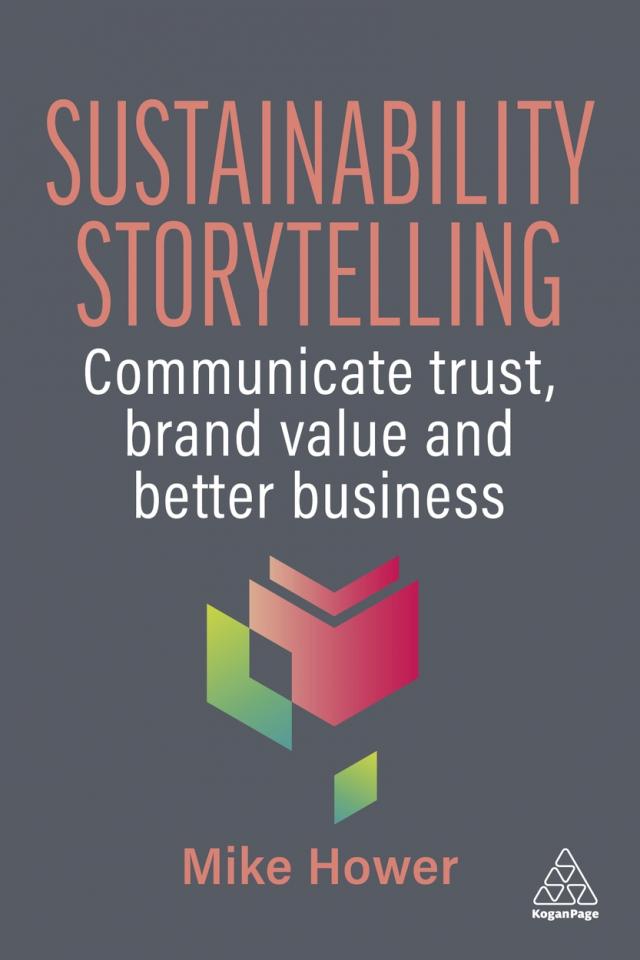 | Mike Hower: Hey there, I'm Mike Hower, author of "Sustainability Storytelling: Communicate Trust, Brand Value, and Better Business," published by Kogan Page. I've spent nearly two decades on both sides of sustainability communication. In my new book, I introduce a framework called the Four Cs of Effective Sustainability Storytelling: Context, compelling, credible, and compliant. Four areas that turn complex sustainability initiatives into stories that build trust, manage risk, and deliver real business value. You'll find practical tools for avoiding greenwashing, navigating evolving regulations, and aligning your sustainability, communications, marketing, and legal teams around a single coherent narrative. As an IN CLEAR FOCUS listener, you can save 25% on "Sustainability Storytelling" when you order directly from koganpage.com. Just enter the exclusive promo code BIGEYE25, that's B-I-G-E-Y-E-25, at checkout. Shipping is always complimentary for customers in the US and the UK. I hope my book helps you tell sustainability stories that resonate, hold up to scrutiny, and move business and sustainability goals forward. Thank you. |
Adrian Tennant: Welcome back. I'm discussing Bigeye's report, The Trusted Voice Economy, with strategy intern Hannah Ruger, who contributed to the report. Hannah, the report moves from creators to community, and it opens with a finding about how moms are feeling. What did the research surface there?
Hannah Rugar: It surfaced a need, and this reframed the whole community section for me. Motherly's 2025 State of Motherhood Survey, which reached more than 2,000 United States moms, found that 70% say motherhood is lonelier than they had imagined, and one in five feels that loneliness every single day. And the loneliness isn't about being physically alone. Many of these moms are surrounded by kids and family all day. It's about feeling like no one fully understands what you're carrying. So when we talk about community as a channel, it's answering a real need this audience feels, which is why peer recommendation and community aren't just channels moms happen to prefer.
Adrian Tennant: Right. Previous IN CLEAR FOCUS guest Lindsay Pinchuk built Bump Club and beyond over nearly eight years without paid advertising. When we spoke, she described how it started, and it wasn't as a business. Let's listen.
Lindsay Pinchuk: I wasn't worried about revenue. I wanted a community. I was creating a community for my own need. This wasn't a business at first. And in doing that and in not really worrying about the revenue or what was going on in terms of dollars and cents, I allowed myself to really start building a community and not only build a community who trusted me, but to connect with a community. But the engine behind it all was the fact that I was very consistent in the message that I was sharing or the messages like there were, you know, five to ten very core messages that I shared regularly that connected with my end user who were expectant parents and new parents and eventually as we grew parents with younger kids.
Adrian Tennant: There's a lesson in that sequence for marketers. What is it?
Hannah Rugar: The community came first and the business came later. That order matters. Communities don't usually form around products. They form around a shared experience. In this case, navigating pregnancy and early parenthood. And the product becomes relevant once the connection already exists. For a brand, that translates into a specific posture. Community is where trust forms, and moms read a brand's conduct there very closely. Genuine help earns you a place. Product-first noise gets punished. So, the shift towards private tended spaces rewards the brand willing to show up as a participant rather than an advertiser.
Adrian Tennant: Yeah. Lindsay also talked about what actually connects people to a brand and she drew a line between two things. Let's hear that.
Lindsay Pinchuk: Stories are really the connector. What are the stories that you can tell? What are the experiences that you can share? How can you really put heart and soul into your brand versus just like a logo and a buy me?
Adrian Tennant: The report highlights Lindsay's SWEEP framework and singles out one part of it as the most underused. Which part, and why does she rate it so highly?
Hannah Rugar: SWEEP stands for Social, Website, Email, Events, Partnerships, and Publicity. And Lindsay's core point is that one message should live across all six of those channels, not just social. The part she singles out, and the one we flagged as most underused, is partnerships. Specifically what she calls zero-transaction partnerships, where two brands reaching the same moms borrow each other's community. There's no money changing hands, and it works precisely because there's no transaction. It's two companies talking to the same people about the same concerns, so the endorsement is implicit and it feels genuine.
Lindsay Pinchuk: So that brings me to the framework and the framework, as you mentioned, is called Sweep. And this was something that I didn't realize I was doing the first time I built my first company, Bump Club and Beyond. It wasn't until I left, I sold it and then I left and I was like, well, what made it successful that I realized what it was that I was doing. Like I didn't have ads. I didn't have a million followers. There actually was no social media when I started. But what I had was this foundation of marketing and I understood how to get the message out. So, every single thing that you as a brand does needs to follow the sweep acronym. And what that means is you take a piece of content or a message and you sweep it across social media, your website, your emails, your events, your partnerships, and your publicity. And it lives in all of those different tactics because when you do that, it amplifies the message.
Adrian Tennant: Lindsay gave us a clear definition of what she means by that kind of partnership. Let's listen.
Lindsay Pinchuk: When I say partnerships, I'm not referring to paid partnerships. I'm referring to zero transaction partnerships. I'm referring to find another company that is meeting and reaching your target consumer and do something with them. Plan an event. plan some content, do something so that you are borrowing each other's communities. That is really and truly the way I grew Bump Club. And that's how I started Dear Found Her. Dear Found Her started as a podcast. That's what it was first. But it was a podcast with guests. They were my partners. They still are. But immediately they were sharing the episodes. My guests were sharing the episodes. It was like a no brainer. And I just think that when there's no monetary transaction and it's really and truly a partnership because it means something and it works and it's, you know, you're really you're reaching the same people and you're talking to them about the same concerns. That's when partnerships work and that's when you really grow your community.
Adrian Tennant: Our report notes that even a business built online kept pulling toward in-person connection. Lindsay saw that early.
Lindsay Pinchuk: In that first season, almost immediately, people started asking me, we want to meet up with other listeners. We want to know what's going on with other people in this community. And I hosted an event with a friend of mine, Mara Smith, who owns Inspiro Tequila. She's another female founder. We hosted an event here in Chicago. It was invite only. And people came in droves. And then the people who didn't know about the event because they weren't invited because it was invite only, were so upset. And they were like, when are you doing another one? And so it really showed me the power of meeting in real life in person. I obviously knew this through Bump Club, but I don't think I realized that it translated into every aspect and every niche that's out there. You make stronger connections and the best connections when you are talking to someone live and in person, and it could be online. I mean, I don't want to discount virtual events because I just got off of a virtual networking session with our community, and it was amazing. So, you know, but I think that those live and in-person and engaging experiences are really what moved the needle in business. And too many brands are not doing it.
Hannah Rugar: I think that's such a useful signal. Online and offline reinforce each other. One introduces the relationship, the other deepens it. What it tells you about this audience is that the thing they're really looking for is connection, and a brand that creates the occasion for it becomes part of the community rather than a company selling to it.
Adrian Tennant: Well, let's talk about the platform picture, because the report is careful to flag this section as directional. Hannah, what should brands take from it?
Hannah Rugar: We were honest that this section is directional by design because we used adult and generational data and flagged it as such. The pattern that's reliable is the generational split. The millennial mom, roughly 29 to 44, is still very reachable on Facebook. It's her number two platform after YouTube. The Gen Z mom increasingly is not. For her, Facebook slips to last, and she's on Instagram, TikTok, and in social commerce. So the practical takeaway is that one platform will not reach both cohorts of moms equally, and a plan that assumes it will is losing the younger half. One more channel we'd point brands to is women's audio. The share of women podcast listeners who seek out women-hosted shows rises to 54% among women aged 18 to 34.
Adrian Tennant: Well, the last section of our report is about artificial intelligence, and it's the part I most want us to get right because it would be easy to misread. Hannah, how does the report position artificial intelligence in all of this?
Hannah Rugar: The framing we landed on is that moms have adopted artificial intelligence faster than almost anyone, and they use it as a genuinely useful tool. Lurie Children's Hospital 2026 research found 81% of parents have used artificial intelligence for a parenting task, 43% use it weekly, and 2 in 3 say it reduced their mental load. Meal planning, scheduling, a quick answer at two in the morning. The utility is real and it's substantial. Where the report draws the line is on the human recommendation. The technology is complementary. It lightens the invisible work of running a household and it frees brands to be more useful, while the peer voice keeps doing the trust work it's always done.
Adrian Tennant: Chelsea Clark gave us a pretty firm view on artificial intelligence generated creators specifically, and it's worth hearing in full because she draws a line. Let's listen.
Chelsea Clark: I will never work with AI creators. The brand can make that kind of content on their own if they want, but I can't imagine it performing as well as a real human. And maybe I just haven't seen good enough AI content. Maybe I'll change my mind. I love AI for lots of other things. I have AI assistants, you know, I love it for productivity, but I don't think creators are worried. I don't think mom creators are worried. It's not in our sphere. We're still pretty confident that the real human is going to be. Plus, AI children? I mean, I don't know, maybe.
Adrian Tennant: I think that last part really matters because she's not rejecting the technology. She's placing it.
Hannah Rugar: Exactly. And I love that she makes that distinction herself. She loves artificial intelligence for productivity. She just doesn't want it standing in for the creator's voice. And that's the report's position too. A brand that uses artificial intelligence simply to produce more advertisements probably won't stand out. Because when everyone can generate content quickly, the content itself is less of a differentiator. But a brand that uses it to understand its customers better, to respond more thoughtfully, to personalize experiences, or to build genuinely helpful resources - that's where the tool earns its place. The human relationship comes first, and artificial intelligence is a strong tool supporting it.
Adrian Tennant: The report closes on four moves for what we characterized as a trust-led market. If a consumer or retail brand takes one thing from this study into their next planning cycle, what should it be?
Hannah Rugar: If it's just one thing, it's the change in posture behind all four moves. The question isn't whether moms hold the purchasing authority, because they clearly do. It's whose voice captures it. So the four moves follow from that. Earn trust before you ask for the purchase, and build it first so your paid spend has something to convert. Go small and go long. 20 or 30 smaller creators over three to six months with the freedom to sound like themselves will beat a single big name for most considered purchases. Participate in community rather than broadcast at it. And meet moms where their trust already lives, which means Facebook for the millennial mom, TikTok and social commerce for the Gen Z mom, women-hosted audio for both, and artificial intelligence used to be useful. The response the market is asking for isn't a new channel. It's a change in how a brand shows up.
Adrian Tennant: Hannah, thank you very much for taking us through the research.
Hannah Rugar: Thanks for having me, Adrian. It was a genuine pleasure to work on.
Adrian Tennant: That's the Bigeye study, The Trusted Voice Economy: The American Mom in 2026. You'll find the full report, along with a complete transcript of this episode, timestamps, and links to the two conversations we drew on with Chelsea Clark and Lindsay Pinchuk on the IN CLEAR FOCUS page at Bigeyeagency.com. My thanks to our strategy intern, Hannah Ruger, for joining me, and thank you for listening to IN CLEAR FOCUS, produced by Bigeye. I've been your host, Adrian Tennant. Until next time, goodbye.
Timestamps
00:00: Introduction to IN CLEAR FOCUS
00:20: Overview of the Trusted Voice Economy Report
01:30: Purchasing Authority in American Households
02:37: The Gap in Perception of Purchasing Authority
03:18: Moms as Buyers Across All Categories
03:56: Shift of Trust from Brands to Peers
04:48: The Role of Creators in Brand Relationships
05:34: Measuring Creator Impact on Sales
06:11: Long-Term Engagement with Creators
07:36: Smaller Creators Outperforming Larger Ones
08:52: The Direct Relationship of Smaller Creators
09:45: Creative Freedom in Influencer Campaigns
10:47: Ensuring Audience Quality
12:30: Community Needs Among Moms
13:45: Building Community Before Business
14:34: The Importance of Storytelling
15:44: The SWEEP Framework for Marketing
17:18: Zero-Transaction Partnerships
18:25: The Value of In-Person Connections
20:07: Platform Preferences Among Moms
21:04: The Role of Artificial Intelligence
22:31: Positioning AI in Creator Relationships
23:09: Four Moves for a Trust-Led Market
24:19: Conclusion and Resources