/
What Brands Miss in Influencer Marketing with Chelsea Clark

IN CLEAR FOCUS: Chelsea Clark, CEO of Momfluence, explains what brands get wrong about influencer marketing. Moms control 85 percent of purchases, but influencers from this group remain underleveraged. Learn why smaller creators often outperform mega-influencers, the value of "brief-less" campaigns, and how to spot fake followers. Discover why treating creators as salespeople instead of creatives hurts campaigns and how prioritizing authentic resonance over raw reach drives real brand awareness.
Episode Transcript
Adrian Tennant: Coming up in this episode of IN CLEAR FOCUS
Chelsea Clark: Creators think they're creatives, brands think they're salespeople. And the best campaign, I bet you, would be a campaign that has no brief, or maybe "Just don’t say X, Y, and Z. Anything else you're willing, you're able to say." The more creative freedom, the better.
Adrian Tennant: You're listening to IN CLEAR FOCUS, fresh perspectives on marketing and advertising produced weekly by Bigeye, a strategy-led, full-service creative agency growing brands for clients globally. Hello, I'm your host, Adrian Tennant, Bigeye's Chief Strategy Officer. Thank you for joining us. As we've discussed on this podcast previously, influencer marketing is one of the fastest-growing channels for brands to invest in. Something we've not covered before is that a key audience, moms, control roughly 85% of household purchasing decisions. Yet, influencer marketing built specifically around mom creators is one of the most under-leveraged channels for brand marketers. When our guest today left the restaurant industry, she started advising small, mom-focused brands on how to grow, but kept running into the same wall. Influencer marketing was either too expensive, too broad or too opaque to be useful. So, she built something different. Chelsea Clark is the founder and chief executive officer of Momfluence, a North American influencer marketing agency and platform that connects brands with a vetted network of nearly 9,000 mom creators across the United States and Canada. To discuss why most brands could be measuring influencer marketing against the wrong standard, what a smarter approach to creator partnerships looks like, and why mom creators represent one of the most commercially powerful and strategically underestimated forces in the space, I'm delighted that Chelsea is joining us today from Collingwood in Ontario, Canada. Chelsea, welcome to IN CLEAR FOCUS.
Chelsea Clark: Thank you. I'm sure none of your listeners will know we're calling what is, but it's just north of Toronto. Perfect.
Adrian Tennant: Well, as I mentioned in the intro, moms control roughly 85% of household purchasing decisions. Now, in your experience working with brands from solo founders to large consumer packaged goods companies, how clearly does that insight actually translate into the way brands plan and fund their influencer marketing strategy?
Chelsea Clark: I feel like I see it in two camps, really. I mean, there's some obvious brands that are in the baby kid space that launched knowing moms and grandmas are their core demographic. So some are very aware, and then I find others, especially in health and wellness, are really targeting the 20 to 30 year olds, and then realize actually, “Hey, our products are doing really well with 35 to 50 year old women.” And so it kind of comes as a surprise to them who they thought their target was actually turns out to be a secondary target, and the real target is moms. And I mean, really it's women really over 30, right? But I write a stat that I think 75 to 80% of women ages 40 plus are moms. So in a lot of ways, the work we do is with women and women-focused companies, or at least for the women, not just for kids. But yes, women in general are just big buyers of everything. We've worked with golf companies, barbecues, and men's shaving kits, all of those things. I know the stat is 85%, but I always joke that I probably have a say in everything, and probably I'm the final buyer. So it's wild the depth of which we influence.
Adrian Tennant: Yeah. Well, when a brand comes to you having already tried influencer marketing and feeling like it didn't deliver, what's the most common story behind that disappointment?
Chelsea Clark: There's definitely two things. One is that creators just don't do what the brand expects them to. A lot of times it's not communicated ahead of time. So a lot of brands don't know what they can ask for. And so there's this kind of weird power imbalance where they're sending product without really defining the expectations. So, I think that's one of the biggest problems, is they're not actually sending briefs or getting an agreeance on deliverables, right? They feel like, oh, this influencer is doing me a favor. I'll just get what I can get. And sometimes that ends in nothing. So that's one thing. And the second part is that brands try it once. That's the biggest thing that I find. They're like, “Well, we sent a few influencers something, and they only did a story unboxing and didn't really do anything.” So that's a bit like running a Google ad for an hour one day and then being frustrated that it didn't work.
Adrian Tennant: Right. If influencer marketing is being consistently misapplied as a conversion tool, which might lead to those kinds of disappointments you discussed, what is it actually well designed to do?
Chelsea Clark: Influencers are really well-designed for brand awareness. I say that for women above 30, if you aren't on social media in some capacity or have a giant local billboard, I don't know how we would find you, right? We're not listening to radio. We're not watching TV. Sure, there's ads popping up on Netflix and Disney and stuff, but those are few and far between. So, brand awareness is key. Getting content to run paid ads, which almost every category of product needs to be doing, that the user generated lifestyle content performs far better than a brand could make, even if it's a photo shoot, right? So, the getting paid ad content is really important. And again, the brand awareness thing comes back to also a brand should be looking at after they run influencer campaigns, not just once, like for an ongoing three to six months, I'm sure their paid ads are performing a lot better, right? They're spending less on a CPA basis. Also, their Google search is going up. More audiences are looking for the brand on their own, right? I might not necessarily click an influencer content, but I think about, “Oh, I need a bike rack. I keep seeing so-and-so's bike rack, I'm going to Google them and search for them.” So, the search volume should be going up as well.
Adrian Tennant: Well, you hinted at it earlier, but there's a fundamental disconnect in how brands and creators each define the job they're doing together. How do you describe that gap to a brand that's frustrated their campaign didn't move product?
Chelsea Clark: Yes, creators think of themselves as creatives, right? You know, back in the day, the word was influencer and lots of influencers don't want to be called influencers. They want to be called creators. What they think of their account is a very creative outlet for them, which is true, right? They're literally creating videos, creating content. They don't think of themselves as salespeople. Very big influencers do once they start making real money, you know, above like the 500,000 audience size, maybe a little before, but until you start making real money, you still feel like your main passion is the creative side of it. Whereas brands only look at creators or influencers as salespeople. Those are two very different things. So the creator thinks that campaign is successful when they make amazing content, the audience likes it. We've got good metrics for them. They're hyper aware of their metrics, right? This post reached more than normal, got lots of comments, lots of saves. Those things are what a creator looks at. And a brand might not care about those if it didn't generate sales. Because they're looking in terms of from a sales person point of view. So there's a big disconnect, which is where the periphery things I mentioned like increase in Google searches or more effective paid ads, those kind of things come into play sometimes after influencer work, you know. Really, they're tastemakers. They're introducing your brand to a whole bunch of audiences, and then it's your job to continue to follow up with them and make the sale, right? Influencers aren't always the magicians we think they are. In some small categories, they can be, but generally, it's not a one-time post for sales.
Adrian Tennant: Based on what you've observed working across hundreds of campaigns, where should a brand that genuinely understands influencers as an awareness channel put the majority of its budget?
Chelsea Clark: So if I was a brand doing this, knowing what I know, I would get really good content and I would repurpose that content and all the smart ways, in email and paid ads, you know, for website reviews, video reviews are awesome. They fare far better than just a written review. So, I mean, I would look at influencers, content generators, and brand awareness at the same time. And I would assume that most of my actual conversion sales are going to happen in my retargeting and in the network that they're giving me to retarget, not necessarily from the influencer, especially not for the first little while, right? For the first three or six months.
Adrian Tennant: Yeah, makes sense. Well, as regular listeners know, we love case studies on IN CLEAR FOCUS. So Chelsea, can you walk us through a specific example of a brand that executed a product seeding strategy at scale, what the campaign structure actually looked like, and what made it work?
Chelsea Clark: Yeah, so we have worked with a diaper company for almost two years every month, and a lot of that is product only. And that works because it's something moms have to buy anyway. It's not very cheap, right? It's $100, $200 a month. And so it's easy to continue re-gifting the same creator with that product, which is the goal of any influencer program, is to use the same creators as many times as you see effect, or release as many times as you can. And so with diapers, we're putting people on at least a three-month contract where they're getting a replenishment every month. And they're building a brand with their audience as a reliable, “hey, this is the product I use. I'm continuing to use it,” which builds trust, right? It's not a one-time post that the audience never sees it again. So, it's happening three months in a row. And the brand, again, is retargeting that audience. So through whitelisting, through other aspects. And they've been doing it, as I said, for two years. Sometimes they're gifting 17-20 creators a month for three months. And I wouldn't even say that's really at scale, but that's like a decent amount. That's kind of what a midsize brand should be doing, 20 or 30 creators a month if they can. Product seeding campaigns really work best when it's something that a creator needs to get replenished, right? If you don't, you can't re-gift a desk chair every month. So, you know, those companies have an advantage, or fashion. Fashion always works. So, another one that comes to mind is a clothing brand we've worked with. They have women's and children's clothing. They have a new launch every season. And so a lot of those creators, again, are on product only and being re-gifted in the same kind of numbers, 20 or 30 creators a season, and really trying to, you know, have those influencers become their brand ambassadors, right? The same creators posting the same time. It just builds more loyalty.
Adrian Tennant: Yeah, I love that. Now, when you're building a shortlist of creators for a campaign, what are the signals you use to evaluate real impact? And why isn't follower count the primary metric?
Chelsea Clark: Follower count isn't the primary metric because you could have someone that has a 30,000 audience and they might only reach 1,000 people on average. And so that's not someone who has great content or has a real audience, quite frankly. So we would rather hire someone that has a 5,000 audience size and reaches 2,000 to 3,000 people on average, right? So their audience size really doesn't matter when we shortlist for their average impressions or average reach per post. So that's one thing. To see how legitimate their audience is, the first thing which I am so blown away that doesn't deter them from buying followers is you look at their audience demographics and the number of Stacys from Ohio who have a 70% Indian audience. Yeah, I don't understand, right? It makes no sense. But it still happens from time to time. So that's one thing we always look for, for sure. You know, comment pods used to be a pretty common thing, and everyone was really wary of those. But there are still accounts that you can see 10 comments are from people that have under 100 followers, and they're not real accounts. So I would say the first thing for sure is the audience demographics, which is why it's so important to use something: a tool or a platform that actually pulls the direct metrics from the creator account, right? Like them sending you a screenshot, I don't believe is as great as actually being able to pull the data from their profile directly. But yeah, a smaller creator with a majority American audience is far superior than someone that's larger with less reach on average and obviously a shady audience following.
Adrian Tennant: Yeah, that makes sense. Are there particular tools or categories of tools that you recommend for this work?
Chelsea Clark: Yeah, we have our own platform that we use. So, we get the creators to connect directly to their socials. I mean, all these things used to be cheap in the beginning and now are really expensive. So I feel bad listing them, but Modash is one. They'll do an audience verification, I think, based on credit. So I think that's the one that would come to mind on a smaller scale without having to get a big subscription.
Adrian Tennant: Okay, great. Inflated or misaligned audiences are a real problem in this space, and the consequences for brands can be significant. So, beyond the most obvious red flags that you've just discussed, what does a compromised creator profile look like in practice?
Chelsea Clark: I think that as long as you are paying for views, right, like you're paying on a CPM basis, other than the audience being legitimate and being your target audience, I think that if you just don't look at followers and look at who they're actually reaching, right, so let's take someone that has 80,000 followers. For a good creator, they might get paid $1,000 for a reel at that size. But someone who doesn't have or has a lesser audience or is reaching less people, you would just be paying them less, right? So really, if you just take out the follower size completely and never look at that and don't pay based on that and only think of what I'm paying per view, it gets a lot. You can level that off and then there's no risk of paying for the wrong audience size.
Adrian Tennant: So, a brand completes an influencer campaign and wants to evaluate whether it worked. What would be a well-constructed assessment of that campaign's success, would you say?
Chelsea Clark: Looking at views, you know, did the metrics deliver what you anticipated? Every campaign we run has an anticipated or estimated impression total. So, if the campaign was a success, you should be pretty close to that or above that. That's number one. Number two is how is the sentiment? How are the comments? Where often creators will send us screenshots as proof of efficacy where their audience is asking stories further questions. “Oh, where'd you get this?”, “What size should I get?” Right? Any conversation that started between the creator and their audience is a really good indicator. Story link clicks: nothing shows interest more than an audience member clicking on the link in a story to go to your website. That's a warm lead that you should be tracking somehow in the retargeting. So, impressions matching or exceeding the estimated pre-campaign impressions is one. Story link clicks and just how the audience responded, how the comments were, how the saves were, anything like that, just general interaction.
Adrian Tennant: Let's take a short break. We'll be right back after this message.
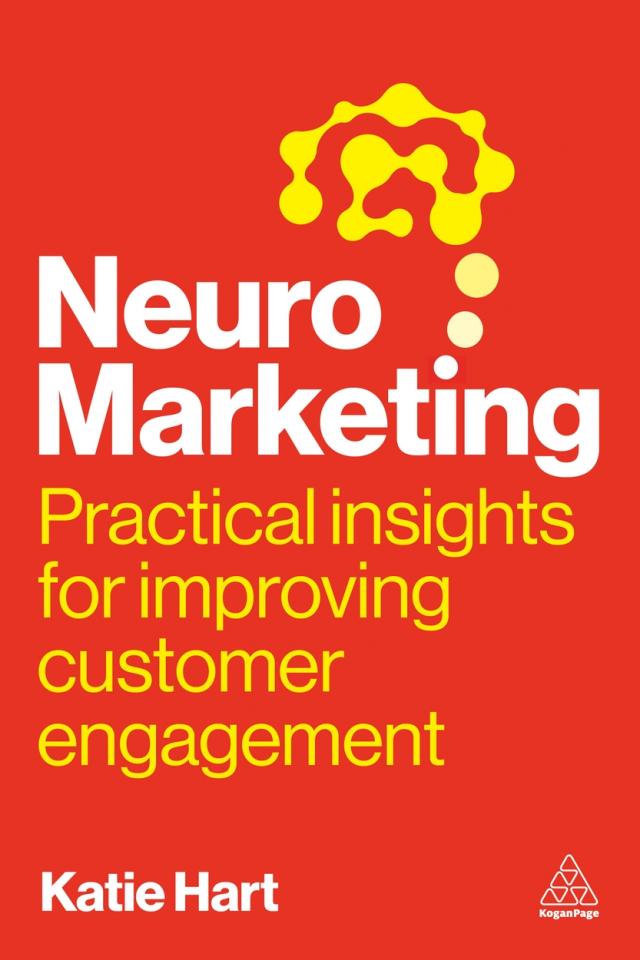
Katie Hart: Hello, I'm Katie Hart, author of "Neuromarketing: Practical Insights for Improving Customer Engagement," published by Kogan Page. I've spent more than 15 years bringing neuroscience and psychology into marketing practice.
In my book, I translate academic neuroscience into clear, actionable tools, covering attention, emotion, memory, and decision-making, alongside practical chapters on how each of the senses can be used to strengthen brand recall and shape consumer choice. You'll learn how to apply evidence-based techniques that improve engagement, optimize creative, and elevate your professional impact, drawing on original research I've conducted with leading brands.
You can save 25% on "Neuromarketing" when you order directly from KoganPage.com. Just enter the exclusive promo code BIGEYE25 at checkout. Shipping is always complimentary for customers in the US and the UK.
I hope my book helps you build campaigns grounded in how people actually think, feel, and decide. Thank you.
Adrian Tennant: Welcome back. I'm talking with Chelsea Clark, founder and chief executive officer of Momfluence, about how brands misuse influencer marketing and what a more strategically sound approach looks like. In your experience, Chelsea, what's the relationship between how much creative freedom a brand extends to a creator and the quality of the content that comes back?
Chelsea Clark: Mm-hmm. So many brands still give a lot of creative direction, which I think is one of the biggest problems in terms of why a lot of content feels inauthentic. I mean, I tried two weeks ago to record a 20-second video for my creator audience, letting them know something about our platform. And in my head, there were 10 things I had to say. I think it took me an hour to get that 20-second video. I'm not an expert, hopefully these creators are way better than I am, but you can imagine if you are talking about the latest soap you have all these things in your head the brand wants to get to your focus on, that you're not just speaking freely. So I have this funny little email plan that starts with go brief-less and the best campaign I bet you would be a campaign that has no brief. You know, or maybe “Just don't say X, Y, and Z, anything else you're able to say.” The more creative freedom, the better because the creator is not going to be trying to fit in the 10 key features that you've listed. Honestly, if you're sending product to a creator or they're promoting your business and what you have in marketing materials from your website and your own social media doesn't give them enough information about what they could talk about, you're not going to get customers. It's a good test. You know, I should be able to get sent a product, check out their website and genuinely make a video about what I like about it without a giant brief.
Adrian Tennant: I want to steal that idea. Just the brief is what you can't say or do. Anything else is open season.
Chelsea Clark: Yeah, because so often brands that do this, the creators come up with amazing ideas nobody's ever thought of. They're like, we would never have thought of using it that way. Or, you know, that's something that this type of creator likes that we would never have thought about. So, it can be far better that way.
Adrian Tennant: There's a provocative view that paying creators for traditional social posting, the straightforward paid post model, is approaching a breaking point the way other digital bubbles have before it. And I've been doing this a long time, so I've seen them come and go. Chelsea, what's behind that argument and what does the shift look like if it happens?
Chelsea Clark: I hope it happens because I agree it is wild how expensive it has gotten and it's why most brands that I have sales calls with that have budget to pay really big influencers, I dissuade them and I say I would never do that. The rates have just gotten so high and there is a reckoning going on. I get all the emails from my friendly competitors too and there's lots of talk about it. So I think that it will burst and I hope it does. It just needs to be adjusted, right? There is still value. If you think of a creator that has built an audience of 2 million or 200,000, there is so much behind-the-scenes work that person has done to get an audience that trusts them, interacts with them, hours and hours and hours, like a job you and I would never want to have. So, they should get paid for their following and, more importantly, for who they're reaching. And that's a lot of legacy work that's been done to that point. But you know, TikTok shop and Amazon affiliates, those kind of programs are really big with certain brands and they're moving more towards an affiliate-based model, which is actually what it should be. And this goes back to the divide between creators think they're creators, brands think they're salespeople. Creators are never going to go full affiliate because that disregards the legacy and the work they've done so far, but it really should be more of a hybrid model, like a standard set payment for reaching on a CPM basis, like a reasonable CPM that's not too far off what you would pay on Meta and all those other things for paid ads. Plus a flat creative fee, right? And that creative fee could differ just like you would pay someone to make a painting. Like the better the content, the better you're paying for the actual creative, but then a large portion of the flat rate really should be based on the affiliate sales, which doesn't work in every industry. But TikTok shop, I think, has changed a lot for brands. They're seeing such success on the purely affiliate model that now going back to paying flat fees feels completely wrong. And I think that's really what's going to drive the biggest shift.
Adrian Tennant: Chelsea, when you look at the categories and types of brands that consistently get the most out of working specifically with mom creators, what do those brands tend to have in common?
Chelsea Clark: They definitely tend to have, maybe one of two things. There are things that a mom has to buy already, and especially in the young child age, anything strollers, high chairs, those kind of things that are big ticket items. Health and wellness, things that you have to replenish and you're buying anyway, tend to do really well. Food does not do very well, so I would keep food out of it, although lots of food brands, we work with quite a few. I would say, though, even just design-wise, right? Again, this ties into the creator feeling their feed as a creative outlet. The nicer your product is designed, the easier it is to get great creators because it fits in with the beautifully designed, you know, aesthetic that they're going for or just looks great on camera. So, you know, things that get replenished and health and wellness, anything baby and toddler, kid that you have to buy anyway, and things that are just really nicely designed and visually appealing.
Adrian Tennant: That's great insight. You've run campaigns where a creator with a very small following outperformed someone with a significantly larger audience on the metrics that actually mattered. What does that tell us about how brands should be thinking about reach versus resonance?
Chelsea Clark: Yes, the biggest creator on that, I think, was $750,000, and the smallest was under 10,000. And the smallest creator got paid $125, the biggest one got paid $3,000, I think. So quite a difference. And the smallest creator had the highest number of story clicks, the highest number of comments, the highest number of saves. It was just off the charts different. And yes, it completely matters the size of the creator when it comes to certain products that really require trust for fast fashion and things that you're buying on impulse, big creators that have really big reach are totally fine. There's no trust factor when you're impulse buying something because it looks nice. But when something takes a little more consideration or it's something new. In this case, it was a child free storyteller kind of what the Yoto player is now. This was a while ago. It's called Lunii, actually, a small creator has an audience that really trusts them and they're like, “Oh, if Kelly,” her name was Kelly, “if Kelly suggested this, I'm sure it's amazing. I love everything else she suggests.” Whereas the bigger creators are just doing so many campaigns that some things are hit and miss and it just lessens the alignment with their audience. They're just throwing a whole bunch of things up. They're working with Febreeze and the glass oven cleaner company that seems to work with so many large creators. I don't want to say they sell out when they get big, but in some way they do, where the smaller creators are really picky about their audience. They're still growing, they take it really seriously, and they don't want to promote something they know their audience wouldn't love. And so those smaller creators really do have more trust with their audience. It's not just like a cliché, it's completely true.
Adrian Tennant: Well, creator burnout is a real and growing issue. Creators who build audiences and then quietly disappear. What separates the creators you see build sustainable long-term careers from those who burn out? Mm-hmm.
Chelsea Clark: It is very common. That happens often. We'll be working on a campaign with someone, and then we hear from them that they're no longer posting or they're taking a long break. And the burnout is really real. They spend so many hours, especially mom creators, but really, they're on their phones nonstop responding to comments. And the psychological stress of every post being evaluated and their performance being public, right? You know, that's why the hiding likes came into play and so many creators jumped on that. They didn't want their performance being publicly scrutinized anymore. So, psychologically, it is difficult. I think if creators really think of it as a job, which is hard at the beginning, but if you think of it as a job, like for me, I have certain work hours. I don't really work outside of them unless I really need to. I'm not checking my email at 8pm. I guarantee you most creators are checking their socials at 8pm and responding to messages or looking at their competition or what have you. So, I think, to not burn out, they need to think of it as an actual job and work set hours, even if that is on the weekend because they're busy moms, at least just having boundaries. Having boundaries would be my number one thing that I think they should do. And I've talked about this on other podcasts that are more creator-focused. There's actually a whole sub-niche of therapists that are for creators specifically. That's how stressful of a job it is. So, often I'm paying out, I pay creators, especially around Christmas, and I pay them more than I've made on that campaign, right? Like, I said, some brands have big budgets at Christmas, and sometimes we use big creators. I'm telling you, I wouldn't trade it. I would never, ever, ever want to be a creator from what I've seen in terms of just their insecurity about it and how much pressure there is. So, the boundaries thing, I think, and maybe getting one of those therapists I mentioned, maybe between those two things, they might not burn out. Yeah, it's a tough industry though.
Adrian Tennant: Well, it is, and now there's a new player in town, potentially. Artificial intelligence influencers, of course, are getting a significant amount of attention right now as an emerging option for brands. Chelsea, from your perspective, running campaigns with real creators, how do you think about artificial intelligence-generated content in that role?
Chelsea Clark: I've had one baby brand in the past year ask me if we have any AI creators, and I was like, no, we definitely don't. I am not a fan of AI-created content. Just like I don't like that Pinterest is all ads. I mean, I hope for paid ads, there's a way of distinguishing. They should be able to toggle on that it's AI. I will never work with AI creators. The brand can make that kind of content on their own if they want, but that's just, I think that a real human, I can't imagine it performing as well as a real human. And maybe I just haven't seen good enough AI content. Maybe I'll change my mind. I love AI for lots of other things. I have AI assistants, you know, I love it for productivity, but I don't think creators are worried. I don't think mom creators are worried. It's not in our sphere. We're still pretty confident that the real human is going to be plus AI children. I mean, I don't know, maybe. Maybe it'll be beneficial, because getting kids to do things for content is very difficult.
Adrian Tennant: Right. And then you'll need those AI therapists for the AI influencers.
Chelsea Clark: Yeah. Yeah, exactly. But it is interesting. I think for certain things it could probably work. But yeah, I don't imagine that getting real-life content is going to go anywhere anytime soon.
Adrian Tennant: Chelsea, for listeners who want to explore working with Momfluence or connect with you directly, what's the best way to reach you?
Chelsea Clark: I would say linkedin is the best way to reach me. I will respond even if a brand that’s there has no idea how to work with influencers, or if it would work for their product. I absolutely love someone, you know, sending me a message saying “Hey, I have so and so company, what would it look like?” I'll send you a paragraph or a sentence. Yes, it would work. You would be looking at this as a minimum. I always think approaching anything with business, you should approach with a small test strategy in mind. And that's always what I'm pitching. I'm never pitching the biggest, I'm probably a horrible salesperson, but I'm not pitching the 100K, you know, campaign. I'm like, I would want to start small and see how it goes. So this is the lowest you can do. I just feel like that's ethically the right thing to do. So, I'll always give you my honest opinion. And if it probably won't work, I'll tell you that too. I have had lots of sales calls where I'm like, this won't work for you. Don't waste your money.
Adrian Tennant: Chelsea, thank you very much for being our guest this week on IN CLEAR FOCUS.
Chelsea Clark: Thank you so much for having me. I appreciate it.
Adrian Tennant: Thanks again to my guest this week, Chelsea Clark, Founder and Chief Executive Officer of Momfluence. As always, you'll find a complete transcript of our conversation with timestamps and links to the resources we discussed on the IN CLEAR FOCUS page at bigeyeagency.com. Thank you for listening to IN CLEAR FOCUS, produced by Bigeye. I've been your host, Adrian Tennant. Until next week, goodbye.
Timestamps
00:00: Introduction to Influencer Marketing and Moms
02:20: Understanding Moms as Key Decision-Makers
04:50: Common Disappointments in Influencer Marketing
05:05: The True Purpose of Influencer Marketing
06:11: The Disconnect Between Brands and Creators
08:07: Budgeting for Brand Awareness
09:02: Case Study: Successful Product Seeding Strategy
10:40: Evaluating Creator Impact Beyond Follower Count
12:31: Tools for Assessing Creator Authenticity
13:08: Identifying Compromised Creator Profiles
14:01: Assessing Campaign Success Metrics
16:08: Creative Freedom and Content Quality
18:09: The Future of Paid Posts and Affiliate Models
20:41: Brands That Benefit from Mom Creators
21:29: Reach vs. Resonance in Creator Campaigns
23:22: Preventing Creator Burnout
25:21: The Role of AI Influencers
27:05: Connecting with Momfluence
27:58: Conclusion and Thanks