/
Challenger Brand Marketing® with John Gumas
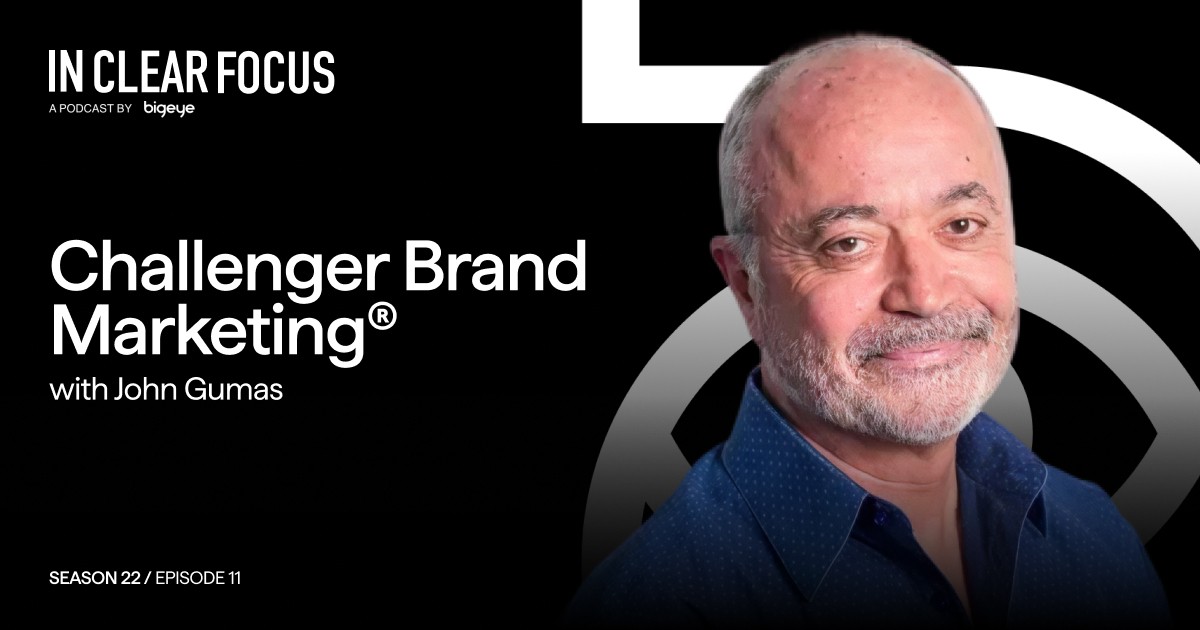
IN CLEAR FOCUS: John Gumas, President of Commit Agency, and originator of Challenger Brand Marketing® explains how under-resourced companies can out-strategize industry giants. He reveals why guessing is the most dangerous mistake challenger brands make. Learn how the Discovery process can triangulate customers, stakeholders, and competitors to uncover the real reasons people buy. Hear a travel insurance success story, stop relying on assumptions, and build winning campaigns based on data.
Episode Transcript
Adrian Tennant: Coming up in this episode of IN CLEAR FOCUS:
John Gumas: Discovery is where the Challenger Brand Marketing® process begins, right? It's where its succeeds or fails. It's that difference between building a marketing campaign that's based on guessing, versus one that's based on fact and data.
Adrian Tennant: You're listening to IN CLEAR FOCUS: fresh perspectives on marketing and advertising produced weekly by Bigeye, a strategy-led, full-service creative agency growing brands for clients globally. Hello, I'm your host, Adrian Tennant, Bigeye's Chief Strategy Officer. Thank you for joining us. Most companies aren't category leaders. They're competing against rivals with bigger budgets, larger sales forces, greater brand awareness, and more sales. Marketing texts can incorrectly suggest that the marketing strategies that work for category leaders can work equally well for smaller brands. Today's guest recognized this was a problem and trademarked a solution. John Gumas is the nation's leading authority on challenger brand marketing, the methodology he pioneered and trademarked over 40 years ago. He's president of Commit Agency, a full-service branding and strategic marketing firm with offices in Arizona and San Francisco. John has helped brands including Yonex, SanDisk, and numerous financial services organizations compete effectively against industry giants. He's the author of two books, "Marketing Smart" and "Challenger Brand Marketing®" which is the definitive guide to his methodology. John is also an adjunct professor of branding, advertising and interactive marketing and serves on several community boards, including the San Francisco Giants Community Fund and the Bay Area Sports Hall of Fame. To discuss what it really takes for under-resourced brands to outmaneuver bigger competitors, I'm delighted that John is joining us today from the San Francisco Bay Area. John, welcome to IN CLEAR FOCUS.
John Gumas: Hello, Adrian. It's such a pleasure to be here with you.
Adrian Tennant: Well, John, as I mentioned in the intro, you trademarked Challenger Brand Marketing® over 40 years ago. What was happening in client work then that made you realize traditional marketing frameworks weren't serving most brands?
John Gumas: Well, you know, it became pretty obvious to us when we started the company that most organizations out there were being out-resourced by one or more competitors. So what does out-resource means? Out-resourced can mean a lot of different things. It could mean your competitors have greater advertising budgets, which it typically means. But it can also mean that your competitors have larger sales forces. They have more retail locations. They have greater brand recognition. There's a greater, a more complex competitive marketplace, but it can be any of these. Or it can simply also be that the marketing that you're doing, your marketing strategies are just not delivering as well as you need them to, or they're not delivering as well as you'd like. Companies that are passionate about their brands, believe in marketing, willing to invest in that growth, have to look at this in a completely different way. Traditional or conventional marketing, when you are a challenger brand up against guerrilla brands. typically doesn't work because the only ones that win that fight are the ones with the most money or the most resources in this case. So if that's not what your company is in terms of being, let's say the gorilla, then you have to look at this in a completely different way. And that's what challenger brand marketing is all about.
Adrian Tennant: So, how should marketers think about what makes a brand a challenger?
John Gumas: Well, you know, it's not about size. It comes down to really having a different mindset. It's this concept of out-thinking, out-strategizing your competitors versus outspending your competitors. And if you just think about that concept for a moment, that alone is really the key, right? It's this concept of owning something. That is unique to you, to your brand. It could be a position, it could be a message, it could be a brand, it could be all of the above, but it's something that you can own and defend from anyone. Essentially it is what makes you different, and is that differentiation relevant to your potential customers? Is it unique to the marketplace, and is it relevant to anyone in the market, customers, et cetera?
Adrian Tennant: You've written that the most dangerous thing a challenger brand can do is guess. So why is guessing so dangerous for these brands specifically?
John Gumas: Yeah. And that's such a great question because you're right. It is the number one reason why we see companies never achieve their full potential in marketing. So challenge brands must assume they get one shot at this and that's how critical it is. So everything they do has to be accurate and true when it comes to brand positioning and messaging. So typically, guessing or assuming they know is that big mistake. You hear clients say, “I've got a great idea. We should do this. I think we should say this”, or “I got this great idea for an ad campaign.” Well, you’ve got to at some point know exactly where your brand needs to be positioned, and you have to know exactly what you have to say in order for your brand to be identified in the market. And you can't guess because marketing fails because it's built on this assumption, right? “I've got an idea.” But it's not built typically on facts and truth. The real reason why a customer will buy from you, a real reason why you're different in the marketplace, the real message you need to say, what are the actual words that someone who's never heard of you before has to hear you say in order for them to say, “Wow! There's a company I want to do business with” or “There's a product I want to learn more about.” And assuming that is extremely dangerous because it's typically not the case. And until you go through a process to learn the truth about your company and more so the truth about the market and the truth about why your potential customers would buy from you versus your competitor, until you know that, you're guessing and you're assuming. And guessing and assumption is probably the most dangerous thing any challenger brand can do.
Adrian Tennant: John, what's typically at stake when challengers get it wrong?
John Gumas: Oh, that's really easy, Adrian. And the answer to that is everything. It's lost resources. It's lost time. More importantly, it's lost opportunity. And what typically happens as well is there's market confusion, right? So think about it: if you launch a company or rebrand a company and you're out there and you don't get it right and it's not working. typically takes the average company about six months to a year to realize that their messaging's not connecting, their brand's just not working, right? Their marketing programs aren't delivering what they need to, then what do they do? They start over. So over that six months to a year, the market is now confused. Who are you? You've invested a lot of money, you've invested a lot of time, and you've lost that opportunity. So getting it wrong from the beginning is dangerous. So that's why you really need to kind of step back and make sure you truly understand what makes your company unique, why it's relevant. And you truly need to understand what you need to say, how you need to say it. And, but you cannot guess at that. That is all fact-based and that is all data-driven.
Adrian Tennant: Well, when we were preparing for this podcast, you shared with me that you actually have a standing dollar bet with new clients about this. Can you tell us about that?
John Gumas: You're right. So I've been doing this for over 40 years now, Adrian, and I'm happy to report I have never lost a dollar. And here's the bet. When we start these programs for clients, we'll typically ask them, “Okay, tell us, you know, what your customer, who they are, what they're looking for, how you differentiate yourselves from your competitors, what is your messaging?” On and on, all the standard branding and marketing questions you can possibly imagine. And I bet our clients, I say, “I bet you, what you think your client needs to hear you say is not going to be what your clients tell us they need to hear you say.” And that's typically in messaging, that's positioning, that strategy. And 100% of the time, what they feel going into this is not what comes out of the data. So think about that for a moment, right? If you're spending your resources based on a position or data that you truly believe is correct, but in reality is not, you can guess what's going to happen. You know, marketing programs are never going to fully achieve their potential. Never going to deliver the ROI that you like because it's not connecting. You're not connecting with the market and assuming you know that, it's pretty dangerous. And I've made a lot of money over the years on those dollar bets, Adrian, so.
Adrian Tennant: Pleased to hear it! Your methodology starts with what you call Discovery. How is this different from standard market research?
John Gumas: Well, companies need to look at what they're doing in a very different way. And what typically happens is that individuals, right, whether a CEO, any C-suite individual, marketing director, CMO, et cetera, all those folks that are responsible for marketing their company, they live their company every day, right? They live it, they breathe it, they understand it, and they expect everyone else to know their company as intimately as they do. So for them, they can't step away and truly look at their company objectively. Just like a prospective new customer would, right? They can't do that. So what our discovery does, it really gets our clients to be open-minded and understand the real reasons and accept the reason behind why people do business with them and trust those facts. Every marketing campaign has to assume that the people you're speaking to have never heard of them before. And with that said, it gives them about seven seconds to tell people who they are, what they do, and what makes them different. And if you can't do that or explain that in seven seconds or less, you're probably not going to be effective in your marketing. So that's why it's so important to go through the process that we go through, to really learn what that is all about and why people truly use you.
Adrian Tennant: I am curious, what kinds of questions are you asking that typical research doesn't?
John Gumas: So, Discovery is where the Challenger Brand Marketing® process begins, right? It's where it succeeds or fails, if it's done correctly. It's that difference between building a brand and building a marketing campaign that's based on guessing or assumption, right? Versus one that's based on fact and data, right? It's that point in which the true differentiation and the strategy is born. It's the point where focus is created, and it's the competitive advantage that's defined at that point. So every meaningful decision that follows right from brand development, positioning, messaging, creative direction, media, oh my gosh, ongoing marketing, tactical execution, everything. Everything traces back to what you found in Discovery. And without that Discovery, marketing really becomes this collection of disconnected tactics. And tactics without strategy is nothing more than educated guessing. And that's why campaigns fail. That's what Challenger Brand Marketing® is all about. So to answer your question, what kind of questions do we typically ask? And with the caveat, our number one goal is to extract from our customers' customers, the real reason why they would do business with our customer, versus competitors. We need to understand what we have to say. What is the messaging we need to use to get them to want to do business with our clients? So first, let me tell you about traditional research and methodologies. Traditional research that most companies use typically rewards kind of safe, polite, you know, rationalized responses. So the participants typically give you their easy answer. You know, not the real reason why they purchased or why they truly feel they like your product or why they chose you over the competitors. Because we all, as humans, right, the easiest thing to do is when we're in any sort of research environment, we don't always know the real reason. So we give the easy reason, and most marketers, most researchers accept that as the truth. We take that one step further because that we feel that's dangerous, and it typically takes you down the wrong path. Kind of the classic mistake. You're building marketing campaigns based on the wrong data. So Challenger Brand Marketing® kind of refuses to stop there. It pushes past what our customers initially say. So we can probe deeper, and we can uncover what they actually decided to buy, you know, your product, your service, over the competitors. So our questions are a little deeper, a little smarter, and they're often kind of uncomfortable questions that most researchers don't ask. You know, we're going to ask questions that are very atypical. And forgive me because that is really our secret sauce, the question and how we ask them and what we ask and how we extract the real reason out of our customers’ customers is to buy so that it really challenges conventional thinking. So the objective is not consensus or comfort. The objective is clarity and truth. We want to know the real reason, down to the actual words, the style, the tone. So this is essentially how powerful and effective challenger brands are born, right? It's why they thrive. And it's really what we believe how real marketing results are generated is by gathering this information and gathering what we refer to as the truth, right? The real reason why somebody loves you, buys from you versus your competitors, et cetera, et cetera, versus the reason they tell you. Because those are usually very different. And what we do is we really get to the bottom of that because once we get to the bottom of that, we have what we need. And once we have that data, then our campaigns are truly effective because we're saying what the market needs to hear versus what we assume the market needs to hear.
Adrian Tennant: Let's take a short break. We'll be right back after this message.
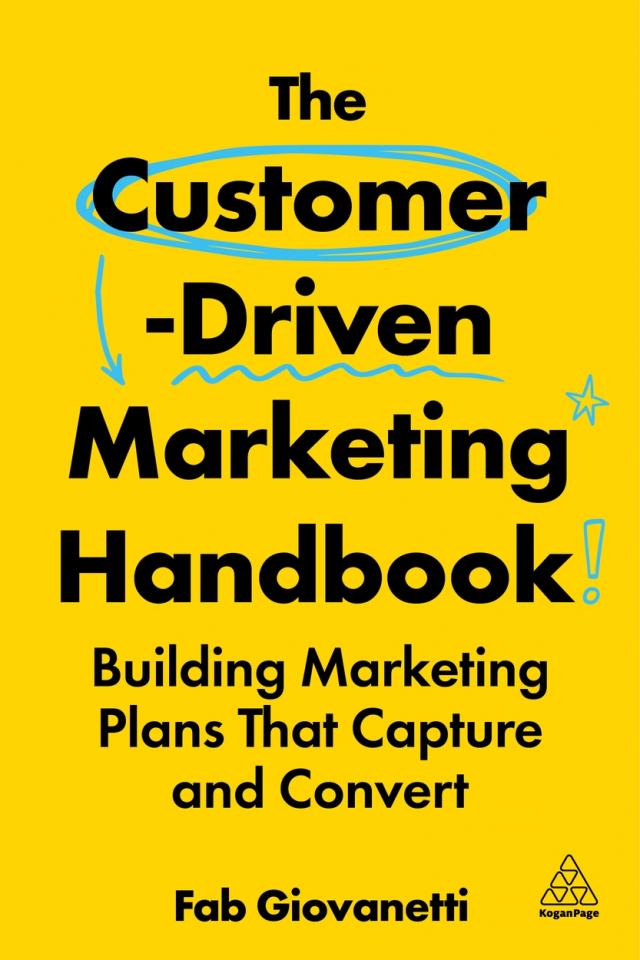 | Fab Giovanetti: Hello, I'm Fab Giovanetti, author of The Customer-Driven Marketing Handbook: Building Marketing Plans that Capture and Convert, published by Kogan Page. As a CEO and a teacher at Alt Marketing School, I've spent over 15 years helping marketers build strategies that put genuine customer relationships at the center of everything they do. In my book, I share practical frameworks for building trust, creating emotional connections, and turning customers into advocates, using real-world examples from brands like Gymshark, Headspace, and Notion. You'll learn how to identify customer pain points, design personalization that feels helpful rather than intrusive, and create shared rituals that transform one-time buyers into lifelong fans. As an IN CLEAR FOCUS listener, you can save 25% on The Customer-Driven Marketing Handbook when you order directly from KoganPage.com. Just enter the exclusive promo code BIGEYE25 at checkout. Shipping is always complimentary for customers in the US and the UK. I hope this handbook helps you create marketing plans that win hearts and deliver results. Thank you. |
Adrian Tennant: Welcome back. I'm talking with John Gumas, president of Commit Agency and the creator of Challenger Brand Marketing®. John, in Discovery, you triangulate three perspectives: customers, internal stakeholders, and competitors. What are you looking for in the gaps between these views?
John Gumas: Yes. And that is the heart of what we're doing. Like you said, there are three key critical points of reference that we believe reveal the true differentiation and the true brand position that we can own and defend from anyone. But it also, what it does, it reveals competitive weaknesses. And as you know, competitive weaknesses are very, very critical because it allows us as a challenger brand that doesn't have the resources that our typical competitors enjoy. It allows us to play in a marketplace that they don't control or they're not as good at. And it also allows us to develop messaging and brand positioning that is based on facts, not based on assumption. But what we do from these three points of data, we can develop brand positioning and messaging strategy that's unique because ultimately what we want to do is defend and own that position from anyone. All right. So gathering the truth, the real data from those three points. Right. Externally, we're talking to their customers and we're talking to their best customers. We're not talking to former customers, past customers. And it's critical that we make that point. We're talking to their raving fans, their best customers. We want to know exactly why they love doing business with this company and this is where we probe very, very deep to find out the real reason. All the way down, Adrian, all the way down to the actual words that they would need to hear, all the way down to some of the tactical elements, how they would find a customer or a company like this. So we look at external customers and interview them to gather their insight. We also take our customers through a very similar questioning exercise that we take their customers. First, the reason why we do that is we show our customers how what they think does not align with what their customer thinks because they're answering the similar questions and they're always so different. Okay. And then this is a big ‘aha’ moment for our clients. They go, “Oh my gosh, I always thought our customers loved us because of this. When in reality, no, it's because of this.” So that comes out of that. The second reason why the internal interviews are so important is because when an organization develops a brand, as you know, the brand has to live - it has to live inside the company. We can't create a brand that that company cannot live up to. It's not true to who they are. And here's what we do. We interview everyone individually and all our interviews are one-on-one. on the telephone. And the reason on the telephone is because there is no influence of somebody that's on a Zoom call looking at me in the eye. There's no focus group where there's one or two people that are influencing everyone else. There's no in-person interview where maybe my body language is influencing what they might say. So the telephone kind of eliminates a lot of that external influence other than tone. And a lot of times we're asking these questions, we can hear the tone to get a sense of what they're saying is true or not true. So point one of data is external customers or best customers. Point two is internal, our customers and all their influencers within the company's C-suite, marketing, et cetera. And then the third piece is the competitor. Incredibly important piece. So we do a very, very deep dive to find out our competitors. What is their brand positioning? What are they saying? How are they selling our same prospective customers? What do we have to say to combat what they're saying? And looking at the gaps that we find from our competitors and our internal interviews, that's between those three points of data right in the middle. is the unique essence, the position, the brand of our customers, and where they need to build going forward. And that's where it starts. That's where all marketing programs start. And the typical marketing program starts after that without going through this process. So as a result, you're never getting the real reason for campaigns. It tends to eliminate any misalignments. It tends to get all the stakeholders on the same page. And you know, as well as I, a company cannot be successful unless their internal stakeholders are all on the same page. So what this process also does is gets all of our customers on the same page. And there's an ‘aha’ for every single person in that group. Every time, they never thought that, they didn't feel that their customers felt that way, or their colleagues felt a certain way. Sometimes it's a little, sometimes it's a lot, but at the end of the day, they all have to be on the same page.
Adrian Tennant: Well, as regular listeners know, we love case studies on IN CLEAR FOCUS. So, John, can you share an example of a time when your discovery process revealed something a client's leadership didn't expect?
John Gumas: Wow. You know why that's a hard question for me is because it happens every time. But let me give you one of my favorites. And it was a client that was in the travel insurance industry. Now, this particular client invested an incredible amount of money building this technology that allowed travelers to find the best insurance option for their vacation, right? Based on all this customized data, it would help them find, you know, the most cost-effective, the one that would do all the things they wanted, whether it's medical evacuation or changes or whatever. And it was very, very sophisticated because that's an industry that's very, very confusing because there's so many options for travelers to buy. And these are typically high-end travelers who are going on their dream vacation and they need to make sure their insurance is right. So the owners of the company, they're brilliant technologists. I mean, the tech that they had created was game-changing for the industry, completely changed the industry. So they launched the company based on their personal belief, their personal assumption that this technology, that everyone would love this technology because of what it did. And it was very logical, the way they positioned it, the way they were selling it, very, very logical to describing the technology and how it worked and what it did. So let's fast forward about a year, year and a half company after they launched. They weren't even close to hitting their expected goals, sales. They couldn't figure out why. Then they hired us. That's where we came in. About a year and a half after this, and this company was not doing well. So we took them through the Challenger Brand Marketing® process, the thing that I painstakingly just described for you. And through that process, we discovered their ‘aha’ moment. And what was their ‘aha’ moment? Well, the ‘aha’ moment was their customers didn't care at all about the detail of the technology, like the owners did. It didn't matter to them. It didn't matter at all. And yeah, it was great technology, but it just wasn't enough. What we learned through this process of questioning and re-questioning and digging for the truth was what their customers wanted. All they wanted was peace of mind. They just wanted to be absolutely certain that when they went on their very expensive dream vacation, everything would be covered that they didn't have to worry about anything. So these customers were not looking for technology. They were looking for peace of mind. This was a significant difference, right? A significant difference in the reason why they would buy the product versus what the founders believe. So, let's fast forward. Let's fast forward about, oh, it might've been more than a year, but not quite two years later, the company's taken off. Based on this data, we created a new brand, a new positioning, a new marketing program. Most importantly, the messaging and strategy, right? Based off the data from this Discovery. And the results were beyond, not their goals, but beyond their stretch goals. Just by adjusting the messaging based on the data, because we didn't guess, we learned why people would buy this. And we learned the actual words and tone and cadence that the brand needed to be positioned within. And that simple change, although it was difficult to get to it, that turned the company around. And about two years after that launch, they sold this company to a very, very large industry giant, the insurance company. I never learned the price, what they sold it for, but I can tell you the owners are now retired and are very, very happy.
Adrian Tennant: The marketing landscape has changed dramatically since you developed this methodology. After 41 years building your ad agency, Gumas, you recently joined commit agency as president. What made this the right moment for that transition?
John Gumas: Well, you know, the company wasn't looking to sell or merge, but sometimes in life, there's just a perfect fit that comes your way. And the owner of Commit Agency, a gentleman by the name of Dave Rawls, he and I have been friends for 15, 20 years. We go way back. We were sister agencies for a while where we used each other's services and helped each other. And it just became an obvious, perfect fit. And now we just have this all-star team of people that are taking challenger brand marketing and our clients to new levels.
Adrian Tennant: What does this mean for how the methodology will develop going forward?
John Gumas: I'll answer that in two parts, Adrian. So part one, let's call the delivery of the message. That is how the message gets out there. And part B is the message development itself. So let's focus on part one first. How do you get the message out there? Delivery of the message, whether it's conventional media, digital media, social media, et cetera, et cetera, that is changing quickly. And the new technologies that are out there, the reporting mechanisms that are out there, and allow our clients to become more and more efficient in their delivery of their messages, that has changed dramatically, night and day. And it will continue to change. If we have this conversation six months from now, it will, it would have changed pretty dramatically. So how you get the message out there has changed, but what has not changed, and what I don't anticipate changing for a long, long time is how you develop the messaging. The process we just described of getting to the point where your message is exactly what the audience needs to hear. Your message resonates perfectly with the audience you're trying to reach and drives them to action. And your message is unique in the marketplace where it allows you to own a position, own a niche, and you can defend that niche against anyone and even trademark that niche. That process. has not changed because that process is this concept of a person. I think of a brand as a person speaking to another person and that person has to be authentic and credible and today's customer. is smarter than they ever were. So you have to be very careful of how you position yourself and how you message yourself and how you get yourself out there. So the process of figuring that out has not changed. And until the time that instead of me talking to you, Adrian, there's a bot talking to you right now, until that time comes, I don't think that process will change. So to answer your question, the outbound delivery changes dramatically and continue to change with all the new technologies. But developing the messaging, which I'll emphasize and reemphasize is the most important part of any marketing program that a challenger brand can do. And understanding the truth of that message and creating a message that is unique to your company. That is the most critical component of challenger brand marketing.
Adrian Tennant: Great conversation. Thank you for sharing your insights. If listeners would like to learn more about applying Challenger Brand Marketing® principles or connect with you directly, what's the best way to do so?
John Gumas: Of course, they can reach me at my email, which is jgumas@commitagency.com. So jgumas at commitagency.com. Connect with me on LinkedIn, John Gumas. If you're interested in reading the book, we have a book written called "Challenger Brand Marketing®." It's on Amazon. It will go through what we just talked about in greater detail. But if they want to reach out and mention your name, I will answer any question that they have. And I'll even send them some more, more information on, on how to do the process in a little more detail.
Adrian Tennant: Perfect. John, thank you very much for being our guest this week on In Clear Focus.
John Gumas: Thank you, Adrian. It was such a pleasure being with you.
Adrian Tennant: Thanks again to my guest this week, John Gumas, President of Commit Agency and the originator of Challenger Brand Marketing. As always, you'll find a complete transcript of our conversation with timestamps and links to the resources we discussed on the IN CLEAR FOCUS page at Bigeyeagency.com. Just select ‘Insights’ from the menu. Thank you for listening to IN CLEAR FOCUS, produced by Bigeye. I've been your host, Adrian Tennant. Until next week, goodbye.
Timestamps
00:00: Introduction to Challenger Brand Marketing®
02:19: The Need for a New Marketing Approach
04:05: Defining a Challenger Brand
05:04: The Dangers of Guessing in Marketing
07:02: Consequences of Missteps for Challenger Brands
08:22: The Dollar Bet: Proving the Importance of Data
09:52: Discovery Process Explained
11:14: Questions That Drive Deeper Insights
15:18: Triangulating Perspectives: Customers, Stakeholders, Competitors
21:31: Case Study: Travel Insurance Client Transformation
25:28: Transition to Commit Agency
26:21: Future of Challenger Brand Marketing® Methodology
29:08: Connecting with John Gumas
29:49: Conclusion and Closing Remarks