Skincare Marketing Trends 2026: Simplify, Prove, Sustain
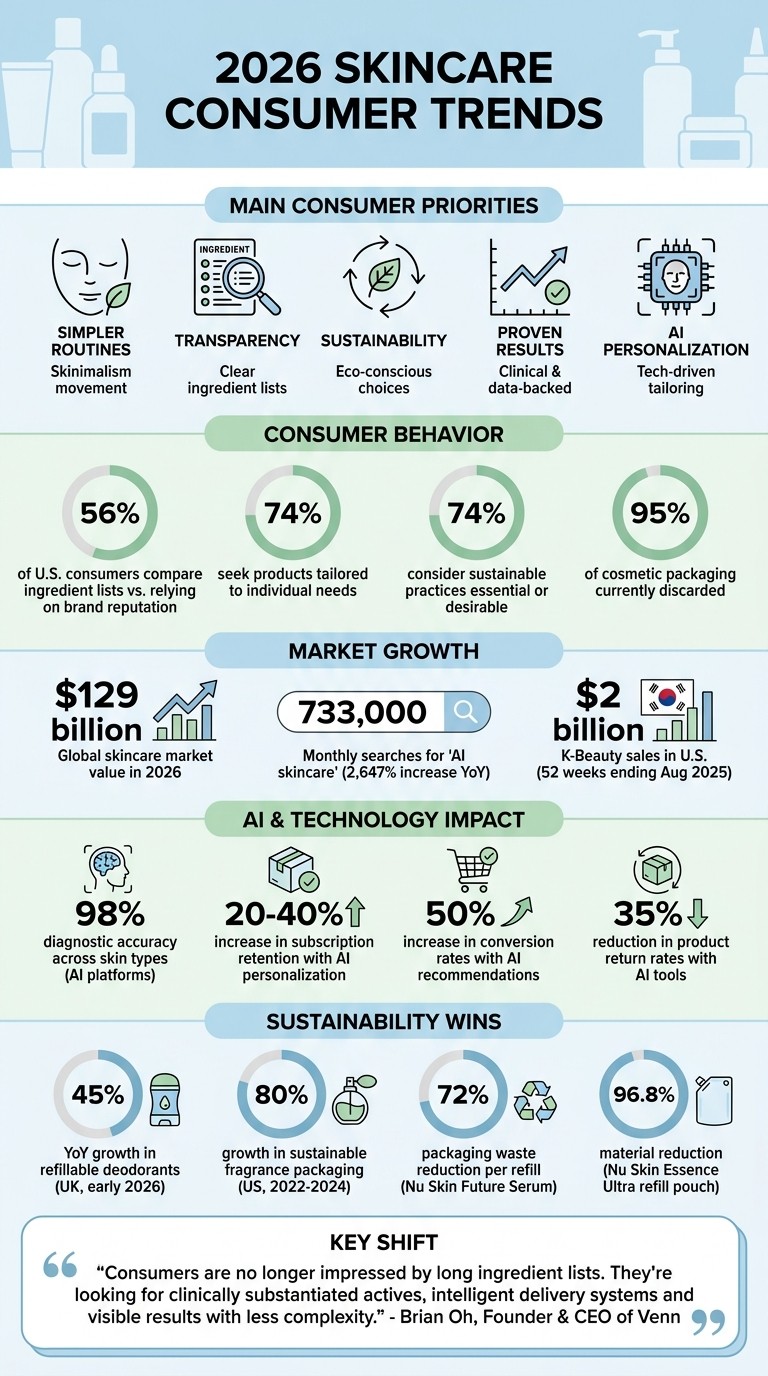
Skincare in 2026 is all about simplicity, proof, and eco-consciousness. Here's what matters most to consumers:
Simpler Routines: People are embracing "skinimalism", preferring multifunctional products that save time and money.
Transparency: Ingredient clarity and evidence-backed claims are now expected. Shoppers want to understand how and why products work.
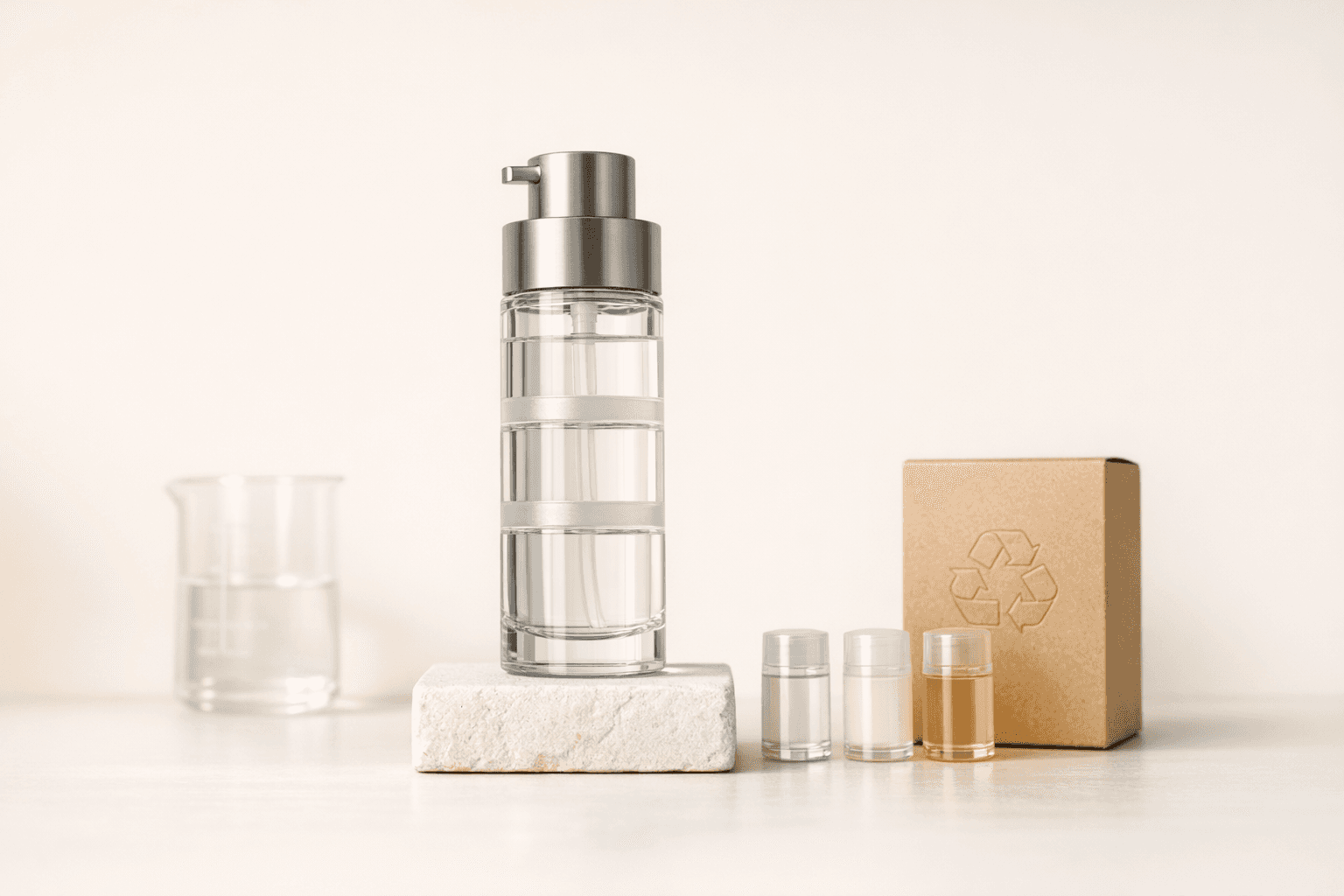
Sustainability: Refillable packaging, recyclable materials, and lifecycle data are influencing buying decisions.
Proven Results: Buyers demand measurable outcomes, such as reduced wrinkles or improved hydration, supported by clinical trials.
AI Personalization: Tools that analyze skin and provide tailored recommendations are reshaping how consumers choose products.
Brands that focus on these priorities - clear results, streamlined solutions, and eco-friendly practices - are leading the market in 2026.
2026 Skincare Consumer Trends: Key Statistics and Priorities
Key Skincare Marketing Trends for 2026
The biggest skincare marketing trends in 2026 center on consumer trust, simplified claims, proof-driven messaging, ingredient transparency, sustainability, creator content, and stronger retail and ecommerce alignment. Skincare consumers are still interested in innovation, but they are also more skeptical of vague promises. Brands that win will be the ones that make benefits clear, support claims with evidence, and communicate value in a way that feels credible across packaging, social, retail, and digital channels.
User Experience Now Matters More Than Ingredient Lists
The skincare world is evolving. People are no longer chasing the latest "miracle ingredients." Instead, they want products that work and feel satisfying to use.
Brian Oh, the Founder and CEO of Venn, summed it up perfectly:
"Consumers are no longer impressed by long ingredient lists. They're looking for clinically substantiated actives, intelligent delivery systems and visible results with less complexity."
This shift marks a move toward mechanism-driven skincare, where the focus is on how a product restores the skin's natural functions rather than simply including trendy ingredients. Shoppers are prioritizing durability - long-term improvements in skin firmness, tone, and elasticity - achieved by enhancing cellular behavior, not just offering temporary fixes. This change is pushing brands to deliver visible, data-supported results.
Results Matter More Than Formulas
Today's consumers want proof, not just promises. Claims about "radiance" or "glow" aren’t enough anymore. Buyers expect to see hard data, like reductions in wrinkle depth, hydration levels, or clinical trial outcomes that validate a product's effectiveness.
This new "data-first minimalism" approach means people are choosing fewer, smarter products. Instead of piling on multiple serums with individual "hero" ingredients, they prefer integrated formulas designed to address complex skin needs. The winning formula combines lab research (how it works), clinical trials (measurable results), and consumer-use studies (practical benefits). For skincare brands, consumer research can help identify which proof points, claims, and benefits matter most to shoppers before they make a purchase.
How Product Texture Builds Brand Loyalty
Beyond results, how a product feels is becoming just as important. Texture - the glide, finish, and even scent of a product - can make or break the experience. These sensory details influence how effective a product feels and whether someone will keep using it.
Take I'm From, for example. In January 2026, they marketed a $23 rice cream with GPS coordinates of the rice harvest on the packaging, turning a simple staple into a high-end experience through storytelling and sensory appeal. Similarly, Medicube introduced the Deep Vita C Capsule Cream (around $30), featuring encapsulated pearls that burst on application. This "3D texture" became a viral hit on social media, blending functionality with a unique sensory experience.
These tactile touches aren’t just clever marketing - they encourage regular use, which builds loyalty and ensures customers stick with the product.
Consumers Want Simpler Skincare Routines
The era of elaborate 10-step skincare routines is giving way to a preference for simplicity. This shift, often referred to as skinimalism, reflects a lasting change in what consumers expect from their skincare products.
Practical reasons are driving this trend. Harsh ingredients and overly aggressive treatments can lead to chronic skin irritation. Instead of the old "freeze, peel, and purge" mindset, people now lean toward products that support and strengthen the skin's natural functions. The focus is on achieving healthier skin with fewer products - streamlined routines that fit into busy lives without sacrificing results. This change paves the way for multifunctional products that deliver multiple benefits in a single step.
Fewer Products, Better Results
The new skincare mantra? Do more with less. Enter the 3-in-1 system: a cleanser that multitasks, a toner-serum hybrid, and a treatment moisturizer. These products simplify routines while maintaining performance.
In March 2026, Pixi Beauty introduced the Vitamin-C CremeSerum, a 2-in-1 hybrid featuring 3D encapsulation technology. This innovation suspends vitamin C pearls in a hydrating serum base, combining brightening and hydration in one product. Petra Strand, Pixi's founder, explained:
"Great skin doesn't have to mean a long routine. Vitamin-C CremeSerum brings together the brightening power of vitamin C with hydration so achieving healthy-looking glowing skin feels simple."
This streamlined approach isn’t just about convenience - it’s also cost-effective. Instead of purchasing multiple products, consumers can invest in one or two high-performance formulas and pair them with affordable essentials. This strategy, known as high-low mixing, is especially appealing as prices rise due to inflation and tariffs. The result? A smarter way to access premium ingredients without overspending.
Skincare That Fits Busy Schedules
Convenience is becoming a key factor in product design. No-rinse solutions that work overnight or under makeup are gaining popularity. For example, Mary Kay launched the Hydrating Cream Mask in March 2026 for $24. This no-rinse formula delivers 12 hours of hydration and fits seamlessly into any routine. In a study of 160 women who used the mask 2–3 times a week for two weeks, 98% found it easy to apply, and 94% reported softer skin.
Dr. Lucy Gildea, Mary Kay’s Chief Brand and Scientific Officer, highlighted the brand's philosophy:
"At Mary Kay, we believe the future of skincare lies at the intersection of advanced science and everyday simplicity."
Hybrid products are also redefining traditional categories. In April 2026, Clarins launched the Double Serum Foundation ($62), a 2-in-1 product featuring a dual-chamber design. It combines two-thirds makeup with one-third serum, offering both skincare and cosmetic benefits. A consumer study of 213 women revealed a 58% boost in complexion radiance immediately and a 54% improvement in bare skin glow after 28 days. These innovations make it easier for consumers to maintain their routines while getting more out of each product.
As routines become simpler, expectations for individual products are rising. Brands delivering multifunctional solutions with proven results are capturing the attention of consumers who prioritize both efficiency and effectiveness.
Transparency and Trust Are Now Required
By 2026, consumers are no longer just glancing at ingredient labels - they’re dissecting them. Over half of U.S. consumers (56%) now compare ingredient lists instead of relying on a brand's reputation. With AI tools like ChatGPT at their fingertips, shoppers are cross-referencing product claims with dermatological research. As Will Henderson, Founder of Skincare Generics, put it:
"Consumers also see AI as neutral, fast and brutally honest, basically everything beauty marketing hasn't been known for".
This shift is further amplified by the Modernization of Cosmetics Regulation Act (MoCRA), which has brought sweeping changes to the industry. By 2026, brands must register facilities, disclose all ingredients, and report serious adverse events. Compliance isn't just about avoiding penalties anymore - it's about earning trust. Topical Skin summed it up well:
"In an industry long shaped by buzzwords, evidence is emerging as the new standard and the new competitive edge".
These regulatory changes, paired with consumer reliance on technology, are driving brands to adopt clearer labeling practices that enhance credibility.
Clear Ingredient Labels Build Credibility
The International Nomenclature of Cosmetic Ingredients (INCI) system has become essential for creating transparent labels. Adding common names alongside technical terms (e.g., Tocopherol [Vitamin E]) makes labels both compliant and consumer-friendly.
Fragrance transparency has also tightened. In 2026, the EU expanded its list of mandatory declared allergens from 26 to over 80 substances. This forces brands to move beyond vague terms like "Parfum." Estella Benz, CEO of Inference Beauty, highlighted the significance:
"2026 will be remembered as the year ingredient transparency stopped being optional. This is a decisive moment for the industry - and a huge opportunity for retailers to lead with clarity and trust".
To balance transparency with clean packaging, brands are turning to digital tools like QR codes and AI-powered ingredient explainers. Strong packaging design can help skincare brands communicate ingredients, usage, sustainability, and proof points clearly without overwhelming the front of pack. These tools provide consumers with on-demand access to ingredient sources, safety profiles, and usage details. This approach aligns with the 74% of consumers seeking products tailored to their individual needs, offering both clarity and convenience.
Using Science to Support Product Claims
Clear labeling is just the beginning. Brands are now expected to back their claims with solid scientific evidence. This means using a combination of in vitro studies, clinical trials, and real-world data to substantiate claims. Dr. Carol Treasure, Founder & CEO of XCellR8, explained the evolving expectations:
"Claims need to be supported more robustly than ever - and explained in a way non-scientists can understand".
Brands led by experts - such as dermatologists, chemists, or aestheticians - are setting the standard for credibility. Collaborations with dermatologists and third-party clinical studies not only strengthen claims but also reduce the risk of legal challenges from the FTC or consumer lawsuits. Florence Roghe, Founder of Collateral Projects, cautioned:
"Regulatory readiness needs to be embedded early - otherwise it becomes an expensive disruption".
AI and Data Are Changing Product Recommendations
The way we choose skincare products has taken a leap forward. AI-powered tools now use smartphone cameras to analyze skin details like texture, pigmentation, fine lines, and redness. Searches for "AI skincare" skyrocketed to 733,000 last month, marking a staggering 2,647% increase compared to the previous year.
Beyond surface-level analysis, modern AI integrates data from wearable devices to assess factors like sleep quality, hydration, and UV exposure. This allows for highly personalized, evolving skincare recommendations instead of sticking to a one-size-fits-all routine. By narrowing down thousands of options into a manageable regimen, AI has been shown to increase subscription retention by 20–40% and boost average order values by up to 50%, especially when brands are transparent about user outcomes. Some platforms even predict potential skin concerns before they appear, enabling users to adjust their routines proactively. This level of personalization is also transforming virtual consultations, making them more tailored than ever.
Virtual Skin Analysis and Custom Solutions
AI tools are changing the game for beauty consultations. For instance, in March 2025, Haut.AI showcased its "Live Image Quality Assurance" (LIQA) and "FACE 180" technologies, which analyze over 150 facial biomarkers across 15+ metrics. These tools helped brands like Beiersdorf and Ulta Beauty increase conversion rates by up to 50% while cutting return rates by 35%. Haut.AI also ensures compliance with GDPR and HIPAA standards through its "Skin Atlas" anonymization technology.
Leading AI platforms, trained on datasets of over 15 million images, now achieve 98% diagnostic accuracy across a wide range of skin types. Using multi-spectral imaging, these tools evaluate more than 200 skin health metrics, identifying issues like wrinkles, pores, and subsurface damage that can’t be seen with the naked eye. For example, Olay’s Skin Advisor platform boasts a 90% accuracy rate in predicting skin age. Such precise diagnostics give consumers confidence in the results, addressing the demand for reliable, evidence-based solutions. Generative AI tools like SkinGPT take this a step further by visually simulating how ingredients will impact your skin over time, making skincare less about trial and error and more about informed decisions. As Beauty Tech Journalist Lara Galan observed:
"AI skincare analysis sits at the center of this shift, reshaping how consumers understand their skin and how they choose products".
However, consistency in image capture is essential for accurate results. Users are encouraged to follow app guidelines for lighting, distance, and positioning while avoiding filters. Platforms with guided capture technology have shown that 87% of user images meet diagnostic standards, compared to just 32% without such guidance.
Why Consumers Trust AI for Skincare Advice
AI’s objectivity is a major reason why consumers trust it. A March 2025 survey of 1,500 U.S. adults revealed growing openness to AI tools that simplify decision-making and provide tailored recommendations. Brands using AI-driven recommendations have seen a 35% reduction in product return rates and up to a 50% increase in conversion rates.
Much like transparent ingredient labeling, AI’s data-backed insights help validate product claims. Brands that clearly explain how their AI works - and acknowledge its limitations - tend to earn more trust. The most effective models combine automated analysis with human expertise, particularly when recommending potent active ingredients. Carly Fink, Founder of Provoke Insights, emphasized this balance:
"Skincare brands that combine expert authority with AI-powered guidance are better positioned to build trust, influence purchase decisions, and drive long-term loyalty".
Alexandra Mercer, Senior Beauty Retail Editor, summed up the shift perfectly:
"The beauty counter used to be about persuasion. In 2026, it is about prediction".
Privacy also plays a key role in maintaining trust. Consumers should prioritize brands that process facial images locally on their devices rather than uploading biometric data to external servers. As AI continues to refine product recommendations, it’s also redefining what consumers expect from personalized skincare. Marketing agencies like Bigeye are helping skincare brands navigate this evolving landscape by combining research-driven strategies with creative media to build trust and loyalty.
Refillable Packaging and Environmental Impact
As we look toward 2026, it's clear that sustainable packaging has become a key factor in earning consumer trust and loyalty. With 95% of cosmetic packaging currently discarded and only a small portion properly recycled, people are demanding better solutions. Refillable packaging systems are stepping in to address these concerns, gaining traction as a practical way to reduce waste while fostering brand loyalty.
In the UK, refillable deodorants have seen impressive growth, increasing 45% year-on-year by early 2026 and now making up 4% of the market. Similarly, in the US, sustainable fragrance packaging surged by 80% between 2022 and 2024, reflecting the growing demand for waste-reducing solutions.
Refillable and Recyclable Packaging Systems
Brands are experimenting with various refillable options, including at-home pouches, in-store refill stations, and swappable inserts. However, in-store refilling faces hurdles, with 70% of US consumers labeling it as inconvenient. This has led to a faster adoption of at-home refill pouches, even though recycling these pouches can pose challenges.
Take Nu Skin Enterprises, for example. Their relaunch of the ageLOC® Tru Face® line aims to cut 515,000 pounds of glass and plastic waste and eliminate 572 tons of emissions annually. Their Future Serum refill system reduces packaging waste by 72% per refill, while the Essence Ultra refill pouch slashes material use by a staggering 96.8%. Ryan Napierski, Nu Skin's President and CEO, stated:
"Our relaunch of Tru Face reflects Nu Skin's deep commitment to both scientific innovation and environmental stewardship".
Kiehl's "Refillery" program has also seen success, with refill sales doubling in 2024. Refill SKUs now account for 16% of transactions for participating products. Their 150ml facial cream pouch cuts packaging by 61% compared to three 50ml jars, while shampoo pouches reduce plastic use by 81%. The Body Shop, meanwhile, has installed refill stations in 720 stores worldwide as of March 2026, making packaging reuse more accessible.
Material innovation is equally critical. L'Occitane's "Forever Bottles", made from 100% recycled and recyclable aluminum, work with refill fountains to minimize waste. Dyson's $54.99 Amino Leave-In Scalp Treatment features an airless bottle system equipped with NFC technology, which sends users digital refill reminders. For younger consumers, Prereq Care offers leak-proof airless pumps at $19.99, addressing concerns about contamination - an issue for 50% of German shoppers under 35 who avoid jars due to bacterial worries.
Backing Up Sustainability Claims with Data
Vague promises about sustainability don't cut it anymore. As Mintel notes:
"Clean packaging is entering a new phase. It's moving from being centred on broad sustainability claims to a focus on simplicity, transparency, and measurable environmental impact".
While 77% of German consumers are familiar with recycling practices, only 40% purchase refillable products. This gap underscores the need for brands to provide hard evidence of their environmental efforts.
Third-party certifications are a powerful way to establish trust. In early 2026, Koala Eco earned Leaping Bunny, Certified Vegan, and Certified Plastic Neutral certifications. Their recycled glass bottles, paired with 33.8 fl oz rPET refills, reduce shipping weight and breakage risks. These products are now available in over 530 Whole Foods locations. Similarly, Prereq Care relies on EWG's "safest possible" rating to validate its ingredient and environmental standards.
Material choices are under intense scrutiny. For instance, Kiehl's is transitioning all multi-material pouches to mono-material films in 2026 to improve recyclability. This shift addresses concerns about "green-polished illusions" - refill systems that seem eco-friendly but are difficult to recycle. Regulatory changes are also pushing this forward. The EU Packaging and Packaging Waste Regulation (PPWR), effective August 2026, sets stricter rules for recyclable packaging and material reduction.
Brands can avoid accusations of greenwashing by publishing clear data on their environmental impact. Metrics like carbon reduction per order, refill adoption rates, and material savings help build transparency. Packaging expert Anina Dorizzi highlights the importance of this shift:
"Even when reuse is not mandated for a product category, it will become increasingly difficult to justify the use of non-recyclable, overbuilt packaging".
How Marketing Strategies Are Adapting in 2026
Skincare brands are rethinking how they connect with consumers, moving away from traditional ad campaigns that prioritize broad reach and short-term impact. Instead, the focus is shifting toward building long-term relationships with trusted creators and cultivating communities centered around shared values. This change reflects evolving consumer expectations: people now value consistency, transparency, and expertise over fleeting hype.
In 2026, 54% of beauty industry executives cite consumer skepticism as a major concern. As a result, brands are steering away from one-off product launches and investing in ongoing engagement. By conducting in-depth consumer research, companies aim to align their campaigns with what people truly want. The ultimate goal? To become an integral part of daily routines, not just another product in an endless scroll.
Building Communities Over Running Campaigns
The balance of power in skincare marketing has shifted. Consumers now trust chemists, clinicians, and researchers more than influencers who focus on aesthetics alone. This trend, called "functional fame", emphasizes credibility over follower counts. Erica Choi, Founder of Superegg, summed it up:
"Long-term, creator-led partnerships and niche community engagement are outperforming one-off, high-volume campaigns. Consumers want consistency and credibility, not hype".
Brands are also redefining how they position their products, focusing on specific moments in a consumer's life. A clear brand strategy helps skincare brands decide which moments to own, which claims to prioritize, and how to show up consistently across packaging, retail, social, and ecommerce. For example, instead of marketing a moisturizer as just a skincare product, they frame it as part of a "post-gym moment" or a "morning clarity primer". Crown Affair, a premium haircare brand, has built its identity around heat-free hair rituals, embedding these moments into its marketing and product design. This strategy creates emotional connections, linking the brand to meaningful daily habits.
In early 2026, a mid-sized indie skincare brand shifted 40% of its launch marketing budget to creator-led micro-events. This change resulted in a 2.6x ROI compared to traditional ad campaigns. These local activations allowed the brand to gather real-time consumer feedback, test new products, and foster a sense of community ownership. Agencies like Bigeye combine consumer insights with creative strategies to help brands execute similar community-first approaches.
Naomi Emiko, Co-founder of TNGE Global, explained the broader perspective:
"Brands need to understand that they're part of an ecosystem. They're not an entity that exists on an island".
This mindset emphasizes partnerships rooted in trust rather than transactional media placements. With 74% of consumers actively seeking science-backed products, brands that fail to meet these expectations risk losing credibility. This community-driven approach naturally extends to integrating online and in-store experiences.
Combining Online and In-Store Sales Channels
While platforms like TikTok Shop have become powerful tools for discovery, physical retail remains essential for building trust. For example, K-Beauty sales in the U.S. reached $2 billion in the 52 weeks ending August 9, 2025, largely driven by TikTok content that funneled consumers into stores like Sephora and Ulta Beauty. This "social-to-retail" model shortens the path from discovery to purchase, but in-store experiences still play a key role in converting interest into loyalty.
Brian Oh, Founder and CEO of Venn, highlighted the importance of physical touchpoints:
"Professional channels - spas, aesthetic clinics, and medically aligned retailers - will become the most influential environments for discovery. These settings offer credibility, hands-on education and consistent results, which matter more than ever in a crowded digital landscape".
Brands are also leveraging AI-powered tools to connect online and offline experiences. Virtual skin analysis and automated booking systems allow consumers to get personalized recommendations online before visiting a physical location. However, 71% of salon regulars will abandon the booking process if it’s too complicated, making smooth integration essential. Bigeye helps brands manage campaigns across platforms like Google, TikTok, and YouTube, ensuring every touchpoint works together to create a seamless experience.
Some companies are reallocating digital budgets toward pop-ups and physical events, focusing on regions beyond traditional hubs like Los Angeles and New York. These events provide opportunities to test products, gather feedback, and build local loyalty while maintaining the flexibility of direct-to-consumer models. Erica Choi noted that selective physical retail is becoming crucial for discovery and trust, helping indie brands grow without losing their core values.
This hybrid approach isn’t just about offering convenience - it’s about meeting consumers where they are, whether that’s online, in a spa, or at a local store. A connected CPG marketing strategy helps skincare brands align consumer insight, retail media, ecommerce, creator content, and analytics across each of those touchpoints. By delivering consistent messaging and experiences across all channels, brands can build trust and drive growth. Bigeye’s research-driven methods ensure that every aspect of a campaign works cohesively, aligning with the broader trends shaping skincare marketing in 2026 - from transparent ingredients to AI-driven personalization and sustainable packaging.
Key Takeaways for Skincare Brands in 2026
By 2026, skincare brands will need to focus on science, simplicity, and sustainability to stay competitive. With the global market expected to hit $129 billion, the emphasis is shifting from quick-fix anti-aging solutions to promoting cellular health and resilience. Experts highlight the growing demand for quantifiable results and transparency over vague claims or fleeting trends.
Transparency is mandatory. Consumers now demand clear ingredient lists and evidence-backed promises. To meet these expectations, brands should adopt tiered testing methods, which include in vitro research, clinical trials, and user studies. This approach not only strengthens product claims but also aligns with the preferences of 74% of consumers who want products tailored to their unique needs. Transparency also extends to product design and a commitment to environmental responsibility.
Simplification and sustainability are reshaping the industry. Shoppers are moving away from complicated multi-step routines, preferring multifunctional products that save time and resources. Additionally, 74% of consumers consider sustainable practices either essential or desirable. This has led to innovations like refillable packaging and lifecycle assessments that prioritize environmental impact from the outset.
AI is no longer just a trend - it’s a cornerstone of the industry. Consumers increasingly trust AI-powered tools for personalized skincare recommendations. As Will Henderson, Founder of Skincare Generics, explains:
"AI isn't a novelty anymore, it's becoming infrastructure... Consumers also see AI as neutral, fast and brutally honest, basically everything beauty marketing hasn't been known for".
Finally, brands must prepare for upcoming regulatory changes by integrating compliance expertise during product development. The path to success lies in combining biotech advancements, full transparency, streamlined skincare routines, and sustainable practices.
FAQs
How can I tell if a skincare product’s results are truly proven?
To know if a skincare product delivers on its promises, focus on its ingredients and whether they’re backed by scientific research or clinical trials. Ingredients like retinoids, niacinamide, and hyaluronic acid are well-documented for providing noticeable results. Look for products with evidence-based formulations to ensure they’re effective.
What’s the easiest “skinimalist” routine to start with in 2026?
The easiest "skinimalist" routine for 2026 boils down to just three steps: a gentle cleanser, a moisturizer, and sunscreen. This straightforward approach keeps things simple while focusing on maintaining your skin's barrier health, offering an effective yet minimalist way to care for your skin.
How can I safely use AI skin analysis without compromising my privacy?
When using AI skin analysis tools, it's important to safeguard your privacy. Opt for platforms that clearly disclose their data collection practices and adhere to privacy laws. Make sure they explain how your data is stored, used, and shared. Prioritize services that offer secure encryption and allow you to adjust privacy settings to your comfort level. Avoid providing sensitive details unless you fully trust the provider, and always take the time to review their privacy policies thoroughly.

Pet Industry
Sep 16, 2026
Month three is the real test for pet subscription retention: early shipments cause churn - fix cadence and dose education, not discounts.