/
Amazon's AI Shopping Revolution with Nik Hall
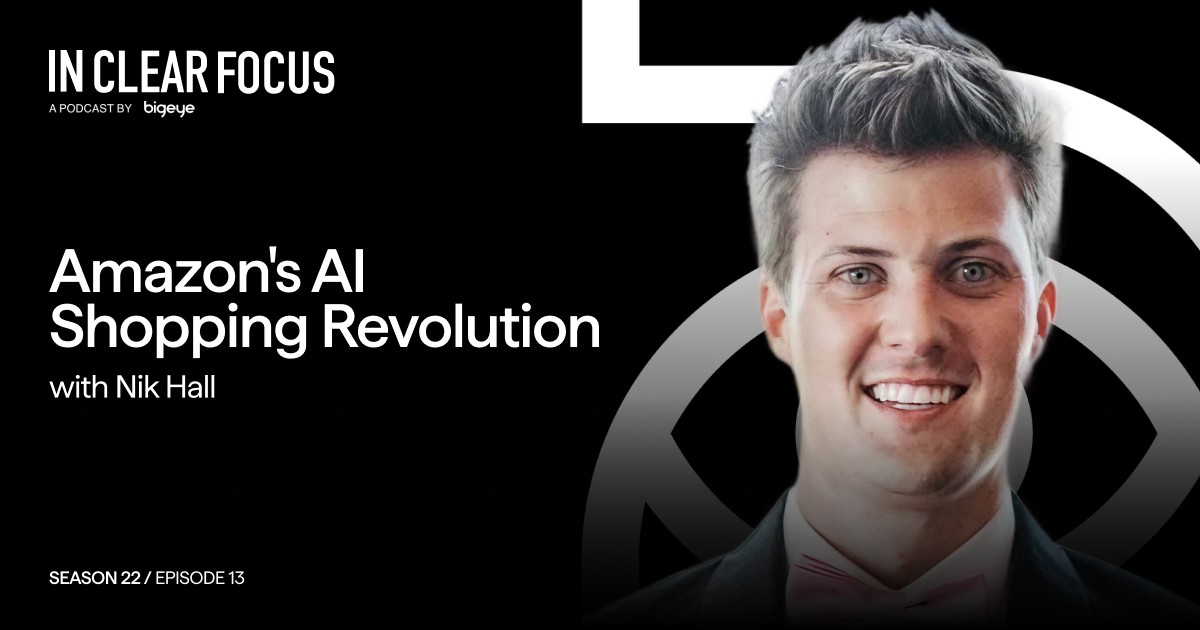
IN CLEAR FOCUS: Nik Hall of REViVE Marketing Partners explains why the era of keyword-stuffing on Amazon is over. He reveals how Amazon's AI shopping assistant, Rufus, is shifting product discovery from search volume to intent-driven conversation. Learn how to adapt your listings, why product quality and authentic reviews matter more than ever, and how to protect your brand's pricing integrity. Discover the strategies high-growth CPG brands need to win in Amazon's AI shopping revolution.
Episode Transcript
Adrian Tennant: Coming up in this episode of IN CLEAR FOCUS:
Nik Hall: We have crazy, high adoption rates with the AI within Amazon. You do not wanna try to scale too early. Don't be lazy with this. Take your top products, make the adjustments. See how it affects things, and then we will continue to grow.
Adrian Tennant: You're listening to IN CLEAR FOCUS, fresh perspectives on marketing and advertising, produced weekly by Bigeye, a strategy-led, full-service creative agency growing brands for clients globally. Hello, I'm your host, Adrian Tennant, Bigeye's Chief Strategy Officer. Thank you for joining us. For years, the playbook for winning on Amazon was largely the same: find the highest volume keywords, stuff your listing, bid aggressively on PPC, and outspend your competitors. Well, that era is ending. Amazon's AI-powered shopping assistant, Rufus, is fundamentally changing how products are discovered, and the brands that understand this shift earliest will have an enormous advantage. My guest today is Nik Hall, founder and CEO of REViVE Marketing Partners, an operator-first Amazon agency built specifically for high-growth, better-for-you CPG brands. Nik's perspective is shaped by first-hand experience. He co-founded a gummy vitamin brand as a college junior, scaled it from zero to eight figures across DTC, Amazon, and more than 25,000 points of distribution, including Target, Walgreens, and Kroger, before a successful exit. When seven consecutive Amazon agencies failed to grow the brand, Nik took the account back in-house and grew Amazon sales 450% in just three months. That experience is the foundation of REViVE, and it informs everything he shares publicly with his online audience of over 15,000 CPG entrepreneurs. To discuss why the keyword-driven era of Amazon is ending, how Rufus is transforming product discovery through AI-powered conversational search, and what CPG brands need to do right now to stay competitive, I'm delighted that Nik is joining us today from Dallas, Texas. Nik, welcome to IN CLEAR FOCUS.
Nik Hall: Thank you. I appreciate it.
Adrian Tennant: Well, you spent seven years scaling your own CPG brand through direct-to-consumer, Amazon, and retail. Now, when you look back, what was the single biggest mistake you made on Amazon before you figured out how it really worked?
Nik Hall: Gosh, I'll say this, I didn't get on Amazon soon enough. So I've got a friend of mine, we were doing direct-to-consumer, and our product at the time, we were doing custom gummy vitamin packs. You couldn't do that on Amazon. And he was like, dude, you're thinking too far into this. Like, you're thinking way too creatively. Just launch a melatonin gummy, launch a omega gummy, launch a whatever, okay? And very quickly, I had a competitor, literally like exact same products as us. We got it from the exact same supplier, stock formulation, built it to 15 million bucks within like two, three years, just on Amazon. sold the business very, very quickly. Us, we grew it and we grew it substantially, but we went on way too late. And so back in the day, this'll irritate people today, just as if you're not ahead of the game today, you'll be irritated in five years. I mean, I could change my title to Melatonin Gummies and start ranking top five position within hours. And so little is that easy and boom. I mean, your product obviously had to be relevant, you had to convert, all of that, but it was nothing like it is today. I'm not saying every product should get on earlier, But if you're going to be on Amazon, you might as well get on earlier because it's only getting more and more competitive. It's getting more and more expensive. And so you want to win early.
Adrian Tennant: Product quality is a theme that runs through everything you typically publicly discuss. You've said that the era of gaming, Amazon's algorithm with keyword tricks, is over. So what happened to make product selection and quality the foundation of Amazon's success today?
Nik Hall: I mean, you got companies like Shein and Temu and go on Temu's app and right away you get a spinning wheel that's gonna give you 99% off and you're gonna get $300 of credits and like everything just feels scammy and Amazon's trying to stay away from that. And what's happened is over the years any product out there gets commoditized to an extreme amount where the Chinese then come in And there's a bunch of stuff that none of us know that's happening behind the scenes with government and companies and whatever it may be. And I don't know enough on that stuff. But one thing that I do know that is public is Amazon is going to put a tax on Chinese sellers that are from China. So if I'm from America and I buy from China, I will not get that tax. However, Chinese sellers will. The reality in Amazon world is the Chinese do not play fairly. Not all of them, but there's a good amount of them. They're ridiculously innovative, but they also steal, cheat, don't care about rules. And Amazon's trying to get rid of some of that stuff because when you steal, cheat, and do all these different things, what also comes with it is one, a lack of values. And that's where we've seen all of these creatine gummies and all these other supplement companies where they have literally zero nutritional value. but they're selling them. And I'm like, that's a straight scam. That's not okay. And so Amazon's trying to get rid of these horrible products that are not good or being lied to or whatever it might be. And the reality is consumers want better and better products. That has been a thing, but back seven, eight, nine years ago, you literally could hack it with reviews, with giveaways, anything to get you ranked up higher. And nowadays that just doesn't work.
Adrian Tennant: Let's talk about Amazon's AI, Rufus. So for listeners who haven't encountered it yet, Nik, can you describe what Rufus actually is and what it does from the shopper's perspective?
Nik Hall: Yeah, so there's two different things with Amazon. So there's Cosmo, which is on the back end, and then you've got Rufus, which is on the front end that we all see. So if you go on your phone and you go on Amazon, the bottom right corner, there's going to be a little bubble that pops up and you can click on that and you can start shopping that way. You also, if you're on your desktop or even sometimes on your phone, you can just type in what you're wanting to actually go after. And what will happen is Rufus will actually pop up and it's this generative AI powered conversational shopping assistant. That's it, like technical of what it actually is. And what's so cool with it? Okay, I'm a different personality. Before I say it's so cool, certain people hate Facebook ads. I don't want to be targeted in anything, get rid of every ad on platform. To me, I'm like, dude, you've heard me talking about this new thing that I'm looking at getting into, this new ATV I want, and now I'm getting all these brands of ATVs. I'm like, this is like my dream. Other people are the exact opposite. Okay, so now going back to that, from a Rufus standpoint, what I do think is people should be very excited about the future of this. Because this is me, back 10 years ago, I literally had no money. I was making $7,000 a year, and I would buy headphones all the time. And I would just buy the cheapest ones, $15, $20, and they'd go out within two or three months. You'd rip them at the gym, they'd come out, any kind of sweat in them would break them. I can't pay $200 for a pair of headphones. Nowadays, I've got my Apple Watch, my MacBook computer, my iPhone, my headphones. I just want it all to integrate because when I pick up my headphones, boom, I'm immediately integrated. Amazon now is starting to understand, Nik wants the Apple this. So if I type in headphones, if you go type in premium headphones on Amazon right now, you will find $40 pair, $50 pair, no matter what because that's the commonality of what America is. They want premium $40 headphones. They don't want Bose $300 headphones because that's expensive. Most people can't afford that. And so what it will start to switch to though is you as a shopper, you as a profile, it will know, hey, you buy premium this type or these brands or whatever it may be. And to me, it just makes it way easier. What they're doing already from a Rufus side, which is super smart, if you talk about one thing of why people don't convert is because of decision fatigue. And when you look at a lot of products on Amazon, there's too many decisions. Now what they're doing is they're suggesting three products. Cheap, good value, best quality. I think it's going to make a huge change.
Adrian Tennant: Well, the adoption numbers are striking: 250 million users, monthly active users growing 140% year over year, and Amazon reporting that shoppers who use Rufus are 60% more likely to complete a purchase. What does that tell you about how product discovery on Amazon is changing?
Nik Hall: I literally got an article this morning and I'm going to just read this. Amazon raises $37 billion in record bond sale for AI. The company is already planning to invest somewhere near the $200 billion in CapEx in 2026 alone. This to me, I'm sitting here and I'm like, this is wild. The amount of investment that's going into it, and we see it from all these different companies. I've got a number of friends that have sat there and been like, AI is dumb, I don't want to deal with it, whatever, blah, blah, blah. To now, I mean, literally like months later, they're like, okay, I'm getting behind. I got to be on it. And so it's for sure going to change. I'm going to say for the better, but there's obviously a cost to everything. And so will there be jobs lost for sure? The hope is we can just get more efficient and then we can all get paid a little bit more and we can all adjust our skills accordingly, but it is going to be a major change. In the last year on Amazon, we have seen more changes in the last year than we have seen in the last 10 years combined minus this last year. I will guarantee you this year we will see probably double what we saw in this last year.
Adrian Tennant: Well, you've described Rufus as representing a shift from keyword-driven to intent-driven product discovery. So for a brand manager, let's say, who spent years optimizing listings around search volume, what does that shift actually look like in practice?
Nik Hall: So the typical way that everyone's gone about stuff is they go online, they use Helium 10, Jungle Scout, Data Dive, use some of these tools or whatever, and they reverse ASIN it, right? So they look at some of the top products, maybe the main competitors, 10, 20, however many competitors that they're going to look at, and they're going to go through and they're going to figure out what are you currently ranking on, figure out if the keyword target is highly relevant to them, if it's a good cost per click, and they're going to start going after that. That's today that is not fully shifted away. Okay. There's a lot of nonsense articles out there. It is not fully shifted away. What we are starting to see with it though is for example, rather than outdoor fan, I'm now looking for my outdoor patio fan for something equivalent of big ass fans, but I don't get a $3,000 budget. So I don't know what's so good about big ass fans. I don't even know if they're great. But what I do know is they seem like they work really well And I don't know if it's just because they're like whatever 3 000 inches. I don't know. They're freaking huge but I'm like, I'd love to have something like that on my back patio. Well, then it starts to explain all of the aluminum blah, blah, blah material and this kind of aerodynamics and this amount of CFM and a bunch of words that I really have no idea. They sound good. And so I just look at them like 13,000 CFM is better than 10,000, which is better than 8,000. So I'll do the 13,000 one. Like let's just buy this right the first time. So you'll start to see though, people will start to ask what we've already seen this through Google and through Amazon is people are now instead of searching for outdoor fans, They are looking for things that are more specific. Outdoor fan, high CFM, aluminum, blah, blah, blah. So they're getting more and more specific. And I think that it's going to go more towards this question and answer of what people are actually looking for, which we can already go through. Let's look at the questions and answers. We can ask our own questions on our own product and enable all those other ones from competitors. And then Amazon will start to know it better and go, oh, this is not an outdoor fan. This is an indoor fan that's, you know, just design. It doesn't even work well. Or it's an outdoor one that may not look as pretty, but it is like super high power.
Adrian Tennant: Amazon has also signaled that Rufus will eventually be able to auto-add items to carts, track and automatically purchase at target prices, and predict replenishment behavior. If those features fully roll out, what does that do to the relationship between brands and their Amazon customers?
Nik Hall: So what's interesting is some of that stuff is actually already out. So there's now a price history. And again, some of this is beta to some people, so it may not be fully 100% out there, but you can see a price history now. And so for me, who's in the Amazon world, I know how to see the price history of everything. My wife says she wants to buy something. I'm like, hey, let's wait for Prime Day. It's coming up. There's a deal every other month, it feels like. And most of them are just kind of half done deals. I've been able to use tools my whole career doing this. Well, now consumers will look at it. And so these deals that, I don't know about how you feel on these prime days or Black Friday or name the next one that it feels like it's every month that you've got something, you miss a deal, who cares, right? It'll just be back in a month or two. And is it actually 20% off or did you just raise your price 20% and drop it 20%, right? And so consumers don't understand all of the backend of some of this stuff. And so what it's allowing people to do is it's allowing them to see that right there. And then I'm sure what'll happen is if consumers say the $15 price, once it hits $13, I'll buy it. There's going to be data, I'm sure, at some point that says, hey, you've got 35 people that'll buy this if you drop it to this amount, boom, auto buy. We don't know for a fact that yet, but they are absolutely like they are. That's a real, real close thing. This is not like a year or two out. This is something that is like very, very close for those that are always looking for a deal or whatever it may be. I mean, I've got 48 things in my cart right now, literally. And I'm like, I don't plan to buy majority of them. I hope not. Jeez. But there are certain things where I'm like, honestly, if it is this price, I would buy it. And I think that's the reality with most people.
Adrian Tennant: Yeah. Super interesting. Let's take a short break. We'll be right back after this message.
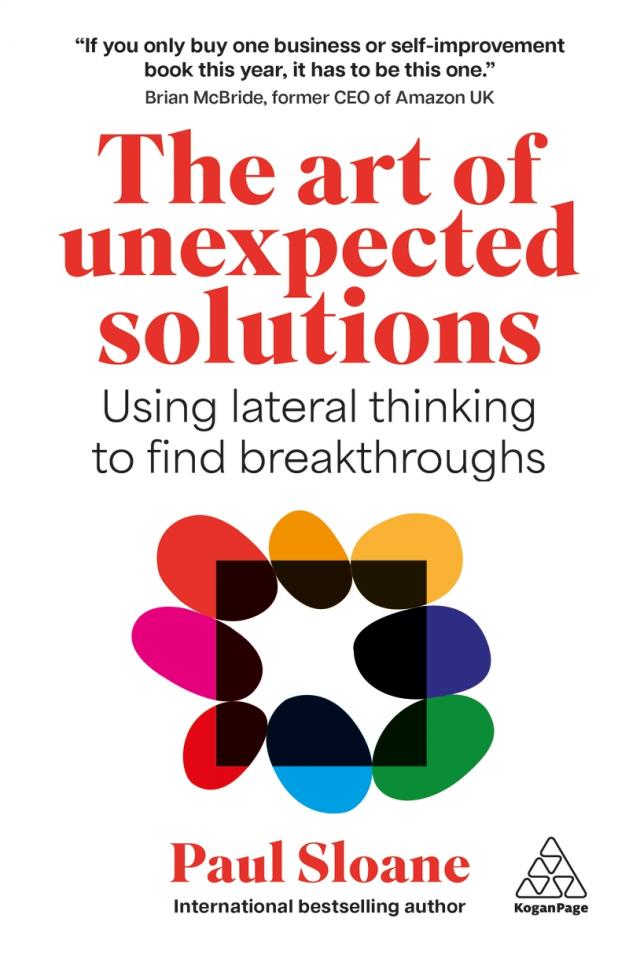 | Paul Sloane: Hello, I'm Paul Sloane, author of "The Art of Unexpected Solutions" published by Kogan Page and the Bigeye Book Club Selection for April. I've spent decades studying how the most transformative innovations in history arrived not from careful planning, but from unexpected discoveries, accidents, failed experiments, and chance encounters that only produced results because someone was curious enough to pay attention. In the book, I share practical techniques for challenging assumptions, cultivating serendipity, and finding solutions that others overlook, with examples drawn from business, science, sport, the arts, and many other fields. As an IN CLEAR FOCUS listener, you can save 25 percent on "The Art of Unexpected Solutions" when you order directly from KoganPage.com. Just enter the exclusive promo code BIGEYE25 at checkout. Shipping is always complimentary for customers in the US and the UK. I hope this book inspires you to approach your toughest challenges from a completely unexpected direction. Thank you. |
Adrian Tennant: Welcome back. I'm talking with Nik Hall, founder and CEO of REViVE Marketing Partners, about how Amazon's Rufus AI is reshaping product discovery and what CPG brands need to do right now to stay competitive. Nik, Rufus reads listings, reviews, and Q&As to help shoppers make decisions. Given that, how do you approach rewriting a product listing for the Rufus era?
Nik Hall: Yeah, so you named half of it right away, right? So Amazon's going through and rather than just having your product image of let's just say a water bottle or a cup or whatever it may be and having different angles of it and stuff that was never a good strategy, right? Like you always wanted to sell on the product. You've got to go through more of these features, benefits, and what is it going to actually do for you? What is it going to do from a consumer perspective? But also, what are the common mistakes that people are having, right? And I'm just going to use the Stanley Cup for an example. Stanley Cup comes out, it becomes the biggest cup in the world, and then two years later, naturally, it goes to Roommate, and then it goes to Simply Modern, and now it's on Adwala. And that'll be gone here in the next year or two. It's just math. It's done this over and over again. But what they're doing every time is they're making these small improvements to the product. And you know, at first it was the Stanley, but it wasn't spill proof. My kids spilled that stuff. They spilled one yesterday all over the ground, you know. Then the next one is actually like truly spill proof if, you know, you turn the knob a little bit. And then the next one is a 40 ounce rather than a 32 ounce or it's a 32 ounce rather than 40 ounce. And so they start to get a little bit more and more innovative and what they're doing, they've already been doing this stuff, right? These other massive brands. As they're going through and they're taking the reviews and they're figuring out what are the majority of the reviews saying in a positive way and a negative way. And let's just figure it out. I used to run this thing and I still run it in a different way of all of the reviews of the company or of that specific product. and we figure out, in order, the most important, meaning the most mentioned things, down to least mentioned things, positively and negatively. On the positive things, in a consumable product, right, a product that you're typically eating, taste is still the number one thing. I'm just saying, if you have a GLP-1, you're gonna lose 100 pounds a week, whatever, some crazy thing, and it tastes like dog poop, it's still gonna be really hard to take, right? And so, like, taste is a major, major factor of all that stuff. But there's a lot of these other little things that you don't realize. And what I've seen so many entrepreneurs do is they go out there and I did this as well. Well, oh yeah, that would be helpful for me. Let's launch something like that. Well, you're not what everyone is. So just go figure out what do they do, what do they not do well. Sometimes you'll find the packaging was such junk it came in and it was broken. But they've got 10 reviews on that. 10 one-star reviews on that, yeah, we can call it a yappy customer if you want to, but the reality is just fix the packaging. One of the things that I saw as like innovation was Liquid IV's variety pack. Everyone was saying, I love this, I just wish there was a variety pack, I wish there was a variety pack. Well, then it started becoming search volume on Amazon. There's a company doing $600,000 a month for years. I called up some people at Liquor AV and I'm like, dude, launch a variety pack. These guys are literally doing $7 million a year off of your product and they've got the worst branding and it's just the craziest thing. And so when you're writing these listings, you've really got to go in and do the research of not what you think it is. Yes, you today still look at the keywords. I do genuinely believe keywords are still always going to be a thing, right? It just won't become the majority of the thing over time. But you then got to figure out the features, benefits, all of that, make sure your product fits that. And then it answers the questions and answers appropriately to what people are actually asking.
Adrian Tennant: Rufus instantly surfaces review patterns, both positive and negative. Nik, what does that mean for brands that haven't been proactively managing their review quality?
Nik Hall: Oh, there's very few categories where below a four-star is okay. There's a couple of them that are 3.9, 3.8 stars that are like, that's just what the market is. You'll see that with all GLP-1 products because if they eat triple-triple In-N-Out burgers still with their fries and their shake and their whatever, it's just math. You're not going to lose weight. Those certain categories or whatever, energy is always tough, sleep is sometimes tough, just because, you know, you drink a caffeine drink an hour before bed and then you don't fall asleep. There's really not a whole lot of managing reviews, truthfully. The people that say like, oh, we can get rid of your bad reviews and stuff, quit trying to get rid of your bad reviews and actually create a better product. No one wants to hear that because that's the hard road, right? That's exciting someone. If you want to become a bodybuilder, you got to eat chicken, rice, and broccoli all day, every day, and you got to work out for two hours a day. Well, no one actually wants to do that. So they want the end result, but they don't want the things that go along with it. If you want to truly build a brand today, I'm a big believer of order minimum quantity or very low quantity of your product and change, change, change, change, change. If you hear one comment, that's not fact, but if you keep hearing it over and over, you've got to switch and change it. Amazon does not allow you to do much. On the review, I'm going to say review manipulation is not a thing anymore. It should not be a thing. Do not play with that. Amazon got sued by the FTC, I think in 2022 or 2023. They banned 200,000 sellers immediately. I've got a buddy of mine, he was doing $100 million a year within like a year and a half, two years, and he is completely gone now. Will never be able to launch another product on Amazon. Now, he'll probably find a way because he hacks a lot of stuff, but it is rough.
Adrian Tennant: Not to be recommended.
Nik Hall: Definitely don't do that.
Adrian Tennant: Okay. Now, Rufus also flags pricing behavior, including what you've called fake discounts. Nik, why does pricing integrity matter more now than it did when shoppers were making decisions purely from search results?
Nik Hall: There's so many discounts throughout the year. And I don't know about you, but five years ago, Memorial Day was a 20% discount. Nowadays, Prime Day is a 20% discount. And so to me, it's just, it's not meaningful. Now, what you don't want to do as a brand is you don't want to go out there and sell your product at a 60% discount because those people never come back. They're just discount shoppers. We did a big study within our own brand and we found anything over a 30% discount created really crappy customers. Now, if you did have a Black Friday sale or anything like that, that was a time that you could actually release a bunch of inventory and all of that, do a massive discount. You may break even, whatever it may be. But I think the price integrity is super, super important, especially with the Shein and Timu and all these other companies that come out. I mean, do you really believe in either pricing? I've watched some of these companies do a 20% increase in price and drop the 20%. And I'm like, this is so annoying. I mean, to me, I'm like, that's not really Amazon's fault. That's the individual or the company behind it. And so that's where I think that they are trying to get it where it's like, you can fully trust us in this.
Adrian Tennant: How does Rufus change the calculus around which products in a portfolio are worth investing in?
Nik Hall: I don't even know if Rufus is going to change a ton on that specifically, but what I will say is I've got a brand, they started about 12 grand a month. Now they're doing about 95,000 a month. And 85,000 of the 95,000 is from one product. Now a couple of different sizes, but one product of their 10 in the catalog. Usually what you're going to find is that if you're able to win, you're able to win. If you're not able to win, you won't win. Now that doesn't mean you can't adjust things or change things or whatever it may be. When you look at ACoS, the average cost of sale or your return on investment, ROI, ACoS, inverse of each other. So if you have a low ACoS or a high ROI, you likely either have cheap cost per clicks, high conversion rate or both. And then obviously inverse if you're not doing well. You've got to figure out, are you spending too much per click or are you not converting high enough? And really when you look at the market today against other products in the space, how are you going against competition? Because Amazon wants the highest converting product. That's what they want. That's why when you look at premium headphones, the $40 one comes up. Because that is the common for what everyone actually converts on. I don't convert on that, but majority of America does. So what you've got to do is you've got to figure out which one of these products can you adjust, change, whatever. And if it's a conversion rate issue because your pricing is too high, cool, that's easy. Change your price tomorrow. If your conversion's low because your reviews are really bad, you've got to change the product. That is not a quick fix. And so this is something which, does it go into Rufus? Yes, indirectly. Because once you start to fix all those issues, then you start to see that. But the reality is this 80-20 rule is as real as it gets. Figure out what works really well. Invest there. Once you figure those out and hit those to a point of diminishing returns, then jump into some of the next ones.
Adrian Tennant: If a CPG brand manager is listening to this and wants to start adapting their Amazon strategy for the Rufus era today, what are the first two or three things you think they should do?
Nik Hall: Yeah, so unfortunately, there's not really many tools out right now. There's a couple of them that are coming out. We'll see how good they are. Just to give you a couple of tools, I just always love sharing this stuff. Zonguru is coming out with one. SmartScout is coming out with one. And then there's a couple of other ones that are vibe coded. The vibe coded ones, I honestly don't know. It's hard to tell. But the first thing I would do, again, go back to the 80-20 rule. Figure out which products you actually want to go in and go through or whatever. You got to deep dive on those. Go through your product, go through all competitor products, whether it's 10, 15, 20. and then you're going to go through and you're going to figure out what are all the things that they say. And I'm sure you can put some of this through chatgpt, cloud, name the other AI platform, whatever, and figure out what are the things that people are asking, going through, whatever. Be direct with this. In this world, you do not want to try to scale too early. Don't be lazy with this. Take your top products, make the adjustments, see how it affects things, and then we'll continue to go. Again, we have crazy high adoption rates with the AI within Amazon. However, it's still not the majority of what people are searching today, but it is becoming. So don't completely risk your portfolio because of that.
Adrian Tennant: Now, your own business, REViVE, focuses specifically on what you call better-for-you CBG brands. Is there something about that category that makes Amazon and the Rufus transition specifically particularly high stakes compared to other product categories?
Nik Hall: Well, I mean, so you got better for you and this is talking mainly just CPG, right? And that's the majority of who we work with. It's our specialty. And when I say better for you, I mean supplements and food products is the typical, but we do have some toy companies, some Christian companies, some other ones that we work alongside. What I'll say within the better for you is you pretty much have better for you and then you just have other me too that is trying to copy Lays. I'm just saying I don't really care to compete against Lays. I don't think I'll ever win against Lays. So what people do is they create something like Siete, which is better for you, a little bit of an alternative. One company I'm looking at in a really, really cool way is Bloom, Bloom Nutrition. They have grown to almost 200 million, I think over $200 million in sales in the last number of years. I mean, I think it's been four or five, six years maybe, not long at all. And they haven't had any like real true innovation. And I say that in the most respectful way possible because, I mean, Greg, the founder of the company, talks openly about how he just changes one little thing and he just makes it better and better. And so I've tried his product. I never drink energy drinks, I drink Celsius now. I tried bloom. I'm like, dang, I've never thought to change an energy drink until I tried some of theirs. A lot of new did a very similar thing. That's how these people are innovating. They're not taking some energy drink and creating some crazy outlandish thing that no one's ever heard because that's a point of hesitation for people. They want to go in and people want to be like, I know I like energy. Oh, that flavor sounds good. Let me try it. And it's trial, right?
Adrian Tennant: Yes, more incremental innovation rather than dramatic disruption.
Nik Hall: Yeah.
Adrian Tennant: Nik, this was a great conversation. If IN CLEAR FOCUS listeners would like to follow your work more closely or learn about REViVE, what's the best way for them to contact you?
Nik Hall: LinkedIn's always great. LinkedIn and YouTube are two things that I'm doing this year. My goal for 2026 is lay out the playbook. Lay out the playbook of exactly how to do Amazon. I know my personality was to learn it myself. I wanted to go out there and it really didn't matter who it was. I have zero intentions on creating a course. It's not really my style. I just want to share a bunch of really good free information that I can have people that are working with agencies be able to manage them better or do it themselves. or find someone that actually understands this at a really, really deep level. And so LinkedIn is always good. Reach out. I usually respond. If not, send me another note.
Adrian Tennant: Nik, thank you so much for being our guest this week on IN CLEAR FOCUS.
Nik Hall: Thanks, Adrian.
Adrian Tennant: Thanks again to my guest this week, Nik Hall, founder and CEO of REViVE Marketing Partners. As always, you'll find a complete transcript of our conversation with timestamps and links to the resources we discussed on the IN CLEAR FOCUS page at Bigeyeagency.com. Thank you for listening to IN CLEAR FOCUS, produced by Bigeye. I've been your host, Adrian Tennant. Until next week, goodbye.
Timestamps
00:00: Introduction to IN CLEAR FOCUS
00:19: The Changing Landscape of Amazon Marketing
02:29: Nik's Biggest Mistake on Amazon
04:03: The Importance of Product Quality
05:47: Understanding Amazon's AI: Rufus
08:52: Rufus Adoption and Impact on Purchases
10:15: Shifting from Keyword-Driven to Intent-Driven Discovery
12:37: Future Features of Rufus and Consumer Behavior
15:13: Managing Product Listings for Rufus
19:07: The Importance of Review Management
20:57: Pricing Integrity in the Rufus Era
22:10: Investing in Product Portfolios
24:05: Adapting Amazon Strategy for the Rufus Era
25:30: Focus on Better-for-You CPG Brands
27:10: Connecting with Nik Hall
27:51: Conclusion and Thanks