/
The RED APPLES Way with Marc Robertz-Schwartz
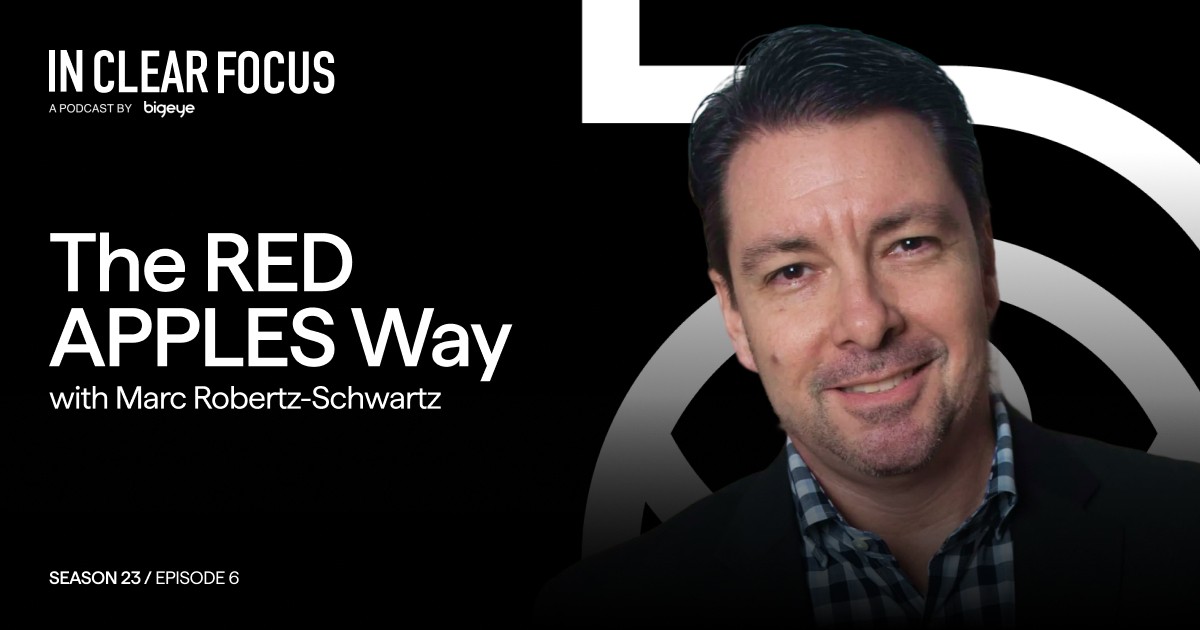
IN CLEAR FOCUS: Marc Robertz-Schwartz, author of "The RED APPLES Way," explains why core values are a business's most durable competitive advantage. Drawing from 16 years of agency ownership, Marc reveals why companies get mission and vision backward. Discover the RED APPLES framework, learn how to build an employee-first culture that survives economic crashes and AI disruption, and find out why values-driven leadership is essential for long-term growth and a successful agency exit.
Episode Transcript
Adrian Tennant: Coming up in this episode of IN CLEAR FOCUS:
Marc Robertz-Schwartz: If you're an entrepreneur and you're running your business, it starts with who you are as a personal individual. So I think you establish the foundation of core values first. You use that to build the mission, the vision, the branding. Everything else should fall into place at that point. I think a lot of organizations, especially small businesses, do it backwards.
Adrian Tennant: You're listening to IN CLEAR FOCUS, fresh perspectives on marketing and advertising produced weekly by Bigeye, a strategy-led, full-service creative agency growing brands for clients globally. Hello, I'm your host, Adrian Tennant, Bigeye's Chief Strategy Officer. Thank you for joining us. At a time when AI tools can generate a logo, write a strategy deck, and draft a press release in seconds, it's tempting to believe that technology alone can build a business. But what actually holds an organization together when the Marcet shifts, a key client leaves, or the economy crashes? Today's guest argues the answer isn't a better tech stack, it's a clearer set of values, Marc Robertz-Schwartz is a multi-award-winning media and marketing executive, entrepreneur, and author based in Central Florida. Over a 30-year career spanning broadcast television, brand management, and agency ownership, Marc built Red Apples Media from a one-person startup launched during the 2008 economic crisis into a nationally recognized full-service agency, earning three regional Emmy Awards, 19 Telly Awards and recognition as a "Best Places to Work" before completing the sale of the company in late 2024. Marc's debut book, "The RED APPLES Way: How nine core values transformed a business founded on fear and desperation into one of passion and purpose," published in July, distills 16 years of operational experience into a practical framework for values-driven leadership. To discuss why clearly defined values may be the most durable competitive advantage a business can have, especially as AI reshapes the marketing landscape, I'm delighted that Marc is joining us today from Central Florida. Marc, welcome to IN CLEAR FOCUS.
Marc Robertz-Schwartz: Thank you so much for having me. I appreciate it. I've been looking forward to this.
Adrian Tennant: Me too, because you and I both came up through broadcast television creative services, as did a previous guest on this show, Tom Mozloom. That world taught us storytelling under real constraints, tight deadlines, limited budgets, and the unforgiving discipline of live air. How did that broadcast foundation shape the way you ran Red Apples Media? And do you think something's lost when today's marketers skip that kind of training?
Marc Robertz-Schwartz: You're going right for the jugular. I love it! I think there's something very special about people who started their careers and are currently in their careers, particularly in the broadcast business. Deadlines are real. As I used to say to people, "If you're on air for a six o'clock newscast, it's not 6:02. It's not 6-whenever. You're on the air at 6 o'clock. You have to have 30 minutes of content, quality content, to fill that 30 minutes. So I think there's something very unique and special about people who were brought up in an era or in a discipline where accuracy, time sensitivity, budgets all make them very transportable. So I do think that that was an important part of what made Red Apples Media successful. When we were given a deadline, our goal was to work ahead of the deadline, to be able to allow for corrections and reviews prior, just like we would with a news story or a promotional spot, right? Promotional spots sometimes had to go through attorneys. They sometimes had to go through the news director. And we had to work far enough ahead to allow for those processes to happen. and for any adjustments that maybe had to be made.
Adrian Tennant: The subtitle of your book includes the phrase "fear and desperation." You were laid off from your role at The Villages just as the 2008 economy was collapsing.
Marc Robertz-Schwartz: Right.
Adrian Tennant: Can you take us back to that moment? What was the reality of launching a business under those conditions? And how did that origin shape the kind of company you decided to build?
Marc Robertz-Schwartz: At the time, it was late 2008, I had just gotten back from a vacation. I think I came back on a Wednesday, I worked on a Thursday, and that Friday afternoon, I was told, "Today's your last day at The Villages." And the statement was, "You don't have to leave now, but you do have to be out by the end of the day." What I didn't know was that three or four other members of my team had already been dismissed from the building. I didn't even know about it. So it was a pretty dramatic exit that was completely unanticipated. And the rationale at the time was "The real estate market is tightening up right now as the economy is starting to tighten up. You guys did such a great job of building our lead funnel that maybe we don't need a marketing department." So we went with that as the explanation. What made it more complicated was that about six months prior, my wife, who was working for a large corporation, had also taken a buyout package, with the idea that she was going to start up a small boutique PR agency. So, you know, she was still six months up and running. I think she had one client at the time and suddenly the two of us are looking at each other going, "What are we going to do to pay the mortgage? How do we keep our daughter in school? How do we keep a normal lifestyle?" And I tried doing two things at the time: I spent half my day looking for a job, and half my day trying to create a company that I thought had some value and sustainability. And that was based on the fact that the only thing that was growing in our area, because we're outside The Villages, it is a disproportionately high senior population, for anybody who knows about The Villages. So the only thing that was growing at the time was the medical industry. Doctors were flocking from all over the country and all over the world to start practices in a growing and booming senior community. So I looked at that and I said, "If I'm gonna do anything, I've gotta do something around the medical industry. And how do I do that along with something that I'm passionate about, which is video storytelling?" And that's where the original concept of Hometown Health TV came from. I had to decide pretty quickly because I realized I wasn't doing either of those two day jobs very well, either looking for a job or trying to build a company. And I finally said, I've got to commit to one of these. And that's when I focused very much on building the Hometown Health TV network.
Adrian Tennant: Well, you didn't start with a values framework on day one. The RED APPLES acronym actually came later. What was the catalyst that made you stop and codify a set of core values for the agency?
Marc Robertz-Schwartz: I think when I started the business, I knew for myself what I wanted the values to be. Maybe I didn't call them values at that time, and I didn't really have to stand there in the mirror every morning and recite the values to myself. Like, I knew in my heart and my soul, I had worked for some really great people during the course of my career. I had worked for some people that, you know, I thought, "I don't want to repeat sort of some of the lessons that I learned." So you take the good, the bad, and you decide who are you as an individual and the type of business now that you've got the control to decide what those values are. So I always knew how I operated, how I wanted them to be. Where it started to become tricky was as the company grew and I started to add people to staff. Now I had to figure out how do I articulate to them what my expectations are as to how they're going to conduct themselves as representatives of what would become Red Apple's Media. And right about the time that we rebranded, it occurred to me, and I so clearly remember this moment. I was sitting in our conference room after hours, everybody had gone. I had one table lamp on in the conference room, and I was just sort of sitting there looking around, thinking to myself, "Look at where we've come. Look at what this has become." Never in my wildest dreams did I ever imagine it was gonna be -- I'm now in 2,500 square feet. At that time, I had six employees. We eventually grew to 13. And I thought to myself, "I need to make sure that everybody's on board with what it is that I'm trying to achieve here." And that's when I started a sketch on a pad that was sitting in the conference room. The words that I knew represented the core values, and then I backed them into using a letter from each letter of RED APPLES to use that as a way to make them more memorable and more clear. That then led to producing mousepads that I put on all the workstations with the core values spelled out, a couple of posters throughout the office. But I also understood that if I didn't embody those core values on a day-to-day basis, they weren't going to trickle down, no matter how many mousepads and how many posters and how many coffee mugs and how many tattoos or whatever it is I thought I was going to do. And that's really where it all came from.
Adrian Tennant: Well, in our pre-interview conversation, you drew a distinction between core values and mission and vision statements, which you suggest companies should probably set aside. Marc, what's the difference and why do you think so many organizations actually get this wrong?
Marc Robertz-Schwartz: I think a lot of small businesses, entrepreneurs, right away go to, "What is my logo going to look like? And what is my catchphrase or slogan going to be?" And to me, that's jumping way too far ahead. I don't necessarily think that you shouldn't have a mission and a vision. But I think you need to start with the core values. The core values are the DNA. The core values are the foundation that the mission and the vision should originate from. And then that eventually leads to "what is the slogan?" And then "what is the logo?" And "what are the tchotchkes going to look like?" Like, how are those relevant? And I think a lot of people, a lot of organizations do it backwards. I think it's not until they've started to almost dig a hole in their organization that they start to realize, "How do I hold so-and-so accountable to honesty and integrity when I've never really articulated to them that that's an important?" I mean, they should automatically believe that that should be an automatic. But if I didn't articulate that to them as the owner of the company, and I don't embody that value as the owner of the company, how can I hold somebody else accountable to it? And so I think when you establish what the core values are, and I'll go further in distinguishing values and core values. Core values are the ones that are just indisputable. They define who you are as an individual, they define who you are as an organization, and more importantly, it allows others to define who you are because you've become so closely associated with those core values that they become synonymous. So I think you establish the foundation of core values first. You use that to build the mission, the vision, the branding. Everything else should fall into place at that point. I think a lot of organizations, especially small businesses, do it backwards.
Adrian Tennant: Let's get into some of the specific values in the RED APPLES framework.
Marc Robertz-Schwartz: Let's do it.
Adrian Tennant: Now, you selected four that you believe are especially relevant right now. The first is 'Excellence in everything.' You described that to me as a fundamentally human trait. So, in a world where AI can produce, and I'm using air quotes here, "good enough" work almost instantly, what does excellence look like?
Marc Robertz-Schwartz: Well, and I will just respectfully correct you. It is 'Excellence in everything.' Period. It is not debatable. It is excellence in everything that we strive to do. And I'll share with you a quick story before I answer your question. We did an offsite meeting and we got into this whole debate about "What does excellence mean?" And one of the people who was working for me was pushing back and saying, "We'll never achieve excellence. We're wasting our time trying." And I said, "I think you're confusing excellence with perfection. I think those are two very different things. Excellence is the effort. Perfection is the potential outcome. If we're not at least striving for excellence, you're right, we're never gonna achieve perfection." So the idea is, are you bringing your best to everything that you do? Are you focused on the details? Are you out-thinking? Are you working collaboratively? And that's really what excellence is all about. I do believe it's a human trait. Look, AI is getting better. I don't know about you, I'll use it from time to time, but I still find myself having to double check it to make sure it's accurate to make sure that it's achieved what I've asked it to do. So I don't believe we can use AI yet to replace the human trait of the possibility of excellence. And I will tell you frankly, early in my career, I made the mistake of believing that my creative and talents were enough to get me by, and I'm very, very candid in the book about some of the areas that I can now look back on and realize I was a difficult individual to manage. And it almost came from the attitude of "Look, I'm really good at what I do. Just get out of my way. Let me do my thing and don't bog me down with the nonsense." And that's not a particularly collaborative way to approach things. The excellence could not just be in the creativity; the excellence had to be in the value that I brought to that organization, which I eventually learned over time, with a few slaps on the wrist along the way.
Adrian Tennant: Well, the second value you identified for our discussion today is the 'A' in RED APPLES, which is 'Anticipating client needs and opportunities.' Now, Marc, you've talked about the danger of a client telling you about a new technology before you've even heard of it. So how did you build a culture of proactive awareness at Red Apples Media?
Marc Robertz-Schwartz: I think that was one of the more difficult ones to build, because it was received as, "Well, you suggested that I need to be on the clock 24-7. Do I need to constantly be thinking about our clients?" And I had to get them to understand that there's a difference between adopting the relationship in such a way, and one of the examples I use is: You're picking up your kid, you're driving them to soccer practice, and you see a billboard in a really strategic location that's available. Does your brain automatically go, "Hey, that would be perfect for the so-and-so client, I need to jot this down and let Marc know about this tomorrow morning?" That's not an 'on-the-clock' thing in my mind. It's just a matter of you dialing yourself into, "How do I anticipate and identify opportunities?" For the most part, our clients weren't necessarily upset if they said, "I drove by a billboard that's available. Why didn't you guys bring it to my attention?" It was a more collaborative type of relationship, but I always thought it was our responsibility to be ahead of that conversation, whether it was technology, whether it was opportunities. So anticipating them as opposed to reacting to them, I think is a big part of what makes an agency so valuable. Otherwise, you risk the possibility of, "Why do I need an agency if I'm finding the billboards? I can just call the billboard company and get up on that billboard, or I could scroll through Facebook and find the 5K." So by being proactive and beating them to that conversation, increases your value as an agency.
Adrian Tennant: Staying with APPLES, 'P - People are our priority. Relationships drive success.'
Marc Robertz-Schwartz: Yes, sir.
Adrian Tennant: You reminded me about a United Airlines commercial from the late 80s (we're dating ourselves there, by the way!) where an agency head is seen handing out airline tickets because the firm had lost its personal connection with clients. Okay, that was nearly 40 years ago. Marc, are we at risk of repeating that exact same mistake with AI and automation, do you think?
Marc Robertz-Schwartz: We're already doing it. The only thing that is dated about that commercial is the reference to faxing. We send a fax here, we follow up with another fax, and so I always chuckle when I see the commercial. I track it down on YouTube, I use it when I do speaking engagements as a way to make this point: that we now have resulted into texting, messaging, emailing. Just picking up the phone anymore just seems like it's such a chore. But sometimes people need to hear the tone of your voice when you're asking something or questioning something. A lot of businesses are leaning towards automation, automated phone services, chatbots. Let's not mistake a chatbot with an actual human being whose job it is to sit there and wait for a chat to be initiated and you're having an actual conversation. So I do think that there's an opportunity for agencies and other businesses to really ramp up their customer service and remember that the personal relationships, the human interactions, typically are going to be more memorable than anything else that we can do to communicate with them. So that's where we really believed in those relationships drive success: People are the priority.
Adrian Tennant: Let's take a short break. We'll be right back after this message.
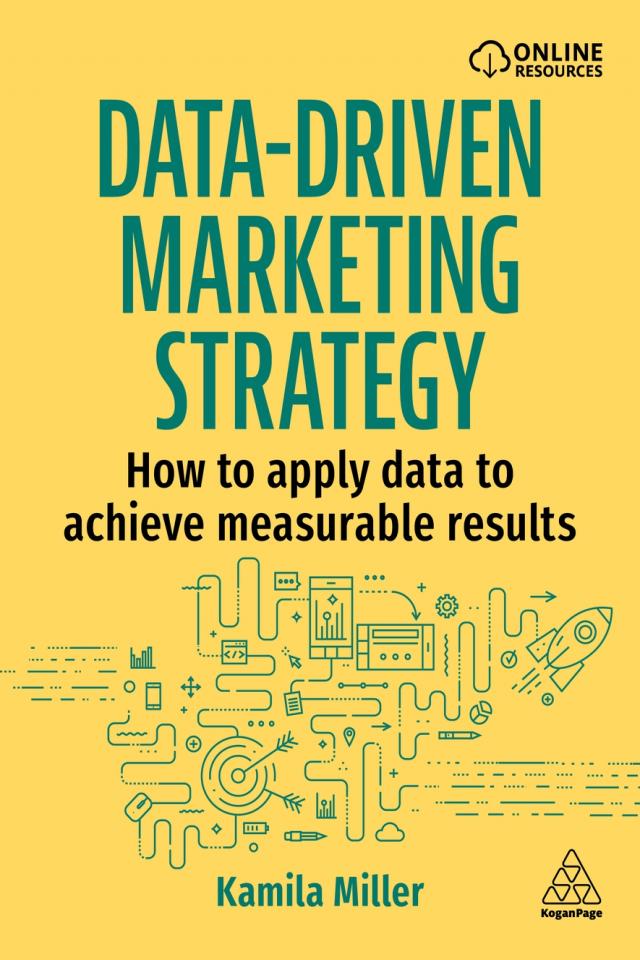
Kamila Miller: Hello, I'm Kamila Miller, the author of Data-Driven Marketing Strategy, published by Kogan Page. As a charter marketer and lecturer in marketing across several prestigious UK universities, I've seen firsthand the gap between collecting data and actually using it to make better decisions.
In my book, I share practical frameworks for turning data into creative, evidence-based strategies, from building actionable personas to leveraging AI for personalization at scale. With real-world examples from brands including Pepsi, Netflix, and HubSpot, you will learn how to move beyond dashboards and reporting to develop strategies where creativity and analytics work together.
As an IN CLEAR FOCUS listener, you can save 25% on Data-Driven Marketing Strategy when you order directly from koganpage.com. Just enter the exclusive promo code BIGEYE25 at checkout.
I hope this book helps you turn your data into strategies that deliver measurable results. Thank you.
Adrian Tennant: Welcome back. I'm talking with Marc Robertz-Schwartz, author of "The RED APPLES Way", about how clearly defined values can serve as a competitive advantage for businesses navigating an era of rapid technological change. Marc, the fourth value you highlighted is 'Solutions. Always provide more value than "no" or "I can't."' You've said that being a solution provider is what will differentiate successful professionals going forward. Can you give us an example from your agency experience where choosing to solve rather than deflect changed an outcome?
Marc Robertz-Schwartz: Our approach was always "no" followed by "but." "No, I can't do that, but let me see if I can come up with another solution." And I will tell you that more often than not that either we achieved an alternative sometimes something that was never even thought of in the original request, or if nothing else, we at least got credit for. "That's not really what I was looking for, but I appreciate you guys trying. That means a lot." It's as simple as, we used to joke that when three o'clock on Friday rolled around, that's when the stuff would hit the fan. Like, where were these issues? Where were these issues at 10 o'clock on Wednesday? Why are they always at three o'clock on Friday? A website would go down. Great example. And it would be really easy for me to say, "Look, man, no one's going to be on your website this weekend. Can we just deal with it on Monday?" That's not a reasonable response. The response is, "You know what? If I got to keep somebody over time, I will do it. If I got to bring somebody in first thing Saturday morning, cause they're already gone for the day, we will get this fixed for you." And there's a lot of value in that, but you wouldn't dismiss a small client. We would have somebody who we hadn't heard from in three months. And I'll go back to the website example again. "You pulled your website work from us. That's cool. I get it. Your nephew is going to manage it for you, but here you are at three o'clock on a Friday and your website is down. So you call Red Apples." Nobody would fault me for saying, "Hey man, I'm sorry to hear that. You get what you pay for." Or it is, "You know what? I'm sorry to hear that. Let me see if we still have administrative access to the site. Let's see if we can go in there and fix it for you. We'll deal with costs and everything on Monday. The most important thing is to get you guys up and running." And that is a legitimate scenario that led to that client coming back to us and then growing that business from there. So what started out as just a website build that was later taken away from us became a full branding campaign for this business. In large part because of what I think was perceived as the generosity of our time and putting things aside and not being spiteful or anything like that. That's not how we operated.
Adrian Tennant: Red Apples Media was recognized as a best places to work in 2024, which was the same year you completed the sale of the company. That's a pretty unusual combination: building for culture and building for exit simultaneously. How did your values framework contribute to making the agency attractive to a buyer?
Marc Robertz-Schwartz: That was a really bizarre experience. In my mind, nobody in the organization at the time knew what was going on behind the scenes as far as the sale of Red Apples. And the way you asked the question was what was going on in my mind? There seems to be almost a poetic ending to this that all this that I had strived for to create the best possible organization is now being recognized as I'm moving on to the next thing -- specific to your question: When I started considering the sale and I met with a broker, they said, "You know, there's certain things that I think you need to do. Like if you can hang in there for another year-and-a-half or so, there's some certain things I think you need to do." Because we're coming right off of COVID. So our numbers had dropped a little bit. We had one person who did not come back after working remotely, who just got bit by the bug and didn't want to come back to the office. But one of the things that I identified was, number one, I had to get back to our values and identify some of the staffing challenges that I had allowed to create in our environment. And there was one in particular, which, again, I talk about in "The RED APPLES Way". I don't name names because it's not necessary, but I think we've all been there. We all have an individual who takes a disproportionate amount of energy from the organization. And typically it comes at the expense of the other people. And I knew it was tense. I knew it was a bad situation. I didn't know until that individual was no longer with us when everybody else started to come to me and say, "I'm so glad. I don't know that I could have worked here another month if I had to continue in this environment." I allowed that to happen too long. So that was I think a big part of changing the dynamic in the last probably 12 months that I owned Red Apples. The other thing was that as the guy who started the company as a one-man band I was the only consistent of the organization. And not by design but by default I had become the face of the organization. So what was important to me was that if I was going to sell it and I didn't want clients to bail because I was no longer there. So I made a very conscious effort over about a one-year period to start to better delegate to other members of my team for that one-on-one, face-to-face interaction with our clients. Especially the new ones that came in because they didn't have a basis of comparison. It was the foundational, long-term clients that I had to be careful didn't feel like they were being downgraded "Oh, so I don't get to meet with you anymore. I've got to meet with so-and-so?" So we had to manage that, but I think in doing so I empowered the other staff members at a level that maybe I hadn't allowed myself to do in the past as part of a very strategic decision. So that when the new owner came in and he retained everybody and that was with the organization, they just kept the ball rolling because they knew the client, they knew the personalities, they knew the best way to contact them, they knew what we had done, they had that institutional knowledge, because I wasn't holding those cards so closely as I had been, just because that's the way I had already done it.
Adrian Tennant: Well, you've spoken on panels recently to students and aspiring entrepreneurs, and you've made the point that launching a business today is fundamentally different from when you started 15 years ago. Marc, what's your advice to someone starting an agency or consultancy now?
Marc Robertz-Schwartz: Fifteen years was not that long ago. But when you look at where we are now and where we were then, there was no AI. Frankly, social media was just barely developing. Video was something that most people couldn't even afford to hire a company to do. A lot of that changed. The importance of a website, the importance of social media accounts has absolutely grown. It's interesting to me that there's some companies that don't even have websites anymore, they just have a social media page and that's what they use as sort of their online calling card, right? So what I encourage them to do is don't bypass the basics. You still have to have a quality something whether it's a product or a service. You still have to have a plan. Surround yourself with people who know the things that you don't know. One of the pieces of advice that I give is find a good bookkeeper from day one find a good attorney from day one. You may never need that attorney, but if nothing else are going to help you set things up a certain way I made mistakes and how I trademarked the company and I made mistakes in the type of financial forms that I just didn't know I didn't know. What's a 941? I have no idea what that is. Until somebody pointed out to me, "Hey, have you filed your 941 yet?" I'm like, "I don't know what that is." And unfortunately, I think a lot of entrepreneurs see those as expenses upfront rather than investments, right? So make the investment upfront so it doesn't cost you more on the back end. Marketing plan: I think you really have to make sure that as part of your plan that you have a specific line item that says, "I'm gonna devote this money to marketing." You can define what that marketing looks like. But again, the idea of sort of, "I'm going to go viral, I'm going to put up a Facebook page," it just doesn't work. And you're going to fail pretty quickly if you believe that's the case.
Adrian Tennant: In your book, "The RED APPLES Way", you write about listening to the universe: that is, trusting instinct and intuition alongside data and strategy. Now, for listeners who work in evidence-based marketing, how do you reconcile that more intuitive approach with the demand for measurable outcomes?
Marc Robertz-Schwartz: My belief in core value number one, the 'R' in RED APPLES is 'Respect the universe.' And it was a lesson that I learned early on, but didn't really connect for me until a little bit later on. And that is understanding that there are certain things that are just out of our control. So I think what you're asking is, there is a personal, instinctual belief that I have that forces me to relinquish control to the things that I don't have control over? Now, that in my mind is distinctive of hard number analytical types of things. We don't commit to a $100,000 media buy because our gut tells us it's a good thing to do. We commit to a $100,000 media buy because there are analytics on the front end that tell us that it should perform a certain way, and then we continue to gauge those analytics to make sure that they're doing what they're supposed to do. Where the universe comes into that is when you say, "Is this really the place that I want to be spending $100,000 with? Do I really feel like I can trust these individuals, or am I just getting a sales pitch?" And I'll tell you, as I work with vendors now, one of the first questions I ask before I sign any agreements is, "Okay, we've just spent the last seven days building this relationship with you convincing me why I should use your software. Are you my point person moving forward, or do you just now send me off to the tech support people now, and if I've got issues, I'm dealing with tech support instead of the person that I built this relationship with?" And how they answer that question more often than not helps drive my final decision as to whether to move forward or not.
Adrian Tennant: You've now completed the full entrepreneurial arc: built, scaled, and earned national recognition, and then sold. As you step into this next chapter as an author, speaker, and consultant, what do you hope readers will take away from "The RED APPLES Way" and put into practice in their own organizations?
Marc Robertz-Schwartz: I think the first, foremost, and most obvious thing is to take a step back and take a look at "Does my organization actually have core values. And if they do, what are they? Are they still relevant?" More importantly, "Do the people in my organization know what those core values are? Do my vendors, do my community partners, do my clients know what those core values are? And do they have to be adjusted?" And you and I talked about the role of AI. There is a huge amount of fear in organizations right now that jobs are being eliminated because of AI. Well, you cannot have an employee-first culture where that's one of your core values, if in the back room you're trying to figure out "How do I eliminate 10% of my workforce by bringing in technology?" And look, I get it, from a business standpoint, that might be necessary. But that says to me, you have to reevaluate your core values. Maybe your core values are more about return on investment to your investors than it is about being a people-first organization. So that's what I really hope, that it starts to kind of stoke the fires and get people to kind of rethink, number one, "What are my core values?" If you're an entrepreneur and you're running your business, it starts with who you are as a personal individual. What are your personal core values? And "How do those now transfer into my business? And how do I articulate them to everybody who needs to know what they are?" By sharing the RED APPLES core values, and I say this, I welcome you to adopt or adapt. Don't dismiss, but maybe put aside the mission and vision, which is a very kind of consultant-type of thing to do, and go back to the grassroots. Who are you? What is your organization? And if done right, it will set you up for success, it will set you up for differentiation, and it will set you up to be able to hold yourself and everybody that is associated with your organization accountable. You have a standard that you have set that you can point to and say, "Is this person honest and authentic?" And if not, "we need to make a decision." And I failed at that on many occasions, but better understand it now. And hopefully some people will learn from that and go, "Yeah, I'm kind of doing the same thing. I don't want that to get out of hand at the expense of not only the organization, but the people who are adhering to the core values."
Adrian Tennant: Great conversation. Marc, if IN CLEAR FOCUS listeners would like to learn more about "The RED APPLES Way" or connect with you directly, what's the best way to do so?
Marc Robertz-Schwartz: Really easy. "The RED APPLES Way" is available in print and e-editions on most of the major platforms Including Amazon and Apple, Barnes & Noble. You can go to TheREDAPPLESWay.com, or check me out personally at MarcRobertz.com and that's Marc with a 'C', Robertz with a 'Z' dot com. I can explain the name another time.
Adrian Tennant: Marc, thank you very much for being our guest this week on IN CLEAR FOCUS
Marc Robertz-Schwartz: Thank you. Appreciate it.
Adrian Tennant: Thanks again to my guest this week, Marc Roberts-Schwartz, author of "The RED APPLES Way". As always, you'll find a complete transcript of our conversation with timestamps and links to the resources we discussed on the IN CLEAR FOCUS page at bigeyeagency.com. Thank you for listening to IN CLEAR FOCUS, produced by Bigeye. I've been your host, Adrian Tennant. Until next week, goodbye.
Timestamps
00:00: Introduction to Core Values in Business
00:23: Welcome to IN CLEAR FOCUS
00:34: The Role of Values in Business Stability
01:05: Guest Introduction: Marc Robertz-Schwartz
02:27: Broadcast Background and Its Impact on Business
03:42: Launching a Business During Economic Crisis
04:18: The Reality of Starting Red Apples Media
06:35: Catalyst for Establishing Core Values
09:00: Distinguishing Core Values from Mission and Vision
11:05: Excellence in Everything: A Core Value
12:28: Anticipating Client Needs and Opportunities
15:18: People Are Our Priority: Building Relationships
17:00: The Risk of Automation in Client Relationships
18:07: Providing Solutions Over Deflection
20:47: Creating a Positive Work Culture for Sale
24:09: Advice for Aspiring Entrepreneurs
26:14: Listening to the Universe: Balancing Intuition and Data
28:41: Key Takeaways from "The RED APPLES Way"
30:58: Closing Remarks and How to Connect with Marc