/
Privacy-First Advertising with Alia J. Daniels
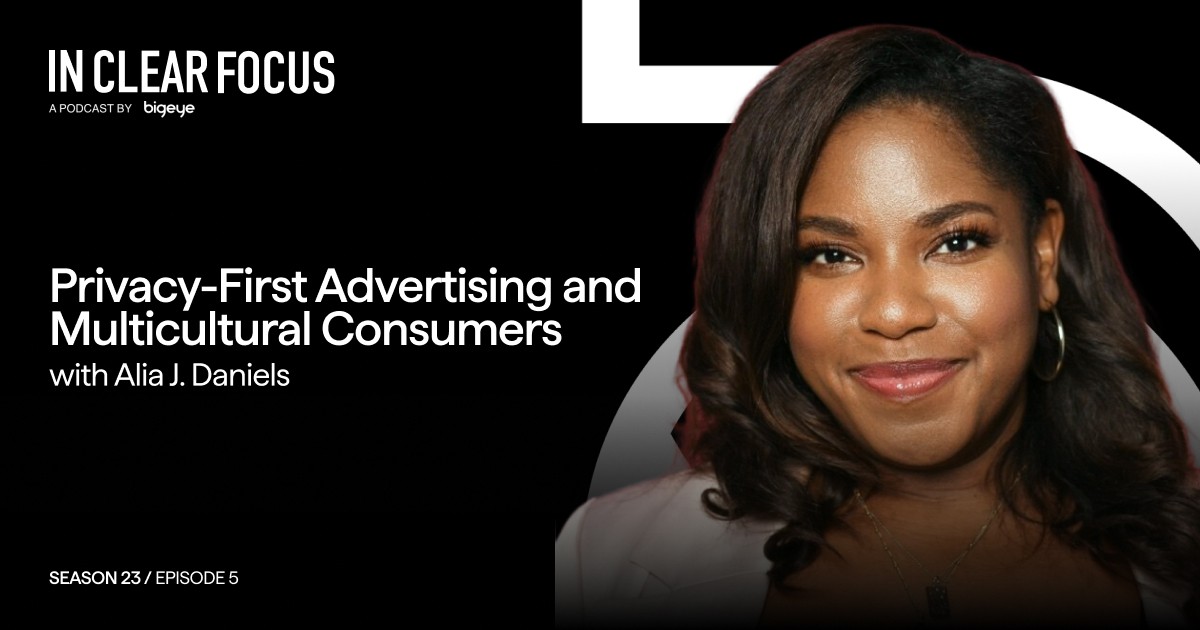
IN CLEAR FOCUS: Alia J. Daniels, COO of Revry and President of PrismRiot, discusses the power of privacy-first advertising. She explains why reaching LGBTQ+ and multicultural consumers is a business imperative, not a charitable exercise. Discover the massive addressability gap in programmatic media, why Revry walked away from The Trade Desk to protect audience data, and how a privacy-by-design exchange connects brands to diverse audiences at scale without ever compromising user trust.
Episode Transcript
Adrian Tennant: Coming up in this episode of IN CLEAR FOCUS …
Alia J. Daniels: Thirty-one million American adults who are identifying as LGBTQ. That's a lot of people. So this isn't a conversation about values or the infamous DEI. It's actually a conversation about business. If you're leaving this much money on the table and you're not in direct conversation with a group of folks this large, what are you doing?
Adrian Tennant: You're listening to IN CLEAR FOCUS, fresh perspectives on marketing and advertising produced weekly by Bigeye, a strategy-led, full-service creative agency growing brands for clients globally. Hello, I'm your host, Adrian Tennant, Bigeye's Chief Strategy Officer. Thank you for joining us. In an era when third-party cookies are disappearing and privacy regulations are tightening, brands face a paradox. The pressure to reach multicultural audiences authentically has never been higher, yet the traditional tools for doing so have never been weaker. Today's guest argues that the platforms now winning are the ones that were built for consent from day one, and that authentic inclusion isn't a values exercise but an addressability problem hiding in plain sight. Alia J. Daniels is co-founder and chief operating officer of Revry, the world's first global LGBTQ+ streaming network available in over 310 million homes across more than 100 countries, which offers original programming such as the groundbreaking hit reality competition series King of Drag. Alia also serves as president of PrismRiot, Revry's multicultural programmatic advertising exchange, which in 2025 won the inaugural Digiday award for best data management platform and recently won a second Digiday TV & Video award for best TV streaming ad sales program. A Forbes Next 1000 honoree and a trained entertainment attorney, Alia brings a distinctive legal and operational lens to questions of data privacy and audience sovereignty. To discuss how privacy-first infrastructure is unlocking the multicultural consumer opportunity at scale, I'm delighted that Alia is joining us today from Los Angeles. Alia, welcome to IN CLEAR FOCUS!
Alia J. Daniels: Thank you. I'm so happy to be here. So excited to be in conversation with you.
Adrian Tennant: Well, Revry launched in 2016, before free ad-supported streaming TV, or FAST was even a recognized category. Alia, I'm curious, what did you and your co-founders see in that emerging ecosystem that others didn't?
Alia J. Daniels: You know what was really awesome about that time? We would kind of joke and call it “the Wild, Wild West of streaming.” Nobody knew what they were doing. It was just kind of all over the place. I mean, the majors that we have now did not exist in the way that they do now. And so it was an opportunity to really be able to do something totally, totally different. There were no gatekeepers. When we started the business, it came about simply because we looked at the new Apple television in the fall of 2015, and there was no LGBTQ app available. And we said, “We should do this.” And so we took the steps to do that. And in 2017, we launched our very first FAST channel with Pluto, which of course, at that time was not called FAST. And they were having to explain to us what it was going to be. And we were like, “I think that makes sense.” We were very deep in the subscription game at that time. But it became very clear to us as a business that fast was the way to go. And so we pivoted relatively early, into this sort of sector of the industry, and we love it.
Adrian Tennant: As you know, there's a framing that still treats LGBTQ+ and multicultural consumers as niche: a segment to reach, usually during Pride Month or Hispanic Heritage Month, for example. The argument from Revry and PrismRiot is that this is fundamentally a measurement problem, not a values question. Alia, how big is the addressability gap?
Alia J. Daniels: Huge, huge. I think a lot of people think about it just from, to your point, being a values-driven decision that's made from a business of, “Oh, we're gonna put some money here” because of these tentpole moments throughout the year, when in actuality, what they're doing is leaving a lot of money on the table. $1.7 trillion spent in the US alone from queer consumers. That's a lot of money, $31 million. American, you know, adults who are identifying as LGBTQ, that's a lot of people. And so this isn't a conversation about values, or, you know, the infamous DEI, but it's actually a conversation about business. And if your business is growing, if you're leaving this much money on the table, and you're not in direct conversation with a group of folks this large, what are you doing? I think there's a really big opportunity that gets left on the table because a lot of times, specifically for queer audiences, businesses have a tendency to think of it as charity. It's even grouped in their mind with their charitable contributions, as opposed to being a really meaningful line item within their spend. And our conversation that we're having with our partners and advertisers and agencies is it's actually not a charitable conversation. This is a business conversation about “Are you growing this line of your business? And are you meaningfully talking to this consumer group that has this much disposable cash? If you're trying to grow your business, specifically in 2026, and you are not having that conversation, I would say that is very detrimental to the growth of the business that you have.”
Adrian Tennant: Well, you cited some impressive numbers there for LGBTQ+ consumers in the United States and their real spending power. And yet most programmatic targeting systematically underreaches it. So, where does the breakdown happen between a brand's buying intent and the audience that actually gets served?
Alia J. Daniels: I think it happens because these conversations are siloed. So a lot of times what ends up happening is, if you have an organization, specifically the giant HoldCos, where the conversation is being had around “What initiatives are we going for?”, a lot of times it may or may not be happening on the programmatic side, it may be happening more on the direct side. And so, programmatic buyers, there has to be a concerted effort to educate around, again, the business decision to speak to queer and other multicultural consumers. And that's something that we actively on our side are doing and having more and more of those conversations, not just with the direct investment teams, but with programmatic teams to understand, “Hey, this is an incredible opportunity, but it's also a very smart business decision to be making, to be spending across both programmatic and from a direct perspective.”
Adrian Tennant: PrismRiot launched in 2023 and what's interesting is that it was built for Revry first, and only then opened up to other multicultural publishers. Alia, can you take us inside that shift from internal tool to industry-wide exchange?
Alia J. Daniels: Yeah, like any good business, it was born out of a genuine problem. And we had a customer who came to us and said, “We want to continue to reach our audience, but we want to be able to do it at scale. You do this, we'll turn on the pipes.” And we're like, “Okay, well, then we're going to figure this out!” And so, we built out PrismRiot specifically for us. And we did it from a perspective of ensuring that privacy first was our mandate for doing so. And because we built it for ourselves, and it worked, and our customers were incredibly happy. We were like, “Why would we not do this for other multicultural publishers? We know that that is a real need in the marketplace. We've had conversations with them.” And we were doing something that was so different from what a lot of companies in the past may have done with just an audience extension tool. We weren't reaching any audience; we were specifically reaching our audience and we were specifically reaching our audience across CTV. And more and more brands and agencies understand that they cannot utilize an entire plan that is not inclusive of CTV. And so because we focus in that specific area, we understood the opportunity that existed, not just for us, but for other multicultural publishers. So it really, it's been, you know, it's a conversation, it's explaining what we're doing. And they're like, “Yeah, let's do it.” And especially in cases where that multicultural partner doesn't necessarily have a CTV offering yet.
Adrian Tennant: After ten years now of leading a business that specifically serves the LGBTQ+ community, Alia, what have those 10 years taught you about what meaningful advocacy looks like in business?
Alia J. Daniels: I think it's about one: having a very important point of view to begin with. I think if you get into a business just for the money, it's never going to work. Now, the money is important. It's a for-profit business, I want to be very clear about that. But I think having a perspective allows you to make some very tough decisions that others may not make. And I know we'll chat about it a little bit later, our decision to not work with a certain large organization. But that was done solely out of an understanding of who we are and what our purpose is as a business, why it's important to advocate for the community that we're serving, because at the end of the day, we view the work that we're doing as a service. And so if you are willing to, you know, sell your community's info for the highest dollar, then that's not truly being of service. And so for us, it's helped to guide everything that we've done as a business.
Adrian Tennant: Well, you foreshadowed the next question, which is around the fact that in early 2025, Revry made the decision to pull its inventory from The Trade Desk, publicly reported in Ad Age and elsewhere. Alia, what was the moment the calculus shifted from negotiating to simply walking away?
Alia J. Daniels: We'd been going through the process for a really long time, and we kept having the same conversation. And more so, what happened is everything kept getting kicked down the road. “How we can work with them? How we can navigate this?” And at the end of the day, the solution from The Trade Desk for us was simply to use their product, which meant for us to give them the data from our audience, and let them add it as an add-on to their existing clients for pennies on the dollar for us. And without us having any clear oversight of what they're doing with that data. And so, as you mentioned, that happened in early 2025, and the political landscape is what it is in this country. And so the idea of taking highly confidential and sensitive information for a group of folks who are being persecuted in this country and giving it away for profit, but not even real profit, for pennies on the dollar, so that we could do a deal would have been, I think, really easy for other folks to do. But we made a decision to just say, “You taking our data and us not having any oversight to ensure that it was protected” and it didn't end up in the wrong hands, and then folks couldn't use it to target people, that was just a non-starter. And I think as we continue to try to have the conversation with them, and it became very clear that that was the only solution that they were willing to bring to the table, it didn't make sense for us to continue down that road. And so we made the decision to say, “No, we're not gonna work with The Trade Desk.” And there's been plenty of folks that we would love to work with, but they've made it clear that they only work with The Trade Desk though some of that is changing, as I think we both have been seeing in the news cycles recently. And so, you know, I think we're a bit ahead of our time. We're seeing more and more folks kind of see what's happening. But at the end of the day, again, as I mentioned before, our job is to serve our community. And that would have been such a destructive way to earn a dollar. And it did make sense for us to do it.
Adrian Tennant: Karma's a curious thing, isn't it?
Alia J. Daniels: Isn't it? Yes.
Adrian Tennant: Privacy regulations such as the General Data Protection Regulation in Europe, the California Privacy Rights Act here in the United States, are often perceived as compliance burdens, things that, you know, the legal team handles. The PrismRiot position is almost the inverse, that privacy by design is actually a commercial advantage. How does that reframe land with the advertisers that you're typically selling to?
Alia J. Daniels: Well, one: we've ensured that privacy first means that our audience. Our customers can trust us because we are ensuring that we are not giving away their privacy to the highest bidder. That's number one. Number two: we figured out a way to do it that still protects our customer, but also allows for the level of direct conversation between brands and multicultural audiences. And that's really important because everyone wins in that case. But if we built a business where we focus solely on “just do it the quickest way we can do it,” and to your point, being burdened. I'm a lawyer, so it's so funny that I'd be like burdened by laws. I'm like, “Yeah, I get it, being burdened by the privacy regulations that exist.” I mean, it's a completely different ethos behind how we've built the business. And again, because we built it for ourselves first and then we started bringing on other multicultural publishers, we built it starting from a place of we wanted to protect our customers because they are so sensitive and being to an extent persecuted in this country. We knew we had to build something that would protect their identities first. We'll also be able to allow for direct communication with them from our brand partners.
Adrian Tennant: Let's take a short break. We'll be right back after this message.
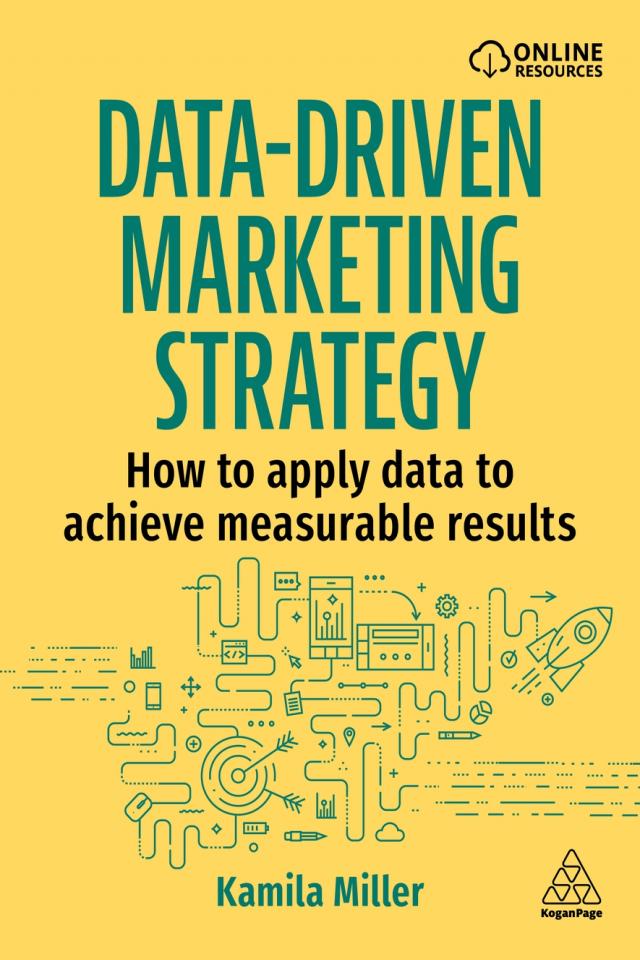
Kamila Miller: Hello, I'm Kamila Miller, the author of Data-Driven Marketing Strategy, published by Kogan Page. As a charter marketer and lecturer in marketing across several prestigious UK universities, I've seen firsthand the gap between collecting data and actually using it to make better decisions.
In my book, I share practical frameworks for turning data into creative, evidence-based strategies, from building actionable personas to leveraging AI for personalization at scale. With real-world examples from brands including Pepsi, Netflix, and HubSpot, you will learn how to move beyond dashboards and reporting to develop strategies where creativity and analytics work together.
As an IN CLEAR FOCUS listener, you can save 25% on Data-Driven Marketing Strategy when you order directly from koganpage.com. Just enter the exclusive promo code BIGEYE25 at checkout.
I hope this book helps you turn your data into strategies that deliver measurable results. Thank you.
Adrian Tennant: Welcome back. I'm talking with Alia J. Daniels, Co-Founder and Chief Operating Officer of Revry, and President of PrismRiot. Revry is now available in over 310 million homes across more than 100 countries. Now, many LGBTQ+ media companies are explicitly regional. HereTV in the US, OutTV in Canada and Europe, Alia, what did going global from day one require structurally?
Alia J. Daniels: You know, it's so funny. I mean, we're a business that's built on the internet. So for us, we built it on the internet and then it was everywhere. And that was intentional in terms of like where the technology was when we built the business. But we actually very quickly understood that that was totally the right decision to go. We could have easily geo-blocked it when we first launched the business and said, “Okay, only the US or only certain countries.” But we intentionally wanted it to be global because there are still places in the world where it is criminally prosecuted if you are part of the queer community. And we understand very inherently how important it is to see ourselves and to be represented on a screen. And so if we could create that opportunity inherently by just flipping a switch and going live, like, why would we not do that? And, you know, we've gotten so much mail and outreach from folks from all over the world, in countries, again, that I've mentioned, where it is persecuted to be a part of the community. And it's always a very similar tenor, which is “Thank you for doing this. I've never seen myself like this. I really identified with this story. And I've never seen anything like this. And it helped me to not feel alone.” And that is a big part of why we did what we did. Because again, we opened Apple TV, and we didn't see it ourselves. And so it was like, “What an amazing opportunity to bring these beautiful queer stories to folks everywhere.” And then, as we continue to grow the business, we would do partnerships all over the world with different services to bring our content to those places. So more and more people would have the opportunity to experience queer storytelling.
Adrian Tennant: Fifteen million monthly active viewers, a lean team, a growing exchange, two Digiday awards. The scale to headcount ratio at Revry is pretty unusual. Alia, you're the Chief Operating Officer. What does staying nimble look like day to day?
Alia J. Daniels: That's a great question. I have to context-switch very, very often, very quickly. And so I'm going from sales meetings to finance meetings to marketing meetings to digging it on a thing within PrismRiot, like I'm going all over the place. And so being able to stay nimble, a lot requires in-depth note-taking that I can come back to. Taking a breath, honestly, giving myself a bit of a breath to catch up and absorb everything that's happening. Because to your point, it is a lot of scale, but there's a lot of things often happening. And it's a function of realizing, and 10 years of doing this, it's a function of realizing that I can't be of service if I am burnt out. And so a lot of it is ensuring that I take care of myself as well, as a part of my ability to execute my job really well. So being able to take a breath, take a break, and make sure I ate lunch. Our Chief of Staff will often message me and say, “Did you eat lunch yet?” And to be able to do that so that I can execute at the highest levels for all the work that we're doing.
Adrian Tennant: Well, it's clearly working. PrismRiot won the inaugural Digiday Award for Best Data Management Platform. And beyond Revry's own inventory, the exchange now includes partners across a much wider multicultural footprint. What does that expansion signal about where the commercial opportunity is heading?
Alia J. Daniels: I mean, I think it speaks directly to what I mentioned earlier about being able to speak to multicultural audiences is a good business decision. It is not a, like I said, tiny line item that's made because you want to be able to check off a box and say, “We did the right thing.” And, you know, when doing the right thing matters. It is good business. It is a good business decision. And so being able to first on our side to understand that, but then to work with partners who also understand that one of our biggest partners is Revolt Media. And so working with Revolt has been really fantastic because they also understand the value of their audience and being able to connect their audience with brands who want to speak to them. And so understanding that makes it a lot clearer, one, from an audience perspective, why it's important to talk to audiences where they are so that they understand that you're talking to them. But two, it's also important for brands to directly connect with these publishers who know their audience, who've already built that trust to be able to be in conversation. I like to say it's a conversation because it's not just like throwing an ad at someone, you are speaking to an audience member, and then they are making a decision to communicate back with you by purchasing your product or service. And so I think being in conversation directly and being in that relationship with someone who's earned the trust of that audience is really important.
Adrian Tennant: Well, connected TV, CTV, is still consolidating, privacy regulations are tightening, and more multicultural publishers are looking for infrastructure rather than building it themselves. Alia, where does the conversation about addressability and representation need to be by, say, this time next year?
Alia J. Daniels: That's a great question. I think there's so much consolidation that's happening right now. And what's inevitably happening is that we're seeing some of the multicultural publishers get swallowed up. And it creates the opposite effect of, I think, what people are anticipating, which is that it can create an alienation of those groups. There's something really beautiful about having a space that is built for a specific audience and from that perspective, not just, “Oh, we think you might like this, so we're gonna throw this at you, and you'll be okay with it.” But creating an ecosystem that exists specifically for multicultural audiences, I think is really still important, and still valuable in spite of all the consolidation that we're seeing. And so my hope is that, you know, by this time next year, the value of multicultural audiences is not a conversation that we're trying to introduce. It is well known, and it is not a foregone aspect of DEI, but a real business decision. And that multicultural publishers are rightly honored and are in a relationship with these agencies and brands who understand that they have to reach multicultural audiences. That is my hope of where we are from next year, because I think we're hopefully getting over the hump of sort of the anti-DEI rhetoric and understanding that, regardless of that, multicultural audiences still exist, they still have money to spend, and there should still be a conversation that's being had. And it's much better to do that directly with multicultural publishers than to just hope that your general market spend might reach the folks that you're trying to.
Adrian Tennant: Got it. So, for a media planner or brand strategist unfamiliar with first-party data clean rooms, how does PrismRiot connect an advertiser to a multicultural audience at scale without exposing individual consumer data?
Alia J. Daniels: So, how it works is when an audience member goes to either the site or the app or what have you, however it's set up, and they have their privacy settings already appropriately selected, so, that's very important. Again, we're starting from privacy. So if they have that turned off, they will not become a part of the audience, but if they have them turned on, they're a part of the audience actively, then what happens is their information goes into a data room. And it's based on where that multicultural audience is. And then when an advertiser wants to reach that audience, there is sort of a ping that will happen when that advertisement is called. And then if the audience member matches, then they will be able to receive the advertisement that the advertiser is trying to get to them. And that's across all of CTV, so long as they are a part of this. Now, the most important part is that it's in a clean room. And that means there is no human who can go in and actually say, “Oh, this is John Doe. Oh, this is so-and-so. Oh, this is …” Like, that does not exist. Nor can we extrapolate it and say, “Oh, and then they do this, this and this.” Like that does not exist. What we know is contextually, they are a part of our audience, because they watch content, they took a certain action, there's no way that we can directly target that person or know a ton of information in that way about them. And that's really important to us. Because again, No human can get in there and do anything nefarious with any of that data. And that data is super, super, super, super limited. It is not hyper-targeted in that way. It's very, very limited to really just device ID.
Adrian Tennant: You're attending TVOT in Montreal this week alongside other connected TV and streaming industry leaders. What's the conversation you're most looking forward to having there?
Alia J. Daniels: You know, it's funny, I'm doing a fireside at TVOT with Mike Roche, who's the CRO at Revolt. And we've worked together for such a long time, but in this, like, era of business being done via computer, we've never met in person before. And so I'm actually really excited to do that fireside with Mike. You know, Revolt has been a really fantastic partner with us, utilizing the service, and I'm so excited for him to give his perspective. I obviously have my perspective. I'm the president of PrismRiot, so I think I have a little bit bias. But to hear his perspective of how it's, you know, one, scaled the opportunity in his business, while also knowing that from a privacy perspective, his audience is still safe and secure, I think is really, really exciting. And I'm just excited to kind of dig into what he's seeing on his side of the table, because I obviously have my perspective on mine. So I'm really looking forward to that conversation.
Adrian Tennant: You alluded to it earlier, but I know before Revry, you had a substantial legal career practicing as a business and entertainment attorney for the better part of a decade. Alia, how does that legal training show up in how you operate as Chief Operating Officer today?
Alia J. Daniels: What's so funny about that is that I'm one of two attorneys. So our Chief Creative Officer, Chris and I, we actually met in law school. That's how we became friends and eventually became co-founders. And so I always say we're very lucky because we get to split being a lawyer. He gets to be a lawyer part-time. I get to be a lawyer part-time. So I'm not always a lawyer. But for me, what it does is when we're thinking about potential partnerships, I kind of get to split my brain in two. I get to think about the terms that are necessary to ensure that we're getting the type of deal that we want. And I also get to think about it from the business perspective. “Is this going to grow the business? What are our objectives? Does this really make sense? What are all the things that I'm thinking about from an execution perspective of what is it going to take for this team to execute on what these deals look like?” And I also get to think about, “Now, how am I going to draft this contract or redline this contract that's going to come back to ensure that those objectives are met?” And so it's kind of nice because I think lawyers are notoriously thought to be deal killers. And so from the beginning, I'm coming at it from a place of, “Okay, we want to do this deal. This deal makes sense from a business perspective. Now, what is it going to take for me to draft this to ensure that the way that we envision this working is actually going to come to fruition?” Which is a really nice place to be because I'm thinking about all of those mechanics as we're even considering whether or not we should do a deal, which is really lovely.
Adrian Tennant: My career started in broadcast television. And I remember one of the big things for us was rights management and where shows could air and under what agreements. I'm curious, does that look different with FAST programming, or is it still just as complicated as it always was?
Alia J. Daniels: It's still just as complicated. You know what's funny is that like, when we first started doing the business, there were rights that didn't exist, like FAST as a title did not exist. And so we kind of had to make up a term based on a definition before the term existed. So it was like, “Here's what we actually want. And it doesn't have a name yet.” Right? And then eventually the industry kind of, you know, consolidated and figured out, “Okay, this is what we're going to do, and this is what it's going to be called.” But it's still just the same of like, what type of rights are you getting, and where it can air, when it can air, you know, is it geo-blocked anywhere? All of those things are still taken into consideration. In fact, even more so now, it seems like because there's so many different avenues. Luckily for us, we're pretty streamlined in the opportunity that we have where we're distributing content.
Adrian Tennant: Great conversation. Alia, if IN CLEAR FOCUS listeners would like to learn more about Revry, PrismRiot, or connect with you directly, what's the best way to do so?
Alia J. Daniels: Revry is available on major streaming platforms and devices; we are a free, ad-supported channel making queer programming accessible to everyone. You can download the Revry app or find us at Revry.com. You can also follow us on social media at RevryTV across all social platforms. And you can find me on social at Alia J. Daniels.
Adrian Tennant: Alia, thank you very much for being our guest this week on IN CLEAR FOCUS.
Alia J. Daniels: Thank you so much for having me, Adrian. I really enjoyed the conversation.
Adrian Tennant: Thanks again to my guest this week, Alia J. Daniels, Co-Founder and Chief Operating Officer of Revry and president of PrismRiot. As always, you'll find a complete transcript of our conversation with timestamps and links to the resources we discussed on the IN CLEAR FOCUS page at bigeyeagency.com. Thank you for listening to IN CLEAR FOCUS, produced by Bigeye. I've been your host, Adrian Tennant. Until next week, goodbye.
Timestamps
00:00 - Introduction to LGBTQ+ Market Potential
01:23 - Guest Introduction: Alia J. Daniels
02:42 - The Wild West of Streaming: Revry's Launch
04:06 - Addressability Gap in LGBTQ+ Marketing
06:11 - Siloed Conversations in Programmatic Advertising
07:30 - PrismRiot: From Internal Tool to Industry Exchange
09:17 - Meaningful Advocacy in Business
10:31 - Revry's Decision to Pull Inventory from Trade Desk
12:53 - Privacy Regulations as a Commercial Advantage
16:01 - Global Reach of Revry
18:15 - Staying Nimble as COO
19:45 - Expansion of PrismRiot and Its Significance
20:30 - The Importance of Multicultural Audiences
22:07 - Future of Addressability and Representation