/
Customer-Driven Marketing with Fab Giovanetti
IN CLEAR FOCUS: Fab Giovanetti, author of this month's Bigeye Book Club selection, "The Customer-Driven Marketing Handbook", explains why chasing quick wins hurts brands. She explores how customer-driven marketing shifts the focus from persuasion to relationship building. Discover the three pillars of trust , how to avoid the "privacy personalization paradox," and the power of shared rituals. Plus, learn to combat the scourge of "viralitis" and build plans that convert audiences into advocates.
Episode Transcript
Adrian Tennant: Coming up in this episode of IN CLEAR FOCUS. Fab Giovanetti: We're in a digital world. Transparency is so innate to any of the platforms that we use, especially social platforms, because our customers can talk back to us, and the audiences can talk back to us and ask us questions and point things out that don't feel right, and they actually now feel more comfortable doing that.
Adrian Tennant: You're listening to IN CLEAR FOCUS, fresh perspectives on marketing and advertising produced weekly by Bigeye, a strategy-led, full-service creative agency growing brands for clients globally. Hello, I'm your host, Adrian Tennant, Bigeye's Chief Strategy Officer. Thank you for joining us. As marketers, we're under constant pressure to deliver fast results, content that pops, campaigns that go viral, metrics we can showcase immediately. But what if that urgency is actually working against us? What if the pursuit of quick wins is undermining the very thing that drives sustainable growth? Our guest today argues that effective marketing isn't about persuasion, it's about building relationships. Fab Giovanetti is an award-winning author, entrepreneur, and marketing consultant. As the CEO and head teacher of Alt Marketing School, she spent over 15 years helping marketers develop strategies that are both effective and aligned with their values. Fab has been featured in The Next Web, Business Insider, and Forbes, and was named one of the Top 100 Marketers in 2023 by Growth Daily. She's also a certified diversity ambassador, actively promoting inclusion and accessibility in marketing education. Fab's book, published by Kogan Page, is "The Customer-Driven Marketing Handbook: Building Marketing Plans that Capture and Convert." It's a practical guide that combines behavioral psychology with actionable frameworks, showing marketers how to build trust, create emotional connections, and turn customers into advocates. with real-world examples from brands including Gymshark, Headspace, and Notion. To discuss why trust has become the currency of modern marketing and how to build marketing plans that win hearts and deliver results, I'm delighted that Fab is joining us today from Cambridge in the UK. Fab, welcome to IN CLEAR FOCUS!
Fab Giovanetti: Thank you for having me, Adrian.
Adrian Tennant: Well, Fab, congratulations on the publication of your third book. What prompted you to write this one?
Fab Giovanetti: Basically, it's the brain dump of everything that I've learned and that we teach when it comes to marketing at my school. What happened is that I found again and again, people will ask me why I do things the way that I do. Just for context, marketers are our main audience. So actually, there's a lot of wanting to know the reasons why we do things and the reasons why we choose things. And I have a policy of zero gatekeeping; however, I also appreciated that if I wanted more and more people to actually make marketing better for the customers and for themselves, a lot of the book is also about making marketing better for marketers. I knew. having done a few books before, that book is a great format for that it can be a companion to what we teach, which kind of works really well, which was one of the reasons why I did it but also the same time it can be an introduction of what I teach and the philosophy that I have around marketing.ou know, it reflects some of the more common sense that we might know of what marketing is, right? I've sprinkled the psychology piece, I've sprinkled the looking at the marketers and actually what we are doing and the load that we're carrying, and also sprinkled in a lot of systems and repeatable things. So I think it's almost marketing, but a little Fab way, 'Fab marketing'. There you go, I got it. 'Fab marketing', we'll go with that.
Adrian Tennant: Love it. Well, you introduce a concept you call 'viralitis,' the urge marketers feel to chase fast results and flashy metrics. Why do you think so many marketers are struggling with that pressure right now?
Fab Giovanetti: Can I say the dirty word? AI! Oooh! That's one of the things. It's not the only one, but I want to bring AI because it's topical. That's a great example of some of the reasons why, as marketers, we might actually find ourselves struggling with viralitis, right? AI is just a great example of that because it allows to create things faster, The output is what it is. There's something that you might have heard of called AI slop, is a thing. So people are starting to recognize, obviously, the content that has been created without the human touch. But nevertheless, even if you are still creating the content organically, AI can still help you with the automations, with the systems, with doing things faster, right? Which means if you already were struggling with eight or nine campaigns at a time, which was a stat from HubSpot a couple of years ago, which is insane, think about now, there's even more pressure to do things faster and to get better results. So we're struggling with this because of one, the situation that we're in and the landscape we're in, but there's another reason in my opinion, which I'm going to go on my little tiny soapbox now, just going to comfortably stand up there for, and I think it's the lack also sometimes of education for other people as us as marketers, we're working with other people, right? Whether it's clients, whether it's managers, there's a lack of understanding and knowledge, which shouldn't fall into the education piece. We shouldn't have to educate our clients, but there we go. of what really good results are, of the combination of marketing for ROI, also known as return on investment, versus marketing actually as an exercise building in relationships. So if we look at this, we don't have to reach the big numbers to see great results. But if we already know that as marketers, sometimes we're then fighting with this wall that is from other people not knowing that is the case, and still expecting a certain number or a certain result to show that things are working or that we are successful. So there's a lot of the knowledge and education that we have to do as marketers on why a number might be better than we think, or a result might actually get better insights than other people think. I talk a lot about it in the book as well, because I think it's one of the things that is not brought to the surface enough. And I think, as I said, just the landscape with AI is only making the pressure go higher because we are assumed to be doing more and to be able to do more. But the final piece here, and it might tie into some of the other questions that we have today, is that how can we have space for curiosity, for testing, for experimenting, for ideas if we don't allow ourselves to actually do that. If we are constantly chasing the big numbers or filling our plate constantly, because unknowingly now we can. So I went a bit on tangents, but I think it gives a bit of an idea of, I think that's where a lot of the things that I talk about the book come back to in different ways. And this is, viralitis is definitely one of the big ones.
Adrian Tennant: Well, you describe trust as the currency of modern marketing. So Fab, for marketers who've been trained to focus on conversions and campaign performance, how should they think differently about trust as a strategic asset?
Fab Giovanetti: I'm gonna bring through something that Adrian said to me before we went live, when we first met, like one of his favorite lines of the book, if I can say that, which is an example that I think I brought up first 10 to nine years ago. I was talking about email marketing just to give you context for that one, but now I apply it to all marketing. You wouldn't go out on a first date and then say, "Hi," have a lovely date, and then at the end of it, you just go down on one knee and ask the person to marry you. If somebody did that to you, I would run for the hills. No offense. Even love at first sight, there's a limit, okay? So when you think about trust, it's that idea that we don't build trust in a day, let alone in an hour. And to people or marketers that have been trained to think about conversions, as you can see, a lot of what I'm talking about I think is foundational, even if the book has got lots of tangible things and smaller and more advanced things as well in it. But the foundation of marketing, it depends on what your definition of marketing is. So I'm going to go a bit on another soapbox. This is a tinier one. But I'm going to give us a new or alternative definition to marketing. If it's not the one that you already know and think about, I'll give you another one. The one that I talk about with our students at the school and in the book is that marketing is relationship building. So when you think about that, building the relationship means building a connection, understanding, and then knowing how to touch base and create touch points with people. Therefore, if marketing is all about conversions, what you're trying to say to me is that on both sides of the marketing funnel, which hopefully we all know what it is, but if we don't, it's a customer journey, which looks like a funnel, which again, I have my own pet peeve on that one too, then we're only focusing on conversion, okay? So if marketing is really about conversion, then everything else that actually we have to do, by the way, not only we should be doing, but we also have to do, doesn't exist. How is that possible? How is it possible that we're not nurturing our clients or customers? How is it possible that we're not encouraging them to talk about us? How is it all about conversions? So if you're not looking at it from a more value-driven and mindset piece, which is the relationship building, which is fair, I'm going to go to the nitty-gritty of the rationale and the logistics. Conversion is one step. What about all the other ones? How can that be all that marketing is?
Adrian Tennant: In the book, you outline three pillars of trust: reliability, authenticity, and transparency. Fab, can you walk us through how these work together?
Fab Giovanetti: I think it's the same idea of what we talked about when it comes to the relationship building, building a relationship of meals, layering different things so that our general customers is actually evolving and is continuing. We are making sure that we don't fall prey of some of the things that could happen. I'm going to bring back what the names are, right? There's reliability, authenticity, and transparency. We might be authentic in the way that authenticity I love and sometimes I'm also a bit like, I have to do a big sigh because now everybody uses it and it's great, but authenticity was, I think, the main buzzword for quite a few years. So people now sometimes are kind of shrugging because they feel like, what does that mean anyway? What it means is that you actually are being upfront and honest about how you show up, which means sometimes it means adding people into the mix. It means collaborating with others, right? Within that, if you have one of these ingredients, like the authenticity comes quite natural to you because this is a great example. of how that works. And we've got brands like, I think Surreal in the UK is a serial brand. It's a great example of being quite authentic because they're very authentic to their tone of voice. And their tone of voice is really about how the whole brand is perceived, but also wants to be perceived, which there's a difference actually in that, right? So that's authenticity in a nutshell is understanding how they want to be perceived. They don't use people necessarily, but they're very true to their tone of voice and how they want to interact with their audience. But if you have that, and then you are not reliable or transparent, something is going to give. And I think when we talk about trust as just about authenticity or just about being transparent, we are actually falling short because we don't bring ourselves into the attention, the fact that being in an online world. So the marketing strategies can be applied also to the offline world, but let's be honest, we're in a digital world. Transparency is so innate to any of the platforms that we use, especially social platforms, because our customers can talk back to us and their audiences can talk back to us and ask us questions and point things out that don't feel right. And they actually now feel more comfortable doing that. So this is where if you have one and not the other, it's almost like a great pizza. You know, like you can have a great pizza without, I don't know, without the mozzarella and it's a bread one and people like it. But to me, the non plus ultra is Margherita because it's got all the three ingredients together. It doesn't feel off to me. So it doesn't mean that you're going to breach the trust necessarily if you're not reliable. So what you say you actually do, if you're not authentic, so you're actually true to who your brand is and your values are, and if you're not transparent. But if you are all these things together, then it means that you actually build that trust piece. So just making sure that they all come together means that you are actually building a more solid relationship. And you can mimic this on a personal relationship as well. So in this case, we're basically making how we build trust with humans, and then we apply it to brands.
Adrian Tennant: You mentioned ‘the pratfall effect’: the idea that showing imperfection can actually make a brand more relatable. That feels counterintuitive. How do you help marketers get comfortable with being less polished?
Fab Giovanetti: There is a friction that comes from the fact that right now that's what we see a lot as users. First of all, there's something to say about the power of getting uncomfortable. It's actually a really good thing for you to learn. But there's also a lot of external pressure, again, to see other people doing the same. And also, my question to you and lovely listeners would be, what does polished mean to you? Because potentially, the way that you see polished doesn't mean that you cannot be, at the same time, showing imperfections. You might still be polished, but you're using imperfections in a way where you actually use the human side. So maybe you go more for employee-generated content or user-generated content, which you can still have a bit of control over if that's what you want, but at the same time, it feels more real, and it has more of the real personality, less scripted. So to me, there's two pieces. And the first one is what I just said. What does polish mean to you? Okay. And within that, you can find the little things that you can do. And I talk about quite a few in the books. There's an extensive kind of connection of those, but to me, my favorite thing is to use people and especially employees and users and customers, because naturally what they do and how they do things are not going to be over-scripted. And it means that within that you have a bit more of that natural touch. And sometimes it also means, if it helps, another example, just to give you two, is maybe building more of the things in public. Notion, I bring this example in the book a lot, but Notion is a great example of that as a B2B platform that actually shares the updates or the new features, asks for feedback, once again, trust, and asks for what people want to see next. And then they share how the progress is going with that feature being built or that new idea being developed, which, for a big company, they don't have to do that. But in there, we have that relatability from not necessarily showing lots of mistakes, but showing the things where they're not perfect. It doesn't mean that you are showing a mistake that you made. You can do that. But even by just documenting a bit more of the journey and bringing your customers in that process, you actually do that for yourself. So Fune gives you a couple of ideas. But the last thing I want to say, which I said at the beginning, because I don't want you to miss it, because it's about mindset. So we tend to brush it away. get comfortable being uncomfortable because as a marketer, building the confidence to actually do things that as long as they feel in line with your values, how you want to be perceived, your audience, and you're not breaching that trust, play a little. And don't be afraid to encourage that because to me, the great leaders, the great marketers that then go ahead in their career and grow are the ones that are there to try new things and to suggest them as well along the way.
Adrian Tennant: Let's take a short break. We'll be right back after this message.
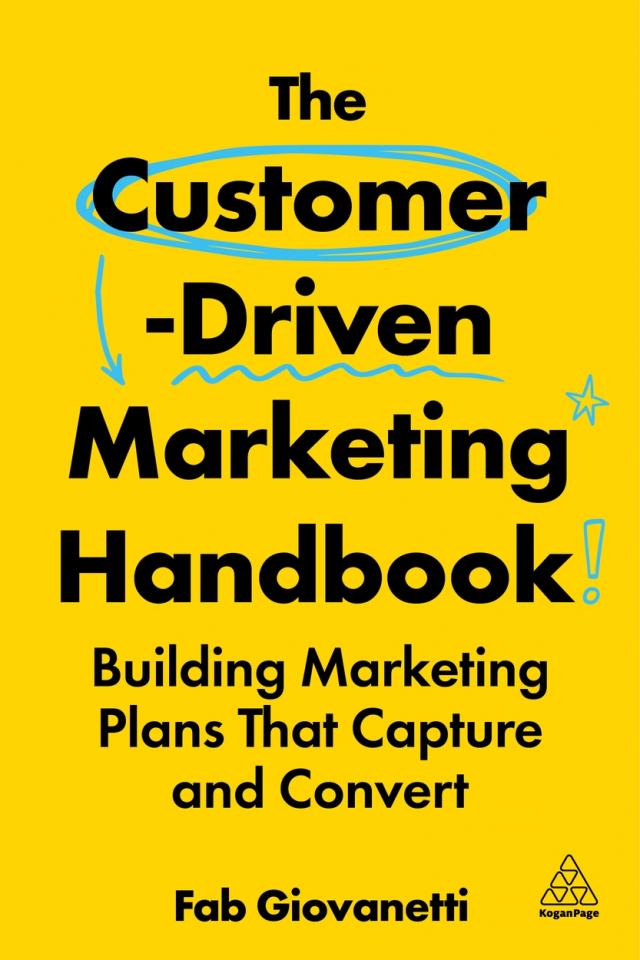 | Fab Giovanetti: Hello, I'm Fab Giovanetti, author of The Customer-Driven Marketing Handbook: Building Marketing Plans that Capture and Convert, published by Kogan Page. As a CEO and a teacher at Alt Marketing School, I've spent over 15 years helping marketers build strategies that put genuine customer relationships at the center of everything they do. In my book, I share practical frameworks for building trust, creating emotional connections, and turning customers into advocates, using real-world examples from brands like Gymshark, Headspace, and Notion. You'll learn how to identify customer pain points, design personalization that feels helpful rather than intrusive, and create shared rituals that transform one-time buyers into lifelong fans. As an IN CLEAR FOCUS listener, you can save 25% on The Customer-Driven Marketing Handbook when you order directly from KoganPage.com. Just enter the exclusive promo code BIGEYE25 at checkout. Shipping is always complimentary for customers in the US and the UK. I hope this handbook helps you create marketing plans that win hearts and deliver results. Thank you. |
Adrian Tennant: Welcome back. I'm talking with Fab Giovanetti, author of the Bigeye Book Club selection for March, "The Customer-Driven Marketing Handbook." Fab, you write that great marketing should guide customers on a journey rather than persuade them to buy. What does that shift look like in practice, especially for marketers who are being measured on short-term results?
Fab Giovanetti: One thing that you can do is look back at the customer journey and look at one thing that you can improve for each and every stage. Because what happens a lot is that I find that we tend to focus on maybe the conversion piece. If we're looking at the customer journey as a funnel, the conversion piece, and you might have the more solid or more active social platforms in the world and the best landing pages and checkouts or whatever that might be. But then when I'm asking, okay, so what are you doing to actually reward and connect and nurture your customers your audiences, people are just like, or when is the last time that you reviewed that and thought about what you could do with it? And the answer is also, so that can be a very simple thing that you can do. There's plenty, obviously, of bigger ways that we can do that. But the first thing I'm saying is tangibly look at every single stage and trying to see what you can either add or improve. I want to catch on the second part though, because, and you're not going to like this, I'm really sorry, but as I said, I don't get keep and I don't lie. You also might want to get uncomfortable, see what I did there from the first part of the conversation, encouraging people, the stakeholders around you, managers, clients, to also look at other types of results. Instead of swapping or taking out some of the shorter-term ones, add or maybe again compromise and find others that you can instead transition to and replace, so that you can have a combination of shorter-term if that still is what you have to do and what you're trying to build upon, but try and add other things that actually show the impact of the work that you're doing that goes beyond the short-term results. I always say the last thing you want to do is create friction, so there are very subtle ways to start changing a bit of the focus when it comes to these kinds of things by actually adding and encouraging to try new things so that then you can have more time to focus on the whole picture as well.
Adrian Tennant: Well, you touched on AI earlier, and of course personalization is a big theme in your book. But you also warn about what you call the 'privacy personalization paradox.' That is, making customers feel watched instead of understood. So Fab, how do marketers find that balance?
Fab Giovanetti: If you want to do something that is personalized, and in the book I give you examples that go from the little things to very complex technical things that you can do, right? And for all of these things, you look at the three ingredients that we talked about, reliability, authenticity, and transparency, especially transparency. That can actually help, I think, really start to assessing before you do the thing, before you use a specific segmentation, before you go down a personalization route on your website. First of all, the transparency I think is the first one that comes in. Is it clear that that's going to happen? Is it written anywhere? Is there some knowledge that you can actually share with your audience that this is how you use the data? Authenticity. Is it something that actually feels in line with how you talk to your audience anyway? Do you have different segments? Yes. Then it makes sense for you to segment them, right? Because you're talking to different people, you want to give them the best solutions or share with them the best content. but if you're doing it for the sake of doing it, and this is the segmentation, it's kind of everybody should do it in my opinion, but there are other things that might feel you're doing it for the sake of doing it, like a chatbot. Most of us need them, but maybe for the case of your company, actually it's always better to redirect to a human, because there can be misleading information, because some of the conversations and topics you cover are sensitive. So actually, going back to authenticity, chatbots are not the right thing for you, or you have to look into a different type of chatbot. And then reliability as well. If something goes wrong, or if you need to update things, do you know what you have to do? How easy is it for you to switch things, changes, improve things before you start personalizing? I hope this helps, but I think it's just going back to what we already said, like literally the trust piece is the big thing about not getting people feeling watched or feeling a bit losing their trust. Go back to reliability, authenticity, and transparency, but apply to the lens of what you want to do with your personalization instead.
Adrian Tennant: There's certainly a lot of fresh thinking and great ideas in your book. And Fab, one of the most distinctive ideas, I think, is turning product usage into meaningful moments that create advocates, something you describe as 'shared rituals.' So Fab, could you share an example that illustrates what makes a ritual effective?
Fab Giovanetti: The example that I love to share all the time is the LEGO one, because I think it's like a nice little thing. And it actually kind of ties back with some of the things that I talk about, which is the language that we use, which is part of the ritualization. And it's actually how people who are adult fan of Legos define themselves as, as an adult fan of LEGOs. It's a thing. And they actually created the sub-community themselves that then the brand piggybacked on. Hey, and they used it to actually create a community and then challenges. That's a great ritual. It has recurrency and frequency, so they do these challenges. It's a shared experience as well, and then it ties into something I talk about in the book, which is ‘The IKEA Effect.’ So people actually get to do something with these challenges using the product in this case, and they get to showcase it and potentially even get rewarded or get something out of it as well. So There is a great example of rituals when it comes to a brand, but I also like to bring forth that there's a lot of examples in sports as well and other type of community, music community as well. I used to be a music journalist, that's a big one. And these small rituals maybe are closer to some of the listeners. So actually thinking about some of these rituals that you might have when you go and watch your favorite game or when you go and watch a gig and things that you do. you realize that there are a lot of rituals that we build all the time. What I would say is that always be mindful of whether you're forcing a ritual, just like forcing any sort of personalization. Because with great power comes great responsibility, and shared rituals are a very powerful thing to build that community, peace, and loyalty, and advocacy within your customers and clients and audiences.
Adrian Tennant: Well, you described four pillars for effective rituals: meaningful, simple, repeatable and social. So for a brand just starting to think about this, where should they begin?
Fab Giovanetti: Always begin with the meaningful piece. I think that's going to be the most important thing because if it's simple, repeatable and social but it literally ties no meaning back to what you do and who you are and what your audience needs and wants from you and how you help them, great, but it's not going to stick. The repeatable and simple and social are little things that can turn it into a habit and then the habit and ritual come together as a powerful duo. But if it's not meaningful, if it doesn't make sense, I say it all the time, customers are not stupid. They know, our audiences know. So if it doesn't feel natural, they're not gonna do it. And then the shared ritual naming itself just obviously doesn't mean anything anymore because it's not shared, because it's not taken up. So you might be able to get people to continue with the ritual and even continue beyond you doing it, if you make it simple, if you make it social and repeatable. But if it's not meaningful, nobody's gonna start and jump on that infamous bad wagon itself.
Adrian Tennant: You're clear that marketers need to track better data, not more data. So for anyone listening who's currently overwhelmed by dashboards and metrics, how do you recommend they identify what actually matters?
Fab Giovanetti: This is a great question, but it's also a bit of a Catch-22 question because I'm always going to say it depends and maybe that helps. So there's a lot of chats around vanity metrics, which I talk about in the book as well. And I believe that they are a thing, but they're not a thing. Let me explain. The vanity metrics are only vanity if they don't mean anything for the goals that you currently have. So actually, if you are looking to build a partnership, specifically, this is a very niche example, but to give you an idea, you're looking to build more partnership with Instagram, because actually it's a relatively strong platform for you and your audience, and you've got lots of user-generated content there. So it's a great place for plenty of reasons. But in order to build the partnerships, you do want to have good engagement, just like the surface-level engagement, not necessarily some of the deeper things. But also you want to have actually follower growth because it shows cloud-to-incredibility, because your goal right now is to get new collaborations and partnerships on Instagram. So I'm going to go and say actually followers are not a vanity metric, which is literally what everybody would say. A lot of the time it is, and a lot of the time followers can be a vanity metric in a lot of platforms. But depending on your goal, any metric can be a vanity metric and any metric can be important. So I think that will be the main thing that I would say, which again, I then break down in the book further. So this is just a starting point for us. Let's do one thing, just look at what this metric that I'm in front of me, how does it tie with my goal right now? And if you don't have your own goals, again, in the book, we break down how to set new goals. So don't worry, I've got you covered. But if you already know your goals, especially for the next quarter, I want you to look at that metric and can you explain to me how this metric is going to tell you whether you are on track with your goal and your progress or not? If it doesn't, then I'm going to ask you, ‘why is it there?’ And if you don't give yourself a good reason, then the question is, is it worth for me right now to focus on it? So you have almost to become a bit of a negotiator with yourself when it comes to this kind of stuff, especially because then if you have to negotiate with the stakeholders why this matters or it doesn't, you already know because you actually made a case for yourself.
Adrian Tennant: If listeners take one idea from "The Customer Driven Marketing Handbook" and implement it on Monday morning, what would you want it to be and why?
Fab Giovanetti: I think that's a great question. And then the problem is this book is, it's huge. It's really huge. So I'm like, one idea, I think is what you mentioned, that is my favorite tagline, which you can read the origin story of that tagline in the book. It's great marketing is about direction, not persuasion. And obviously I'll tell you how to implement it, but I think that's the biggest thing for me, like to start off is just great marketing is about direction, not persuasion. sorry to all the books that are about persuasion. I'm sorry, I'm just going against the tide. I know, what can I say? That's who I am. I'm a marketing rebel after all, right? But I genuinely believe that when you think about it this way, then the implementation that I would have, which is kind of tied but not tied, but when I give you something that is super tangible, which again, I'm cheating, I'm sorry. It doesn't really come from the book, but it kind of does in everything that I teach in the book, so we're going to take it. What would your marketing look like if it were easy? This is a big question. So let's go back. I said to you, great marketing is about direction. If you want to make your marketing feel easier for you and your audience, like you're not shouting, like you're not begging, but like you are starting to build a relationship, what is one thing that you can do that will be making it feel easier for you? Let's start with you. you know, and whatever that might be, that might be the first place for you to dig into because great marketing and marketing that is directing and not pushing starts with marketing that feels easy because then your audience will see that and receive that as well.
Adrian Tennant: Great conversation. Fab, if listeners would like to learn more about you, your school, or your book, "The Customer-Driven Marketing Handbook," what's the best way of doing so?
Fab Giovanetti: First of all, you can find me on social anywhere. I am F-a-b G-i-o-v-a-n-e-t-t-i. Come and say "Hi!" and let me know that you listened to this. And I can come and say "Hi!" too and I can check in on you and see if you did your homework, because yes, I run a school, as Adrian said, so I like homework. And if you want to find out more about our school, it's ALT, like alternative, so A-L-T marketingschool.com. That's my book and that's where the genesis of "The Customer-Driven Marketing Handbook" came from. And I'm pretty sure that people can find my book in Kogan Page's, and I feel there's also something special if people get the book through you, isn't it?
Adrian Tennant: That's right! IN CLEAR FOCUS listeners can save 25 percent on "The Customer-Driven Marketing Handbook" when you order directly from koganpage.com using the promo code BIGEYE25 at checkout. Fab, thank you very much for being our guest this week on IN CLEAR FOCUS!
Fab Giovanetti: Thank you for having me. It's been a pleasure.
Adrian Tennant: Thanks again to my guest this week, Fab Giovanetti, author of "The Customer-Driven Marketing Handbook." As always, you'll find a complete transcript of our conversation with timestamps and links to the resources we discussed on the IN CLEAR FOCUS page at Bigeyeagency.com. Just select ‘Insights’ from the menu. Thank you for listening to IN CLEAR FOCUS, produced by Bigeye. I've been your host, Adrian Tennant. Until next week, goodbye.
Timestamps
00:00: Introduction to InClear Focus
02:37: Fab Giovannetti's New Book
04:04: Understanding Viralitis
07:07: Trust as the Currency of Marketing
09:31: The Three Pillars of Trust
12:50: Embracing Imperfection: The Pratfall Effect
15:30: Guiding Customers on a Journey
19:10: The Privacy Personalization Paradox
21:21: Creating Meaningful Shared Rituals
24:17: Identifying Meaningful Metrics
26:44: Key Takeaway: Direction Over Persuasion
28:24: Where to Find Fab and Her Work
29:27: Closing Remarks