/
The Divided Brain with Paul Larche

IN CLEAR FOCUS: Behavioral branding strategist and author of "The Divided Brain: Understanding Human Behaviour in Branding and Business," Paul Larche explains why logical marketing often fails. He reveals how the subconscious "old brain" makes decisions that the "new brain" simply rationalizes. Learn to navigate resistance to change, leverage loss aversion, and use his Brand Value Canvas. Discover why feeling precedes facts and how to avoid AI manipulation by understanding human behavior.
Episode Transcript
Adrian Tennant: Coming up in this episode of IN CLEAR FOCUS
Paul Larche: Belonging is huge. We're always trying to see how we fit in, how we're going to look, how we're going to be perceived if we buy this product or use this service, how is it going to affect where we are in terms of everything from status to just the way we look at ourselves.
Adrian Tennant: You're listening to IN CLEAR FOCUS, fresh perspectives on marketing and advertising, produced weekly by Bigeye, a strategy-led, full-service creative agency growing brands for clients globally. Hello, I'm your host, Adrian Tennant, Bigeye's Chief Strategy Officer. Thank you for joining us. A common view of marketing is that customers can be persuaded by the right argument – show the value, prove the benefit, walk through the data, and the sale will follow. But, behavioral science suggests that's not how most decisions actually get made. The instinctive, emotional response almost always fires first, and the reasoning that follows is often the brain's after-the-fact justification for a choice already made. Today's guest has spent more than four decades studying that gap, first as a broadcaster, then as a strategist. Paul Larche is a behavioral branding strategist and the President and Chief Executive of Larche Communications. Starting as a radio announcer in Northern Ontario when he was still a teenager, Paul rose through national broadcast syndication at Telemedia, then built and sold one of Ontario's most respected independent radio networks to Bell Media. He's a member of the Ontario Association of Broadcasters Hall of Fame and the author of the book, “The Divided Brain: Understanding Human Behaviour in Branding and Business.” To discuss the brain behind the brand, I'm delighted that Paul is joining us today from near Toronto, Canada. Paul, welcome to IN CLEAR FOCUS.
Paul Larche: Thank you so much for having me, Adrian. I'm really looking forward to our chat.
Adrian Tennant: Paul, your career began on the air as a radio announcer in Northern Ontario, and over four decades, it took you from local broadcasting to running national syndication for the Toronto Blue Jays and the Maple Leafs to building and selling a five-station independent network. Looking back, what was the moment that convinced you human behavior was the business you were really in?
Paul Larche: It's a bit of a loaded question, but I like it because it's always intrigued me. I don't think there was a lightning bolt moment, but I tell the story in the book about how when I did start out in radio as a teenager as an announcer, but I quickly got into management and learned very quickly that my paycheck was going to be attached to advertising. And so I really developed a great appreciation for what advertising is, how it works, especially when you're in a small market radio station where most of the local advertisers are using radio as their media, or certainly were back then. And I always was puzzled by how some ads seemed to really work well, and the clients were extremely happy with the results they got and yet others just didn't seem to click, and the cash register wouldn't ring for them. And I was always at a bit of a loss to figure out why. And it took me probably that revelation going through two or three different markets to the point where when I did get to Toronto, and I started having more exposure to national advertisers and much bigger agencies and worked with, you know, some of the biggest agencies in the world. And you know, their R&D departments, their research departments, their focus groups. This is in the '90s. I really realized that the commercials didn't talk about things that I always talked about in commercials, which were facts and features and all the benefits. And it really struck me that it was more about feeling. And it's counterintuitive to think that that feeling is more important than the product itself or even the facts and features. So, it took me a little while to get my head around that. But once I did, once I started researching it myself, I guess the big discovery for me was that our decisions are made in what I called the old brain, which is the subconscious part of our brain. And that's been very clearly proven in neuroscience, today, beyond a shadow of a doubt. There's a lot of data that backs that up. That old brain makes the decision, and then when I call the new brain, its de facto role, more often than not, is just to rationalize that decision. In evolutionary points of view that was excellent because it kept our species alive. It was very good for us to be able to make very quick, snap decisions. Our ancestors who did that were able to pass their genes on. And today, in the world we're in, we really find that it's not necessarily the same fit it was with the environment that we were in before. To answer your question, it was always fascinating to me, but it wasn't until that point when I was in Toronto that I really got a lot of exposure and experience to that, and I really got a lot out of a book that came out at the time called "Descartes' Error," by Antonio Damasio, who's a neuroscientist, and he had a lot of really good, interesting data behind it. And it wasn't until I read that that it started clicking to me. And then I thought, “Hey, listen, I might have an unfair advantage here.” If I go back to small market radio and use some of these techniques, I really feel that I can make my clients' cash registers ring. So that's exactly what I did. I actually, at the time, quit my dream job and bought a very small radio station in central Ontario. We had a staff of six and it was losing money. And I was going to put that theory to the test.
Adrian: Wow, I love that you put it to the real world test.
Paul Larche: I did, and I often talk about one of the first clients that I went to visit was a guy called Ted, and he was opening a mechanic shop and he and his wife were just setting it up, and they were so excited about it, they had three bays, and they had this brand new diagnostic equipment, and they had a couple of AAA-rated mechanics that were working for them, and they really thought that they had a great story to tell. I knew that with my newfound knowledge of feeling coming before facts and figures, and features and all the practical things that he brings to it, it would be a bit of a sales pitch for me to be able to convince him. And that's where I came up with this metaphor, the divided brain. So I talked to him about it for a little while. And just by coincidence, his wife ended up coming in. And she was complaining that he hadn't fixed her car and it's been sitting outside the lot for three weeks. And he said, well, I haven't done it yet because I'm working on my customers' cars. My customers come first. And I went, that's it. That is the feeling that we want to capture. So, for 20 years, they ran a campaign about Ted fixes everybody's cars except Benita's. Benita was his wife's name. And they would banter back and forth. And we have several examples of how that worked, but they never really did talk too much about what was actually the features they had. It was just something that people could connect with, and say “okay, wow, if he's prioritizing his customers over even his wife, he really has to care about his customers” and that is something the old brain can connect with. And he grew his business to 20 bays at some point, moved a few times, and he exited very successfully a few years ago.
Adrian Tennant: In your book, "The Divided Brain," you write about interlocking gears to describe how the old and new brains work together. How did you arrive at that metaphor?
Paul Larche: That metaphor really is what I call a eureka moment, when I decided that I was going to quit my dream job in Toronto and move back to small market radio. Having digested, read a lot of books, taken some courses, working with really top agencies, the problem was always explaining this to somebody over the course of a lunch or over the course of a presentation, because it is counterintuitive, and I never could seem to find a way to get the story across in an easy to digest way. And it wasn't until one day, it was the proverbial sitting having a coffee, you know, jotting down on the back of a napkin that I, you know, printed out a brain, and then I put a large circle that I turned it into a gear, and a smaller one, and connected them together and started thinking of the concept of, okay, I can explain a lot of what I've learned just with this metaphor, that the old brain, it is a gear, and it's the larger gear, and it really is turning the new gear, which is the new brain or neocortex. They work together by default, the old brain makes a decision, the new brain just goes along with it. The gears are connected, and that has kept us alive and allowed us to thrive and survive to this point. Once I was able to do that and then I was able to bring in language that the client could understand in terms of what the old brain is looking for, I could explain it within a half an hour, so, every presentation, and then we own their own marketing and advertising agency, the first thing we always did was we had a half-hour presentation on this metaphor, and people just immediately accepted it for what it was. And then we weren't having to fight them on trying to make sure that they're going to put feeling before facts and figures.
Adrian Tennant: Your book describes a set of default old brain responses, including a preference for simplicity, craving for belonging, resistance to change, and the fear of loss. Paul, in your experience, which of those do brand campaigns most often get wrong?
Paul Larche: Well you have to understand that these default mechanisms are hardwired, and you can't get around them. I think probably one of the biggest ones that people miss is resistance to change. For our ancestors, change meant stress. It meant that something was going on. They didn't want change. They wanted things to stay status quo. They felt that there was a level of safety there, anytime there was change, something didn't feel right or pattern recognition mechanisms in the old brain, since something is not fitting here, it would induce anxiety and stress. And often marketers, one of the first things that a new agency will tell the client is well, let's change everything. Let's change your logo. Let's change your colors. Let's change your fonts. Let's do this. Let's do that. And it's one of those things that it's an easy trap for a client to fall into. More often than not, it's the worst thing you can do, unless you have absolutely no brand equity with any of your clients. So I think that's the first one I always try to talk about, because more often than not, clients that came into our agency wanted to talk about changing their logo. But you also mentioned the other one, belonging. Belonging is huge and that's the one that nobody wants to admit to. They may not even consciously be thinking about it, but we're always trying to see how we fit in, how we're going to look, how we're going to fit, how we're going to be perceived if we buy this product or use this service, how is it going to affect where we are in terms of everything from status to just the way we look at ourselves. And often it's even the way we look at ourselves that's a big driver, because we have healthy egos by design. And if there's anything that can threaten that that makes us feel like maybe we made a bad decision or weren't the smartest person in the room, it really can push back. So those are the two biggest ones. The other one, too, is simplicity which I think a lot of marketers get now, but for the longest time they didn't. I still, to this day, I am amazed at how many brands make me have to jump through so many hoops to get something done that's so simple. The old brain loves simplicity. Make it simple. We're getting there, but we have a long way to go.
Adrian Tennant: Loss aversion suggests that the fear of losing something is stronger than the prospect of gaining an equivalent. How can a brand marketer use that insight in practice?
Paul Larche: You're absolutely right on that point. Loss, we do not like to lose at all. And again, makes perfect sense from an evolutionary point of view. You want it to hold on to what you had. But I think from a branding and marketing point of view now, the best way that you can use this is you can actually turn it around. And what would the person that you're talking to, what would they lose if they didn't consider your brand? If they didn't consider wanting to use your product. Because maybe your product can help save them some time. It could give them an opportunity to pick up new business or increase the size of their wallet book. It can save wasted effort. It can reduce a whole bunch of frustrations that they may have. So, it's kind of a reverse order of, listen, my product, what it can do is it can put you in a position where you're going to get back some of the things that you are losing right now. Often, time is one of the big ones. Time is huge. You can save somebody some time. They look at that as something that really clicks and it resonates through things like loss aversion.
Adrian Tennant: Let's take a short break. We'll be right back after this message.
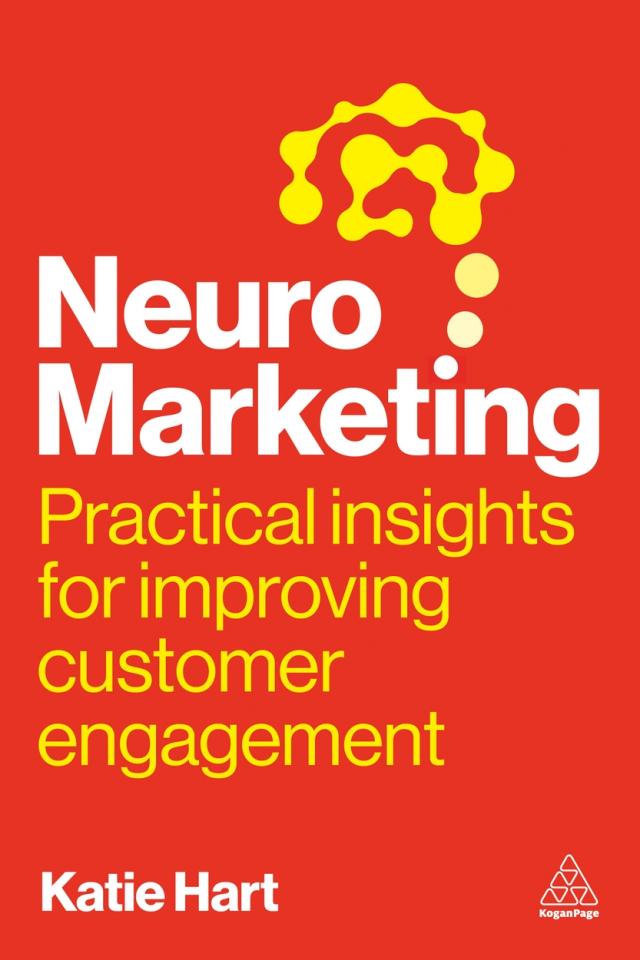 | Katie Hart: Hello, I'm Katie Hart, author of "Neuromarketing: Practical Insights for Improving Customer Engagement," published by Kogan Page. I've spent more than 15 years bringing neuroscience and psychology into marketing practice. In my book, I translate academic neuroscience into clear, actionable tools, covering attention, emotion, memory, and decision-making, alongside practical chapters on how each of the senses can be used to strengthen brand recall and shape consumer choice. You'll learn how to apply evidence-based techniques that improve engagement, optimize creative, and elevate your professional impact, drawing on original research I've conducted with leading brands. You can save 25% on "Neuromarketing" when you order directly from KoganPage.com. Just enter the exclusive promo code BIGEYE25 at checkout. Shipping is always complimentary for customers in the US and the UK. I hope my book helps you build campaigns grounded in how people actually think, feel, and decide. Thank you. |
Adrian Tennant: Welcome back. I'm talking with Paul Larche, Behavioral Branding Strategist and Chief Executive Officer of Larche Communications, about how understanding the old brain/new brain dynamic can sharpen brand strategy and marketing communications. Paul, you spent 40 years in radio, first behind the microphone, then leading national syndication, and then running your own network. What did that experience teach you about audience behavior that you think today's digital and social media marketers could learn from?
Paul Larche: Well, radio is still very viable today. Radio is still doing well. It's called the cockroach of the– what you would call the traditional media. It still does well because radio really is great at making connections and relationships. And people that listen to– it could be particularly if you're talking about local radio. People get to know who the morning people are. They grow up with them. They're part of their breakfast. They feel a connection. And that happens throughout the day. So radio really, for me, taught me a lot of discipline because you can easily lose that loyalty if you're not really talking to that target and really making sure that you're connecting emotionally with them. In digital marketing, and we were in the digital marketing business as well, it's how do you forge and create that relationship that radio would allow us to do with a listener? And conversely, a good marketing campaign would do for its customer. And it was how do we bring that into play, that familiarity, that personality, that usefulness, that sense of place that radio did was a great way to make sure that we reviewed all of our digital campaigns using the divided brain metaphor of making sure that we want people to feel before we actually explain to them why they can rationalize it. I thought it was great that way. It's still a very powerful medium, and it's the best medium in the world for creating any type of imagination. He called radio the theater of the mind. And you can still to this day listen to old radio shows, shows that were done in the ‘30s and ‘40s and ‘50s, and they're very captivating.
Adrian Tennant: In radio, you have to earn the listener every single day, because the listener can switch stations at any moment. I'm curious, Paul, how does that discipline of earned attention translate to brand building in today's paid media, algorithm-driven world?
Paul Larche: Well, you're absolutely right. The customer on a radio station, or frankly, on any social media feed for that matter, can easily leave that medium if they want. They can leave that platform. But the algorithms today, and I think they're getting better, that they really have to be considered to be less of an interruption and more of a companion to what people are doing. And if you're paying for it, people are flicking through, just, you know, use social media for example, but if you're paying to get positioned in Facebook or LinkedIn or whatever social media platform you're buying advertising in, people are usually flipping through with their fingers really quickly, and if you can't capture their attention really quickly, you're going to lose it. And what people are looking for, they're looking for something that may be of interest to them, and it's opening up that whole discussion of what the old brain is looking for. They're going to be looking for things. “Do I trust this? Is this safe? Is this something that can help me in my status?” So even though you're getting in front of people who necessarily didn't pick you to be in front of them, if you make sure that you're using the new brain, old brain platform, and you're making sure that you're positioning the feeling before the facts, it'll all come back to people buy on emotion and they justify with fact. And that's what you have to make sure you're trying to get across. And a lot of what I see is talking only about the facts and features. And often people will just skip through that because in a hyper-competitive world, almost all the similar products have the same features. It's very hard to differentiate yourself with just features. And especially if they're software-related, because you can add a feature the next day if your competitor does. So it's very, very hard to find that uniqueness that can separate you from the others. It's going to have to be that your clients thinks, “I'm going to trust this organization,” or “I'm going to trust this product because I know that they're going to continue to try to figure out a way to look after me.” And even if they don't have that feature today, I know they'll have it tomorrow. So I'm not going to skip around and move brands because they're looking after me.
Adrian Tennant: Your book culminates in what you call the Brand Value Canvas, a framework built on three legs: emotional resonance, rational validation, and distinctive uniqueness. Could you give us a sense of how the canvas works in practice?
Paul Larche: Absolutely. We did this with our clients using a big whiteboard, and we had this canvas printed out. It's quite large, and we usually would have some of their stakeholders there. It could be staff. Often, if there was any way, we'd love to have some of their customers there. And with some businesses, they did even bring in some of the customers that they had a good relationship. But the whole process was really to divide the target customer and what they're looking for and your brand, treat them separately at first. And the idea was that on one side, you'd look at the customer, your target customer. What do they need? What are their pains? What are they trying to avoid? What are their desires? How do they want to move forward? And also, what features are they looking for? And then we would put that aside and literally put it aside. Then we'd say OK, now let's just talk about your brand, your product, your service, whatever it is. Then we'd say OK, what are the solutions that you offer? What are the practical things that you can do to make sure that you come through with the customer? But then we would start peeling that onion back, and then we would really get around pain points a lot. What pain points are they trying to alleviate? What stresses are they trying to avoid? And it would just depend on the type of a business, but usually that was pretty easy to come up with, and some businesses are more obvious than others. And then the one that would take the most time was what are the rewards that they're looking for that they won't admit to? What are the hidden rewards that they're looking for? If they were to buy your product or service, can this make them look better? Can it put them in a position to get a promotion? Can it give them an opportunity to make some additional money? Can it save them some time so that they can do something else that they want to do that they find is more important to them? But usually, again, it was around those old brain wants and needs. And then once we had that, then we would look at both of these, what you offered, what the client's looking for, and we'd try to mix and match them. And more often than not, you could mix and match some of the things that you did. And then the third layer on that, I called it a three-legged stool. You're right, there was the emotional resonance, then the rational validation, but then uniqueness does come into it to a certain point. Not necessarily that your product is unique, but it hasn't been marketed. Whatever you can say is unique hasn't been marketed by your competitors. Because there is some truth to if you latch onto a position first and you own it, you can hold onto it. So if you can then say, listen, what I'm offering is going to get all these three levers, you turn that into a brain promise and that brain promise should hit on all those three things. And then our advice would just be to stick with it. And it was a formula, again, that worked and it all came from the Divided Brain Framework.
Adrian Tennant: When you apply that canvas to a brand audit, what's most often missing? The emotional leg, the rational leg, or the distinctiveness leg?
Paul Larche: I would say it's 90% the emotional side. And it's the same thing if you're a startup or you're a founder– you're so excited about what you have and all the cool things it can do. And the reason you're doing that is because from an emotional point of view for you, it's something that you've built. It's something that you feel that you have, that you can really take out to the world and you have a lot of pride. And that pride comes from the old brain, the old brain feels like listen, I'm going to be providing for my family, I'm going to be growing a business here, I'm going to be successful. And so I want to push all these features that I have, all these practical things that I offer. Then when we ask them, yeah, but how is that going to affect your customer at an emotional level? Is it going to take away a pain or is it going to help them in the way that they're perceived and in their environment, you know, or within their peer group? All of these things, that's usually when the wheels would fall off. And that's why we always did that presentation on the divided brain before we did the meeting. So that there wouldn't be that resistance, that resistance that always inevitably came. When you're in the agency business, you obviously talk to a lot of other agency owners, and everyone tries to do it a little differently. They all understand the concept of the divided brain. I haven't invented this by any stretch, and you can get much deeper into it. All I did was come up with a metaphor that made a person that maybe didn't go to marketing school, or didn't work in an advertising agency, or didn't study psychology. For those people, this is counterintuitive. So that was the hardest point to get over.
Adrian Tennant: Artificial intelligence is handling more and more of the rational persuasion layer, copy, targeting, and personalization. What do you think that means for brands whose competitive advantage has lived on the emotional side?
Paul Larche: Listen, it's a great tool for, depending on what you're using it for, and it can help businesses, particularly, you know, on their bottom line, if they're looking for efficiencies. But when you look at AI in terms of marketing, my radar senses go up because I'm more concerned about AI and the fact that it does understand the old brain, because it's been fed all that information. AI is just built on what knowledge is being put into it. And you know, the AIs today have PhD-level psychology at their fingertips that they can pull out and they understand evolutionary psychology. They understand these things better than most people do. It makes it very easy at scale for us to be, frankly, manipulated. And social media has been doing this for a while. I don't think anybody would disagree with me– AI is just going to make that better. These algorithms are getting so sophisticated. When you're going through your feeds, you'll hit a like button or you'll stop on something, how much time you're spending on it, all of that data is being gathered. And with that, it can really create a model of what your hot buttons are and what your cool buttons are. And you can translate that into not only products and services and relationships, but politics, and anybody that wants to get a message across now can use AI and use it in technically unethical ways, because they don't know you. They don't know you personally, but they know enough about your habits that they may be able to get you rattled up or concerned or agitated. Whatever it may be, again, you can use that and you can say, listen, here, I want to put an ad, you know, help me and help me create the ad. But I just caution people that if you try something and the AI isn't being, it can hallucinate, it can take you down a different road. And if you start trying to say things like, you know, using some of the biases that we all have, for example, that you know, loss aversion bias is one. We only have two left in stock. If you don't buy this right now, you're going to lose it. As long as that's true, then you're fine. But if you start using these techniques, and there's a lot of them, and none of them are true, your client will at some point find out, and you will lose that trust, and they'll be gone. In my book, I spend the last couple of chapters on errors in thinking, I call it. We can use this, you know, ethically to our advantage, but just making people understand that this is the way the brain works in the environment we're in today is the best defense mechanism against these things.
Adrian Tennant: Great conversation. Paul, if IN CLEAR FOCUS listeners would like to learn more about you or purchase a copy of "The Divided Brain," what's the best way to do so?
Paul Larche: Go to my website, PaulLarche.com, P-A-U-L for Paul, then Larche, L-A-R-C-H-E, so PaulLarche.com. Or if you're on Amazon or wherever you buy your books, it is available in all major bookstores. There is an audio version of it available as well at Audible.com. But I think the best place to go is to the website, because there's other information there as well. I often speak at conferences, so there's information there if anybody wanted to talk to me about speaking to their group.
Adrian Tennant: Paul, thank you very much for being my guest this week on IN CLEAR FOCUS.
Paul Larche: Thank you so much, Adrian. It was a lot of fun.
Adrian Tennant: Thanks again to my guest this week, Paul Larche, behavioral branding strategist and author of "The Divided Brain: Understanding Human Behaviour in Branding and Business." As always, you'll find a complete transcript of our conversation with timestamps and links to the resources we discussed on the IN CLEAR FOCUS page at bigeyeagency.com. Thank you for listening to IN CLEAR FOCUS, produced by Bigeye. I've been your host, Adrian Tennant. Until next week, goodbye.
Timestamps
00:00: Belonging in Marketing
00:22: Welcome to InClear Focus
00:33: The Role of Emotion in Decision-Making
01:14: Meet Paul Larch: A Journey Through Broadcasting
02:07: Understanding Human Behavior in Branding
02:39: The Moment of Realization
03:56: The Old Brain vs. New Brain
05:26: The Divided Brain Metaphor
08:09: Interlocking Gears: Old and New Brain Dynamics
10:09: Default Old Brain Responses in Branding
12:18: Leveraging Loss Aversion in Marketing
13:37: The Importance of Emotional Connection
15:18: Lessons from Radio for Digital Marketers
17:17: Earned Attention in a Paid Media World
19:27: The Brand Value Canvas Explained
22:49: Common Gaps in Brand Audits
24:30: The Impact of AI on Emotional Branding
27:28: Conclusion and Resources